
Vatican City: A Journey Through the Heart of Catholicism

Walking Tour

3.8 km (2.4 miles)

54 min travel time

8 Stops

Vatican City, Italy
Vatican City: A Journey Through the Heart of Catholicism
Tour Stops
1
Saint Peter's Square
View on map
Audio Narrations
English
Introduction
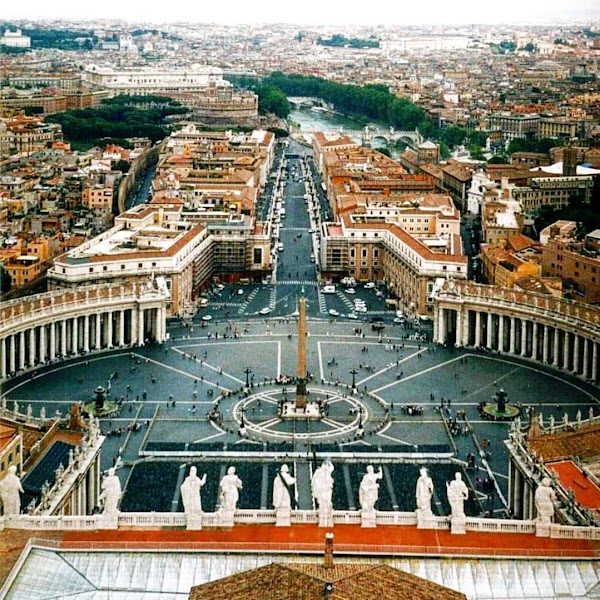
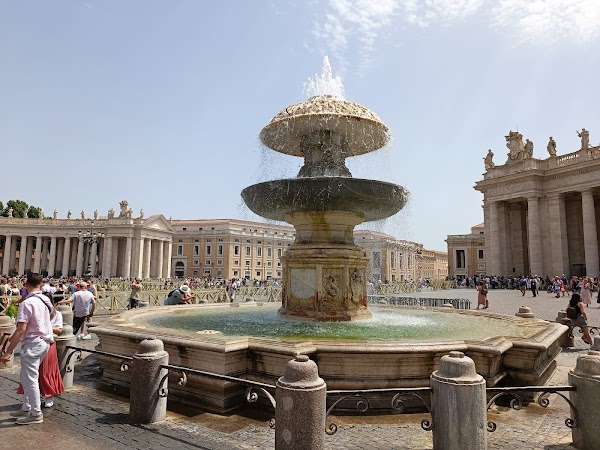
Saint Peter's Square, the heart of Vatican City, is a masterpiece of Renaissance architecture and a testament to the grandeur of the Catholic Church. Designed by Gian Lorenzo Bernini in the 17th century, the square is embraced by two majestic colonnades, each adorned with 140 statues of saints. The colonnades converge at the foot of St. Peter's Basilica, creating a theatrical approach to the church's imposing facade. At the center of the square stands an ancient Egyptian obelisk, brought to Rome by Emperor Caligula in the 1st century AD. The obelisk, originally from Heliopolis, is believed to have been carved around 1300 BC and is one of the oldest monuments in Rome. It stands as a symbol of the Church's continuity with the ancient world. Flanking the obelisk are two fountains, designed by Bernini and Carlo Maderno. The fountains provide a refreshing contrast to the vast expanse of the square and offer a place for pilgrims to rest and contemplate. Saint Peter's Square is not only a place of religious significance but also a popular tourist destination. Visitors from all over the world come to admire the square's beauty and to experience the spiritual atmosphere that permeates it. The square is also the site of major papal events, such as the election of new popes and the celebration of Easter Mass. During the Christmas season, a towering Christmas tree is erected in the square, and a nativity scene is displayed at the foot of the obelisk. The square is illuminated with festive lights, creating a magical atmosphere that attracts visitors from far and wide.Bernini's Colonnade
Standing before St. Peter's Basilica, your gaze is drawn to the vast embrace of Bernini's Colonnade. This iconic masterpiece, completed in 1667, transforms the square into a theatrical stage, where the basilica stands as the grand protagonist. The colonnade's four rows of Doric columns, numbering 284 in total, create a sense of awe and grandeur. As you approach, the columns seem to reach out, welcoming you into the heart of the Catholic Church. The colonnade's elliptical design, inspired by ancient Roman architecture, symbolizes the Church's universality. It represents the arms of the Church, encircling the faithful from all corners of the world. The 140 statues of saints that adorn the colonnade's balustrade further emphasize this universality, representing the Church's rich history and global reach. As you walk beneath the colonnade, notice the subtle optical illusion created by Bernini. The columns appear to be closer together at the center than at the ends, creating a sense of depth and perspective. This illusion draws your eye towards the basilica, emphasizing its importance. At the center of the colonnade, two fountains designed by Bernini add to the square's grandeur. The water's gentle murmur provides a sense of tranquility amidst the bustling crowds. The fountains also serve a practical purpose, providing a source of fresh water for pilgrims and visitors. Bernini's Colonnade is not merely an architectural marvel; it is a powerful symbol of the Church's enduring presence and its embrace of the faithful. As you stand within its embrace, you cannot help but feel a sense of awe and inspiration.Papal Address
Standing in the heart of Vatican City, Saint Peter's Square transforms into a stage where the Pope delivers his powerful Papal Address. This iconic location, embraced by Bernini's majestic colonnades, becomes a focal point for the Catholic faithful and global audience. The square's vastness, capable of accommodating over 300,000 people, underscores the magnitude of the occasion. From the Papal Palace's window overlooking the square, the Pope's words resonate across the crowd. His pronouncements on faith, morality, and global issues captivate the audience, fostering a sense of unity and inspiration. The square's acoustics, meticulously designed by Bernini, ensure that every word reaches the farthest corners, amplifying the Pope's message. The Papal Address often coincides with significant religious events, such as Christmas and Easter, further amplifying the spiritual significance of the occasion. The square's festive decorations and the presence of pilgrims from around the world create an atmosphere of reverence and anticipation. Beyond the religious significance, the Papal Address also carries political and social weight. The Pope's pronouncements on global issues, from poverty to conflict resolution, hold considerable influence. The square, with its symbolic location within the Vatican, serves as a platform for the Pope's voice to reach the international stage. In conclusion, Saint Peter's Square transcends its physical dimensions to become a sacred space where the Pope's message resonates with profound impact. The square's architecture, acoustics, and historical significance converge to create a unique setting for the Papal Address, shaping the spiritual, political, and social landscape of the Catholic Church and the world.
2
Obelisk of St Peter's Square
View on map
Audio Narrations
Chinese
导言
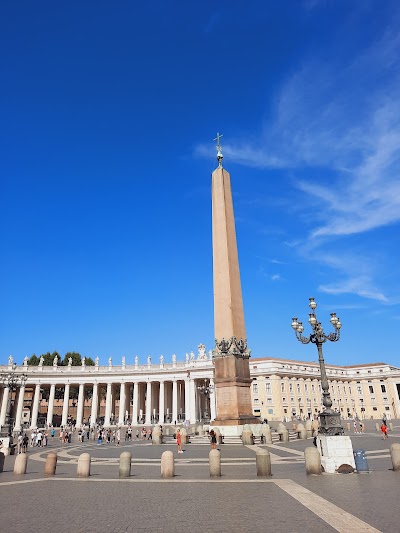
梵蒂冈方尖碑,一块高耸的红色花岗岩巨石,傲然矗立在梵蒂冈城圣彼得广场的中心。这座古埃及方尖碑上没有象形文字,据估计已有大约 4500 年的历史,早于罗马城本身。它最初竖立在埃及的赫利奥波利斯,公元 37 年被卡利古拉皇帝带到罗马,并放置在尼禄竞技场。这座方尖碑拥有一个独特的区别,即自罗马时代以来一直屹立不倒的唯一一座古罗马方尖碑。 梵蒂冈方尖碑高 25.5 米,重约 326 吨,在教皇西斯图斯五世的指导下于 1586 年进行了非凡的搬迁。这项由多梅尼科·丰塔纳完成的工程壮举历时 13 个月,动用了 900 人、75 匹马和 40 台绞盘。方尖碑从尼禄竞技场的原址到圣彼得广场的现址的旅程仅有 800 英尺,但它仍然是人类智慧和决心的证明。 一个引人入胜的传说围绕着方尖碑最初的金属球体,人们曾认为里面装着凯撒大帝的骨灰。在搬迁过程中,球体被打开,里面空空如也。如今,这个球体保存在保守宫博物馆。据说方尖碑顶部的十字架装着耶稣基督的遗物,增加了它的历史和宗教意义。 梵蒂冈方尖碑作为几个世纪历史的无声见证,是古埃及宏伟和天主教会持久力量的象征。它在圣彼得广场的存在提醒着我们文化之间的相互联系和人类成就的持久遗产。工程壮举
圣彼得广场方尖碑,一座高耸的巨石,屹立在梵蒂冈城的中心,体现了一项非凡的工程壮举,几个世纪以来一直吸引着人们的思想。这座 25 米高的方尖碑最初竖立在古埃及,重约 326 吨,公元 1 世纪由卡利古拉皇帝运往罗马。在没有现代技术帮助的情况下,将如此巨大的物体运过如此遥远的距离,其纯粹的物流证明了罗马工程师的才智。 方尖碑的搬迁涉及一个复杂的过程,其中包括建造一艘专门设计用于承载其重量的巨型船只。一旦到达罗马,方尖碑被小心地搬运到圣彼得广场的当前位置,这一壮举需要数百名工人的协调和使用创新的起重机制。方尖碑的稳定性由一个复杂的基座系统确保,该系统将重量均匀地分布在地面上。 除了物理运输之外,在圣彼得广场重新竖立方尖碑提出了一个独特的工程挑战。方尖碑最初被一个青铜球体覆盖,但在运往罗马的途中丢失了。为了取代它,文艺复兴时期的工程师设计了一个新的尖顶,一个镀金的青铜十字架,既是象征性的,也是结构性的元素。由多梅尼科·丰塔纳设计的十字架经过精心设计,可以承受风和其他环境力。 圣彼得广场方尖碑证明了古埃及和罗马工程的持久遗产。其精妙的设计、运输和重新竖立展示了古代文明非凡的创造力和解决问题的能力。作为历史和人类成就的象征,方尖碑继续激发着来自世界各地的游客的敬畏和惊叹。梵蒂冈地标
耸立在 83.5 英尺高的圣彼得广场方尖碑,是梵蒂冈城中心的一座雄伟地标。其古埃及起源可追溯到公元前 13 世纪,赋予方尖碑深远的的历史意义。公元前 10 年,奥古斯都皇帝将其从赫利奥波利斯运往罗马,最初装饰在尼禄竞技场,那里是战车比赛和公开处决的地点。1586 年,西克斯图斯五世教皇决心将方尖碑改造成一个基督教符号,委托将其迁至圣彼得广场。搬迁是一项巨大的工程壮举,需要建造一个特殊的木制脚手架,并使用 900 人和 140 匹马。方尖碑现在矗立在那里,证明了天主教会的持久力量及其将古代异教符号融入其自身传统的能力。其象形文字铭文描绘了对太阳神拉的崇拜和祭祀场景,让人们得以一窥古埃及的宗教信仰。方尖碑矗立在圣彼得广场,提醒着人们教会悠久而复杂的历史,以及它随着时间推移而适应和演变的能力。它是连续性和变革的象征,证明了信仰和人类精神的持久力量。
3
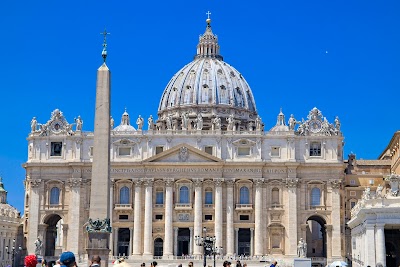
St. Peter's Basilica
View on map
Audio Narrations
English
Introduction
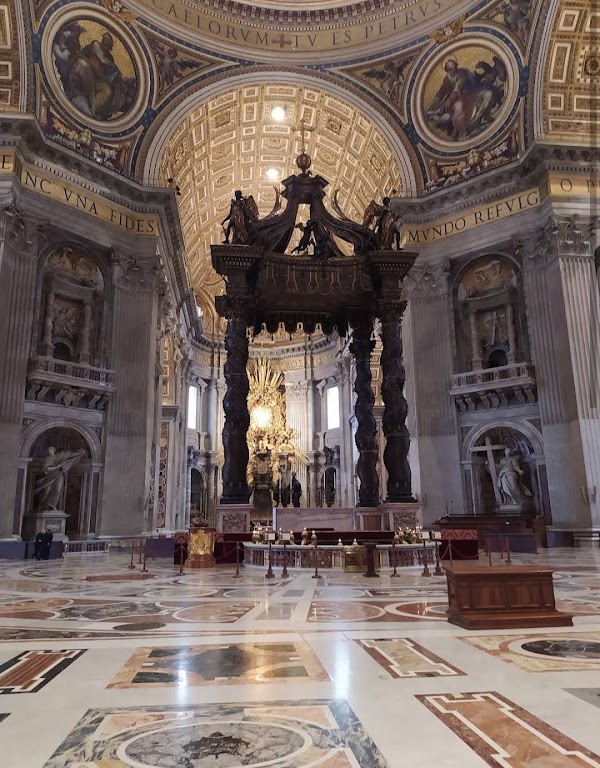
St. Peter's Basilica, a colossal architectural marvel in Vatican City, stands as a testament to the grandeur of the Catholic Church. Its origins trace back to the 4th century, when Emperor Constantine commissioned a basilica over the burial site of Saint Peter, the first pope. The present basilica, a masterpiece of Renaissance and Baroque architecture, was designed by renowned architects like Bramante, Michelangelo, and Bernini. The basilica's awe-inspiring dome, designed by Michelangelo, dominates the skyline of Rome. Its interior is equally impressive, adorned with intricate mosaics, sculptures, and paintings by masters like Raphael and Michelangelo. The Baldachin, a monumental bronze canopy over the papal altar, is a masterpiece by Bernini. Beneath the basilica lies the Confessio, where Saint Peter's tomb is believed to be located. The basilica also houses numerous tombs of popes and other notable figures, making it a significant pilgrimage site. St. Peter's Square, designed by Bernini, complements the basilica's grandeur. Its elliptical shape and colonnades create an inviting embrace, welcoming visitors to the heart of the Catholic world. The square is often used for papal ceremonies and gatherings, drawing millions of pilgrims and tourists alike. The basilica's rich history, artistic treasures, and spiritual significance make it a must-visit destination for anyone interested in architecture, art, or religion. Its enduring beauty and timeless appeal continue to captivate visitors from around the globe.Largest Church
St. Peter's Basilica, a colossal architectural marvel in Vatican City, stands as the largest church in the world, a testament to its grandeur and significance. Its vast interior, spanning over 23,000 square meters, can accommodate a congregation of 20,000, making it a venue for grand religious ceremonies and papal events. The basilica's towering dome, designed by Michelangelo, is a masterpiece of engineering, rising to an impressive height of 136 meters. Its massive scale and intricate details, including the iconic baldacchino by Bernini, create an awe-inspiring ambiance that befits its status as the heart of the Catholic Church. As the largest church, St. Peter's Basilica attracts millions of pilgrims and tourists annually, eager to witness its architectural splendor and religious significance.Holy Door
The Holy Door, a significant portal within St. Peter's Basilica, holds immense spiritual and symbolic value. Inaugurated during Jubilee Years, this sacred gateway represents the beginning of a period of renewal and forgiveness. The opening ceremony, presided over by the Pope, is a solemn event that marks the commencement of the Holy Year. The Holy Door is adorned with intricate panels depicting scenes from the life of Christ, a testament to the basilica's rich artistic heritage. Its design reflects the theme of conversion and the path towards salvation. During Jubilee Years, pilgrims from around the world flock to St. Peter's to pass through this sacred threshold, seeking spiritual renewal and the indulgence associated with the pilgrimage. The Holy Door serves as a reminder of the basilica's significance as a pilgrimage destination and a symbol of the Church's welcoming embrace. Its opening signifies a time of grace and mercy, inviting the faithful to embark on a journey of spiritual transformation.
4
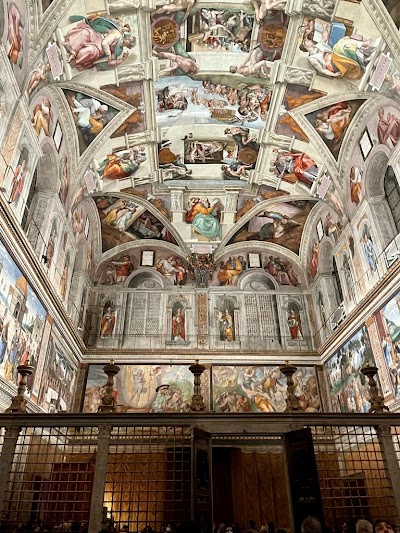
Sistine Chapel
View on map
Audio Narrations
English
Introduction
The Sistine Chapel, a masterpiece of Renaissance art, is located within the Vatican Museums in Vatican City. Its fame stems from the breathtaking frescoes adorning its interior, most notably Michelangelo's iconic ceiling and "The Last Judgment" on the altar wall. The ceiling, painted between 1508 and 1512, depicts scenes from Genesis, including the Creation of Adam, while the lunettes and spandrels feature prophets, sibyls, and the ancestors of Christ. "The Last Judgment," completed in 1541, portrays the second coming of Christ and the final judgment of humanity. The chapel's walls are adorned with 15th-century frescoes depicting the lives of Moses and Christ, as well as portraits of popes. The Sistine Chapel serves as the site of the papal conclave, where cardinals gather to elect a new pope. Its grandeur and artistic significance have made it a must-see destination for art enthusiasts and pilgrims alike.Vatican Museum
Nestled within the hallowed halls of the Vatican Museums, the Sistine Chapel stands as a testament to the genius of Michelangelo and the grandeur of the Catholic Church. As you step inside, your gaze is drawn upward to the breathtaking ceiling frescoes, a masterpiece that depicts scenes from the Book of Genesis. Michelangelo's vibrant brushstrokes and masterful use of perspective create an illusion of depth that transports you into the biblical narrative. At the altar end, the awe-inspiring "Last Judgment" fresco dominates the wall, portraying the second coming of Christ and the separation of the righteous from the damned. The intricate details and emotional intensity of the figures are a testament to Michelangelo's unparalleled skill. Beyond the iconic frescoes, the Sistine Chapel is also home to a collection of remarkable tapestries depicting scenes from the lives of Christ and Moses. These tapestries, woven with intricate precision, add to the chapel's opulent atmosphere. As you explore the Vatican Museums, be sure to allocate ample time to marvel at the Sistine Chapel. Its unparalleled beauty and historical significance make it a must-see for any visitor seeking a deeper understanding of Renaissance art and the Vatican's rich heritage.Renaissance Art
The Sistine Chapel, a hallowed sanctuary within the Vatican City, stands as a testament to the zenith of Renaissance art. Its vaulted ceiling, adorned with Michelangelo's masterful frescoes, is a symphony of biblical narratives and human form. The central panels depict scenes from Genesis, including the iconic "Creation of Adam," where God's outstretched finger imbues life into the first man. Michelangelo's profound understanding of anatomy and perspective is evident in the dynamic poses and expressive gestures of his figures. The chapel's walls are adorned with frescoes by renowned Renaissance masters such as Botticelli, Ghirlandaio, and Perugino. Their works depict the lives of Christ and Moses, showcasing the influence of classical art and the revival of humanist ideals. The chapel's overall design reflects the synthesis of Christian iconography with the rediscovery of ancient Greek and Roman aesthetics. Beyond its artistic significance, the Sistine Chapel holds immense historical and religious importance. It serves as the venue for papal conclaves, where cardinals gather to elect a new pope. The chapel's grandeur and symbolism underscore the power and influence of the Catholic Church during the Renaissance era.
5
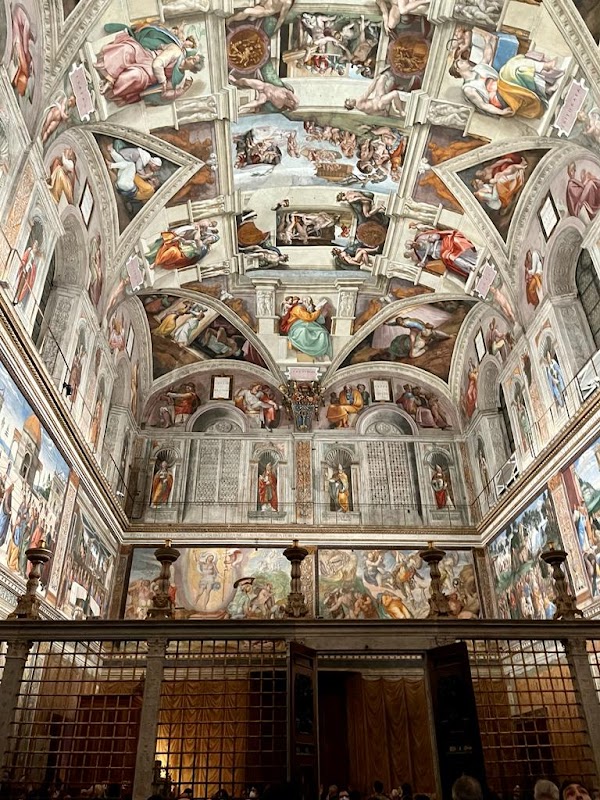
Vatican Museums
View on map
Audio Narrations
English
Introduction
The Vatican Museums, a treasure trove of art and history, are a must-see destination in Vatican City. Founded in the 16th century by Pope Julius II, they house over 70,000 artworks, spanning millennia and representing diverse cultures. The museums' highlights include the Sistine Chapel, adorned with Michelangelo's iconic frescoes, and the Raphael Rooms, showcasing the artist's masterful paintings. The Gallery of Maps, a 120-meter-long frescoed corridor, offers a unique perspective on 16th-century cartography. The Pio-Clementino Museum boasts an impressive collection of Greek and Roman sculptures, including the renowned Laocoön and His Sons. The Gregorian Egyptian Museum showcases ancient Egyptian artifacts, including mummies and hieroglyphics. The Vatican Museums offer a captivating journey through art, history, and culture, leaving visitors in awe of the artistic legacy preserved within its hallowed halls.Raphael's Rooms
Step into the Raphael's Rooms, a breathtaking quartet of chambers within the Vatican Museums, where the genius of Raphael unfolds in vibrant frescoes. Commissioned by Pope Julius II, these rooms were intended as his private apartments but have since become a testament to the artist's mastery. The Stanza della Segnatura, the first room Raphael adorned, is a symphony of philosophy, theology, poetry, and justice. The iconic "School of Athens" depicts ancient philosophers gathered in a grand hall, with Raphael himself and Leonardo da Vinci portrayed among them. The Stanza di Eliodoro showcases Raphael's narrative prowess, with scenes from the Old Testament illustrating the protection of the Church. In the Stanza dell'incendio del Borgo, Raphael glorifies the papacy, depicting Pope Leo IV extinguishing a fire and Pope Leo III crowning Charlemagne. The final room, the Sala di Constantino, completed by Raphael's pupils after his untimely death, celebrates the emperor's conversion to Christianity. Each fresco is a masterpiece, rich in symbolism and allegory. Raphael's innovative use of perspective and harmonious compositions create an immersive experience, transporting visitors to the heart of the Renaissance. The Raphael's Rooms stand as a testament to the artist's genius and the enduring legacy of the Vatican Museums.Michelangelo's Frescoes
Within the hallowed halls of the Vatican Museums, Michelangelo's frescoes adorn the Sistine Chapel, a testament to his unparalleled genius. The ceiling, a breathtaking expanse of vibrant hues, depicts scenes from Genesis, culminating in the iconic "Creation of Adam." Each brushstroke captures the divine spark of life, as God's finger reaches out to bestow consciousness upon humanity. The lunettes, painted later, showcase the ancestors of Christ and the prophets, their solemn expressions conveying the weight of their lineage. Michelangelo's frescoes are not merely artistic masterpieces; they are theological treatises. The "Last Judgment," painted on the altar wall, is a chilling depiction of the final reckoning. Christ, as the stern judge, separates the righteous from the damned, while the elect ascend to heaven and the condemned are cast into the abyss. The fresco's vivid colors and dynamic composition evoke a sense of awe and trepidation, reminding viewers of the eternal consequences of their actions. Beyond their artistic and religious significance, Michelangelo's frescoes offer a glimpse into the artist's own life and struggles. The "Creation of Adam" is said to reflect his own doubts and anxieties about his abilities, while the "Last Judgment" is believed to express his disillusionment with the corruption of the Church. These frescoes are not only works of art but also windows into the soul of one of history's greatest masters.
6
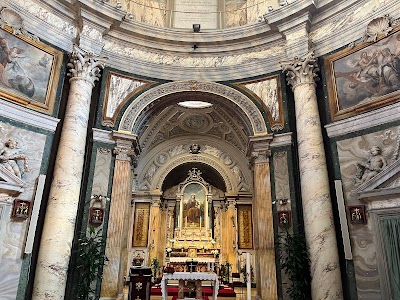
Chiesa di Sant'Anna dei Palafrenieri
View on map
Audio Narrations
English
Introduction
Nestled within the Vatican City walls, the Chiesa di Sant'Anna dei Palafrenieri stands as a testament to the artistic and spiritual heritage of the Holy See. This unassuming church, tucked away near St. Peter's Basilica, boasts a rich history and unique architectural features that set it apart from its grander counterparts. Built in the 16th century, the church served as a place of worship for the palafrenieri, the grooms who tended to the papal horses. Its modest facade belies an interior adorned with exquisite frescoes by the renowned artist Pellegrino Tibaldi. These vibrant murals depict scenes from the life of Saint Anne, the mother of the Virgin Mary, and showcase Tibaldi's mastery of light and shadow. One of the church's most captivating features is the intricate wooden ceiling, a masterpiece of Renaissance craftsmanship. The intricate carvings and gilded details create a sense of awe and wonder, transporting visitors to a bygone era of artistic splendor. The high altar, adorned with a beautiful marble statue of Saint Anne, further enhances the church's spiritual ambiance. Beyond its artistic treasures, the Chiesa di Sant'Anna dei Palafrenieri holds a special significance for the Vatican. It served as the parish church for the Vatican City State until the construction of St. Peter's Basilica, and its intimate setting has hosted numerous papal ceremonies and events throughout the centuries. Today, the church remains a hidden gem within the Vatican, offering a glimpse into the lesser-known aspects of the Holy See's history and artistic legacy. Its serene atmosphere and captivating beauty provide a welcome respite from the bustling crowds of St. Peter's Square, inviting visitors to contemplate the spiritual and artistic treasures that lie within its walls.Sant'Anna dei Palafrenieri
Chiesa di Sant'Anna dei Palafrenieri: A Sanctuary Dedicated to Saint Anne Nestled within the Vatican City walls, the Chiesa di Sant'Anna dei Palafrenieri stands as a testament to the devotion of the Venerabile Arciconfraternita di Sant'Anna de' Palafrenieri, the Pontifical Grooms. This church, dedicated to Saint Anne, the mother of the Virgin Mary, holds a unique place in the hearts of the Grooms, serving as both their parish church and a poignant reminder of their centuries-old association with the Papacy. Commissioned in 1565 by Pope Pius IV, the church boasts a groundbreaking design attributed to the renowned Renaissance architect Giacomo Barozzi da Vignola. He pioneered the use of an elliptical plan, a feature that would later become a hallmark of Baroque architecture. This innovative design reflects the Grooms' forward-thinking approach and their commitment to embracing new ideas. The church's history is intertwined with the Archconfraternity. After a smooth start, construction slowed due to financial constraints. However, the Grooms persevered, and the church was finally completed in 1775. The facade, attributed to Borromini, prefigured the style of Sant'Agnese in Agone, showcasing the Grooms' appreciation for artistic innovation. Inside, the church reveals a harmonious blend of elegance and devotion. The elliptical plan creates a sense of intimacy, while the eight Corinthian columns and the frescoes by Ignazio Stern narrate the life of Saint Anne. The high altar, adorned with a painting of Saint Anne and the Virgin Mary by Arturo Viligiardi, serves as a focal point for prayer and contemplation. The Chiesa di Sant'Anna dei Palafrenieri is more than just a place of worship. It embodies the enduring spirit of the Pontifical Grooms, their dedication to Saint Anne, and their unwavering service to the Papacy. It stands as a testament to their faith, resilience, and commitment to excellence.Vatican City Parish Church
Chiesa di Sant'Anna dei Palafrenieri: The Heart of Vatican City Parish Nestled within the walls of Vatican City, the Chiesa di Sant'Anna dei Palafrenieri stands as the beating heart of the Vatican's parish community. More than just a church, it embodies the rich history and vibrant spirit of the Vatican City State. This 16th-century gem, commissioned by the Pontifical Grooms, boasts a unique elliptical design pioneered by the renowned architect Giacomo Barozzi da Vignola. This innovative approach marked a turning point in church architecture, influencing the Baroque style that would sweep across Europe. Beyond its architectural significance, Sant'Anna dei Palafrenieri holds a special place in the hearts of Vatican City residents. It serves as the official parish church, offering daily masses, Sunday services, and a vibrant community center. The church fosters a sense of belonging and connection for those who call Vatican City home. Stepping inside, visitors are greeted by a warm and inviting atmosphere. The beautiful interior, adorned with intricate artwork and sculptures, reflects the deep faith and artistic heritage of the Vatican. The church also houses the tomb of Pope Pius XI, a testament to its historical and spiritual importance. For those seeking a deeper understanding of Vatican City's cultural and religious landscape, Sant'Anna dei Palafrenieri offers a unique perspective. Its rich history, architectural significance, and role as the parish church provide a window into the lives of those who reside within the Vatican walls. Whether seeking spiritual solace, historical insights, or simply a glimpse into the daily life of the Vatican City community, the Chiesa di Sant'Anna dei Palafrenieri stands as a beacon of faith, history, and community spirit.
7
Parco della Mole Adriana
View on map
8
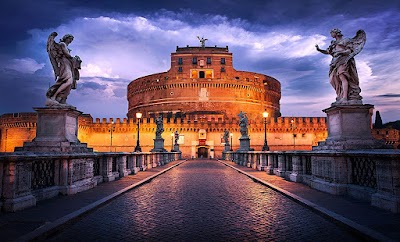
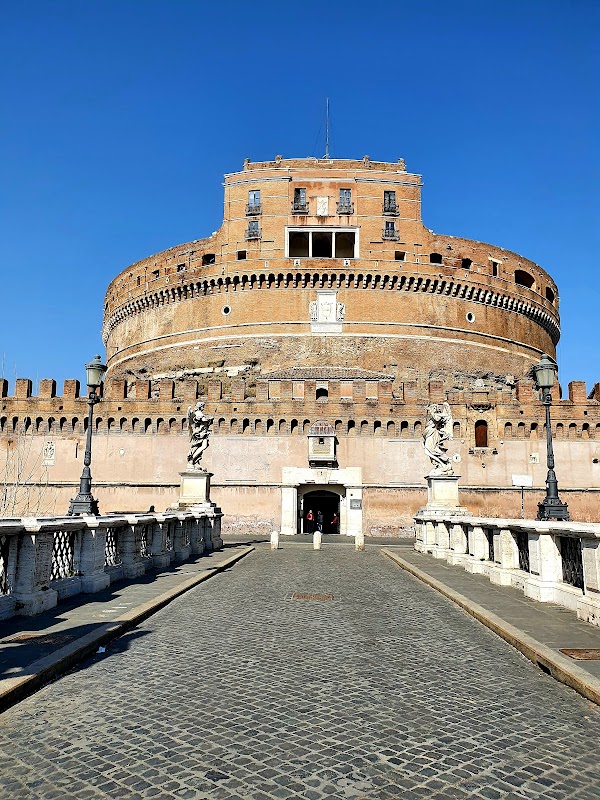
Castel Sant'Angelo
View on map
Audio Narrations
English
Introduction
Castel Sant'Angelo, a towering cylindrical structure in Rome, was initially commissioned by Emperor Hadrian as a mausoleum for himself and his family. Later converted into a fortress and castle by the popes, it now serves as a museum. The building, once Rome's tallest, features a decorated cylinder with a garden top and a golden quadriga. It was adorned with bronze and stone statuary, much of which was lost during its conversion to a military fortress. The legend of the Archangel Michael sheathing his sword atop the mausoleum, signifying the end of the 590 plague, gave the castle its current name. The popes fortified the structure, connecting it to St. Peter's Basilica via the Passetto di Borgo. It served as a refuge for Pope Clement VII during the Sack of Rome and housed prisoners like Benvenuto Cellini and Giordano Bruno. The castle's upper floors boast elegant Renaissance interiors, including the Sala Paolina with frescoes depicting Alexander the Great's life. The terrace offers breathtaking views of Rome and was immortalized in Puccini's opera "Tosca.Archangel Michael Statue
The iconic Archangel Michael statue stands atop Castel Sant'Angelo, a towering cylindrical fortress in Rome. Commissioned by Emperor Hadrian as a mausoleum, it was later transformed into a papal fortress and prison. The statue, sculpted by Flemish artist Peter Anton von Verschaffelt in 1753, replaced an earlier marble work by Raffaello da Montelupo. It depicts the archangel sheathing his sword, symbolizing the end of the plague that ravaged Rome in 590. Legend has it that Pope Gregory I witnessed the archangel's apparition atop the castle, prompting its renaming to Castel Sant'Angelo. The statue's placement on the castle's summit serves as a poignant reminder of the divine protection believed to have shielded Rome from adversity.Bridge to St. Peter's Basilica
Castel Sant'Angelo, an iconic Roman landmark, holds a unique significance as the bridge to St. Peter's Basilica. Originally built as Emperor Hadrian's mausoleum, it was later fortified and connected to the Vatican by the Passetto di Borgo, a secret passageway used by popes to escape danger. The bridge leading to the castle, known as Ponte Sant'Angelo, is adorned with 10 statues of angels designed by Bernini. These angels hold instruments of Christ's Passion, adding a sacred dimension to the bridge's architectural beauty. Crossing Ponte Sant'Angelo offers breathtaking views of the Tiber River and the towering dome of St. Peter's Basilica. Pilgrims and tourists alike have traversed this bridge for centuries, making it a symbol of faith and pilgrimage. The castle itself houses a fascinating museum, showcasing its rich history as a fortress, prison, and papal residence. Visitors can explore its many chambers, including the Treasury Room, which holds precious artifacts and papal regalia. From the castle's rooftop terrace, one can enjoy panoramic views of Rome, including St. Peter's Basilica in all its grandeur. The bridge and castle together form an integral part of the Vatican pilgrimage route, connecting the ancient world with the heart of Christianity.
Experience the Full Tour
Download the DocentPro app to access all tour stops, complete audio narrations in multiple languages, offline maps, and interactive features.