
Seine River Wonders

Walking Tour

6.5 km (4.0 miles)

1h 31min travel time

12 Stops

Paris, France
Seine River Wonders

12 places on the map
Explore the map in the DocentPro app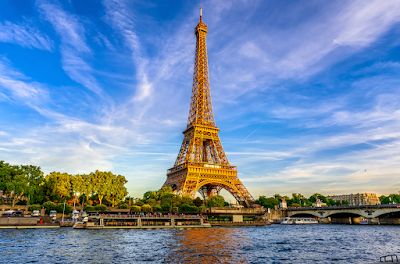
Tour Stops
1
Eiffel Tower
View on map
Audio Narrations
Introdução
A Torre Eiffel, construída em ferro forjado, é um testemunho da engenhosidade e da audácia arquitetônica. Sua estrutura em treliça, muitas vezes confundida como puramente decorativa, é essencial para sua estabilidade, distribuindo o peso uniformemente para resistir às forças do vento. A torre possui não um, mas três níveis distintos para visitantes, cada um oferecendo uma perspectiva única da paisagem parisiense. Embora as vistas panorâmicas do topo sejam inegavelmente deslumbrantes, poucos se aventuram ao primeiro nível, onde é possível descobrir o escritório preservado do próprio Gustave Eiffel. Esta joia escondida oferece um vislumbre da mente do engenheiro visionário e da construção da torre. Curiosamente, a Torre Eiffel foi inicialmente recebida com resistência de proeminentes artistas e intelectuais parisienses que a consideravam uma monstruosidade. Mal sabiam eles que ela se tornaria o próprio símbolo de Paris, atraindo milhões de visitantes a cada ano e inspirando admiração com sua escala e design intrincado.Dominação da paisagem urbana
O domínio da Torre Eiffel sobre a paisagem urbana parisiense é inegável. Sua estrutura de ferro perfura o céu, diminuindo até mesmo as grandes avenidas e os edifícios da era Haussmann que definem a Cidade das Luzes. Visível de quase todos os cantos de Paris, ela serve como um ponto de referência constante, um farol na paisagem urbana. Esse domínio visual foi intencional. Gustave Eiffel, o homônimo da torre, imaginou uma estrutura que não apenas se misturaria, mas proclamaria com ousadia a chegada da era industrial. A escala da torre, atingindo mais de 300 metros em sua ponta, era sem precedentes em Paris, transformando instantaneamente o horizonte da cidade e estabelecendo um novo padrão para a ambição arquitetônica. Mesmo hoje, em meio aos arranha-céus modernos do distrito financeiro de La Défense, a Torre Eiffel mantém sua presença poderosa, uma prova de seu impacto duradouro na paisagem urbana parisiense. É um símbolo da engenhosidade humana, uma lembrança da evolução da cidade e uma constante no panorama em constante mudança de Paris.Ícone romântico
A Torre Eiffel, perfurando o horizonte parisiense, transcende sua estrutura de aço para incorporar o próprio romance. Sua silhueta, instantaneamente reconhecível e eternamente capturada em incontáveis cadeados de amor, sussurra contos de amor. As luzes cintilantes que iluminam a torre todas as noites, transformando-a em um farol de brilho dourado, testemunharam inúmeros beijos roubados e promessas sussurradas. Cada feixe cintilante parece ecoar com a alegria e a esperança de um novo amor e a força duradoura de laços duradouros. Casais de todo o mundo se aglomeram em sua base, atraídos por uma atração magnética invisível, para declarar seu amor com a Cidade das Luzes como pano de fundo. Uma proposta sob a Torre Eiffel, banhada pelo brilho aconchegante de seu espetáculo noturno, transcende uma simples pergunta; torna-se uma promessa tecida no próprio tecido de uma das cidades mais românticas do mundo. A torre permanece como uma sentinela silenciosa, testemunhando inúmeras histórias de amor que se desenrolam sob sua presença majestosa, ligando para sempre sua imagem à magia do romance.
2
Musée du quai Branly - Jacques Chirac
View on map
Audio Narrations
Introduction
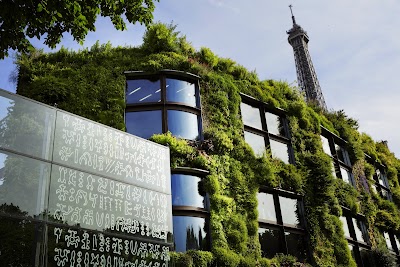
The Musée du quai Branly - Jacques Chirac stands as a testament to the art and cultures of Africa, Asia, Oceania, and the Americas, often overlooked in traditional Western-centric museums. Its unique architectural design, a collaboration between Jean Nouvel and landscape artist Gilles Clément, is a spectacle in itself. The building seems to organically emerge from its lush garden setting, blurring the lines between nature and human creation. Inside, the museum's collection boasts an impressive array of masks, sculptures, textiles, and ritual objects, each whispering tales of distant lands and ancient traditions. A particularly intriguing aspect is the dedicated space for temporary exhibitions, offering a dynamic platform for contemporary indigenous art and exploring the ongoing dialogue between cultures. The museum's commitment to showcasing the living heritage of these communities through music, dance, and storytelling makes it more than just a repository of artifacts; it's a vibrant center for cultural exchange and understanding.Primitivism Debate
The Musée du quai Branly, with its vast collection of non-European art, stands at the heart of the Primitivism debate. The museum's very existence sparks questions about the categorization of art and the legacy of colonialism. Critics argue that by grouping diverse cultures under the umbrella term "primitive," the museum perpetuates a hierarchical view of art history, placing the West at its pinnacle. They question whether these objects, often ritualistic or utilitarian in origin, should be considered "art" through a Western lens. The museum's architecture, a blend of modern and organic forms, further fuels the debate, with some interpreting it as reinforcing a romanticized view of the "primitive." However, the Musée du quai Branly also provides a platform for challenging these very notions. Its exhibitions and programming often engage directly with the complexities of colonialism and its impact on the perception of non-Western art. The museum strives to present these objects within their cultural contexts, highlighting their craftsmanship and significance beyond Western aesthetic values. The visitor is left to grapple with these contrasting perspectives, making the Musée du quai Branly not just a museum but a dynamic space for critical reflection on the evolving understanding of art and culture.Seine Riverfront
Nestled along the Left Bank, the Musée du quai Branly - Jacques Chirac boasts a unique relationship with the Seine Riverfront. Its sprawling facade, a vibrant tapestry of glass and greenery, appears to engage in a continuous dialogue with the flowing water. This architectural marvel, designed by Jean Nouvel, incorporates the river as a key element, blurring the lines between the museum's exterior and the Seine's edge. Visitors strolling along the riverbank encounter a captivating interplay of light and shadow cast by the museum's overhang, its presence both imposing and inviting. The museum's gardens, cascading down towards the water, offer a tranquil escape from the city's bustle, with glimpses of the Seine peeking through the foliage. This seamless integration of nature and architecture creates a serene atmosphere, inviting contemplation and reflection as one transitions from the vibrant riverfront into the heart of the museum.
3
Cathédrale de la Sainte-Trinité
View on map
Audio Narrations
Introduction
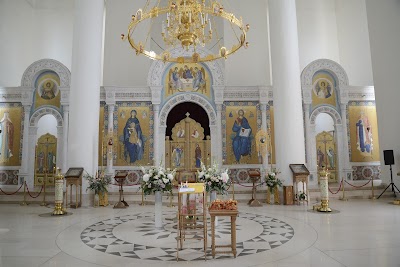
The Cathédrale de la Sainte-Trinité, often overshadowed by its more famous Parisian counterparts, stands as a testament to the city's architectural diversity. Consecrated in 1867, this often-overlooked gem boasts a unique blend of architectural styles, fusing Romanesque and Byzantine influences. Its striking facade, adorned with colorful mosaics and intricate sculptures, hints at the opulence within. Stepping inside, visitors are greeted by an ethereal expanse bathed in light streaming through magnificent stained-glass windows. These vibrant windows, some of the largest in Paris, depict scenes from the Old and New Testaments, casting a kaleidoscope of colors across the interior. Adding to its allure, the cathedral houses a magnificent pipe organ, renowned for its rich tones and impressive scale. This lesser-known Parisian treasure offers a moment of peaceful reflection amidst the bustling city, inviting contemplation of its artistic grandeur and often-overlooked place in Parisian history.Iconostasis
The iconostasis within the Cathédrale de la Sainte-Trinité in Paris presents a unique blend of Byzantine tradition and modern artistic expression. Designed by the renowned Russian iconographer Léonid Ouspensky, it departs from a strictly traditional arrangement, reflecting a contemporary interpretation of ancient forms. Crafted primarily from walnut wood, the iconostasis is notable for its relatively modest height, fostering a sense of openness and accessibility within the sanctuary. This design choice allows for a greater visual connection between the nave and the altar, emphasizing the shared experience of the liturgy. The icons themselves, painted by Ouspensky and his students, adhere to the stylistic conventions of the neo-canonical school, characterized by their vibrant colors, expressive brushwork, and theological depth. The arrangement of icons, while adhering to the fundamental hierarchical structure, also incorporates unique elements that reflect the specific dedication of the cathedral to the Holy Trinity. This interplay of tradition and innovation makes the iconostasis of the Cathédrale de la Sainte-Trinité a compelling example of the living tradition of Byzantine iconography within a modern context.Orthodox Christianity in France
The Cathédrale de la Sainte-Trinité in Paris stands as a powerful symbol of the growing presence of Orthodox Christianity in France. Consecrated in 2016, this modern cathedral serves as the seat of the Russian Orthodox Diocese of Chersonesus, highlighting the historical ties between France and Russia within the Orthodox faith. Its striking contemporary design, a departure from traditional Orthodox aesthetics, reflects the dynamic evolution of the religion within the French cultural landscape. The cathedral's presence has provided a spiritual home for France's burgeoning Orthodox community, which includes descendants of Russian emigrants from the early 20th century and more recent converts. Beyond religious services, the Cathédrale de la Sainte-Trinité has become a hub for cultural exchange, hosting exhibitions, concerts, and lectures that introduce the richness of Orthodox tradition to a wider French audience. Its location in Paris, a global crossroads, further emphasizes the cathedral's role in fostering dialogue and understanding between the Orthodox world and the West.
4
Musée d'Orsay
View on map
Audio Narrations
Introduction
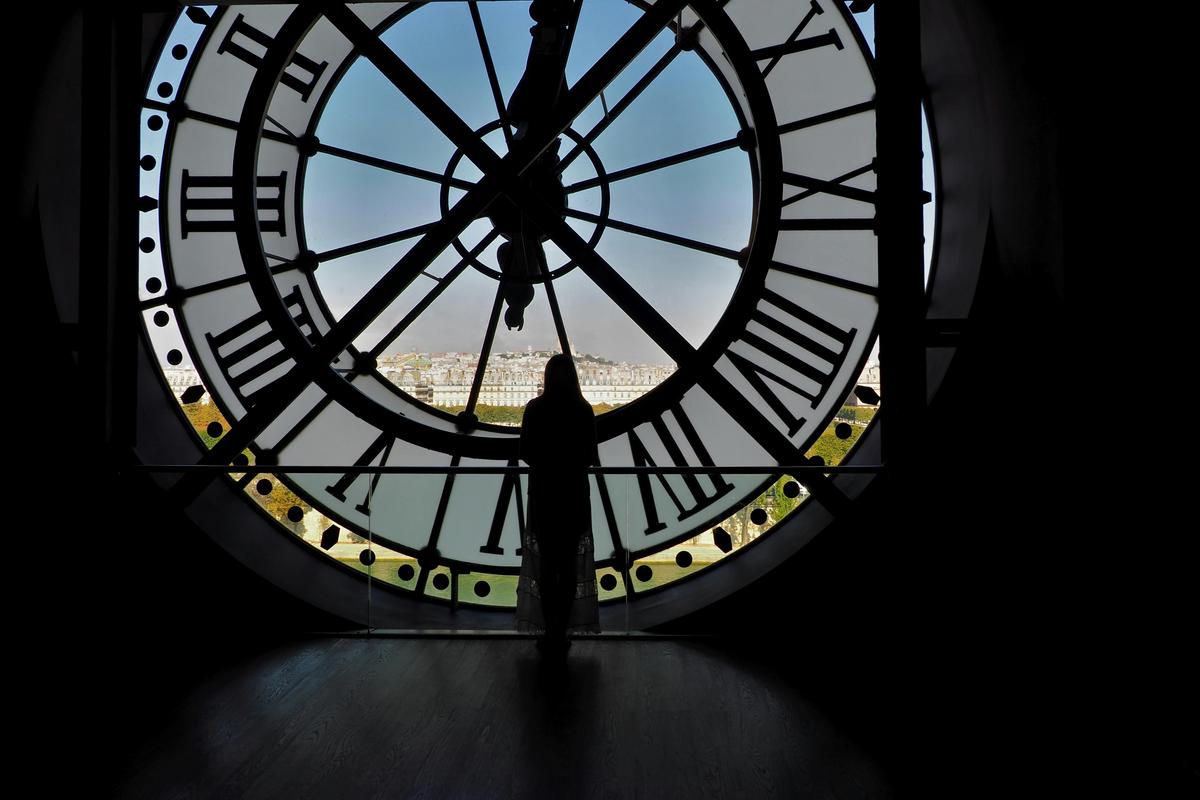
Housed in the grandiose former Gare d'Orsay, a Beaux-Arts railway station on the banks of the Seine, the Musée d'Orsay holds a special place in the Parisian art scene. It is renowned for housing the largest collection of Impressionist and post-Impressionist masterpieces globally. Stepping into the museum is akin to stepping into a late 19th-century Parisian salon, with its soaring ceilings, ornate clocks, and grand chandeliers. While renowned for iconic paintings like Manet's "Le Déjeuner sur l'herbe" and Van Gogh's self-portraits, the museum also boasts a fascinating collection of decorative arts, photography, and sculpture. A lesser-known treasure is the restaurant, housed in the former hotel dining room, with its opulent Belle Époque décor and breathtaking views of the Tuileries Garden. This juxtaposition of art and architecture, combined with the historical significance of the building itself, makes the Musée d'Orsay a truly captivating experience.Parisian Landmarks
The Musée d'Orsay holds a unique position amongst Parisian landmarks, not just for its impressive collection of Impressionist and Post-Impressionist art, but also for its remarkable history intertwined with the city's evolution. Once a bustling railway station, the Gare d'Orsay, its grand architecture with its soaring arched ceiling and ornate clock face, bore witness to the arrival of the Belle Epoque and the dawn of the 20th century. This architectural gem, facing the Seine and mirroring the Louvre across the river, narrowly escaped demolition in the 1970s. Its transformation into a museum dedicated to art predominantly from the period 1848 to 1914 adds a poignant layer to its story, reflecting the changing artistic landscape of Paris during a period of immense creativity. Standing as a testament to both the city's architectural prowess and its artistic legacy, the Musée d'Orsay offers a captivating journey through time, reminding visitors of Paris's constant evolution and its enduring spirit of reinvention.Post-Impressionism
The Musée d'Orsay in Paris offers an unparalleled journey into the heart of Post-Impressionism. Stepping beyond the confines of Impressionism, artists like Georges Seurat, Paul Signac, and Camille Pissarro, represented in the museum's collection through iconic works, sought a more structured and analytical approach to painting. Their exploration of color theory, evident in Seurat's pointillist masterpieces, and their emphasis on symbolic and emotional expression, as seen in Van Gogh's poignant landscapes and portraits, laid the groundwork for modern art. The Orsay's collection allows for an intimate exploration of this pivotal transition, showcasing not just the stylistic innovations but also the personal struggles and artistic dialogues that defined the movement. From the vibrant hues of Gauguin's Tahitian canvases to the melancholic beauty of Toulouse-Lautrec's depictions of Parisian nightlife, the Musée d'Orsay provides a nuanced understanding of Post-Impressionism's lasting impact on the trajectory of art history. The museum's unique setting, a former railway station, further enhances the experience, its industrial grandeur providing a striking backdrop for these revolutionary works.
5
Pont des Arts
View on map
Audio Narrations
Introduction
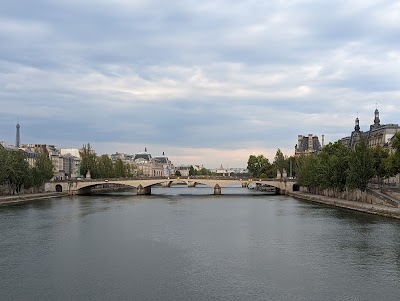
The Pont des Arts, a pedestrian bridge spanning the Seine in Paris, holds a unique place in the city's romantic landscape. Unlike its more ornate counterparts, this bridge captivates with its simplicity. Constructed in 1804 as one of the first metal bridges in Paris, it originally featured nine arches and served as a crucial link between the Louvre and the Institut de France. The bridge's history, however, is marked by both joy and sorrow. Severely damaged during World War II, it was later rebuilt in its current form with seven arches. For decades, the Pont des Arts was adorned with thousands of "love locks" attached by couples as a symbol of their commitment. This charming tradition, however, ultimately proved detrimental, adding significant weight to the bridge's structure. Today, the bridge stands free of locks, its metal railings replaced with transparent panels, offering unobstructed views of the Seine and the Parisian skyline. This transformation, while controversial, has returned the bridge to its original elegance, a testament to its enduring allure in a city that breathes romance.Literary Setting
The Pont des Arts, a pedestrian bridge spanning the Seine, holds a unique place in literary Paris. More than just a picturesque backdrop, it has served as a symbolic space for writers to explore themes of love, loss, and artistic expression. Its metal framework, once adorned with thousands of "love locks," has borne witness to countless whispered promises and poignant farewells, echoing the romanticism often found in French literature. The bridge's position, offering unparalleled views of iconic Parisian landmarks like the Louvre and Notre Dame, has provided fertile ground for writers seeking to capture the city's beauty and grandeur. Furthermore, the Pont des Arts has attracted artists and bohemians for centuries, making it a natural gathering place for literary characters seeking inspiration or a break from societal norms. Its presence in literature often reflects this artistic spirit, serving as a space where characters engage in philosophical discussions, artistic pursuits, or chance encounters that shape their destinies. The bridge's own history, including its near demolition and subsequent restoration, adds another layer of symbolism, reflecting themes of resilience and the enduring power of art and love.Seine River Views
From the Pont des Arts, the Seine unveils itself as a living tapestry of Parisian life. The iron latticework of the bridge frames postcard-worthy views of the river's languid flow, its surface reflecting the changing hues of the sky. Gaze east towards the Ile de la Cité, where the imposing silhouette of Notre Dame Cathedral rises above the riverbanks. As dusk descends, the cathedral's illuminated facade casts a shimmering reflection upon the water, a spectacle best admired from the bridge's vantage point. To the west, the Grand Palais's majestic glass dome glimmers in the distance, while charming houseboats, known as péniches, bob gently below, offering a glimpse into a tranquil life on the water. The rhythmic passing of the bateaux-mouches, the Seine's iconic riverboats, adds a touch of Parisian charm to the scene. The Pont des Arts, devoid of the weight of love locks, allows for unobstructed panoramic views, making it a privileged spot to witness the Seine's timeless beauty and its integral role in the heart of Paris.
6
Pont Neuf
View on map
Audio Narrations
Introduction
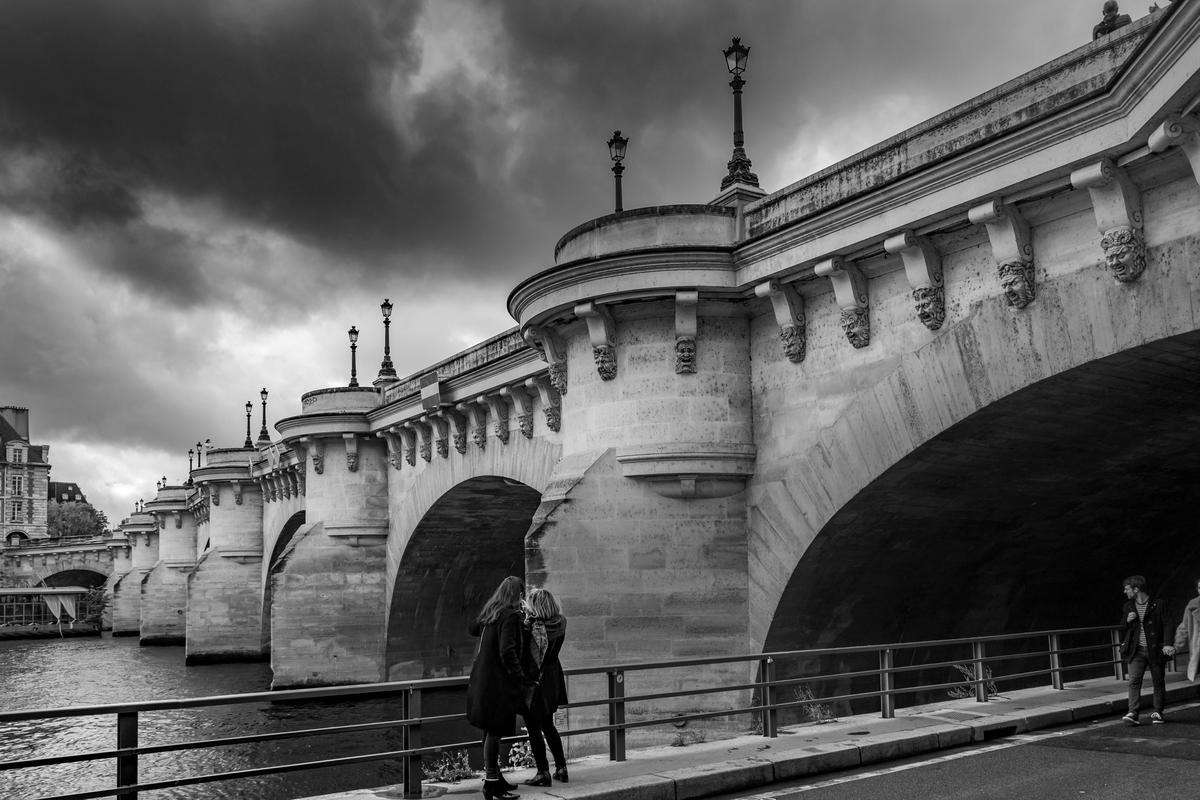
Spanning the Seine River at its narrowest point, the Pont Neuf stands as a testament to Parisian history, despite its name, which translates to "New Bridge." Completed in 1607, it was a marvel of urban planning, boasting the first Parisian bridge without houses crowding its length, allowing citizens and visitors alike to enjoy unobstructed views of the river and the city beyond. Its distinctive design, featuring twelve arches and adorned with 381 unique mascarons (grotesque masks), each representing a different character, quickly made it a beloved landmark. The bridge's central point, marked by an equestrian statue of King Henri IV, offers a breathtaking panorama of the Île de la Cité, the historical heart of Paris. Interestingly, the Pont Neuf was also a hub of commerce and social life, with vendors and entertainers setting up shop along its wide walkways. This bustling atmosphere, captured in numerous paintings and literary works, cemented the bridge's place in the Parisian imagination.Oldest Standing Bridge in Paris
Despite its name meaning "New Bridge," the Pont Neuf holds the distinguished title of the oldest standing bridge in Paris. Completed in 1607, its longevity is a testament to the ingenuity of its design and construction during the reign of King Henry IV. While other Parisian bridges succumbed to the ravages of time, floods, and the need for modernization, the Pont Neuf endured. Its sturdy structure, featuring twelve arches and fortified with protective breakwaters, proved resilient against the powerful currents of the Seine River. This resilience contrasts sharply with the fate of its predecessors, often built from wood or less durable materials, which proved ill-equipped to withstand the test of time. The Pont Neuf's enduring presence offers a tangible link to the Paris of the Renaissance, its stone arches echoing centuries of history and whispering tales of a bygone era. It stands as a symbol of architectural prowess and a silent witness to the city's ever-evolving urban landscape.Seine River Views
The Pont Neuf, despite its name meaning "New Bridge," offers timeless perspectives of the Seine River. From its central position spanning the Île de la Cité, the bridge unveils a captivating panorama of Parisian lifeblood. Upstream, the river flows towards verdant reflections of the Tuileries Garden, while downstream, the iconic silhouette of the Eiffel Tower pierces the horizon. The bridge's numerous arches, each framing a unique vista, showcase the ever-changing moods of the Seine. Observe the gentle sway of bateaux mouches as they glide beneath, their lights painting streaks across the water's surface at twilight. From this vantage point, one can witness the play of light and shadow on the river's surface, from the golden hues of sunrise reflecting off the Louvre's facade to the shimmering cityscape under a canopy of stars. The Pont Neuf's pedestrian walkways, devoid of traffic, provide an ideal setting to pause and absorb the captivating scenes of river commerce and leisure that have unfolded for centuries. It's a place where history and the vibrant pulse of Parisian life converge, best experienced with the gentle current of the Seine as a backdrop.
7
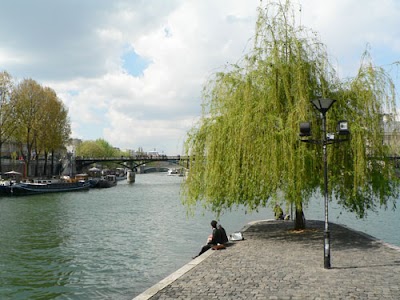
Square du Vert-Galant
View on map
Audio Narrations
Introduction
Nestled at the western tip of Île de la Cité, Square du Vert-Galant offers a unique Parisian experience. This intimate park, shaped like the bow of a ship, juts out into the Seine, providing unparalleled views of the river and its iconic bridges. Named after King Henry IV, known as "le Vert-Galant" (the Green Gallant) for his amorous nature, the square whispers tales of the past. A bronze statue of the king, erected in 1824, stands as a reminder of his reign. Descending a staircase from Pont Neuf, visitors are enveloped in a verdant haven, a stark contrast to the bustling city surrounding it. Weeping willows caress the water's edge, their branches swaying gently in the breeze. Benches tucked beneath the trees offer a secluded spot for contemplation or a romantic rendezvous. The square's charm lies in its simplicity, a tranquil escape amidst the grandeur of Paris. It's a place where one can almost hear the echoes of history, the murmur of the river, and the whispers of lovers.Île de la Cité History
Square du Vert-Galant, nestled at the western tip of Île de la Cité, whispers tales of the island's transformation. Once a tumultuous space prone to flooding and housing a bustling marketplace, the area underwent a dramatic shift during the reign of Henri IV, whose nickname, "Vert-Galant" (the Green Gallant), graces the square today. His vision for the island extended beyond its practical uses; he sought to elevate its status and beauty. The creation of the square was part of a larger project to reshape the western point of Île de la Cité, turning a previously neglected area into a place of leisure and grandeur. This reflected a broader trend in Parisian history, where the city's rulers sought to tame the Seine and mold the island to their liking, reflecting evolving tastes and ambitions. Today, the square's verdant foliage and romantic ambiance stand in stark contrast to the island's tumultuous past, offering a tranquil escape amidst the heart of Paris while echoing the enduring legacy of Henri IV and his mark on the city's historical landscape.Seine River Views
From the tip of Square du Vert-Galant, the Seine River unfurls in a captivating panorama. This intimate park, shaped like the bow of a ship, juts out into the river, offering unobstructed views both upstream and downstream. Gaze eastward towards the Ile de la Cité, where the majestic Notre Dame Cathedral dominates the skyline. The river shimmers, reflecting the changing light and the grandeur of Parisian architecture. As you turn west, the Eiffel Tower pierces the sky in the distance, a constant reminder of the city's iconic beauty. The gentle current carries with it traditional bateaux mouches, their presence adding a touch of Parisian charm to the scene. The Square itself, with its weeping willows and lush greenery, provides a sense of tranquility amidst the urban bustle, making it a perfect spot to pause and soak in the captivating views of the Seine. The combination of historical landmarks, architectural marvels, and the ever-changing river traffic creates a captivating spectacle, best appreciated from this unique vantage point.
8
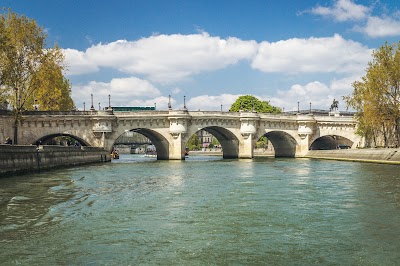
St. Michael's Bridge
View on map
Audio Narrations
Introduction
The Pont Saint-Michel, a stone arch bridge, strides across the Seine in Paris, connecting the Île de la Cité, the historical heart of the city, to the vibrant Latin Quarter. Built in 1857, it replaced a series of earlier bridges dating back to the 14th century, each bearing witness to the ebb and flow of Parisian life. The bridge is instantly recognizable by its distinctive ornamentation: six cast iron lampposts adorned with elaborate decorations and the letter "N," a subtle nod to Napoleon III, during whose reign the bridge was constructed. Atop its parapet, carved spandrels, each unique, depict fantastical creatures and floral motifs, adding a touch of whimsy to the otherwise imposing structure. From the bridge, one is afforded breathtaking views of Notre Dame Cathedral, its spire piercing the Parisian sky, and the verdant Square du Vert-Galant, a small island at the western tip of Île de la Cité, often overlooked by visitors. The Pont Saint-Michel, a testament to Parisian history and architectural prowess, offers a unique vantage point from which to contemplate the city's enduring beauty.Seine River Bridges
St. Michael's Bridge stands out among its Seine River brethren with a unique architectural distinction: it is one of only two bridges in Paris built without a central arch. This design choice, a response to the era's burgeoning river traffic, allows for unobstructed views up and down the Seine. This lack of a central arch, however, necessitated innovative engineering. St. Michael's Bridge boasts the widest metal arch ever constructed at the time of its completion, a testament to the ambition of its design. This engineering feat, while impressive, is subtly hidden beneath the bridge's ornate decoration. The bridge is adorned with numerous sculptures and lampposts, a characteristic shared with many Seine River bridges. However, St. Michael's Bridge distinguishes itself with a unique dedication to the history of France. Each of its lampposts is crowned with a gilded "N," a tribute to Napoleon Bonaparte, while the bridge's stonework incorporates remnants from demolished structures of the French Revolution, silently echoing the city's tumultuous past.Literary Landmarks
While not a literary landmark in the traditional sense of a bookshop or writer's haunt, St. Michael's Bridge holds a unique place in Paris's literary history. Its location, a stone's throw from the Latin Quarter, placed it near the heart of Paris's intellectual and artistic life. For centuries, the bridge bustled with booksellers, their stalls lining its sides, making it a popular destination for bibliophiles. This vibrant trade earned the bridge the nickname "Pont Neuf but for books." Writers and thinkers, from the university and beyond, would have undoubtedly crossed this bridge, their minds brimming with ideas, perhaps stopping to browse the booksellers' wares. Although the booksellers are long gone, replaced by souvenir stalls and street performers, echoes of this literary heritage linger. Imagine the ghost of a young Hemingway, fresh off the train from America, pausing on the bridge, gazing at Notre Dame, and feeling the first stirrings of inspiration that would later fuel his Parisian adventures. St. Michael's Bridge stands as a silent witness to the ebb and flow of literary life that has always characterized the City of Lights.
9
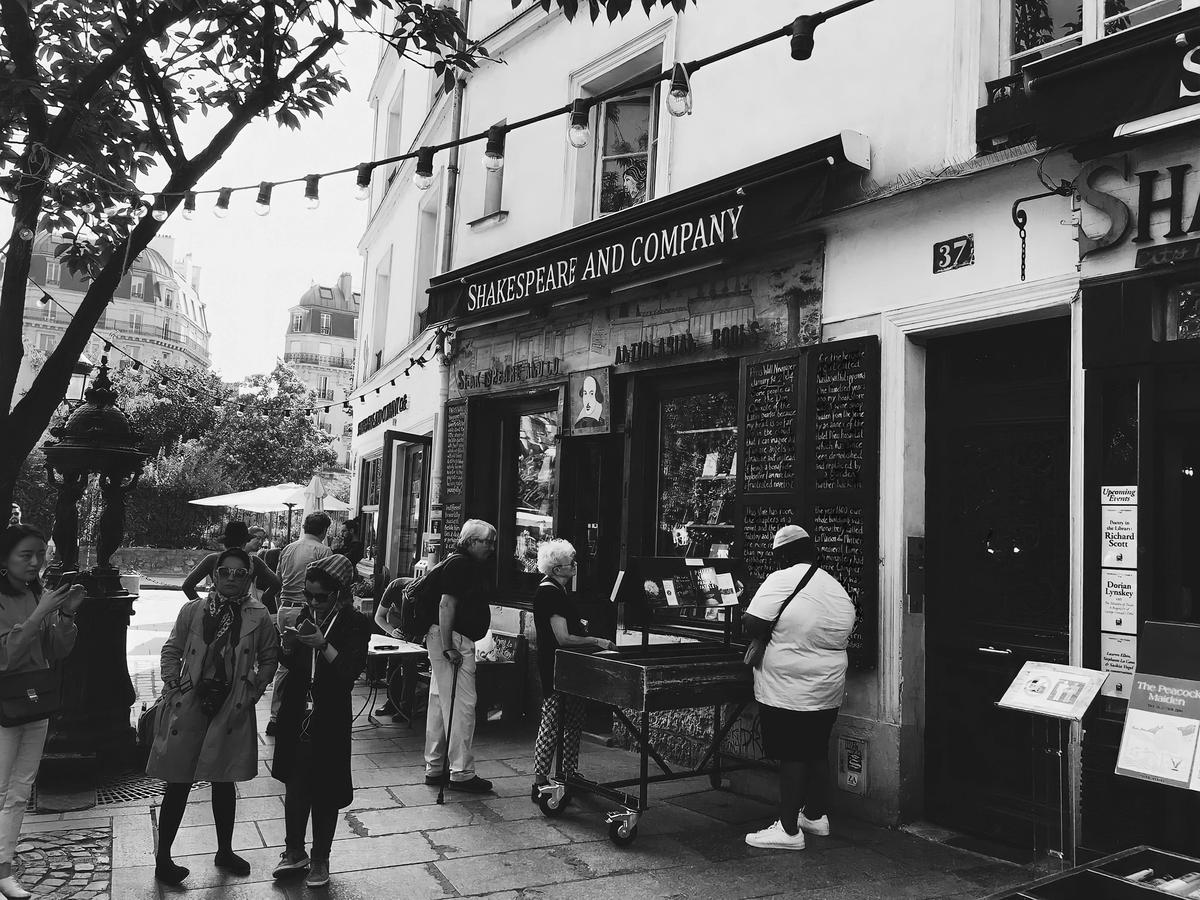
Shakespeare and Company
View on map
Audio Narrations
Introduction
Nestled on the Left Bank of the Seine, a stone's throw from Notre-Dame, Shakespeare and Company is more than a mere bookshop; it's a literary haven with a captivating past. Founded in 1951 by American expatriate George Whitman, the shop quickly became a sanctuary for Beat Generation writers like Allen Ginsberg and William S. Burroughs. Its creaking floorboards and labyrinthine shelves, overflowing with new and secondhand books, whisper tales of countless literary gatherings and late-night philosophical debates. Aspiring writers can still experience the shop's bohemian legacy through its tradition of offering aspiring writers a bed and workspace in exchange for helping out in the shop, a tradition that has fostered a unique and ever-evolving literary community within its walls. The shop's charmingly chaotic atmosphere, imbued with the spirit of literary giants, continues to inspire booklovers and dreamers from around the world, solidifying its place as a true Parisian institution.Bohemian Legacy
Shakespeare and Company in Paris is more than just a bookshop; it's a living testament to the enduring spirit of the Bohemian legacy. Founded in 1951 by George Whitman, the shop echoes the free-spirited, intellectual atmosphere of Sylvia Beach's original Shakespeare and Company, a haven for Hemingway and Fitzgerald in the 1920s. Whitman, a kindred spirit to Beach, envisioned a literary sanctuary, and his shop quickly became a magnet for wandering writers, poets, and artists. This legacy continues to this day. The shop's creaky floorboards and overflowing shelves whisper tales of countless aspiring writers who sought refuge, inspiration, and the camaraderie of fellow artists within its walls. Many stayed as "Tumbleweeds," the affectionate term for volunteers who help run the shop in exchange for a bed and a chance to immerse themselves in this unique literary haven. This tradition, a tangible link to the bohemian ideals of community and creative exchange, keeps the spirit of the Beat Generation alive. Shakespeare and Company stands as a beacon of bohemian ideals, a place where literature and life intertwine, and the pursuit of art transcends generations.Modernist Movement
While not directly born from the Modernist Movement, Shakespeare and Company in Paris became a haven for its proponents, embodying the movement's spirit in a tangible way. George Whitman, the bookstore's founder, shared the Modernists' disdain for rigid tradition and embraced their experimental nature. The bookstore became a microcosm of this ethos, a place where established literary giants sat alongside aspiring writers, their conversations a tapestry of unconventional ideas and artistic exploration. The very layout of the bookstore, a labyrinthine collection of bookshelves and cozy nooks, mirrored the Modernist rejection of structured, linear thinking. It encouraged exploration and serendipitous discovery, much like the stream-of-consciousness narratives favored by Modernist writers. Shakespeare and Company, with its open-door policy for struggling artists and writers, embodied the movement's social conscience, offering refuge and fostering a community of creative minds challenging the established norms. The bookstore became a living testament to the Modernist spirit, a place where art and life intertwined, and the written word served as a catalyst for change and innovation.
10
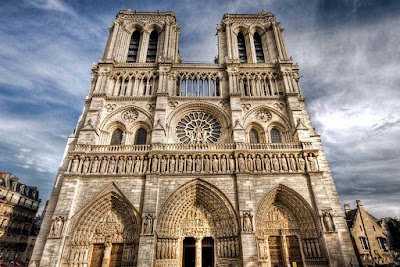
Cathédrale Notre-Dame de Paris
View on map
Audio Narrations
Introduction
Notre-Dame de Paris, a masterpiece of French Gothic architecture, rises from the Île de la Cité, an island nestled in the heart of the Seine. Its construction, spanning from 1163 to 1345, reflects the evolving styles of the era, evident in the transition from Romanesque to Gothic elements. While the cathedral's iconic towers and stained glass windows captivate all who visit, a closer look reveals fascinating details often overlooked. Gargoyles, those fantastical creatures perched atop the edifice, served not just as decorative elements but as functional waterspouts. Deep within the cathedral's treasury lies a venerated relic – the purported Crown of Thorns, believed to have been worn by Jesus Christ. The cathedral's south rose window, a breathtaking spectacle of stained glass, miraculously survived the devastating fire of 2019, its vibrant hues still casting a mesmerizing glow upon the interior.Gargoyles and Chimeras
Notre Dame's gargoyles and chimeras are far more than decorative flourishes. While the rain-spouting gargoyles, with their grotesque visages, served a practical purpose, the chimeras are purely decorative, their fantastical forms perched high on towers and rooftops. These mythical beasts, a blend of different animals, were never intended to ward off evil, as some believe. Instead, they served as symbolic protectors of the cathedral and reminders of the line between the earthly and the divine. Look closely, and you'll find a menagerie of creatures: eagle-headed griffins, winged demons, and the fearsome tarasque, a dragon-like beast from Provençal legend. One of the most famous chimeras, the "Stryge," perches atop the south tower, its elbows resting on the parapet, seemingly contemplating the city below. These stone creatures, sculpted from blocks of limestone, are not original to the cathedral. They were added during the 19th-century restoration led by Viollet-le-Duc, who drew inspiration from medieval bestiaries and his own imagination. Despite their relatively recent addition, the gargoyles and chimeras of Notre Dame have become integral to the cathedral's identity, captivating visitors with their intricate details and fantastical forms.Religious Relic
Notre-Dame de Paris, beyond its architectural grandeur, has been a sanctuary for sacred relics for centuries. Most renowned is the Crown of Thorns, believed to have been placed upon Jesus Christ during his crucifixion. Brought to Paris in the 13th century, this relic, crafted from rushes, is a poignant symbol of Christ's suffering and is deeply venerated by the faithful. Notre-Dame also houses a fragment of the True Cross, upon which Christ was crucified, and a nail from the crucifixion itself. These relics, displayed in ornate reliquaries, are brought out for veneration on specific holy days, drawing pilgrims from around the world. The presence of these relics elevates Notre-Dame beyond a magnificent cathedral; it transforms it into a sacred repository, a tangible link to the life and sacrifice of Jesus Christ. This spiritual dimension adds another layer of meaning to the experience of visiting Notre-Dame, inviting contemplation and reflection on faith and history.
11
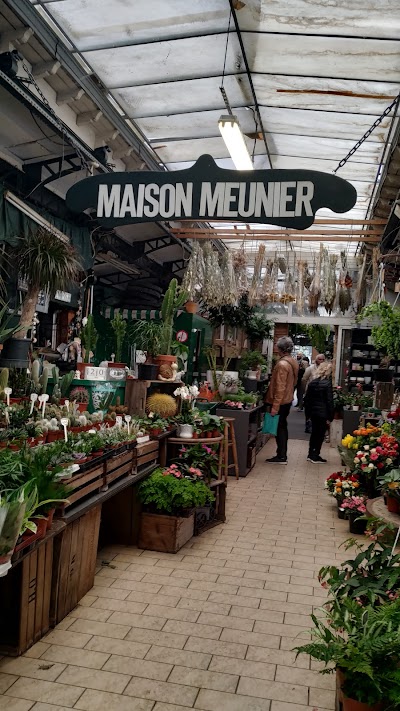
Marché aux Fleurs Reine Elizabeth II
View on map
Audio Narrations
Introduction
Nestled within the heart of Paris, the Marché aux Fleurs Reine Elizabeth II offers a sensory journey through vibrant colors and intoxicating scents. More than just a flower market, it stands as a testament to Parisian history, named after Queen Elizabeth II following her state visit in 1957. The market's wrought-iron pavilions, reminiscent of the 19th century, house a captivating array of blooms. Alongside the expected roses, tulips, and lilies, one discovers exotic orchids, delicate peonies, and even carnivorous plants tucked away in corners. This haven for horticultural enthusiasts also caters to bird lovers with a dedicated section featuring a symphony of chirping finches, canaries, and budgies. The Marché aux Fleurs Reine Elizabeth II is a testament to the Parisian love affair with beauty, both cultivated and wild, offering a glimpse into the city's enduring connection with nature.Horticultural Heritage
The Marché aux Fleurs Reine Elizabeth II stands as a vibrant testament to Paris's enduring horticultural heritage. For centuries, this site has served as a hub for plant trade, reflecting evolving horticultural trends and practices. The market's presence since the 17th century speaks to the longstanding French passion for gardens and cultivated beauty. Within its bustling aisles, one finds not only a vast array of flora, but also echoes of historical plant introductions. Many species, once considered exotic and rare, first entered the French horticultural scene through this very market, forever altering the landscape of Parisian gardens and parks. The generations of vendors, each contributing their expertise and passion, embody a living lineage of horticultural knowledge. Their practices, passed down through families or apprenticeships, preserve traditional cultivation techniques and plant varieties that might otherwise be lost. The Marché aux Fleurs Reine Elizabeth II, therefore, is more than just a marketplace; it's a living museum of horticultural history, where the past and present intertwine to inspire both seasoned gardeners and casual admirers alike.Architectural Landmark
While not a standalone architectural marvel, the Marché aux Fleurs Reine Elizabeth II holds a unique position in Parisian cityscape. Its integration into the historical fabric of Paris, nestled near the iconic Notre Dame Cathedral and the Seine River, makes it an intriguing element of the city's architectural tapestry. The market's design, a blend of functional metal structures and open-air stalls, provides a stark yet harmonious contrast to the grand, classical architecture of its surroundings. This juxtaposition highlights the evolution of Parisian urban design, showcasing the adaptation of public spaces to meet the city's changing needs while respecting its historical context. The market's metal framework, a common feature in 19th-century industrial architecture, adds a touch of industrial-era aesthetic to the heart of Paris, subtly reminding visitors of the city's multifaceted architectural heritage. The open layout of the stalls, a deliberate design choice, allows the vibrant colors and textures of the flowers to take center stage, turning the market itself into a dynamic, organic architectural element that changes with the seasons.
12
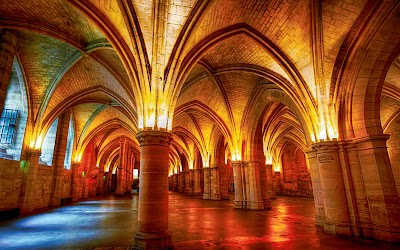
Conciergerie
View on map
Audio Narrations
Introduction
The Conciergerie, a formidable medieval palace turned chilling prison, stands as a stark reminder of the French Revolution's turbulent years. Located on the Île de la Cité, its Gothic architecture, with its imposing towers and fortified walls, belies its grim history. Once the residence of French kings, it was within these very walls that Marie Antoinette, the last Queen of France, spent her final days before her execution. Visitors can explore her reconstructed cell, a poignant space furnished with sparse belongings, offering a glimpse into the harsh realities of imprisonment during that era. Beyond its historical significance, the Conciergerie boasts remarkable architectural features, including the Salle des Gens d'Armes, a vast hall with soaring vaulted ceilings, a testament to the building's former grandeur. The Salle des Gardes, with its massive central pillar and ribbed vaults, further underscores the building's medieval origins. The Conciergerie's transformation from a royal palace to a notorious prison, and its eventual recognition as a UNESCO World Heritage site, reflects the complex and often tumultuous history of Paris itself.French Revolution
During the French Revolution, the Conciergerie, once a medieval palace, transformed into a stark symbol of the Reign of Terror. Within its walls, the Revolutionary Tribunal, a symbol of swift and often brutal justice, held court. Thousands, from aristocrats to revolutionaries themselves, faced accusations of counter-revolutionary activities within its somber chambers. The accused, stripped of their former lives and identities, were crammed into overcrowded cells, awaiting their fate. Among the most famous prisoners held within the Conciergerie was Marie Antoinette, the former queen. Imprisoned after the fall of the monarchy, she endured deplorable conditions and constant surveillance before her execution in 1793. Her memory lingers, particularly in the haunting reconstruction of her cell, a poignant reminder of the revolution's human cost. The Conciergerie stands as a chilling testament to this tumultuous period, its very stones echoing with the whispers of fear, despair, and the inexorable wheels of revolutionary justice.Seine River
The Seine River whispers tales of the Conciergerie, its dark stone facade reflected in the water's flow. This imposing edifice, once a royal palace, later a notorious prison, stands on the Île de la Cité, embraced by the Seine's two arms. For centuries, prisoners arrived by boat, passing beneath the Pont au Change, their fate sealed as they glimpsed the Conciergerie's forbidding towers. Imagine the despairing faces pressed against barred windows, catching a final glimpse of freedom on the river below. The Seine, witness to both regal processions and revolutionary turmoil, bore witness to the comings and goings of the Conciergerie's inhabitants. Even today, the rhythmic lapping of the Seine against the Conciergerie's foundations evokes the echoes of its tumultuous past, a poignant reminder of the site's layered history. A walk along the riverbanks, with the Conciergerie's imposing silhouette reflected in the water, offers a unique perspective on this historical landmark, connecting its somber past to the vibrant cityscape of present-day Paris.
Experience the Full Tour
Download the DocentPro app to access all tour stops, complete audio narrations in multiple languages, offline maps, and interactive features.