
Stanford University Self-Guided Audio Campus Tour

Walking Tour

7.0 km (4.3 miles)

1h 35min travel time

19 Stops

Stanford, United States
Welcome to Stanford University, one of the world’s leading educational institutions. Nestled in the heart of Silicon Valley, Stanford has been a hub of innovation, learning, and research since its founding in 1885. As you explore this iconic campus, you'll discover the blend of rich history, architectural beauty, and cutting-edge advancements that have shaped both the university and the world. Let this tour guide you through the highlights and hidden gems of Stanford, where tradition meets the future.

Tour Stops
1
Stanford Oval
View on map
Audio Narrations
Introduction
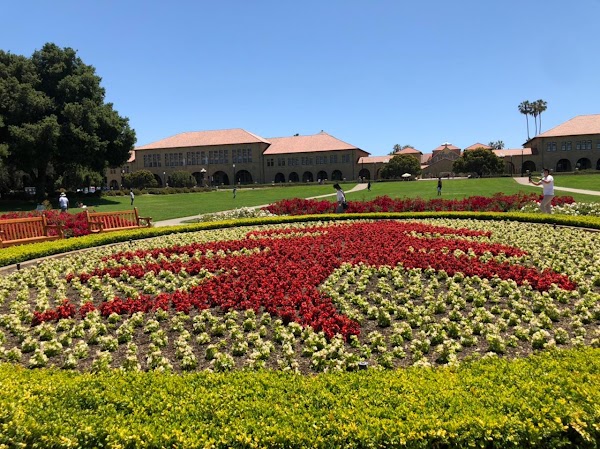
Welcome to Stanford University! You are at the iconic Oval, named after its distinct oval shape. This beautifully landscaped space lies at the heart of Stanford’s campus and serves as a grand entrance to the university, offering a panoramic view of the Main Quad, one of Stanford’s most historically significant areas. The Oval’s central location symbolizes the interconnectedness of academic life, with many key buildings and landmarks just a short walk away. It’s not only a gathering place for students and visitors but also a representation of the university’s balance between tradition and innovation.Leland and Jane Stanford
Stanford University was founded by Leland and Jane Stanford as a tribute to their only son, Leland Stanford Jr., who tragically passed away at the age of 15 while a trip to Italy. Leland Stanford, born into a prosperous farming family in New York, became a successful businessman and politician, playing a key role in building the Central Pacific Railroad. Heartbroken by their loss, the Stanfords decided to create a university in their son’s memory, famously stating, “The children of California shall be our children.” In 1885, they dedicated their fortune to establishing an institution that would foster education and opportunity for future generations. Today, Stanford University stands as a living legacy to their son, offering world-class education and driving innovation for students around the globe.The master plan
Stanford University’s campus was designed through a creative collaboration between Leland Stanford and Frederick Law Olmsted, the landscape architect behind New York’s Central Park. In 1886, Olmsted came to the Stanfords’ Palo Alto Farm to begin planning, working closely with Leland on every major decision, from the location to the orientation of the Main Quad. Their partnership, though not without compromise, resulted in a campus master plan that emphasized openness and monumental scale, with long sight lines like the iconic Palm Drive leading to the Oval and the expansive 17-acre Main Quad. This innovative design was a departure from traditional university layouts and has influenced Stanford’s expansion over the years, with newer areas like the Science and Engineering Quad and the Arts District continuing to reflect the openness and vision of Olmsted’s original plan.
2
Building 420
View on map
Audio Narrations
Introduction
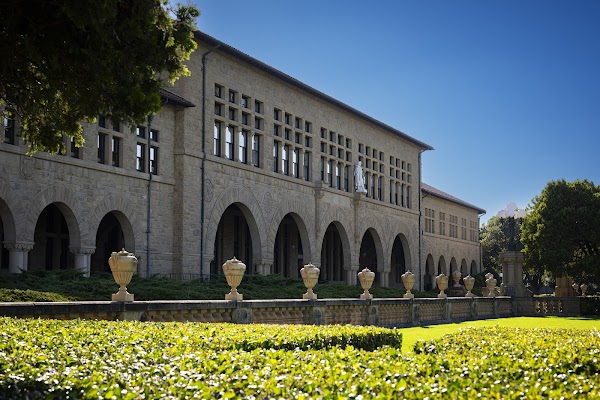
Before we head to the Memorial Quad, let’s take a quick stop at Building 420. This building, located on the edge of the Main Quad, houses the Department of Psychology, one of Stanford’s oldest and most distinguished departments. Stanford has a rich history of groundbreaking research in psychology, and Building 420 has been central to many influential studies in human behavior, cognition, and neuroscience.The building in search for its name
Previously, Building 420 was known as Jordan Hall, named after Stanford’s first president, David Starr Jordan. The building had two statues on either side of the entrance, representing Louis Agassiz (Left) and Alexander von Humboldt (Right), both prominent 19th-century scientists. Agassiz was a renowned Swiss naturalist, and von Humboldt was a famous German explorer and naturalist. These statues symbolized the university’s dedication to scientific exploration and intellectual discovery. Maybe what you see today looks more like this picture. What happened to the signage and Agassiz’s statue? Stanford decided to remove the name “Jordan Hall” and the statue of Louis Agassiz as part of its effort to reconsider its historical legacy. David Starr Jordan supported eugenics, promoting selective breeding based on flawed ideas of genetic superiority. Similarly, Agassiz held controversial views on race and advocated for scientific racism. In response, Stanford renamed the building “Building 420” and removed the statues, reflecting the university’s commitment to inclusivity and reevaluating the figures it honors.Why Fish Don't Exist
If you want to know more about the founding history of Stanford University and the complicated story of David Starr Jordan and Jane Stanford, you might want to check out this book: “Why Fish Don’t Exist” by Lulu Miller intriguing. The book delves into the life of David Starr Jordan, exploring his contributions to science, especially in taxonomy. However, it also critiques his belief in eugenics, which played a role in the removal of his name from a key campus building. Through Jordan’s story, Miller offers a deeper reflection on the tension between order and chaos, providing fresh insight into Jordan’s complex legacy and its lasting impact on Stanford’s history.
3
Memorial Court (Quad)
View on map
Memorial Court
Audio Narrations
Introduction
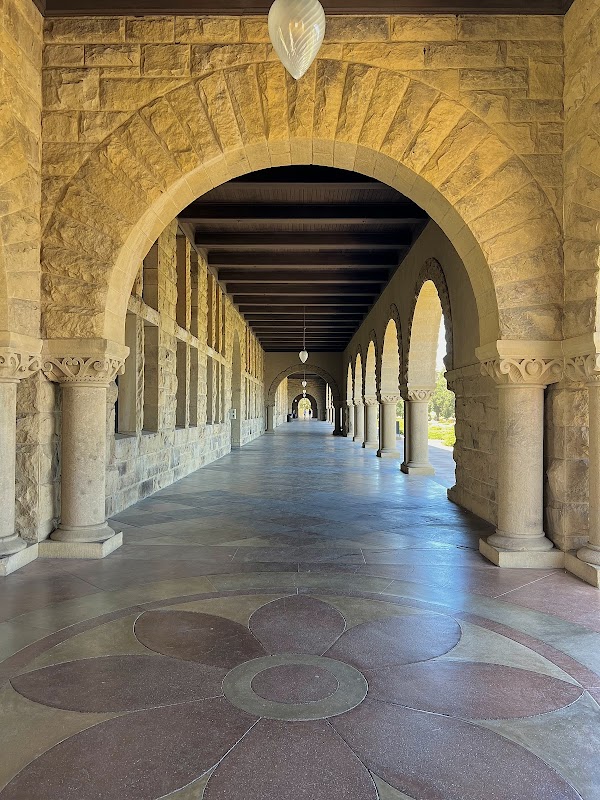
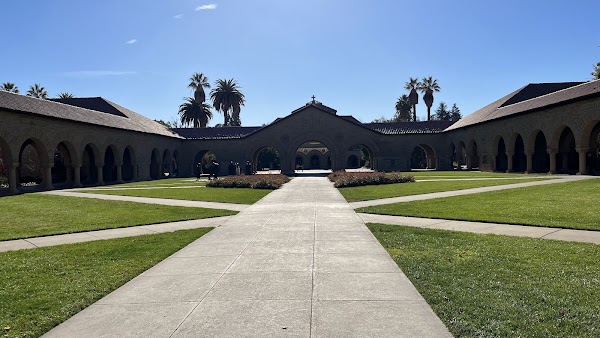
The Memorial Quad at Stanford is one of the university’s most iconic areas, connecting key academic buildings and featuring stunning Romanesque Revival architecture. Framed by sandstone arches and colonnades, it leads to the heart of campus, where the Memorial Church stands as a tribute to Leland Stanford Jr. The Quad is not just a historical focal point but also a vibrant space that blends Stanford’s architectural beauty with its academic and community life, serving as a central hub for students and visitors alike.The Burghers of Calais
The Burghers of Calais, a sculpture by Auguste Rodin, tells the story of six French citizens who, during the Hundred Years’ War, offered themselves as hostages to save their city, Calais, from destruction by the English. The burghers expected to be executed, but their lives were spared. The statue depicts their bravery and sacrifice. At Stanford’s Memorial Quad, the sculpture serves as a symbol of selflessness, courage, and the human capacity for sacrifice, aligning with the university’s values of leadership and service.Arches and Pillars
Stanford’s Memorial Quad was designed in the Romanesque Revival style, which is all about strong, rounded arches and sturdy columns. This style was chosen to give the university a timeless feel, connecting it to the traditions of ancient learning while still looking forward to the future. The pillars create a sense of openness and grandeur, while the natural stone blends beautifully with the surrounding landscape. The idea was to make Stanford look both solid and welcoming—like it’s a place that’s been here for ages and will continue to inspire generations to come.
4
Memorial Church
View on map
Audio Narrations
Introduction
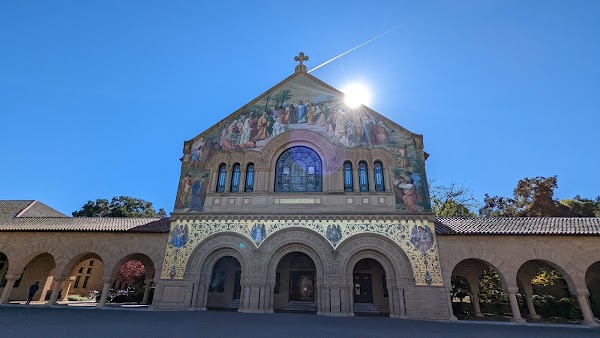
Memorial Church, often referred to as “MemChu,” stands at the heart of Stanford University’s campus as a symbol of the university’s spiritual heritage and commitment to fostering community. One of the special aspects of Memorial Church is its status as one of the first non-denominational churches in the country, reflecting the inclusive vision of Jane Stanford. Unlike many traditional churches, it welcomes people of all faiths and backgrounds, symbolizing unity and spiritual openness. Whether you’re here for a service, a concert, or simply to admire its beauty, Memorial Church remains a cherished sanctuary on campus, blending history, art, and spirituality.History
Memorial Church was commissioned by Jane Stanford in 1903 as a tribute to her late husband, Leland Stanford, the university’s co-founder. Designed to be the centerpiece of the Stanford campus, the church reflects Jane’s deep religious convictions and desire for it to serve as a spiritual home for all, regardless of faith. The original building looked quite different from what it looks like now. The building was severely damaged in the 1906 San Francisco earthquake, but it was rebuilt and restored over the years, most notably after another earthquake in 1989. Today, Memorial Church stands as a historic and architectural gem, symbolizing the Stanford family’s enduring legacy.The Sermon on the Mount
The exterior mosaic of Memorial Church is one of its most striking and iconic features. Covering the entire façade of the church, the mosaic depicts a vibrant biblical scene known as “The Sermon on the Mount.” It shows Jesus surrounded by a diverse group of followers, symbolizing the church’s message of inclusivity and community. The mosaic was created by Italian artisans and consists of thousands of colorful tiles, giving it a stunning, intricate detail that catches the light beautifully. This artwork, set against the church’s sandstone exterior, reflects both the religious and artistic vision Jane Stanford had for the church, making it a centerpiece of the Stanford campus.
5
Tanner Fountain
View on map
Audio Narrations
Introduction
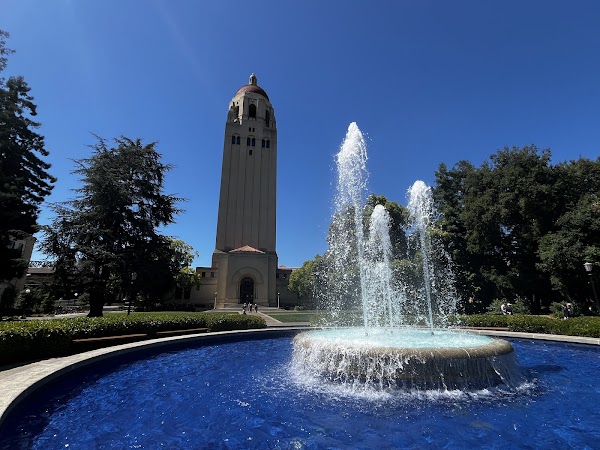
Tanner Fountain, installed in 1977 between Hoover Tower and Memorial Auditorium, was donated by Obert Tanner and his wife to honor their son. Its design is simple yet elegant, featuring a circular arrangement with flowing water, creating a serene atmosphere on Stanford’s campus. With landscaping designed to integrate seamlessly into its surroundings, the fountain offers a peaceful space for reflection amidst the bustling university life. It’s a place where students and visitors alike can relax and enjoy the tranquility.Obert C. Tanner
Obert Clark Tanner (1904–1993) was a University of Utah professor, philanthropist, and founder of O.C. Tanner Co., which he started by selling class rings in 1927. The company grew to specialize in employee recognition services. Before becoming a philosophy professor, Tanner taught Religious Studies at Stanford from 1939 to 1944. Throughout his life, he funded numerous educational and public art projects. Tanner has donated more than forty fountains to hospitals, college, universities, and communities.Fountain Hopping
There is one more reason why this fountain is famous - it is one of Fountain Hopping spot! Fountain hopping is a beloved Stanford tradition where students splash from fountain to fountain across campus. Fountain hopping at Stanford began as a way for students to let loose and break free from the academic grind. With so many fountains across campus, students started hopping between them as a fun, spontaneous activity. It became a kind of Stanford rite of passage, offering a playful escape from stress and creating a sense of camaraderie. Over time, it evolved into an informal but cherished tradition, where students come together to explore campus in a carefree, joyful way—sometimes even taking part in themed or late-night fountain hopping events.
6
Hoover Tower
View on map
Audio Narrations
Introduction
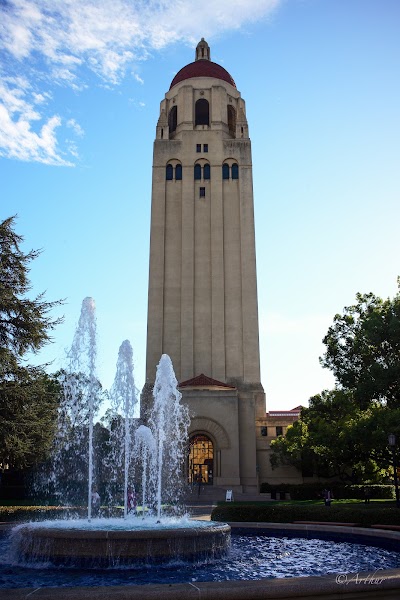
Hoover Tower is one of Stanford University’s most iconic landmarks, rising 285 feet above campus. The construction was overseen by the architect of Coit Tower, Arthur Brown Jr. The structure was dedicated in 1941 for the university's 50th anniversary and houses the Hoover Institution Library and Archives, a renowned research center focused on political, economic, and social issues. The tower’s observation deck offers stunning views of the Stanford campus and the surrounding Bay Area. Named after former U.S. President Herbert Hoover, a Stanford alumnus, the tower stands as a symbol of both academic excellence and historical significance.Who is President Hoover?
Herbert Hoover was the 31st President of the United States, serving from 1929 to 1933. A Stanford alumnus, Hoover was a successful mining engineer and humanitarian before entering politics. He led relief efforts during World War I, earning global recognition for his work feeding millions in war-torn Europe. However, his presidency was overshadowed by the onset of the Great Depression. After leaving office, Hoover remained active in public service, contributing to historical research and global relief efforts, including his founding of the Hoover Institution at Stanford.Hoover Institution
The Hoover Institution is a public policy think tank and research center at Stanford University, founded in 1919 by President Herbert Hoover. It focuses on research related to political, economic, and social issues, with a particular emphasis on individual freedom, limited government, and free markets. The institution houses extensive archives, including materials from prominent world leaders, and aims to generate knowledge that promotes peace, prosperity, and human freedom. Its library and research facilities are world-renowned, attracting scholars from around the globe.
7
Knight Management Center
View on map
Audio Narrations
Introduction
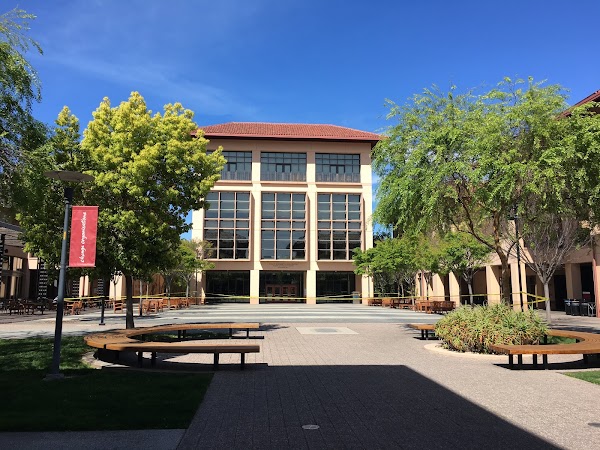
The Knight Management Center, home to the Stanford Graduate School of Business (GSB), is a hub of innovation and leadership development. Opened in 2011, this state-of-the-art facility was designed to foster collaboration, creativity, and a sense of community among future business leaders. Its architecture combines sustainability with functionality, featuring energy-efficient systems and open, flexible spaces that encourage interaction among students, faculty, and industry professionals. The complex houses classrooms, conference rooms, and study areas, providing a vibrant environment for students pursuing MBA and executive education programs. As part of Stanford’s rich academic landscape, the Knight Management Center reflects the university's commitment to shaping ethical, forward-thinking leaders for the global business world.Just Do It.
The "Knight" in the Knight Management Center refers to Phil Knight, the co-founder and former CEO of Nike. Phil Knight is a Stanford Graduate School of Business alumnus, having earned his MBA from Stanford in 1962. He has been a major supporter of the university, and the Knight Management Center was named in recognition of his generous donation, which helped fund the construction of the business school complex. His contributions reflect his belief in the importance of education and leadership development, which aligns with the mission of Stanford GSB.Stanford Startup Garage
Have you wondered how come so many great startups started from Stanford? Programs like Stanford’s Startup Garage is a highly regarded, hands-on course offered at the Graduate School of Business (GSB) that guides students through the process of launching a startup. Designed for those interested in entrepreneurship, the course provides a structured environment where students work in teams to develop a business idea, prototype it, and eventually pitch their startup to real investors. The course covers everything from identifying a market opportunity and developing a product, to understanding the financials and business models necessary for scaling a venture. With mentorship from experienced entrepreneurs, investors, and faculty, Startup Garage is an immersive experience that combines theory with practical application, helping future founders navigate the complexities of launching a successful business.
8
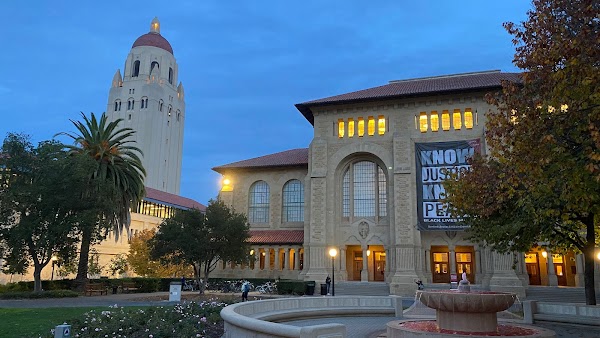
Cecil H Green Library
View on map
Audio Narrations
Introduction
Welcome to Stanford’s Cecil H. Green Library, the largest library on campus and a hub for students, researchers, and curious minds! Specializing in humanities and social sciences, Green Library offers vast resources, from rare books in Special Collections to modern tools in the Media & Microtext Center. Green Library holds an impressive 4 million volumes, primarily focused on humanities and social sciences. For more specialized subjects, Stanford has other libraries around campus dedicated to areas like Business, Law, Art, Medicine, and Engineering, ensuring that each field has its own rich collection and resources. And yes, visitors can enter the library with their ID!History
Cecil H. Green Library’s history dates back to 1919, when Jane Stanford, the co-founder of Stanford University, held a competition to determine the design for the campus's new main library. Architects Bakewell and Brown, known for their work on other Stanford landmarks, won the competition with a classical design. Originally called the Main Library, it served as the heart of academic life at Stanford for decades. In the 1980s, following a generous donation from Cecil H. Green, a co-founder of Texas Instruments and a Stanford supporter, the library underwent a major expansion. This included the addition of the East Wing, which was built to modernize the library and provide more space for collections. In recognition of Green’s contributions, the library was renamed in his honor.Lane Library Reading Room (Room 207)
The Lane Reading Room, located in Stanford’s Cecil H. Green Library, is one of the most iconic spaces on campus. Known for its grand vaulted ceilings, arched windows, and classical design, it offers a serene environment perfect for focused study. The room is named after Charles Lane, Jane Stanford’s brother, and is a blend of historical significance and academic utility. Long wooden tables and soft lighting create an inviting atmosphere, while portraits of Stanford’s founders adorn the walls, connecting students to the university’s history. Its peaceful ambiance makes it a favorite for those seeking concentration and inspiration in their work. The Lane Reading Room stands out not just for its beauty but for its function as a space where students can engage deeply with their studies in a quiet, reflective environment. It’s a place where tradition meets academic rigor, making it a treasured part of Stanford’s library system.
9
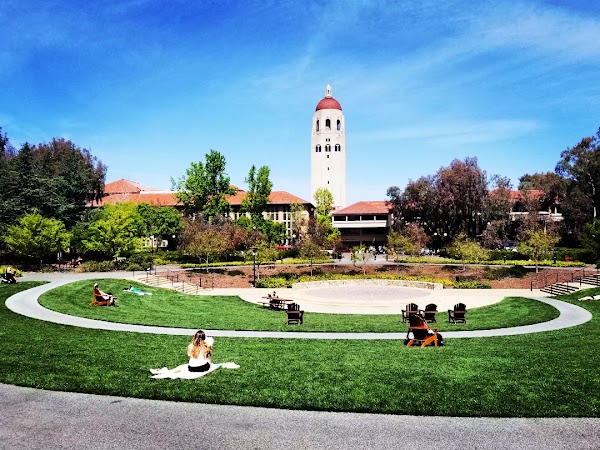
Meyer Green
View on map
Audio Narrations
Introduction
Meyer Green at Stanford is a popular outdoor space located on the former site of Meyer Library. Transformed into a lush, open lawn with trees and seating areas, it serves as a central spot for relaxation, studying, and socializing. Students often gather here for casual activities, picnics, or outdoor events. Its wide, grassy area and nearby amenities make it an inviting space to unwind or meet with friends between classes, adding to the vibrant campus life at Stanford.Meyer Library
Meyer Library was demolished in 2015 due to its outdated infrastructure, seismic safety concerns, and the university’s shifting needs for space. Originally built in the 1960s, the library no longer met modern requirements for libraries or academic facilities. Instead of investing in expensive upgrades, Stanford chose to create Meyer Green, an open, flexible space that better suits students' needs for outdoor activities, relaxation, and social gatherings, while also enhancing the aesthetic of the campus.Stanford Law School
As you approach Stanford Law School, you’ll notice it’s one of the leading institutions for legal education, not just in the U.S. but globally. Established in 1893, it’s known for its rigorous academics, interdisciplinary approach, and strong focus on public service. The Law School offers a wide range of programs and clinics that allow students to apply their knowledge to real-world legal issues. Its faculty includes prominent scholars and practitioners in various fields of law. The beautiful building and campus reflect Stanford’s commitment to fostering both intellectual growth and a close-knit, collaborative community.
10

Stanford University Bookstore
View on map
Audio Narrations
The bookstore
Be sure to swing by the Stanford Bookstore during your visit to pick up some memorable souvenirs! Whether you’re looking for a classic Stanford hoodie, a stylish cap, or even a cozy blanket to remind you of your time on campus, the bookstore offers a wide variety of apparel and merchandise. You’ll also find unique gifts like mugs, stationery, and keychains to take a little bit of Stanford with you. It’s the perfect spot to grab something for yourself or a gift for a fellow Stanford fan. Plus, the bookstore offers a great selection of books, including works by Stanford faculty and alumni. Make sure you stop by and leave with something special!Stanford Tree
Maybe you’ve seen a variety of school mascots, but how about a tree? The Stanford Tree serves as the unofficial mascot of Stanford University, representing the school’s quirky and unconventional spirit. Part of the Stanford Band, the Tree is a nod to El Palo Alto, the redwood that inspired the city’s name. Each year, a new student is chosen to design and wear a unique tree costume, making it one of the most recognizable and ever-changing mascots in college sports. Despite its playful and eccentric appearance, the Tree holds a beloved place in Stanford’s culture, adding a fun and creative touch to school events and athletic games.
11
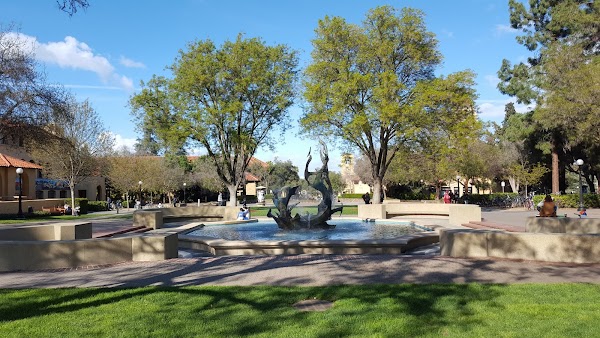
White Memorial Plaza
View on map
Audio Narrations
Introduction
Located near key landmarks like the Stanford Bookstore, White Plaza is a vibrant and bustling hub at the heart of Stanford University, serving as a central gathering spot for students, staff, and visitors alike. It’s often the backdrop for student events, rallies, performances, and casual hangouts. White Plaza is where Stanford’s energy and spirit come to life, offering a dynamic space for expression, community, and interaction. Whether you’re passing through or participating in an event, it’s a must-visit spot on campus.White Memorial Fountain and The Claw
Over the years, White Memorial Fountain, created by California sculptor Aristides Demetrios, has become a beloved landmark at Stanford, affectionately known as "MemClaw" or "The Claw." The fountain was commissioned to honor two brothers who tragically passed away before completing their studies at Stanford. Demetrios uses contrasting elements of bronze and water to symbolize their untapped potential. The solid bronze structure represents stability and strength, while the fluid, changing water reflects the uncertainty of what they might have become, creating a poignant metaphor for lost possibilities.Place for students to gather and voice up
White Plaza has long been a hub for various student events at Stanford, ranging from cultural celebrations and performances to political rallies and advocacy campaigns. Throughout the years, it has hosted environmental awareness drives, social justice initiatives, and movements like climate change protests. The plaza is also a popular spot for student group activities, community-building events, and vibrant fairs, reflecting the diversity of interests and passions within the campus community. In recent times, White Plaza has become a critical space for student activism. One significant example is a recent protest supporting Palestine, where students gathered to demand a ceasefire in the ongoing conflict. This demonstration was a powerful show of solidarity, with students raising their voices against global injustice and calling for peace. The protest exemplified how Stanford students use the plaza to engage proactively with pressing issues, utilizing the space to advocate for human rights and social change.
12
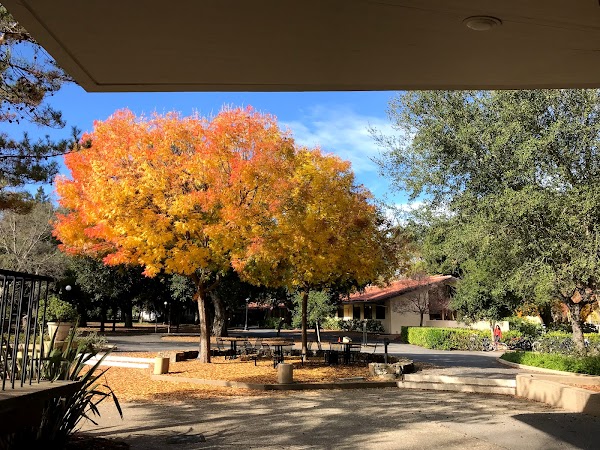
Tresidder Memorial Union
View on map
Audio Narrations
Introduction
Next to White Plaza, you'll find Tressider Union, a lively building offering a variety of dining options and outdoor seating. It’s a central hub for student life at Stanford, where students come to eat, study, and meet up with friends. Tressider also provides indoor spaces for relaxation, group meetings, and student organizations. With cafes, essential services, and event rooms, it’s designed to support daily campus activities. Since its opening in 1962, Tressider has been a vital part of building a strong community and fostering student engagement at Stanford.COHO
The Coffee House, or COHO, located in Tressider Union, is a beloved hangout for Stanford students. Opened in 1968, COHO offers a casual and cozy atmosphere with a variety of coffee, snacks, and light meals. It’s not just a spot for grabbing a quick drink—COHO also serves as a social space where students gather to study, chat, or enjoy live music and performances. Its rich history and relaxed vibe make it a cultural staple at Stanford, fostering community in a comfortable setting. COHO is also a hub for live performances, including jazz nights and open mic events. COHO hosts regular jazz jam sessions in collaboration with the Stanford Jazz Workshop, where musicians of all levels can come together to play in a laid-back environment. Open mic nights give students a platform to perform music, poetry, and other talents, fostering a creative and supportive community. These events make COHO a lively and integral part of Stanford’s artistic scene. The jazz night is usually on Mondays 8-10pm, during the school calendar.
13

Lake Lagunita
View on map
Audio Narrations
Introduction
Don’t be surprised if the lake is dry! Lake Lagunita is a seasonal lake on the Stanford University campus, offering both a scenic spot for recreation and a unique habitat for wildlife. Once a popular location for student activities like sailing and picnics, it now primarily serves as a natural space for walking, jogging, and relaxing. During the rainy season, the lake fills, attracting local wildlife, but it often remains dry during much of the year. Lake Lagunita provides a peaceful retreat on campus, with trails and open space for outdoor enjoyment.It used to be more filled with water!
Lake Lagunita was initially constructed in the late 1800s as a reservoir to supply irrigation for the Stanford family’s Palo Alto Stock Farm. Over the years, it transitioned into a popular recreational area for Stanford students. It hosted a variety of activities and campus traditions, such as sailing, picnics, and the Water Carnival, an annual event that featured boat races and other water-based games. Lake Lagunita remains dry due to several factors, including Stanford's efforts to conserve water and protect endangered species. While many believe the lake is left empty to safeguard the California tiger salamander, it's also due to Stanford reducing water diversions from San Francisquito Creek to protect steelhead trout populations. Additionally, ongoing drought conditions in California further impact the lake's ability to fill naturally. This combination of conservation and environmental protection explains why the lake is typically dry for much of the year.Lagunita Dining Hall and Midnight Breakfast
During exam periods, Lagunita Court—situated right next to Lake Lagunita—hosts a much-anticipated event known as the midnight breakfast. This tradition provides students with a delightful late-night break from studying, where they can gather with friends to enjoy a hearty meal. The dining hall serves an array of breakfast favorites such as pancakes, waffles, scrambled eggs, bacon, and pastries. Sometimes, there are even special additions like omelet stations or themed food items. The midnight breakfast has become a beloved tradition among Stanford students because it offers more than just food; it fosters a sense of community and camaraderie during a stressful time. Sharing a meal late at night creates a relaxed and enjoyable atmosphere where students can unwind, socialize, and recharge. The event highlights Stanford's commitment to student well-being by acknowledging the hard work students put into their studies and providing a supportive space to balance academics with leisure. It's a fun way to make lasting memories and reminds everyone that they're part of a connected and caring campus community.
14

Papua New Guinea Sculpture Garden
View on map
Audio Narrations
Introduction
Somewhat tucked away, the Papua New Guinea Sculpture Garden at Stanford is a captivating display of art that reflects the rich cultural and mythological heritage of Papua New Guinea. The garden is home to a series of beautifully carved wooden and stone sculptures, depicting traditional stories, ancestral spirits, and figures. Nestled among eucalyptus trees, this tranquil space offers visitors a serene experience, combining the beauty of nature with the artistry and storytelling of Papua New Guinean culture, making it a unique and immersive destination.History and Significance of the Cultural Exchange
The Papua New Guinea Sculpture Garden was created as part of a cultural exchange project aimed at fostering collaboration and understanding between Papua New Guinean artists and the Stanford community. The idea for the Papua New Guinea Sculpture Garden originated with artists Naui Saunambui and Yati Latai, who proposed the project to Jim Mason, a graduate student in the Department of Anthropology at Stanford University, during his fieldwork on the Sepik River in 1989. Mason, inspired by their vision and wanting to give back to the community, returned to Stanford and began organizing the project under the Department of Anthropology. In 1994, after four years of fundraising and preparation, he returned to Papua New Guinea to gather the artists and oversee the creation of the garden on Stanford’s campus. Ten of the most accomplished master carvers from the Sepik River region were selected to come to Stanford for the Papua New Guinea Sculpture Garden project. These artists, aged 27 to 74, represented six villages from the Iatmul and Kwoma societies. For many, this was their first opportunity to work outside Papua New Guinea. They worked in teams that blended the older generation's deep mythic and artistic knowledge with the younger men's physical strength, creating a collaborative and multigenerational approach to the sculptures. During their residency, the artists held musical performances, gave lectures on Papua New Guinea, taught bark painting, and spoke to the public about their culture. They also engaged with local students and enjoyed campus activities like barbeques and music sessions with Stanford students. For the Papua New Guinea Sculpture Garden, materials were carefully sourced and transported. Indigenous woods like kwila and garamut, commonly used for spirit house posts, were shipped from Papua New Guinea to Stanford. The artists also experimented with pumice stone, a new medium for them, sourced from Mono Lake, California. These materials allowed the artists to recreate the visual and cultural significance of their traditional art forms, while also expanding their craft through the use of new techniques and resources.Reinterpretation of Rodin
Papua New Guinea artists Simon Gambulo Marmos and Jo Mare Wakundi reimagined two of August Rodin’s famous bronze sculptures, the thinker and the gates of hell, from the Cantor collection using Iatmul mythology. Carved in wood, The Thinker (Yerakdu) in the Papua New Guinea Sculpture Garden tells the story of an ancestor who has just emerged from the earth. He sits beside the hole from which he came, contemplating how to create humans from clay. His first attempt at creation has failed, leaving broken body parts scattered at his feet, symbolizing the struggle of creation and the weight of his thoughts. The Gates of Hell / Opawe and Namawe, carved from pumice stone, tells the story of a devastating flood that wiped out the ancestral world. The flood is triggered by a man who deceives his older brother into killing his wife. One side of the sculpture shows the younger brother’s family, while the other side depicts the twisted bodies of villagers drowning in the flood, representing the destruction and chaos caused by betrayal.
15
Terman Fountain
View on map
Audio Narrations
Introduction
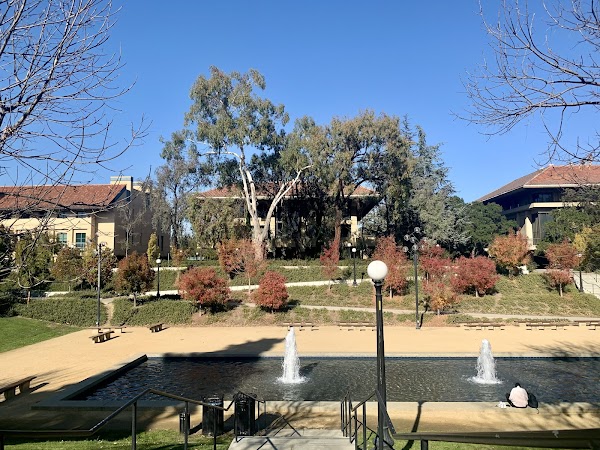
The Terman Fountain at Stanford, a shallow rectangular pool, was originally part of the Terman Engineering Center, built in 1978. Although the building was demolished in 2012, the fountain was preserved and integrated into the landscaping of the area, which now serves as a temporary open space. The fountain, which had been relatively hidden while the building stood, was refurbished and made a central feature of the site, surrounded by benches crafted from salvaged wood beams from the Terman Center. It continues to serve as a peaceful gathering spot on campus, and most importantly, as one of the Fountain Hopping spot for Stanford students.
16
Science & Engineering Quad Courtyard
View on map
Audio Narrations
Introduction
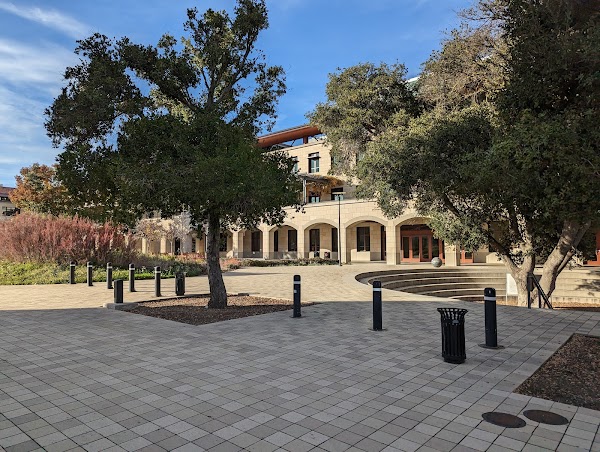
The Science and Engineering Quad at Stanford is a testament to the university’s pivotal role in advancing science and technology. This area is home to state-of-the-art buildings and research centers, where groundbreaking work in fields such as computer science, engineering, and biotechnology takes place. Stanford’s contributions have been central to the development of Silicon Valley, fostering innovations that have shaped the modern world. Pioneers like Bill Hewlett and Dave Packard, who were instrumental in founding Hewlett-Packard, began their journeys here, as did other industry leaders whose work has revolutionized technology. The quad embodies Stanford’s commitment to interdisciplinary collaboration and cutting-edge research, fueling progress in science and technology on a global scale.Pars Pro Toto
You would be easily find big spheres in the quad. Pars Pro Toto is a striking installation by artist Alicja Kwade that invites viewers to contemplate the nature of reality and perception. The work consists of several large, spherical stones arranged in a seemingly random but carefully orchestrated manner. These stones appear to hover between natural formation and human intervention, suggesting alternate realities and the interconnectedness of the universe. Kwade’s piece challenges the boundaries of science, art, and philosophy, fitting perfectly into the environment of innovation and inquiry fostered by Stanford. Through its presence, Pars Pro Toto symbolizes how individual elements come together to form a greater whole, reflecting the collaborative spirit of discovery that thrives in the surrounding academic spacesJen-Hsun Huang Engineering Center
The Jen-Hsun Huang Engineering Center stands as the anchor of Stanford’s Science and Engineering Quad. It houses over 270 faculty, staff, and students from key departments, including the Department of Management Science and Engineering, the Institute for Computational and Mathematical Engineering, and the Stanford Technology Ventures Program. Named after Stanford alumnus and NVIDIA co-founder Jen-Hsun Huang, who earned his master’s in electrical engineering in 1992, the building symbolizes the university’s commitment to driving future innovation and groundbreaking research. The center also serves as a social and academic destination, bringing together students and faculty across disciplines to collaborate on solutions to today’s complex challenges.
17
Cantor Arts Center at Stanford University
View on map
Audio Narrations
Introduction
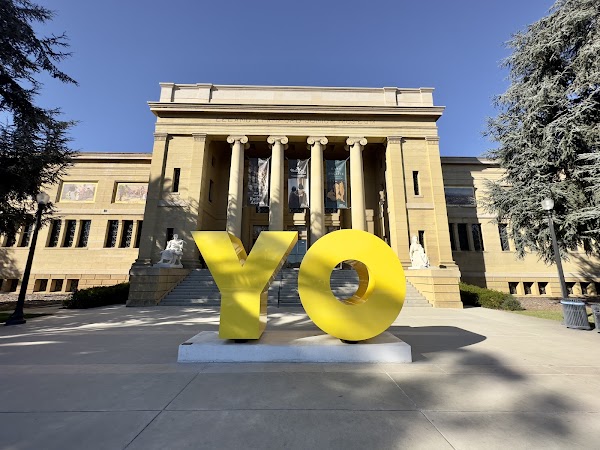
The Cantor Arts Center, officially known as the Iris and B. Gerald Cantor Center for Visual Arts at Stanford University, is a vibrant art museum located on the Stanford campus. Originally opened in 1894, this historic museum offers over 130,000 square feet of exhibition space, including beautiful sculpture gardens. Home to the largest collection of Auguste Rodin sculptures outside of Paris and Mexico City, it showcases 199 of his works, primarily in bronze. Best of all, admission is free, allowing the public to explore its rich artistic offerings year-round.Art collections
The Cantor Arts Center boasts an extensive collection of over 38,000 works that represent diverse artistic traditions and time periods. Notable collections include African art, American art, ancient art, and a significant number of works by Auguste Rodin. It also features photography from Andy Warhol, early motion studies by Eadweard Muybridge, and works from Asia, Oceania, and Indigenous Americas. The center is home to modern and contemporary art, European art, and the Richard Diebenkorn sketchbooks, alongside the Asian American Art Initiative (AAAI), focused on preserving and showcasing works by Asian American artists. The Stanford Family memorabilia is housed here too. In addition to these permanent collections, the Cantor regularly hosts rotating exhibitions, offering visitors a dynamic and ever-changing experience.OY/YO
Right in front of the Cantor Arts Center, you will see a huge yellow installation, which can be read as “YO” or “OY”, depending on from which direction you are looking at. Deborah Kass’s OY/YO installation, commissioned in 2019, explores the interplay of language and culture. “Oy” is a Yiddish expression of frustration or woe, while “Yo” is a greeting in African American slang and also means “I” in Spanish. Kass designed the work to resonate with different communities and languages, celebrating cultural diversity and identity. It serves as a powerful welcome, symbolizing unity through its multiple interpretations.
18
Bing Concert Hall
View on map
Audio Narrations
Introduction
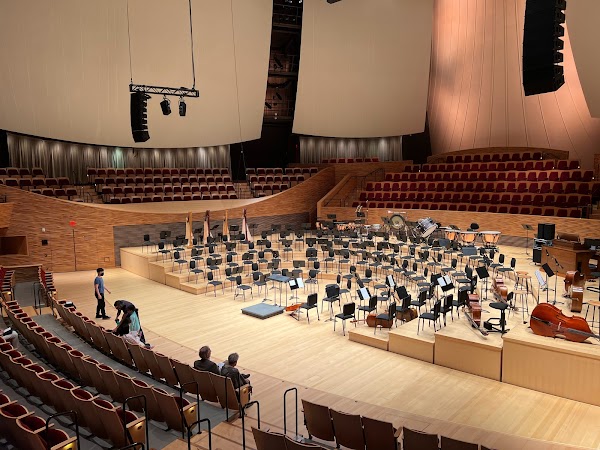
Situated across from the Canter Art Center, Bing Concert Hall is the premier performance venue at Stanford University. Opened in 2013, Bing Concert Hall exemplifies the harmonious fusion of architecture, acoustics, and technology, elevating the practice, study, and experience of the performing arts. Renowned for its stunning design and state-of-the-art acoustics, the hall provides an exceptional setting for both artists and audiences. With a seating capacity of 842, it offers an intimate yet grand space for performances ranging from classical music and jazz to contemporary and world music.A Fusion of Architectural Beauty and Acoustic Excellence
Bing Concert Hall is a true architectural gem on Stanford’s campus, seamlessly blending form and function to create an inspiring space for the performing arts. The building’s elegant design draws visitors in with its sweeping curves and inviting presence, intended to evoke the feel of a “clearing in the woods.” Inside, the hall’s acoustics are unparalleled, offering an intimate setting with breathtaking clarity and sound. The oval-shaped hall, designed in a vineyard style, has seating that surrounds the stage in layers, creating a close and personal concert experience. Large curved panels around the hall help to enhance the sound by either reflecting or absorbing it, and they can also be used for video projections. The continuous glass walls around the hall create a seamless transition between the inside and outside, connecting the interior space with the exterior colonnades. This modern design pays homage to Stanford’s traditional architectural style while adding a contemporary twist. This seamless blend of architecture, technology, and acoustics makes Bing Concert Hall not just a venue, but a transformative space for experiencing the performing arts.Famous performers performed at Bing
Bing Concert Hall has hosted numerous renowned performers since its opening in 2013, solidifying its reputation as a premier venue for classical performances. Artists like Itzhak Perlman, Joshua Bell, and Lang Lang have graced its stage, captivating audiences with their virtuosic performances. The hall has also welcomed the legendary cellist Yo-Yo Ma, who has performed there on multiple occasions, often collaborating with pianist Kathryn Stott and other renowned musicians like Edgar Meyer and Chris Thile. The San Francisco Symphony, led by Michael Tilson Thomas, has also performed at Bing, making it a hub for both international stars and beloved resident ensembles like the St. Lawrence String Quartet
19
Arizona Garden
View on map
Audio Narrations
Introduction
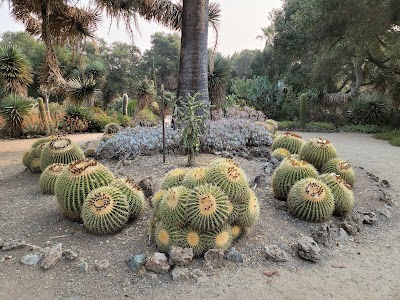
Watch out for those pointy cacti! Arizona Garden at Stanford University is a unique garden created by Jane and Leland Stanford as part of their grand estate. It showcases a stunning collection of rare cacti and succulents from around the world, making it a historical and botanical gem. As you explore, you’ll experience the beauty and craftsmanship that reflect the Stanfords’ vision of elegance and innovation. Restored with care, the garden continues to thrive as a peaceful retreat and a reminder of Stanford’s rich history.History
The garden at Stanford University was originally planted between 1880 and 1883 by landscape architect Rudolph Ulrich for Jane and Leland Stanford, focusing on drought-tolerant plants (“Arizona” refers not to the state, but to an “arid” environment, meaning a garden designed for drought-tolerant plants). It was intended to be part of the Stanfords’ mansion estate, but after the death of their only child, Leland Jr. Stanford, in 1884, the mansion was never built, and the estate became Stanford University. The garden was maintained until the original gardeners retired in 1925, after which it fell into disrepair. In the early university years, it was a popular spot for couples. Restoration work began in 1997 and continues today, preserving some original plants. The garden now holds around 500 cacti and succulents, divided into Eastern and Western Hemisphere sections, though as of September 2021, the plants were not labeled.A status garden
The Arizona Garden was designed as a “status garden” to showcase the wealth and prominence of Jane and Leland Stanford during the Gilded Age. The garden was part of a grand estate the Stanfords envisioned, meant to impress visitors with its exotic and rare plants. The garden’s visually stunning display that incorporated cacti and succulents were not commonly used in formal Victorian gardens. Leland Stanford’s wealth and influence, partly derived from his railroad business, played a significant role in making the garden possible. Stanford’s imported mature cacti and succulents from the Sonoran Desert, plants that were expensive and difficult to transport. Today, the Arizona Garden remains a historical and botanical treasure, reflecting the grandeur and ambition of its original design while requiring continuous care to preserve its distinctive beauty in Stanford’s challenging climate.
Experience the Full Tour
Download the DocentPro app to access all tour stops, complete audio narrations in multiple languages, offline maps, and interactive features.