
Washington D.C.'s Museums: A Cultural Journey Through America's Capital

Walking Tour

3.7 km (2.3 miles)

51 min travel time

9 Stops

Washington D.C., United States
Washington D.C.'s Museums: A Cultural Journey Through America's Capital

Tour Stops
1
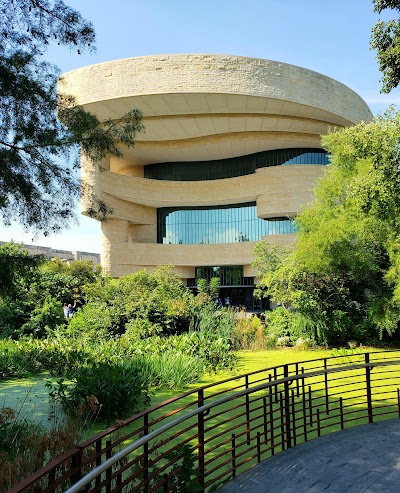
National Museum of the American Indian
View on map
Audio Narrations
French
Introduction
Le Musée national des Indiens d'Amérique à Washington, D.C. est un puissant témoignage de la résilience et de la diversité des cultures autochtones à travers l'hémisphère occidental. Son architecture unique, évoquant des formations rocheuses naturelles, prépare le terrain pour une expérience immersive. Entre ses murs courbes, les visiteurs découvrent une vaste collection d'objets, allant de textiles finement tissés et de perlages captivants à des photographies poignantes et à un art contemporain fascinant. L'engagement du musée à présenter les perspectives amérindiennes se manifeste dans ses expositions, souvent organisées en collaboration avec les communautés autochtones. Cette approche garantit l'authenticité et offre une tribune aux voix autochtones pour qu'elles soient entendues directement. L'une des caractéristiques les plus frappantes du musée est son impressionnante collection de mâts totémiques, chacun étant un symbole imposant du savoir et de l'art ancestraux. Le musée abrite également le Mitsitam Cafe, une destination culinaire à part entière, offrant aux visiteurs un avant-goût des cuisines autochtones des Amériques.Savoirs autochtones
Le Musée national des Indiens d'Amérique à Washington, D.C. offre une perspective unique sur le savoir autochtone, allant au-delà des expositions statiques pour mettre en valeur les traditions vivantes et les applications contemporaines. Les collections, les expositions et les programmes du musée mettent l'accent sur la diversité des systèmes de savoir autochtones à travers les Amériques. Les visiteurs peuvent explorer comment ces systèmes englobent des relations complexes avec le monde naturel, une compréhension sophistiquée de l'astronomie et de la médecine, ainsi que des structures sociales et une gouvernance complexes. Le musée offre une plateforme aux voix autochtones pour partager leurs points de vue sur les savoirs écologiques traditionnels, en soulignant leur pertinence pour répondre aux enjeux contemporains tels que le changement climatique et la durabilité. Grâce à des démonstrations d'artistes, des séances de contes et des ateliers interactifs, les visiteurs peuvent échanger directement avec des détenteurs de savoirs autochtones et acquérir une appréciation plus profonde de la résilience et de la capacité d'adaptation de ces systèmes de savoir au fil des générations. L'engagement du musée envers la collaboration avec les communautés autochtones garantit une représentation exacte et respectueuse de ces biens culturels inestimables, ce qui en fait une ressource essentielle pour comprendre la profondeur et le dynamisme du savoir autochtone.Revitalisation culturelle
Le Musée national des Indiens d'Amérique à Washington, D.C. est un puissant témoignage de revitalisation culturelle. Le musée ne se contente pas d'exposer des artefacts ; il offre une plateforme où les voix autochtones peuvent être entendues, où les histoires peuvent être partagées et où les traditions peuvent être célébrées. Entre ses murs, les visiteurs rencontrent des cultures vivantes, et non des reliques du passé. Le musée collabore activement avec les communautés autochtones des Amériques, en veillant à ce que leurs points de vue façonnent les expositions et les programmes. Cette approche collaborative garantit l'authenticité et le dynamisme de l'offre du musée. Des programmes de revitalisation linguistique aux expositions d'art contemporain, le musée donne vie à des traditions en voie de disparition et favorise une compréhension plus approfondie de la résilience et de la diversité des cultures autochtones. L'existence même du musée, conçu en collaboration avec les peuples autochtones, est un puissant symbole de survie et de résurgence culturelles. En offrant un espace d'échange intergénérationnel et de transmission culturelle, le Musée national des Indiens d'Amérique permet aux communautés autochtones de se réapproprier leurs récits et de partager leur patrimoine vivant avec le monde.
2
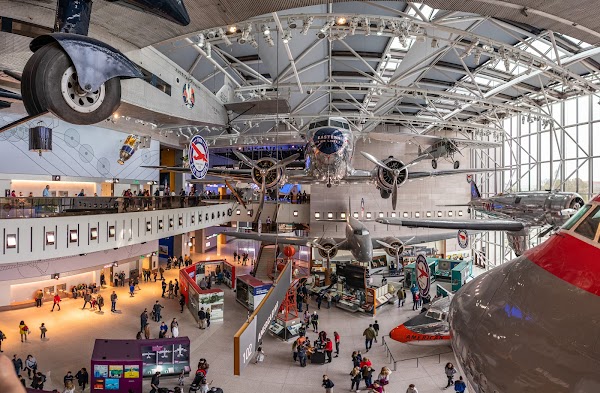
Smithsonian National Air and Space Museum
View on map
Audio Narrations
French
Introduction
Le musée national de l'air et de l'espace du Smithsonian, situé à Washington, D.C., est une institution renommée dédiée à la préservation et à la mise en valeur de l'histoire de l'aviation et de l'exploration spatiale. Fondé en 1946, il abrite une collection incomparable de plus de 60 avions, 50 vaisseaux spatiaux et des milliers d'artefacts. Parmi ses pièces maîtresses, on trouve le module de commande d'Apollo 11, Columbia, le Flyer original des frères Wright et le Spirit of St. Louis piloté par Charles Lindbergh. Le musée possède également une vaste collection d'objets spatiaux, notamment des roches lunaires et une combinaison spatiale portée par Neil Armstrong lors de sa marche lunaire historique. Son annexe, le Steven F. Udvar-Hazy Center, situé près de l'aéroport international de Dulles, expose des avions et des vaisseaux spatiaux encore plus grands, notamment la navette spatiale Discovery et un Concorde. La rénovation en cours du musée, qui devrait s'achever en 2026, promet d'améliorer l'expérience des visiteurs grâce à de nouvelles galeries et expositions interactives, confirmant ainsi son statut de destination mondiale pour les passionnés d'aviation et d'espace.Aérospatiale
Le musée national de l'air et de l'espace du Smithsonian à Washington, D.C., s'impose comme un phare de l'histoire et de l'innovation aérospatiales. Son immense collection comprend le Flyer original des frères Wright, le module de commande d'Apollo 11, Columbia, et la navette spatiale Discovery, offrant un aperçu incomparable de l'évolution du vol humain. Les artefacts du musée ne se limitent pas aux engins spatiaux, englobant des avions historiques comme le Lockheed SR-71 Blackbird et le Boeing 367-80, le prototype de l'emblématique avion de ligne 707. Pour ceux qui sont fascinés par l'exploration spatiale, les expositions du musée explorent les subtilités de la science planétaire et de l'astrophysique. Les visiteurs peuvent s'émerveiller devant des échantillons lunaires, toucher un morceau de la météorite martienne ALH84001 et observer COSTAR, l'optique corrective du télescope spatial Hubble. Les initiatives de recherche permanentes du musée contribuent à notre compréhension du cosmos, les scientifiques étudiant tout, de la formation des étoiles à la recherche de la vie extraterrestre. L'engagement du musée envers l'éducation aérospatiale est évident dans ses expositions interactives et ses programmes éducatifs. Le planétarium Albert Einstein captive le public avec des spectacles immersifs explorant les merveilles de l'univers, tandis que le centre d'apprentissage Boeing fait participer les jeunes esprits à des activités pratiques qui suscitent la passion pour les domaines des sciences, de la technologie, de l'ingénierie et des mathématiques. Grâce à sa vaste collection, ses recherches de pointe et ses activités de sensibilisation éducative, le musée national de l'air et de l'espace du Smithsonian demeure un centre mondial pour les passionnés d'aérospatiale, inspirant des générations à atteindre les étoiles.Science et technologie
Le musée national de l'air et de l'espace du Smithsonian à Washington, D.C. est un phare d'innovation scientifique et technologique. Sa vaste collection d'objets, couvrant l'histoire de l'aviation et de l'exploration spatiale, offre un trésor de connaissances sur l'ingéniosité humaine et la poursuite incessante du savoir. Les expositions du musée présentent des avions révolutionnaires, du Flyer original des frères Wright au SR-71 Blackbird. Les visiteurs peuvent s'émerveiller devant le module de commande d'Apollo 11, Columbia, qui a transporté les premiers hommes sur la Lune, et assister à l'évolution de l'exploration spatiale grâce à des écrans interactifs. Au-delà de ses artefacts emblématiques, le musée abrite une mine de recherches scientifiques et de programmes éducatifs. Le Centre d'études terrestres et planétaires mène des recherches de pointe en astrophysique, en géologie planétaire et dans la recherche de la vie extraterrestre. Les éducateurs du musée interpellent les visiteurs de tous âges, suscitant une passion pour la science et inspirant les futures générations d'explorateurs. Le musée national de l'air et de l'espace du Smithsonian n'est pas seulement un dépositaire du passé, mais un centre dynamique de découvertes et d'innovations scientifiques. Ses collections, ses expositions et ses programmes offrent une occasion unique de se plonger dans les merveilles de la science et de la technologie, d'attiser la curiosité et d'alimenter l'esprit d'exploration humain.
3
National Gallery of Art
View on map
Audio Narrations
English
Introduction
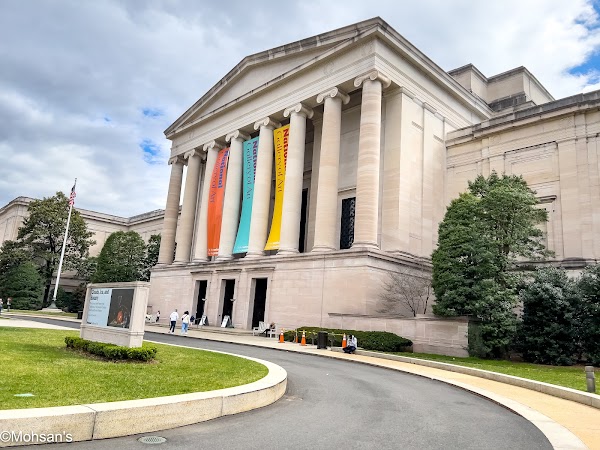
The National Gallery of Art in Washington, D.C., houses an impressive collection of over 141,000 paintings, sculptures, drawings, prints, photographs, and decorative arts. Its European and American masterpieces are displayed in the neoclassical West Building, while modern and contemporary works are showcased in the celebrated East Building designed by I.M. Pei. The Sculpture Garden, a 6.1-acre oasis in the heart of the city, features outdoor sculptures. Among the highlights of the collection is Leonardo da Vinci's "Ginevra de' Benci," the only painting by the master in the Americas. The Gallery also boasts a significant collection of works by Italian Renaissance masters such as Raphael and Titian, as well as masterpieces by Rembrandt, Vermeer, and Van Gogh. With its free admission and diverse offerings, the National Gallery of Art is a must-visit destination for art enthusiasts and culture seekers alike.Masterpieces of Western Art
Nestled in the heart of Washington, D.C., the National Gallery of Art stands as a sanctuary for masterpieces of Western art. Its hallowed halls house an unparalleled collection that spans centuries, from the ethereal beauty of Leonardo da Vinci's "Ginevra de' Benci" to the vibrant brushstrokes of Vincent van Gogh's "The Starry Night." The gallery's Italian Renaissance collection is a treasure trove of artistic brilliance. Duccio's "Maesta" panels, with their intricate gold leaf and vibrant hues, transport visitors to the heart of 14th-century Siena. Fra Angelico's "Adoration of the Magi" and Botticelli's "Adoration of the Magi" showcase the exquisite detail and storytelling that defined the era. Moving through the galleries, one encounters the grandeur of the Venetian masters. Titian's "Venus of Urbino" exudes sensuality and grace, while Giorgione's "Allendale Nativity" captures the tender intimacy of the holy family. Raphael's "Alba Madonna" and "Saint George and the Dragon" display the artist's mastery of composition and emotional depth. The Dutch Golden Age is represented by a stunning array of works by Rembrandt van Rijn. His "Self-Portrait with Two Circles" reveals the artist's introspective gaze, while "A Woman Holding a Pink" captures the fleeting beauty of a moment. Jan Vermeer's "Girl with a Pearl Earring" enchants with its enigmatic smile and exquisite brushwork. The National Gallery of Art's collection of French Impressionism is equally impressive. Claude Monet's "Water Lilies" series invites viewers to immerse themselves in the tranquil beauty of nature. Edgar Degas' "Little Fourteen-Year-Old Dancer" captures the grace and vulnerability of a young ballerina. Vincent van Gogh's "The Starry Night" is a symphony of swirling colors and emotional intensity. With its unparalleled collection and unwavering commitment to preserving and sharing the masterpieces of Western art, the National Gallery of Art is a destination that inspires awe and wonder in every visitor.Community Engagement
The National Gallery of Art in Washington, D.C., has a deep commitment to community engagement, fostering connections between art and diverse audiences. Through innovative programs and partnerships, the museum strives to make art accessible and meaningful to all. One notable initiative is the "Community Day" program, which offers free admission and special activities tailored to specific community groups, such as families, seniors, and individuals with disabilities. The Gallery also collaborates with local organizations to bring art to underserved communities, organizing workshops, exhibitions, and outreach programs in schools, libraries, and community centers. Furthermore, the museum's "Art for All" program provides free art classes and workshops to individuals with cognitive and physical disabilities, empowering them to engage with art in a creative and inclusive environment. By prioritizing community engagement, the National Gallery of Art in Washington, D.C., plays a vital role in fostering a vibrant and inclusive arts ecosystem that enriches the lives of all.
4
Hirshhorn Museum
View on map
5
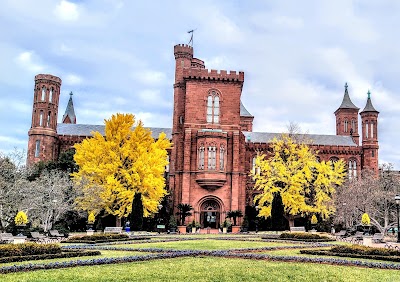
Enid A. Haupt Garden
View on map
6
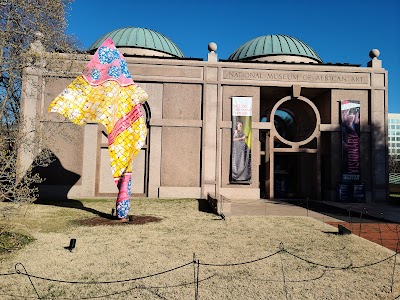
Smithsonian National Museum of African Art
View on map
7
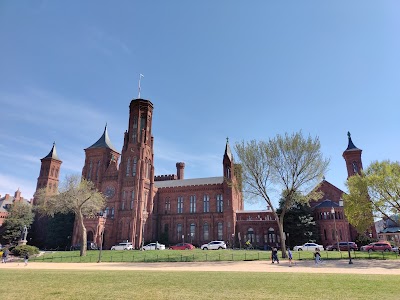
Smithsonian Castle
View on map
Audio Narrations
English
Introduction
The Smithsonian Castle, a majestic sandstone structure, stands as the heart of the Smithsonian Institution in Washington, D.C. Designed in the Norman Revival style by architect James Renwick Jr., the castle's cornerstone was laid in 1847, and it was completed in 1855. Its towers, turrets, and intricate carvings evoke a sense of medieval grandeur, transporting visitors to a bygone era. The castle's interior is equally captivating, with a soaring central hall adorned with intricate murals and sculptures. The nine-foot-tall statue of James Smithson, the institution's founder, stands proudly in the rotunda, a testament to his vision of establishing a center for knowledge and learning. The castle houses the Smithsonian's administrative offices and the Visitor Center, where guests can explore interactive exhibits and learn about the institution's vast collections. Beyond its architectural splendor, the Smithsonian Castle holds a unique place in American history. It served as a hospital during the Civil War, tending to wounded soldiers from both sides of the conflict. Its walls bear witness to the nation's resilience and the power of knowledge to heal. Today, the castle remains a symbol of the Smithsonian's enduring commitment to education, research, and public engagement.Tourist Destination
The Smithsonian Castle, the heart of the Smithsonian Institution, is more than just a museum. It's a historical landmark, a architectural marvel, and a gateway to the vast world of knowledge that the Smithsonian offers. For tourists, the Castle is a must-visit destination. Its iconic red sandstone towers and intricate carvings are a sight to behold, and its central location on the National Mall makes it easily accessible. But beyond its aesthetics, the Castle holds a wealth of treasures waiting to be discovered. Step inside, and you'll be transported back in time. The original exhibits, dating back to the 19th century, showcase the Smithsonian's early collections of natural history specimens, anthropological artifacts, and scientific instruments. These exhibits offer a glimpse into the history of science and exploration, and they're a testament to the Smithsonian's enduring commitment to education and research. One of the Castle's hidden gems is the "Castle's Attic," a collection of over 137,000 objects that haven't been on public display for decades. This treasure trove includes everything from taxidermied animals and antique microscopes to Native American artifacts and historic documents. Visitors can explore this hidden collection through virtual tours and online exhibits, offering a unique behind-the-scenes look at the Smithsonian's vast holdings. The Castle also serves as a starting point for exploring the rest of the Smithsonian museums. With 19 museums and the National Zoo located within walking distance, the Castle is the perfect hub for your Smithsonian adventure. Whether you're a history buff, a science enthusiast, or simply looking for a unique and educational experience, the Smithsonian Castle is a must-visit destination in Washington, D.C. Its rich history, captivating exhibits, and central location make it an unforgettable stop on your journey through the world of knowledge.Fellowship Programs
Nestled in the heart of Washington, D.C., the Smithsonian Castle stands as a beacon of knowledge and discovery, offering unparalleled opportunities for aspiring researchers and scholars through its prestigious Fellowship Programs. Immerse yourself in the rich history of the Smithsonian Institution, the world's largest museum and research complex, as you delve into cutting-edge research and collaborate with renowned experts in your field. The Smithsonian Castle Fellowship Programs provide a unique platform for individuals seeking to advance their research and contribute to the advancement of knowledge. As a Smithsonian Castle Fellow, you will have the privilege of working alongside leading researchers and curators, gaining invaluable insights into the vast collections and resources of the Smithsonian Institution. The Smithsonian Institution offers a diverse range of Fellowship Programs tailored to specific research areas and disciplines. Whether your passion lies in history, science, art, or culture, you will find a program that aligns with your interests and aspirations. From the Smithsonian Institution's Predoctoral Fellowship Program to the Smithsonian Institution's Postdoctoral Fellowship Program, there are numerous opportunities to pursue your research goals and make a meaningful impact on your field. As a Smithsonian Castle Fellow, you will have access to state-of-the-art research facilities, extensive library resources, and a vibrant community of scholars and researchers. The Smithsonian Institution's commitment to fostering a collaborative and intellectually stimulating environment ensures that you will be surrounded by individuals who share your passion for knowledge and discovery. The Smithsonian Castle Fellowship Programs are highly competitive, attracting some of the brightest minds from around the world. To be considered for a Smithsonian Castle Fellowship, you must demonstrate exceptional academic credentials, a strong research proposal, and a commitment to excellence in your field. If you are an aspiring researcher or scholar seeking an unparalleled opportunity to advance your knowledge and make a lasting contribution to your field, the Smithsonian Castle Fellowship Programs offer a transformative experience that will shape your career and ignite your passion for discovery.
8
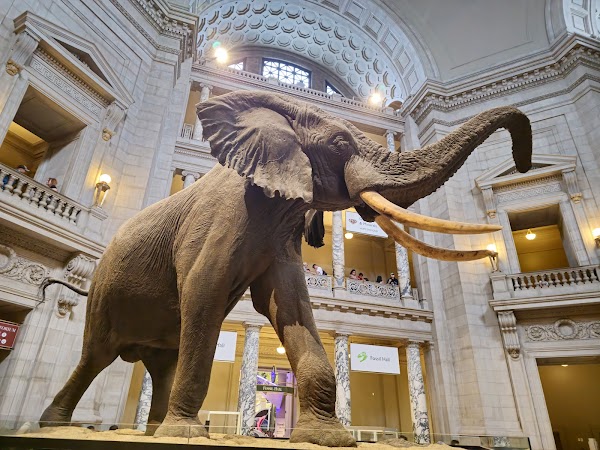
Smithsonian National Museum of Natural History
View on map
Audio Narrations
French
Introduction
Le Smithsonian National Museum of Natural History à Washington, D.C., est une institution colossale dédiée à la résolution des mystères du monde naturel. Sa vaste collection de plus de 140 millions de spécimens et d'artefacts couvre les domaines de la géologie, de la zoologie, de la botanique et de l'anthropologie. Parmi ses expositions renommées figure le Janet Annenberg Hooker Hall of Geology, Gems and Minerals, qui abrite le légendaire Hope Diamond. Le David H. Koch Hall of Fossils, un espace de 31 000 pieds carrés témoignant du concept de « Deep Time », présente le parcours remarquable de la vie sur Terre sur des milliards d'années. Le Sant Ocean Hall présente une réplique impressionnante d'une baleine franche de l'Atlantique Nord, tandis que le centre éducatif Q?rius permet aux jeunes esprits de s'initier à l'exploration scientifique pratique. L'engagement du musée en faveur de l'inclusivité s'étend à ses entrées accessibles, ses places de stationnement réservées et une salle d'allaitement dédiée pour la commodité des visiteurs.Salle de l’océan Sant
Le Sant Ocean Hall du Muséum national d'histoire naturelle du Smithsonian à Washington, D.C., est une exposition captivante qui plonge les visiteurs dans les merveilles de l'océan. La pièce maîtresse de la salle est un modèle grandeur nature de Phoenix, une baleine franche de l'Atlantique Nord de 45 pieds, offrant une rencontre époustouflante avec l'un des doux géants de l'océan. Un autre point fort est l'exposition de deux calmars géants, des créatures rarement vues vivantes en raison de leur nature insaisissable. La salle abrite également un ensemble de mâchoires de 7 pieds de haut provenant du grand requin blanc éteint, Carcharodon megalodon, le plus grand requin qui ait jamais existé. Au-delà de ces spécimens remarquables, le Sant Ocean Hall propose un éventail d'expositions interactives et de présentations multimédias. "Ocean Odyssey", un film haute définition du célèbre cinéaste sous-marin Feodor Pitcairn, transporte les visiteurs dans les profondeurs de l'océan, présentant ses écosystèmes vibrants et ses habitants variés. L'exposition "Science on a Sphere", créée par le National Oceanic and Atmospheric Administration, permet aux visiteurs d'explorer les données et les images des océans, obtenant ainsi des informations sur les processus dynamiques de l'océan. Le Sant Ocean Hall n'est pas simplement une collection de merveilles marines ; c'est un témoignage de l'engagement du Smithsonian pour la recherche scientifique et la conservation. L'exposition souligne l'importance de comprendre et de protéger l'océan, en mettant l'accent sur son rôle vital dans le maintien de la vie sur Terre. Grâce à ses expositions immersives et à ses programmes éducatifs, le Sant Ocean Hall inspire les visiteurs à apprécier la beauté et la fragilité de l'océan, favorisant un sens de l'intendance et de la responsabilité envers ce royaume extraordinaire.Diamant Hope
Le Musée national d'histoire naturelle de la Smithsonian à Washington, D.C. abrite fièrement le diamant Hope, une captivante gemme bleue chargée d'histoire et d'intrigue. Donné par le joaillier Harry Winston en 1958, le diamant Hope est devenu la pièce maîtresse de la collection de gemmes du musée. Son parcours jusqu'à la Smithsonian a été marqué par la simplicité, car il est arrivé par courrier recommandé assuré pour seulement 1 million de dollars. Le charme du diamant Hope va au-delà de sa teinte captivante. En 2005, la Smithsonian a confirmé son origine en tant que joyau de la couronne française volé grâce à des recherches avancées en géométrie assistée par ordinateur. Son poids, initialement estimé entre 44 et 45,5 carats, a été précisément déterminé en 1975 à 45,52 carats. La monture du diamant a évolué au fil du temps. En 2009, il a été présenté comme une gemme autonome, mettant en valeur son éclat. En 2010, il a été dévoilé dans un collier nouvellement conçu "Embracing Hope", comportant des diamants blancs et du métal blanc. La monture actuelle du diamant, restaurée en 2012, comprend un nouveau diamant d'une valeur de plus d'un million de dollars. La mystique du diamant Hope est encore renforcée par sa prétendue malédiction, qui a captivé l'imagination du public. Bien qu'il n'existe aucune preuve concrète le reliant au malheur, la légende ajoute à son attrait. Le parcours du diamant de l'Inde à la Smithsonian témoigne de son héritage durable et de l'engagement du musée à préserver les trésors historiques.
9
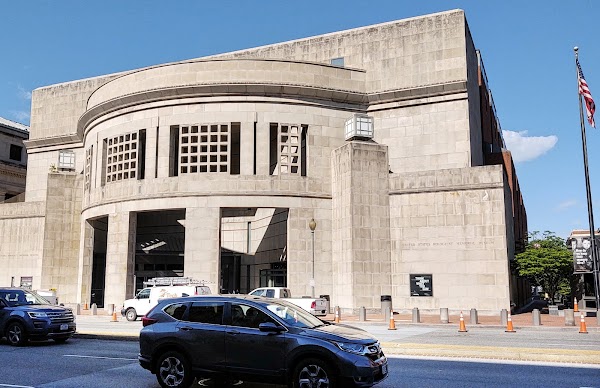
United States Holocaust Memorial Museum
View on map
Audio Narrations
English
Introduction
The United States Holocaust Memorial Museum in Washington, D.C., is a poignant tribute to the victims and survivors of the Holocaust. Its permanent exhibition, "The Holocaust," takes visitors on a chronological journey through the Nazi regime's atrocities, from the rise of Hitler to the liberation of concentration camps. Artifacts, photographs, and eyewitness testimonies paint a vivid and harrowing picture of the horrors endured by millions. The museum also houses special exhibitions that explore the Holocaust's broader context and its impact on human rights. The Hall of Remembrance, a hexagonal room echoing the Star of David, provides a serene space for reflection and remembrance. Beyond its exhibits, the museum actively promotes education and genocide prevention through programs like the Center for Advanced Holocaust Studies and the Academy for Genocide Prevention. Its website offers a wealth of resources, including online exhibitions, personal stories, and an encyclopedia of the Holocaust. The museum's architecture, designed by James Ingo Freed, is a powerful statement in itself. Its angular, disorienting spaces evoke the unease and uncertainty experienced by Holocaust victims. The museum's presence on the National Mall, adjacent to the Smithsonian museums, underscores the importance of confronting and learning from the darkest chapters of human history.Architectural Symbolism
The United States Holocaust Memorial Museum in Washington, D.C., is a powerful embodiment of architectural symbolism, designed to evoke the horrors of the Holocaust through its very structure. Architect James Ingo Freed drew inspiration from Holocaust sites, incorporating elements that subtly reference the atrocities committed. The exterior's simplicity belies a complex interior, where twisted metal and distorted masonry symbolize the disruption and fragmentation caused by the Holocaust. The Hall of Witness, the museum's central space, is a towering atrium that evokes the disorientation and fear experienced by victims. Its steel-framed roof, intentionally asymmetrical, suggests instability and unease. The Hall of Remembrance, a hexagonal chamber filled with light, stands in stark contrast, offering a space for quiet contemplation and remembrance. Its eternal flame and inscribed names of concentration and death camps serve as a poignant reminder of the lives lost. Throughout the museum, materials like kiln-fired bricks and steel sinews recall the industrialization of death, while the interplay of light and shadow creates an atmosphere of both reverence and unease. The United States Holocaust Memorial Museum is not merely a repository of artifacts; it is a living testament to the horrors of the past, using architecture as a powerful tool to convey the incomprehensible.Holocaust Remembrance
The United States Holocaust Memorial Museum in Washington, D.C., stands as a solemn tribute to the victims of the Holocaust and a testament to the resilience of the human spirit. Its permanent exhibit, "The Holocaust," takes visitors on a harrowing journey through the Nazi regime's systematic genocide, from the rise of anti-Semitism to the horrors of the concentration camps. Upon entering, visitors receive an identity card bearing the name of a real Holocaust victim. This personal connection deepens the emotional impact of the exhibit, as visitors witness the unfolding tragedy through the eyes of an individual. The Hall of Remembrance, a hexagonal room echoing the Star of David, provides a serene space for reflection and remembrance. The museum's extensive collection includes artifacts, documents, and testimonies that offer a comprehensive account of the Holocaust. Visitors can view a Polish railcar used to transport Jews to concentration camps, hear firsthand accounts from survivors, and explore the museum's online archives. Beyond its exhibits, the museum plays a vital role in Holocaust education and prevention. The Center for Advanced Holocaust Studies and the Academy for Genocide Prevention train professionals in the field, while the website provides a wealth of resources for educators and the public. The United States Holocaust Memorial Museum is a powerful reminder of the darkness that can consume humanity. Yet, it also serves as a beacon of hope, inspiring visitors to confront hatred, promote tolerance, and work towards a world free from genocide.
Experience the Full Tour
Download the DocentPro app to access all tour stops, complete audio narrations in multiple languages, offline maps, and interactive features.