
Berlin's Historic Heart: A Journey Through Time and Culture

Walking Tour

5.3 km (3.3 miles)

1h 13min travel time

13 Stops

Berlin, Germany
Berlin's Historic Heart: A Journey Through Time and Culture
Tour Stops
1
Jewish Museum Berlin
View on map
Audio Narrations
English
Introduction
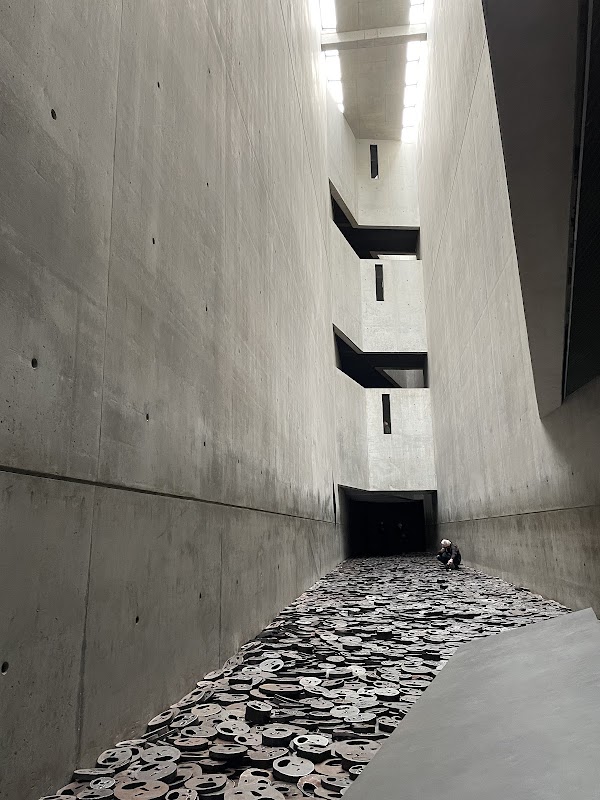
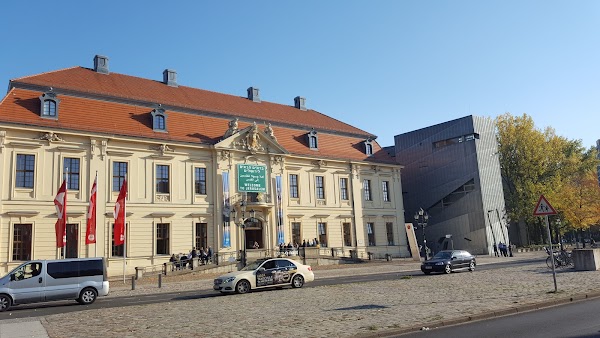
The Jewish Museum Berlin, designed by Daniel Libeskind, is a striking architectural marvel that houses a comprehensive collection showcasing the history of German Jews. Its zigzagging form, reminiscent of a lightning bolt or Star of David, symbolizes the tumultuous Jewish experience. The museum's centerpiece is a 66-foot-tall void that represents the absence left by the Holocaust. Visitors navigate through a labyrinth of galleries, encountering poignant artifacts, interactive displays, and thought-provoking installations that illuminate Jewish life from medieval times to the present. The museum also features a garden of exile, a library, and an archive, making it a hub for research and contemplation.History Museum
Delve into the rich tapestry of Jewish history and culture at the Jewish Museum Berlin, a captivating destination for history enthusiasts. This architectural marvel, designed by Daniel Libeskind, houses a permanent exhibition that transports visitors through the vibrant and often tumultuous journey of Jewish life in Germany. The museum's core exhibition, "Jewish Life in Germany: Past and Present," offers a comprehensive narrative from the medieval era to the present day. Through artifacts, multimedia displays, and interactive installations, visitors gain insights into the contributions of Jewish communities to German society, their struggles during the Holocaust, and their resilience in rebuilding their lives after the war. One of the museum's most striking features is the "Void," a raw concrete space that symbolizes the absence and loss experienced by the Jewish community during the Nazi regime. Visitors are invited to contemplate the complexities of Jewish history and the enduring impact of the Holocaust. The museum also hosts temporary exhibitions that explore diverse themes related to Jewish culture, history, and contemporary issues. These exhibitions provide a platform for thought-provoking discussions and offer fresh perspectives on the Jewish experience. With its unique architectural design, thought-provoking exhibitions, and commitment to preserving Jewish heritage, the Jewish Museum Berlin stands as a testament to the resilience and vitality of the Jewish community in Germany. It is a must-visit destination for anyone seeking a deeper understanding of Jewish history and its profound significance in shaping German society.World War II
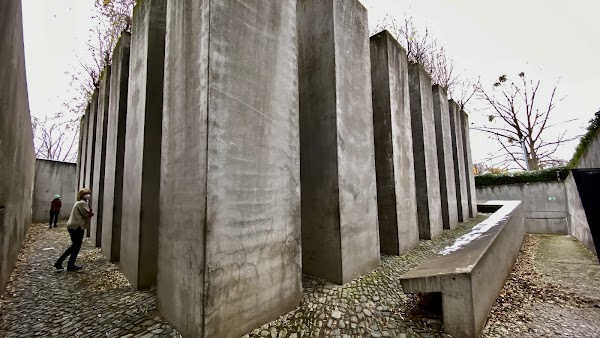
The Jewish Museum Berlin stands as a poignant testament to the Jewish experience during World War II. Its unique architectural design, featuring tilted floors and walls, disorients visitors, mirroring the instability faced by Jewish people during the Holocaust. The museum's three intersecting axes represent key aspects of Jewish history: Continuity and Change, Emigration and Exile, and The Holocaust. The Garden of Exile, with its towering concrete columns, evokes the displacement and uncertainty of the Holocaust. The Holocaust Tower, a tall, dimly lit room with an eerie ringing noise, creates an atmosphere of loss and isolation, inviting visitors to reflect on the horrors of the genocide. Through these immersive spaces, the Jewish Museum Berlin offers a profound and unforgettable exploration of the Jewish experience during World War II, fostering a deep understanding of the human toll and resilience amidst unimaginable suffering.
2

Checkpoint Charlie
View on map
Audio Narrations
English
Introduction
Checkpoint Charlie, located at the junction of Friedrichstraße, Zimmerstraße, and Mauerstraße in Berlin, Germany, was the most well-known crossing point between East and West Berlin during the Cold War. Designated as the sole crossing point for foreigners and members of the Allied forces, it gained prominence as a symbol of the Cold War's division between East and West. The name "Charlie" originated from the NATO phonetic alphabet, with Checkpoint Alpha and Bravo being the other Allied checkpoints on the Autobahn from the West. Checkpoint Charlie witnessed several significant events, including a tense standoff between Soviet and U.S. tanks in October 1961, which was peacefully resolved after negotiations between US Attorney General Robert F. Kennedy and KGB spy Georgi Bolshakov. It also became a site of daring escape attempts by East Germans, with some successfully crossing the border by lowering windshields on cars or hiding in vehicle trunks. The iconic guardhouse at Checkpoint Charlie, initially a wooden shed, was replaced by a larger metal structure in the 1980s. However, the Allies intentionally kept their infrastructure simple to symbolize their view of the Berlin Wall as an illegitimate border. In contrast, the East German side featured elaborate guard towers, cement barriers, and thorough vehicle searches. Checkpoint Charlie played a role in prisoner swaps during the Cold War, including the exchange of U-2 spy plane pilot Francis Gary Powers for Soviet spy Rudolf Abel at the nearby Glienicke Bridge. It also became a popular motif in spy novels and films, notably in the opening scene of "The Spy Who Came in from the Cold." During the fall of the Berlin Wall in 1989, Checkpoint Charlie became a focal point as thousands of East Germans gathered, demanding the opening of the gates. After a four-hour standoff, the border guards finally allowed people to move freely between East and West Berlin for the first time in nearly 30 years. Today, a replica of the original guardhouse stands on Friedrichstrasse as a tourist attraction, while the original is preserved at the Allied Museum in Berlin. Checkpoint Charlie remains a poignant reminder of the Cold War's division and the eventual reunification of Germany.International Symbolism
Checkpoint Charlie, the iconic crossing point between East and West Berlin during the Cold War, stands as a potent symbol of international division and the struggle for freedom. Its name, derived from the NATO phonetic alphabet, underscores its significance as a gateway between two worlds. Checkpoint Charlie became a focal point of global tensions, witnessing tense standoffs between Soviet and American tanks and serving as a conduit for daring escapes from East Berlin. The checkpoint's symbolism extended beyond its physical presence, representing the ideological divide that separated East and West and the yearning for reunification. Today, Checkpoint Charlie remains a poignant reminder of the Cold War era, its symbolism resonating with those seeking to understand the complexities of international relations and the enduring power of human resilience.Freedom and Liberty
Checkpoint Charlie, an iconic symbol of the Cold War, stands as a testament to the struggle for freedom and liberty. During the division of Berlin, this crossing point between East and West became a focal point of tension and a gateway to escape for those seeking refuge from communist oppression. The infamous "Mr. Gorbachev, tear down this wall!" speech by President Ronald Reagan in 1987 resonated deeply at Checkpoint Charlie, embodying the yearning for freedom that permeated the divided city. The subsequent fall of the Berlin Wall in 1989, witnessed by jubilant crowds at Checkpoint Charlie, marked a triumph for liberty and the end of an era of oppression. Today, Checkpoint Charlie remains a poignant reminder of the sacrifices made in the pursuit of freedom. The guardhouse, adorned with graffiti and historical exhibits, serves as a museum, offering visitors a glimpse into the complexities of the Cold War and the indomitable spirit of those who dared to cross the divide in search of a better life.
3
Wall Museum - Checkpoint Charlie
View on map
4
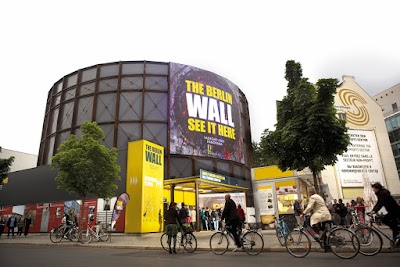
THE WALL - asisi Panorama
View on map
5
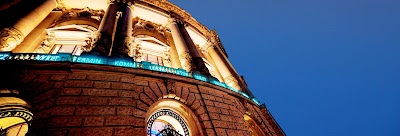
Museum for Communication Berlin
View on map
6
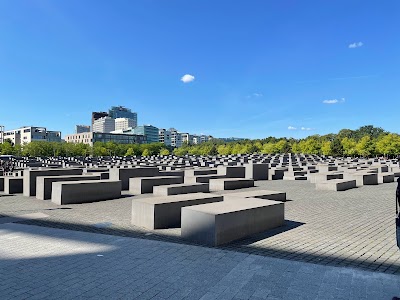
Memorial to the Murdered Jews of Europe
View on map
Audio Narrations
English
Introduction
The Memorial to the Murdered Jews of Europe in Berlin, Germany, is a poignant tribute to the six million Jewish victims of the Holocaust. Designed by architect Peter Eisenman, it comprises 2,711 concrete stelae arranged in a grid-like pattern over 4.7 acres. The stelae vary in height, creating a wave-like effect that evokes a sense of disorientation and unease. The memorial's abstract design encourages visitors to confront the horrors of the Holocaust in their own way, without the imposition of traditional symbolism. Beneath the field of stelae lies an underground information center that provides a comprehensive account of the victims and the sites of destruction. Through non-fiction stories and historical photographs, the center documents the persecution and extermination of European Jews. The memorial's location at the heart of Berlin, near the Reichstag and Bundesrat, serves as a constant reminder of Germany's responsibility for the Holocaust and its commitment to preventing such atrocities in the future.Holocaust Memorial
The Memorial to the Murdered Jews of Europe in Berlin, Germany, is a poignant tribute to the victims of the Holocaust. Designed by architect Peter Eisenman, it consists of 2,711 concrete slabs, or "stelae," arranged in a grid pattern on a sloping field. The stelae vary in height, creating a sense of disorientation and unease, reflecting the chaos and horror of the Holocaust. Beneath the memorial lies the "Place of Information," an underground space that houses the names of approximately 3 million Jewish Holocaust victims. Visitors can access this space through a narrow, sloping passageway, adding to the somber and reflective atmosphere. The memorial's location is particularly significant. It stands on the former site of the Berlin Wall, a symbol of division and oppression. By placing the memorial here, Germany acknowledges its responsibility for the Holocaust and its commitment to remembrance and reconciliation. The Memorial to the Murdered Jews of Europe is not just a monument; it is a place of contemplation and education. It serves as a reminder of the horrors of the Holocaust and the importance of fighting against hatred, intolerance, and discrimination.Artistic Expression
The Memorial to the Murdered Jews of Europe in Berlin, Germany, is a powerful and evocative work of art that confronts the horrors of the Holocaust through its unique artistic expression. Designed by architect Peter Eisenman, the memorial consists of a field of 2,711 concrete stelae, each varying in height and arranged in a grid-like pattern. This abstract and minimalist design creates a disorienting and unsettling atmosphere, reflecting the chaos and dehumanization experienced by the victims of the Holocaust. The stelae are made of gray concrete, a material often associated with coldness and anonymity. Their uniform shape and size emphasize the mass murder of millions of individuals, while their varying heights evoke a sense of individuality and loss. The labyrinthine layout of the memorial forces visitors to navigate through narrow and claustrophobic passages, creating a physical and emotional experience that mirrors the isolation and oppression endured by the victims. The memorial's abstract nature invites multiple interpretations, encouraging visitors to engage with the artwork on a personal level. Some see it as a representation of a graveyard, with the stelae resembling tombstones. Others interpret it as a metaphor for the bureaucratic machinery of the Holocaust, with the grid-like structure evoking the cold efficiency of the Nazi regime. The Memorial to the Murdered Jews of Europe is not merely a commemorative site but a powerful work of art that challenges traditional notions of remembrance and forces us to confront the darkness of the past. Through its unique artistic expression, it serves as a poignant reminder of the horrors of the Holocaust and the importance of fighting against hatred and intolerance.
7

Brandenburg Gate
View on map
Audio Narrations
English
Introduction
The Brandenburg Gate, an iconic symbol of Berlin, stands as a testament to the city's tumultuous history. Built in the late 18th century, this neoclassical masterpiece was modeled after the Propylaea in Athens. Its 12 Doric columns frame five passageways, with the central one once reserved for royal use. The gate is crowned by a bronze quadriga, a chariot drawn by four horses, representing victory. During the Cold War, the Brandenburg Gate became a symbol of division, as it stood at the border between East and West Berlin. The Berlin Wall, erected in 1961, cut off access to the gate for both East and West Germans. In 1989, the gate became a symbol of reunification when it was reopened, marking the fall of the Berlin Wall and the end of the Cold War. Today, the Brandenburg Gate is a popular tourist destination, visited by millions each year. It has been the backdrop for numerous historical events, including President Ronald Reagan's famous 1987 speech in which he challenged Soviet leader Mikhail Gorbachev to "tear down this wall." The gate remains a powerful symbol of German unity and a reminder of the triumph of freedom over oppression.Symbol of Peace
The Brandenburg Gate, an enduring symbol of peace and unity, stands as a testament to Berlin's tumultuous past and its hopeful future. Initially erected as a symbol of peace following the Batavian Revolution, the gate's significance shifted during Napoleon's triumphal procession, when the quadriga atop the structure was removed and taken to Paris. Its return marked a shift in symbolism, with the goddess Eirene now representing military victory rather than peace. Despite this change, the gate's original message of peace persisted in the relief sculptures adorning it. The panel beneath the quadriga depicts Eirene surrounded by personifications of virtues such as Friendship, Joy, and Public Policy. Even during the Nazi regime, when the gate became a symbol of power, the statue of Mars sheathing his sword at the gate's base hinted at a longing for an end to war. With the fall of the Berlin Wall in 1989, the Brandenburg Gate once again became a beacon of peace and unity. The opening of the gate to traffic symbolized the reunification of East and West Berlin, and the removal of the physical barrier that had divided the city for decades. Today, the gate stands as a reminder of the power of peace to overcome adversity and bring people together.International Icon
Brandenburg Gate, a majestic symbol of German reunification and a beacon of international significance, stands tall in the heart of Berlin. This iconic landmark, steeped in historical significance, has witnessed the ebb and flow of empires, wars, and the triumph of peace. Its architectural grandeur, coupled with its pivotal role in shaping Germany's destiny, has cemented its status as an international icon. The gate's neoclassical design, inspired by the Propylaea of the Athenian Acropolis, exudes an aura of timeless elegance. Its imposing Doric columns, surmounted by the Quadriga statue, a chariot drawn by four horses, symbolize victory and peace. The Quadriga's tumultuous journey, from being seized by Napoleon to its triumphant return after World War II, mirrors the resilience of the German spirit. During the Cold War, Brandenburg Gate became a poignant symbol of division, standing isolated in the no man's land between East and West Berlin. Its reopening in 1989, with crowds joyously streaming through its archway, marked a pivotal moment in world history, heralding the fall of the Berlin Wall and the reunification of Germany. Today, Brandenburg Gate stands as a testament to the indomitable spirit of a nation and a symbol of unity and reconciliation. It attracts visitors from around the globe, eager to witness its architectural splendor and immerse themselves in its historical significance. As an international icon, Brandenburg Gate represents the triumph of peace over adversity, a beacon of hope, and a reminder of the enduring power of human resilience.
8
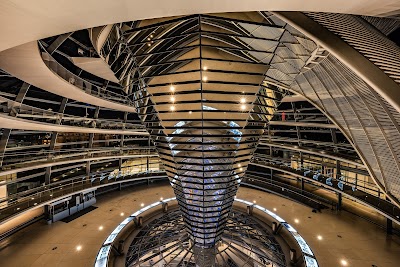
Reichstagskuppel
View on map
9

Reichstag Building
View on map
10
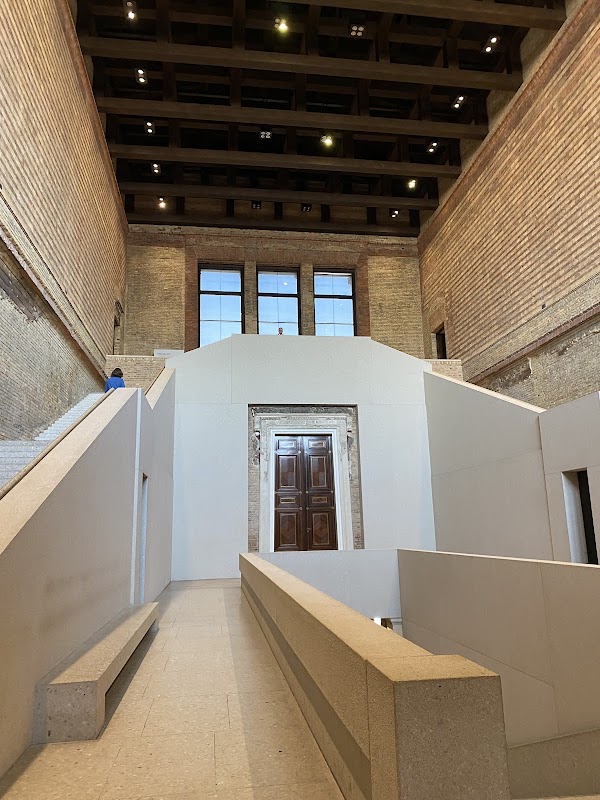
Neues Museum
View on map
Audio Narrations
English
Introduction
The Neues Museum, a neoclassical architectural marvel on Berlin's Museum Island, houses a captivating collection of artifacts that narrate the cultural evolution of humanity. Its exhibits span three historical collections, showcasing the artistic and cultural heritage of ancient Egypt, the Stone Age, and the Middle Ages. The museum's highlight is undoubtedly the iconic bust of Queen Nefertiti, a testament to the artistry of ancient Egypt. The Neues Museum's journey has been marked by resilience. Severely damaged during World War II, it lay in ruins for decades before undergoing a meticulous reconstruction led by renowned architect David Chipperfield. The restoration seamlessly blends the original structure with modern elements, creating a harmonious balance between history and contemporary design. Beyond its architectural significance, the Neues Museum offers a captivating glimpse into the lives of our ancestors. The Egyptian collection boasts an impressive array of sculptures, papyrus texts, and literary works, providing insights into the beliefs and daily life of this ancient civilization. The Pre- and Early History collection takes visitors on a journey through the Stone, Bronze, and Iron Ages, showcasing the technological advancements and artistic expressions of prehistoric societies. The Neues Museum stands as a testament to the enduring power of human creativity and the importance of preserving our cultural heritage. Its exhibits inspire awe and wonder, inviting visitors to delve into the rich tapestry of human history and appreciate the artistic achievements of civilizations past.Iron Construction
The Neues Museum in Berlin, Germany, stands as a testament to the innovative use of iron construction in the mid-19th century. Designed by Friedrich August Stüler, the museum's structural elements showcase the cutting-edge techniques of the era. The museum's foundation rests on timber piles, supporting a lightweight construction of hollow terracotta vaults reinforced with an iron grid. Cast iron roof trusses, adorned with wrought iron ties, provide a sturdy framework. The museum's columns, particularly those on the third floor, are made of iron and clad in cast zinc ornaments, mimicking the classical style while incorporating modern materials. The museum's construction relied heavily on the expertise of August Borsig, whose iron foundries supplied the cast and wrought iron components. Borsig's innovative designs, such as the bowstring trusses used in the Nubian Room, demonstrate the structural capabilities of iron. These trusses bear the weight of the wide-span ceilings, eliminating the need for supporting columns and creating a sense of spaciousness. The Neues Museum's iron construction not only served functional purposes but also contributed to its aesthetic appeal. The delicate iron constructions in the Kunstkammer rooms on the third floor showcase a dematerialized variant of the arches on the lower floors, adding a touch of lightness and elegance to the space. The museum's use of iron construction represents a significant chapter in the history of architecture, demonstrating the transition from traditional materials to the innovative use of iron. It remains a testament to the ingenuity and technological advancements of its time.Architectural Masterpiece
The Neues Museum, a captivating architectural masterpiece on Berlin's Museum Island, stands as a testament to the genius of architect Friedrich August Stüler. Completed in 1855, the museum seamlessly blends elements of late classicism and historicism, showcasing Stüler's masterful ability to fuse different architectural styles. The building's imposing facade, adorned with intricate sculptures and reliefs, hints at the treasures within. Upon entering the museum, visitors are greeted by a grand staircase adorned with historical plaster casts, leading them to the upper floors. The museum's innovative use of iron constructions, concealed behind its elegant facade, allowed for wide-span ceilings and open floor plans, creating a sense of spaciousness and grandeur. The Neues Museum's architectural significance extends beyond its structural innovations. Stüler's design incorporates elements of ancient Greek architecture, such as the Porch of the Caryatids from the Erechtheion on the Acropolis in Athens. These references to classical antiquity reflect the museum's original purpose as a repository for archaeological artifacts. In 2009, after extensive restoration work led by architect David Chipperfield, the Neues Museum reopened its doors, showcasing a harmonious blend of old and new. Chipperfield's approach, guided by the concept of "gentle building evolution," preserved the museum's historic structure while incorporating contemporary elements. The result is a building that respects its past while embracing the present, creating a captivating architectural experience that transports visitors through time.
11
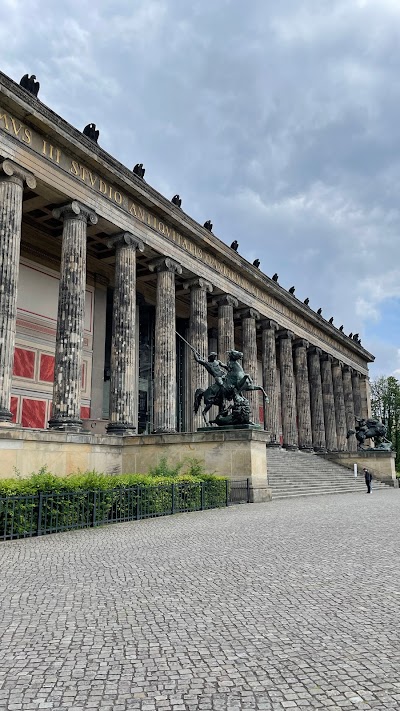
Altes Museum
View on map
12
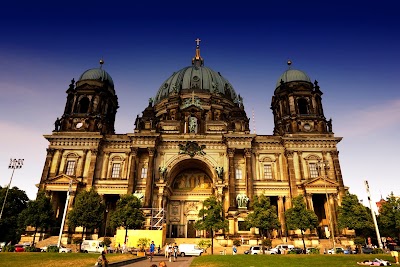
Lustgarten
View on map
13

Berlin Cathedral
View on map
Audio Narrations
English
Introduction
Berlin Cathedral, also known as the Supreme Parish and Collegiate Church, is a monumental German Protestant church and dynastic tomb of the House of Hohenzollern. Situated on Museum Island in central Berlin, its origins trace back to a castle chapel for the Berlin Palace in the 15th century. The present collegiate church was built from 1894 to 1905 by order of Emperor William II, designed by Julius Raschdorff in Renaissance and Baroque Revival styles. The listed building is the largest Protestant church in Germany and one of the most significant dynastic tombs in Europe. Beyond church services, the cathedral hosts state ceremonies, concerts, and other events. Its monumental dome, ornamental mosaics, gold features, and numerous statues captivate visitors. The simpler Baptismal and Matrimonial Chapel invites reflection, while the Hohenzollern crypt, the most important dynastic sepulcher in Germany, houses nearly 100 sarcophagi and burial monuments spanning five centuries. The cathedral's rich history, elaborate architecture, and artistic treasures make it a must-see destination in Berlin.Artistic Masterpieces
Berlin Cathedral, a majestic architectural masterpiece in the heart of Berlin, Germany, stands as a testament to the city's rich artistic heritage. Its awe-inspiring dome, a marvel of engineering, dominates the skyline, while its intricate façade showcases an eclectic blend of Baroque, Renaissance, and Gothic influences. Inside, visitors are greeted by a symphony of artistic wonders. The grand nave, adorned with soaring arches and intricate frescoes, leads to the opulent chancel, where the magnificent high altar, a masterpiece of gilded woodcarving, takes center stage. The cathedral's stained-glass windows, a kaleidoscope of vibrant colors, depict biblical scenes with exquisite detail, casting an ethereal glow upon the sacred space. Every nook and cranny of Berlin Cathedral reveals a hidden gem, from the delicate carvings on the choir stalls to the intricate mosaics adorning the chapels. It is a sanctuary of artistic excellence, where the beauty of human creativity harmoniously intertwines with the grandeur of faith.Cultural Heritage
Berlin Cathedral, a majestic edifice in the heart of Berlin, stands as a testament to the city's rich cultural heritage. Its architectural grandeur, spanning centuries and styles, reflects the evolution of German artistry and craftsmanship. The cathedral's imposing dome, a masterpiece of engineering, dominates the skyline, while its intricate façade showcases a harmonious blend of Baroque and Renaissance elements. Inside, the opulent interior boasts soaring arches, ornate frescoes, and resplendent stained glass windows, creating an atmosphere of awe and reverence. Beyond its architectural splendor, Berlin Cathedral holds significant historical and cultural value. It served as the royal chapel for the Hohenzollern dynasty, Prussia's ruling family, and witnessed pivotal moments in German history. The cathedral's crypt houses the remains of numerous Hohenzollern monarchs, offering a glimpse into the dynastic legacy of the region. The cathedral's resilience is also a testament to Berlin's cultural heritage. Severely damaged during World War II, it underwent meticulous restoration efforts that spanned decades. The painstaking reconstruction preserved the cathedral's architectural integrity while incorporating modern elements, symbolizing the city's ability to rise from adversity and preserve its cultural treasures. Today, Berlin Cathedral remains a vibrant center of religious and cultural life. It hosts regular services, concerts, and exhibitions, showcasing its enduring role in the community. Its architectural and historical significance, coupled with its ongoing cultural relevance, make Berlin Cathedral an invaluable asset to Berlin's cultural heritage, offering visitors a profound connection to the city's past and present.
Experience the Full Tour
Download the DocentPro app to access all tour stops, complete audio narrations in multiple languages, offline maps, and interactive features.