
Buenos Aires: A Day of Iconic Sights and Cultural Immersion

Walking Tour

11.7 km (7.3 miles)

2h 42min travel time

15 Stops

Buenos Aires, Argentina
Buenos Aires: A Day of Iconic Sights and Cultural Immersion
Tour Stops
1
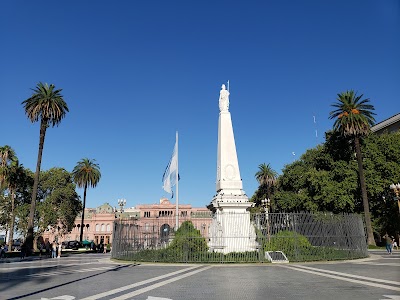
Plaza de Mayo
View on map
Audio Narrations
Introduction
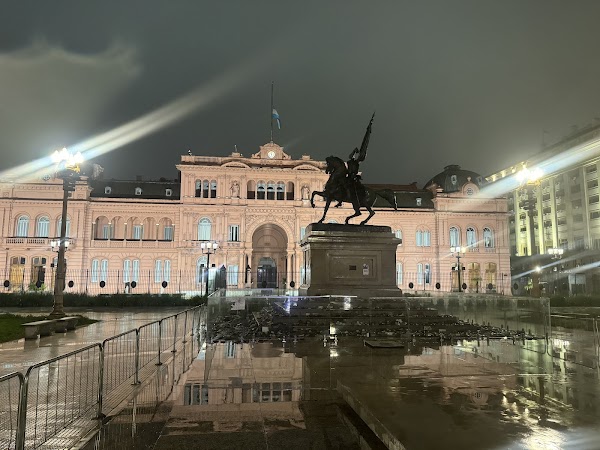
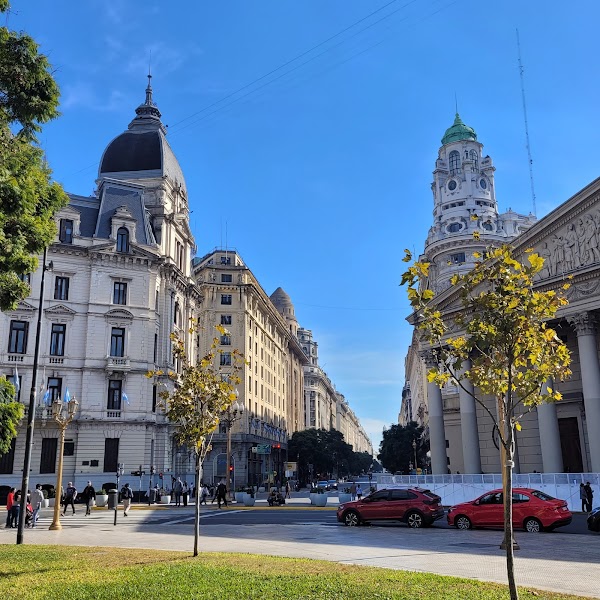
Plaza de Mayo, the oldest public square in Buenos Aires, Argentina, has witnessed pivotal events in the city's history. Named after the May Revolution of 1810, it is surrounded by significant buildings: the Cabildo, the Metropolitan Cathedral, the Casa Rosada (presidential palace), and the National Bank. The square has been the focal point for political demonstrations, from the first political rally in 1890 to the protests of the Mothers of the Plaza de Mayo, who gather every Thursday to demand information about their children who disappeared during the military dictatorship. The May Pyramid, erected in 1811, stands as a monument to the May Revolution. An intriguing fact is that bull running was held in the plaza until shortly after the revolution. Today, Plaza de Mayo remains a vibrant hub for protests and celebrations, embodying the political and cultural heart of Buenos Aires.Bull Running
Plaza de Mayo, the oldest public square in Buenos Aires, holds a unique place in the history of bull running. In the early days of the city's settlement, the square served as a venue for this thrilling spectacle. The tradition of bull running in Plaza de Mayo dates back to the colonial era, when the Spanish conquistadors introduced the practice to the region. The square's vast expanse provided ample space for the bulls to run, while the surrounding buildings and balconies offered spectators prime viewing spots. Bullfights were a popular form of entertainment in Buenos Aires, and Plaza de Mayo was one of the most prominent venues for these events. The square's central location and large capacity made it an ideal setting for grand spectacles. The bullfights were often accompanied by music, dancing, and other festivities, creating a lively and vibrant atmosphere. However, the practice of bull running in Plaza de Mayo was not without its detractors. As the city grew and became more cosmopolitan, concerns about animal cruelty and public safety led to a gradual decline in the popularity of bullfights. By the early 20th century, bull running in the square had largely been phased out, and the tradition was eventually abandoned altogether. Today, Plaza de Mayo stands as a testament to the city's rich and multifaceted history. While bull running is no longer practiced in the square, its legacy remains etched in the collective memory of Buenos Aires. The square's historical significance and architectural beauty continue to draw visitors from around the world, who come to appreciate its unique blend of past and present.Historical Demonstrations
Plaza de Mayo, the heart of Buenos Aires, has witnessed countless historical demonstrations that have shaped Argentina's political landscape. The Mothers of the Plaza de Mayo, a group of women whose children "disappeared" during the military dictatorship, have held weekly protests here since 1977, demanding justice and accountability. Their iconic white headscarves have become a symbol of resistance and a poignant reminder of the horrors of that era. The plaza has also been the stage for massive rallies and demonstrations, both in support of and against successive governments. In 1945, massive protests forced the release of Juan Domingo Perón from prison, while in 1955, the plaza was bombed during one of his rallies, killing hundreds. In the 1970s and 1980s, the plaza became a focal point for protests against the military dictatorship, with tens of thousands of people gathering to demand an end to human rights abuses. Today, Plaza de Mayo remains a vibrant public space where Argentines gather to express their views and commemorate their history. The plaza's rich tapestry of historical demonstrations is a testament to its enduring significance as a symbol of both struggle and hope in Argentina.
2
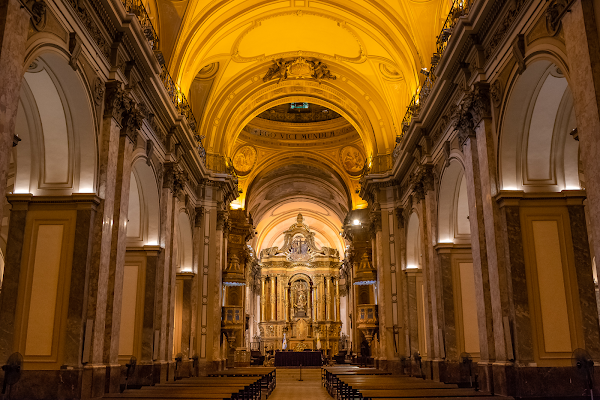
Buenos Aires Metropolitan Cathedral
View on map
3
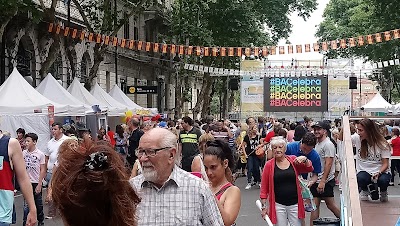
Buenos Aires Celebra Av De Mayo
View on map
4
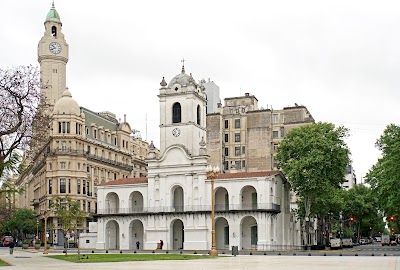
Museo Nacional del Cabildo de Buenos Aires y de la Revolución de Mayo
View on map
5
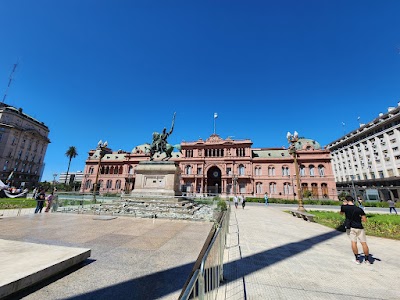
Casa Rosada
View on map
6
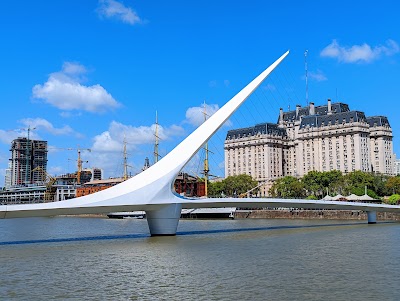
Woman's Bridge
View on map
Audio Narrations
Introduction
The Woman's Bridge, a rotating footbridge spanning 170 meters across Dique № 3 in Buenos Aires, Argentina, is a captivating architectural marvel designed by renowned Spanish architect Santiago Calatrava. Opened in 2001, this unique structure is a harmonious blend of a cantilever spar cable-stayed bridge and a swing bridge. Its asymmetrical arrangement features a single mast with cables suspending a portion of the bridge that rotates 90 degrees on a white concrete pylon, allowing vessels to pass in less than two minutes. The bridge's design is said to represent the image of a couple dancing the tango, with the white mast symbolizing the man and the curve of the bridge representing the woman. This iconic landmark, named after the many streets in the Puerto Madero district that bear women's names, is a testament to Calatrava's innovative vision and has become a beloved symbol of Buenos Aires.Iconic Landmark
The Woman's Bridge in Buenos Aires, Argentina, is a striking architectural marvel that stands as an iconic landmark in the city's vibrant Puerto Madero district. Designed by renowned architect Santiago Calatrava, this pedestrian bridge is a testament to his innovative vision and engineering prowess. Its unique design, inspired by the tango, features a single mast with cables suspending a portion of the bridge that rotates 90 degrees to allow water traffic to pass. This graceful movement, reminiscent of a couple dancing the tango, has earned the bridge its affectionate nickname, "The Tango Bridge." Beyond its aesthetic appeal, the Woman's Bridge holds cultural significance as a symbol of the city's embrace of women and their contributions to society. Its name pays homage to the numerous streets in Puerto Madero named after prominent women in Argentine history. The bridge's design, with its curved lines and flowing form, is said to represent the feminine form, further solidifying its status as a tribute to women's empowerment. As an iconic landmark, the Woman's Bridge attracts visitors from around the world who marvel at its architectural ingenuity and symbolic meaning. Its distinctive silhouette has become synonymous with Buenos Aires, gracing countless postcards and travelogues. The bridge serves as a gathering place for locals and tourists alike, offering breathtaking views of the city skyline and the bustling port below. Whether admired from afar or experienced firsthand, the Woman's Bridge stands as a testament to the power of architecture to inspire, connect, and celebrate the human spirit.Symbol of Modern Buenos Aires
Woman's Bridge, a striking architectural marvel in the heart of Buenos Aires, stands as a testament to the city's modern spirit. Designed by renowned architect Santiago Calatrava, the bridge embodies the essence of contemporary Buenos Aires, blending innovation with elegance. Its sleek lines and graceful curves evoke the dynamism and vibrancy of the city, while its white concrete pylon and steel needle symbolize the strength and resilience of the Argentine people. As a pedestrian bridge, Woman's Bridge connects the bustling Puerto Madero district with the historic San Telmo neighborhood, creating a physical and symbolic link between the city's past and present. Its unique rotating mechanism, allowing vessels to pass through, further underscores the bridge's adaptability and modernity, reflecting Buenos Aires' embrace of progress and change.
7
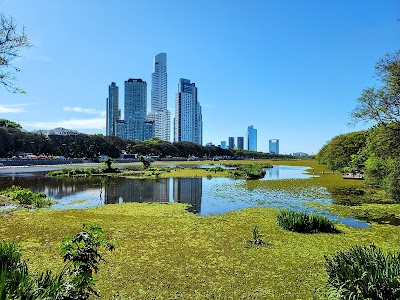
Costanera Sur
View on map
8
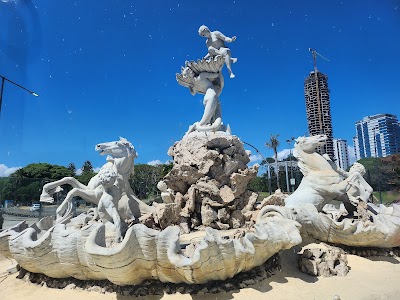
Fuente de las Nereidas (Lola Mora)
View on map
9
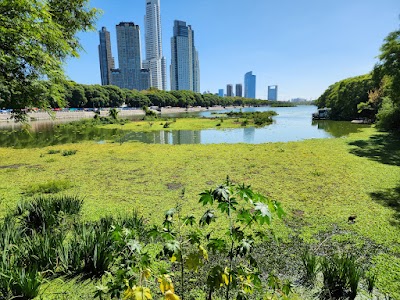
Reserva Ecológica Costanera Sur
View on map
Audio Narrations
Introduction
The Reserva Ecológica Costanera Sur, a sprawling 865-acre ecological reserve on the Río de la Plata riverbank in Buenos Aires, Argentina, is a haven for nature enthusiasts and urban dwellers alike. Once a bustling seaside promenade, the reserve was transformed in the 1970s when debris from urban highway construction was used to reclaim land from the river. Over time, a diverse ecosystem emerged, attracting over 300 species of birds, including the endangered sirirí pampa duck. Visitors can explore the reserve's four distinct ecosystems via a network of trails, encountering a variety of flora and fauna, including ceibo trees, the national flower of Argentina. The reserve also boasts several lagoons, providing a habitat for aquatic species like chajás and jacanas. Beyond its ecological significance, the reserve serves as an educational hub, offering programs for children and nature enthusiasts. Its visitor center features interactive exhibits showcasing the reserve's unique flora and fauna, while a native plant nursery contributes to the preservation and regeneration of the local ecosystem.Urban Oasis
Nestled amidst the bustling metropolis of Buenos Aires, the Reserva Ecológica Costanera Sur emerges as an unexpected oasis of tranquility. This urban sanctuary, once a landfill site, has been transformed into a verdant haven, offering respite from the city's relentless pace. Spanning over 350 hectares, the reserve is a testament to the resilience of nature. Its diverse habitats, including wetlands, grasslands, and forests, support a rich tapestry of flora and fauna. Over 2,000 species of plants and animals thrive within its boundaries, including native birds, reptiles, and mammals. As you venture into the reserve, the cacophony of urban life fades away, replaced by the soothing sounds of rustling leaves and bird song. The air is fresh and invigorating, carrying the scent of blooming flowers and the salty tang of the nearby Rio de la Plata. Meandering trails guide you through the reserve's varied landscapes, offering glimpses of hidden lagoons, towering trees, and vibrant wildflowers. Observation decks provide panoramic views of the surrounding wetlands, where you can witness the graceful flight of birds and the playful antics of turtles basking in the sun. The reserve is not only a haven for wildlife but also a sanctuary for human rejuvenation. Whether you seek solitude for meditation, a leisurely stroll, or an invigorating bike ride, the reserve offers a serene escape from the urban sprawl. Its tranquil atmosphere and abundant natural beauty provide a much-needed respite from the stresses of city life. As the sun begins its descent, the reserve transforms into a magical realm. The golden rays cast a warm glow on the landscape, creating a picturesque backdrop for evening picnics and stargazing. The reserve's proximity to the city skyline offers a unique juxtaposition of urban and natural beauty, reminding visitors of the delicate balance between human development and the preservation of nature.Coastal Ecosystem
Reserva Ecológica Costanera Sur, a coastal ecosystem in Buenos Aires, Argentina, stands as a testament to the resilience of nature amidst urban sprawl. Once a neglected landfill, it has been transformed into a thriving habitat for diverse flora and fauna. The reserve's wetlands, marshes, and grasslands provide critical breeding and feeding grounds for migratory birds, including the endangered Hudsonian Godwit. Its proximity to the Río de la Plata estuary creates a unique brackish environment that supports a rich array of aquatic species, including fish, crustaceans, and mollusks. The reserve's coastal location plays a vital role in regulating the city's microclimate, acting as a natural buffer against flooding and erosion. Its dense vegetation absorbs carbon dioxide and releases oxygen, contributing to air quality and mitigating the urban heat island effect. The reserve also serves as a natural water filtration system, improving the quality of water in the adjacent river. Beyond its ecological significance, the reserve offers a sanctuary for recreation and environmental education. Visitors can explore its trails, engage in birdwatching, and learn about the importance of coastal ecosystems through interactive exhibits and guided tours. The reserve's proximity to the city center makes it an easily accessible destination for residents and tourists alike, fostering a greater appreciation for the delicate balance between urban development and natural conservation.
10
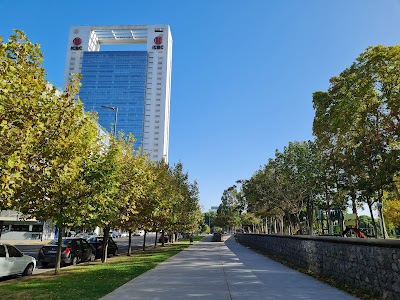
Raquel Forner Park
View on map
Audio Narrations
Introduction
Nestled in the heart of Buenos Aires, Raquel Forner Park, a verdant oasis, unfolds its beauty. This urban sanctuary, named after the renowned Argentine artist, invites visitors to immerse themselves in its tranquil embrace. Upon entering the park, one is greeted by a symphony of colors and textures. Lush green lawns, adorned with vibrant flowerbeds, create a picturesque canvas. Towering trees, their branches reaching towards the sky, provide a welcome shade from the bustling city life. The park's winding paths, lined with benches, offer a serene setting for leisurely strolls or quiet contemplation. At the heart of the park lies a charming pond, its tranquil waters reflecting the surrounding greenery. A graceful bridge, adorned with intricate details, spans the pond, inviting visitors to cross over and explore the hidden corners of this urban retreat. Raquel Forner Park is not merely a green space; it is a vibrant hub of cultural and artistic expression. The park's open-air amphitheater hosts a variety of events, from musical performances to theatrical productions. Art installations, scattered throughout the park, add a touch of whimsy and inspiration to the landscape. For those seeking a moment of respite, the park's library offers a tranquil haven. Its collection of books, spanning various genres, provides an escape from the everyday hustle and bustle. Raquel Forner Park is a testament to the city's commitment to preserving green spaces and fostering cultural enrichment. It is a place where nature and art converge, creating an unforgettable experience for visitors of all ages.Abstract Expressionism
Raquel Forner Park: A Canvas of Concrete and Sky Nestled in the heart of Buenos Aires, Raquel Forner Park transcends its role as a mere green space. It becomes a living canvas, echoing the spirit of Abstract Expressionism through its bold forms and unbridled creativity. Forner, a renowned Argentine artist deeply influenced by the movement, left an indelible mark on the park's design. The towering concrete structures, reminiscent of Willem de Kooning's gestural brushstrokes, rise against the azure sky, creating a dynamic interplay of light and shadow. The park's open layout invites exploration and interpretation, much like an abstract painting. Visitors become active participants, wandering through the labyrinthine pathways and discovering hidden corners that reveal new perspectives. The interplay of geometric shapes and organic forms evokes the works of Mark Rothko, inviting contemplation and introspection. Water features, reminiscent of Jackson Pollock's drip paintings, add an element of fluidity and movement to the landscape. The cascading waterfalls and reflecting pools create a mesmerizing spectacle, blurring the lines between reality and abstraction. Raquel Forner Park is not merely a park; it's a testament to the boundless imagination and raw emotion that define Abstract Expressionism. It's a place where art transcends its traditional boundaries, spilling onto the urban landscape and inviting everyone to engage in a dialogue with its bold forms and evocative spaces.Geometric Harmony
Raquel Forner Park: A Symphony of Geometric Harmony Nestled in the heart of Buenos Aires, Raquel Forner Park transcends the typical green space, transforming into a living canvas of geometric harmony. Designed by the renowned Argentine artist Raquel Forner, the park is a testament to her unique vision, where art and nature intertwine in a mesmerizing dance of form and function. Upon entering, visitors are greeted by a mesmerizing interplay of geometric shapes. The park's layout is a masterful composition of circles, squares, and triangles, each element meticulously placed to create a sense of balance and rhythm. The pathways themselves become an integral part of the design, winding through the landscape like graceful lines, inviting exploration and contemplation. Forner's artistic touch is evident in the park's sculptures, which are strategically positioned to accentuate the geometric harmony. Abstract forms in vibrant colors emerge from the greenery, adding a playful touch to the landscape. These sculptures are not mere decorations; they are integral components of the park's narrative, engaging the viewer in a dialogue between art and nature. The park's geometric precision extends to its plant life. Rows of neatly trimmed hedges and strategically placed trees create a sense of order and structure. The use of repetition and symmetry reinforces the park's overall theme of geometric harmony, offering a sense of tranquility and visual delight. Raquel Forner Park is not just a park; it's an immersive experience, a living testament to the power of geometric harmony. It's a place where art and nature converge, where visitors can lose themselves in the beauty of form and find solace in the rhythmic interplay of shapes and colors.
11
Florida y Lavalle
View on map
Audio Narrations
Introduction
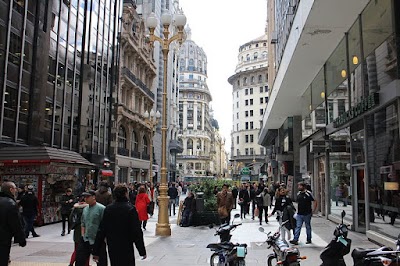
Florida y Lavalle, a vibrant intersection in the heart of Buenos Aires, pulsates with the city's energy. The iconic Florida pedestrian street, a haven for shoppers and strollers, intersects with the bustling Lavalle, renowned for its theaters and cultural offerings. Here, history and modernity converge, creating a unique urban tapestry. The intersection is a gateway to the city's cultural scene. The magnificent Teatro Colón, a world-renowned opera house, stands majestically on the corner of Florida and Libertad, just steps away from Lavalle. Its opulent interiors and world-class performances captivate audiences from around the globe. Across the street, the Gran Rex cinema, a landmark of Art Deco architecture, offers a glimpse into the golden age of cinema. Beyond the theaters, Florida y Lavalle is a shopper's paradise. The Galerías Pacífico, a stunning shopping arcade with stained-glass ceilings and intricate mosaics, houses a diverse array of boutiques and department stores. Along Florida, street vendors offer everything from souvenirs to handcrafted leather goods, while sidewalk cafes provide a respite from the bustling crowds. The intersection is also a hub for transportation. The Florida and Lavalle subway stations connect passengers to various parts of the city, while numerous bus lines traverse the area. The iconic yellow taxis, a symbol of Buenos Aires, are readily available, offering a convenient way to explore the city's vibrant neighborhoods. Florida y Lavalle is a microcosm of Buenos Aires, where history, culture, and commerce intertwine. It is a place where locals and tourists alike come together to experience the city's unique charm and energy.Architectural Landmarks
Architectural Landmarks of Florida y Lavalle: A Fusion of Styles and Eras Florida y Lavalle, a vibrant intersection in the heart of Buenos Aires, Argentina, boasts a fascinating tapestry of architectural styles, reflecting the city's rich history and cultural influences. From the grandeur of the Art Deco Palacio Barolo to the Neoclassical elegance of the Teatro Colón, each landmark tells a unique story. The Palacio Barolo, a towering 100-meter behemoth, stands as a testament to Dante Alighieri's Divine Comedy. Its intricate details, including a lighthouse at the top symbolizing the ninth circle of Paradise, and the reddish-orange brickwork reminiscent of the Florentine Palazzo Vecchio, transport visitors to a bygone era. Across the street, the Teatro Colón, a majestic opera house, showcases a blend of Italian Renaissance and French Baroque styles. Its horseshoe-shaped auditorium, adorned with intricate carvings and gilded balconies, provides an opulent setting for world-renowned performances. Just a few steps away, the Galería Güemes, a commercial and residential complex, offers a glimpse into Art Nouveau architecture. Its curved lines, stained-glass windows, and ornate metalwork create a sense of whimsy and elegance. Further down Florida, the Edificio Otto Wulff, a former department store, stands as a prime example of Art Deco architecture. Its geometric shapes, bold colors, and streamlined design reflect the modern aesthetic of the 1930s. These architectural gems, along with numerous other landmarks in the area, showcase the diverse influences that have shaped Buenos Aires' cityscape. From the grandeur of European styles to the innovative spirit of Art Deco, Florida y Lavalle offers a captivating journey through the city's architectural history.Historical Commercial Hub
Florida y Lavalle: A Historical Commercial Hub in Buenos Aires The intersection of Florida and Lavalle streets in Buenos Aires holds a rich history as a commercial hub, dating back to the city's early days. In the 18th century, the area was a bustling marketplace, with merchants selling everything from food and textiles to furniture and tools. As the city grew, so did the importance of Florida and Lavalle, becoming a major shopping destination for both locals and visitors. In the early 20th century, the area underwent a major transformation. Grand department stores like Gath & Chaves and Harrods opened their doors, attracting shoppers from all over Argentina and beyond. These stores offered a wide variety of goods, from high-end fashion to everyday necessities, and helped to solidify Florida and Lavalle's reputation as a premier shopping destination. The mid-20th century saw the arrival of international brands and the construction of modern shopping malls, further enhancing the area's commercial appeal. Today, Florida and Lavalle remain a vibrant commercial hub, with a mix of traditional stores, modern shopping centers, and trendy boutiques. The area is also home to numerous restaurants, cafes, and bars, making it a popular destination for both shopping and leisure. Beyond its commercial significance, Florida and Lavalle also hold historical and cultural importance. The iconic Obelisco, a towering monument commemorating the 400th anniversary of the city's founding, stands at the intersection of the two streets. The Teatro Colón, one of the world's leading opera houses, is also located nearby. These landmarks, along with the area's rich architectural heritage, make Florida and Lavalle a fascinating place to explore. Whether you're a history buff, a shopping enthusiast, or simply looking for a vibrant and exciting place to visit, Florida and Lavalle in Buenos Aires offer a unique and unforgettable experience.
12
Cartel BA Verde
View on map
13
Obelisco
View on map
Audio Narrations
Introduction
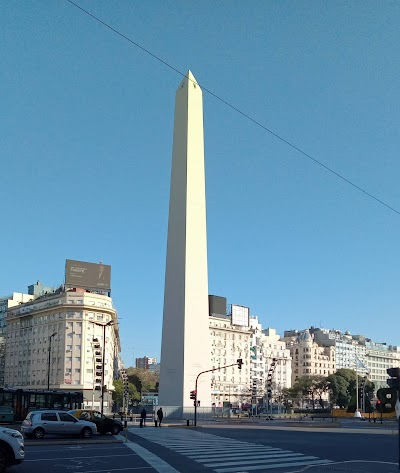
The Obelisco de Buenos Aires, a 71.5-meter-tall obelisk made of Cordoba white stone, stands at the intersection of Av. Corrientes and Av. 9 de Julio. Designed by Argentine architect Alberto Prebisch, it was built in 1936 to commemorate the 400th anniversary of Buenos Aires' first founding. The obelisk's height makes it visible from most parts of the city and has become a popular meeting spot. It has hosted events like the opening ceremony of the 2018 Summer Youth Olympics. Despite initial criticism, the obelisk has become an iconic symbol of Buenos Aires, with a sonnet by Baldomero Fernández Moreno immortalized at its base.Architectural Symbol
The Obelisco in Buenos Aires, Argentina, stands as a towering architectural symbol, embodying the city's rich history and vibrant spirit. Designed by Alberto Prebisch, this iconic monument was erected in 1936 to commemorate the 400th anniversary of the city's founding. Its sleek, minimalist form, devoid of ornamentation, reflects the modernist architectural style prevalent at the time. The obelisk's stark white exterior, composed of Olaen stone from Córdoba, contrasts strikingly with the surrounding cityscape, making it a focal point from afar. Its simple yet imposing presence has become synonymous with Buenos Aires, serving as a beacon of national pride and a symbol of the city's architectural heritage.Historical Landmark
The Obelisco in Buenos Aires, Argentina, is a towering monument that stands as a testament to the city's rich history. Erected in 1936 to commemorate the 400th anniversary of Buenos Aires' founding, the obelisk stands at the intersection of two of the city's most prominent thoroughfares, Avenida 9 de Julio and Avenida Corrientes. Its imposing height of 67.5 meters makes it visible from various points across the city. The obelisk's design is a testament to the architectural prowess of Alberto Prebisch, who drew inspiration from ancient Egyptian obelisks. Constructed from Cordoba white stone, the monument features four sides, each adorned with intricate carvings depicting significant moments in Buenos Aires' history. These carvings include the city's founding in 1536, its second foundation in 1580, the raising of the Argentine flag in 1812, and the declaration of Buenos Aires as the nation's capital in 1880. Over the years, the Obelisco has become an iconic symbol of Buenos Aires, serving as a gathering point for celebrations, protests, and cultural events. Its significance as a historical landmark is further enhanced by its location on the site of the former San Nicolas church, where the Argentine flag was first raised in 1812. Today, the Obelisco stands as a beacon of Buenos Aires' past, present, and future, attracting visitors from around the world who seek to delve into the city's captivating history.
14
Teatro Colón
View on map
Audio Narrations
Introduction
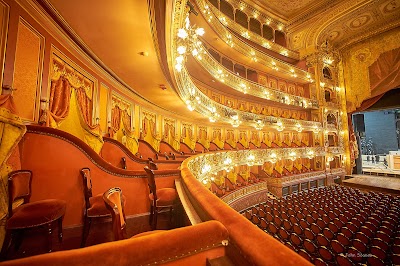
Teatro Colón, a world-renowned opera house in Buenos Aires, Argentina, stands as a testament to architectural grandeur and acoustic brilliance. Inaugurated in 1908, its horseshoe-shaped auditorium boasts 2,487 seats and a stage renowned for its vast dimensions. The theater's interior is adorned with opulent scarlet and gold decor, while the cupola features stunning 20th-century artwork by Raúl Soldi. Beyond its aesthetic splendor, Teatro Colón is celebrated for its exceptional acoustics, consistently ranked among the finest in the world. The theater's acoustics are attributed to its horseshoe shape, which allows for optimal sound reflection, and the strategic use of both hard and soft materials. This acoustic marvel has graced the performances of legendary artists, including Enrico Caruso, Luciano Pavarotti, and Maria Callas, solidifying Teatro Colón's reputation as a global hub for opera, ballet, and classical music.Tourism Destination
Nestled in the heart of Buenos Aires, Teatro Colón stands as a beacon of architectural grandeur and cultural heritage. Completed in 1908 after two decades of construction, this opulent opera house is renowned for its exceptional acoustics, which have captivated audiences for over a century. With a seating capacity of 2,500 and standing room for an additional 500, Teatro Colón has hosted legendary opera singers, ballet dancers, and classical musicians. Beyond its performances, Teatro Colón offers guided tours that delve into its rich history and intricate details. Visitors can explore the Hall of Busts, adorned with sculptures of renowned composers, and the Golden Lounge, a replica of the Hall of Mirrors at Versailles. The tour also showcases the theater's impressive technical features, including a massive chandelier that can be lowered to allow musicians to perform from within. Teatro Colón's significance extends beyond its artistic offerings. It has played a pivotal role in Argentine society, serving as a gathering place for the elite and a symbol of national pride. Its restoration in the early 21st century, which cost a staggering $100 million, underscores its enduring importance as a cultural landmark. For discerning travelers seeking an immersive cultural experience, Teatro Colón is an unmissable destination. Its architectural splendor, world-class performances, and historical significance make it a captivating destination for those who appreciate the finer things in life.World-Class Performances
Teatro Colón, a majestic architectural marvel in Buenos Aires, Argentina, stands as a testament to the city's rich cultural heritage. Renowned for its world-class performances, the theater has hosted legendary artists and captivated audiences for over a century. The acoustics of Teatro Colón are legendary, consistently ranked among the finest in the world. Its horseshoe-shaped auditorium and meticulously chosen materials create an immersive soundscape that transports listeners to another realm. The theater's stage has witnessed unforgettable performances by renowned opera singers, ballet dancers, and symphony orchestras. Teatro Colón's commitment to artistic excellence is evident in its diverse programming. From grand operas to intimate chamber concerts, the theater offers a wide range of performances that cater to discerning tastes. Its resident companies, including the Teatro Colón Orchestra and Ballet, are celebrated for their virtuosity and artistry. Beyond its performances, Teatro Colón is a treasure trove of architectural and artistic wonders. Guided tours provide an exclusive glimpse into the theater's opulent interiors, adorned with marble staircases, lavish furnishings, and exquisite artwork. Visitors can marvel at the Golden Hall, a breathtaking space inspired by the Hall of Mirrors at Versailles, and the Hall of Busts, which pays homage to opera's greatest composers. For those seeking an unforgettable cultural experience, Teatro Colón offers a unique opportunity to witness world-class performances in an unparalleled setting. Its rich history, exceptional acoustics, and commitment to artistic excellence make it a must-visit destination for any discerning traveler.
15
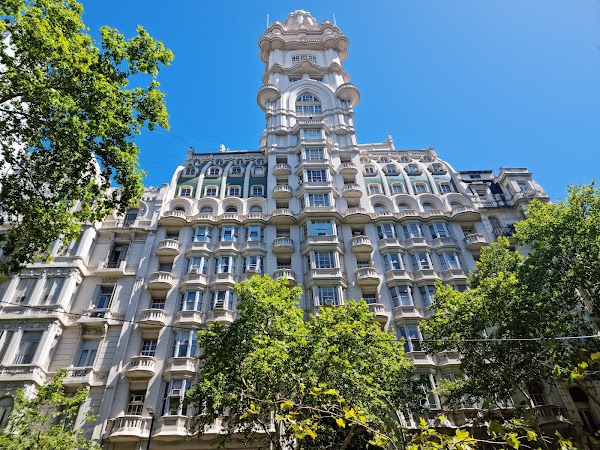
Palacio Barolo
View on map
Audio Narrations
Introduction
Palacio Barolo, a national historic monument in Buenos Aires, Argentina, stands as a testament to Dante Alighieri's Divine Comedy. Designed by Italian architect Mario Palanti, this eclectic skyscraper is a unique blend of neo-Romanesque and neo-Gothic styles. Its 22 floors represent the three realms of the Divine Comedy: hell, purgatory, and heaven. The building's height of 100 meters symbolizes the 100 cantos of the poem, while the lighthouse at its peak represents the nine choirs of angels. The lobby features inscriptions in Latin verse and monster statues, while the first three floors showcase alchemical symbols and Masonic iconography. The building's foundations adhere to the golden ratio, and its ornamental spire aligns with the Southern Cross constellation on Argentine Independence Day.National Monument
Palacio Barolo, a towering architectural marvel in Buenos Aires, Argentina, stands as a testament to the enduring legacy of Italian immigrant Luis Barolo and his admiration for Dante Alighieri's Divine Comedy. Designated a National Historic Monument in 1997, this 22-story office building is a masterpiece of eclectic design, blending elements of Art Nouveau, Gothic, and Renaissance styles. Barolo's vision was to create a sanctuary for Dante's remains, believing that Europe was on the brink of destruction. The building's intricate symbolism reflects the poet's epic journey through Hell, Purgatory, and Paradise. The basement and ground floor represent Hell, while floors 1-14 symbolize Purgatory. The upper floors, 15-22, represent Heaven, culminating in a lighthouse that once housed a powerful beam visible from Uruguay. Palacio Barolo's architectural details are a testament to Barolo's passion for Dante's work. Latin inscriptions adorn the facade, and the building's height of 100 meters corresponds to the 100 cantos of the Divine Comedy. The bronze dome, inspired by a Hindu temple, represents the union of Dante and his beloved Beatrice. Today, Palacio Barolo remains a vibrant hub of activity, housing offices and businesses. Guided tours offer visitors a glimpse into its architectural wonders and the fascinating story behind its creation. As a National Historic Monument, Palacio Barolo stands as a symbol of Buenos Aires' rich cultural heritage and a testament to the enduring power of art and architecture.Dante's Divine Comedy
Palacio Barolo, a majestic edifice in Buenos Aires, stands as a testament to the profound influence of Dante's Divine Comedy. Conceived by Italian immigrant Luis Barolo and architect Mario Palanti, the building's design meticulously mirrors the structure and themes of Dante's epic poem. The building's 100-meter height corresponds to the 100 cantos of the Divine Comedy, while its 22 floors reflect the 22 stanzas in each canto. The nine access points represent the nine circles of Hell, and the still-functioning lighthouse symbolizes the nine angelic choirs. The Southern Cross constellation, aligned with its actual position on Argentine Independence Day, adorns the top of the lighthouse. Throughout the building, intricate details evoke the Divine Comedy. The lobby's central dome radiates out into nine vaulted archways, representing the circles of Hell. Geometric figures and Masonic symbols adorn the walls and floors, hinting at the alchemical and esoteric themes of the poem. Visitors can ascend through the building, experiencing the journey from Hell through Purgatory to Paradise. The observation deck on the 21st floor offers breathtaking panoramic views of Buenos Aires, while the highest point, the lighthouse, provides a glimpse of the celestial realm. Palacio Barolo is not merely a building but a living testament to the enduring power of Dante's masterpiece. Its unique architectural features and symbolic details invite visitors to immerse themselves in the rich tapestry of the Divine Comedy, making it a must-visit destination for anyone seeking a deeper understanding of Dante's literary genius.
Experience the Full Tour
Download the DocentPro app to access all tour stops, complete audio narrations in multiple languages, offline maps, and interactive features.