
Chicago's Architectural Wonders: A Journey Through Time and Design

Walking Tour

5.3 km (3.3 miles)

1h 17min travel time

9 Stops

Chicago, United States
Chicago's Architectural Wonders: A Journey Through Time and Design
Tour Stops
1
Millennium Park
View on map
Audio Narrations
English
Introduction
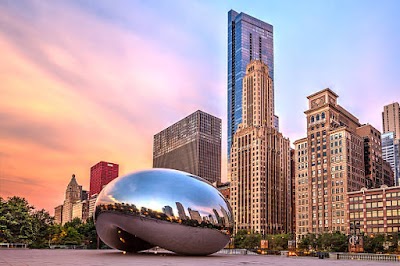
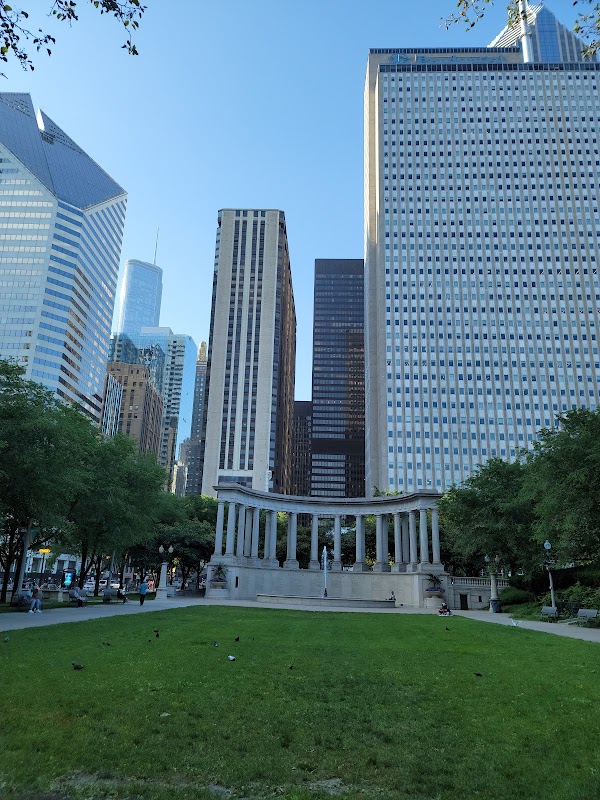
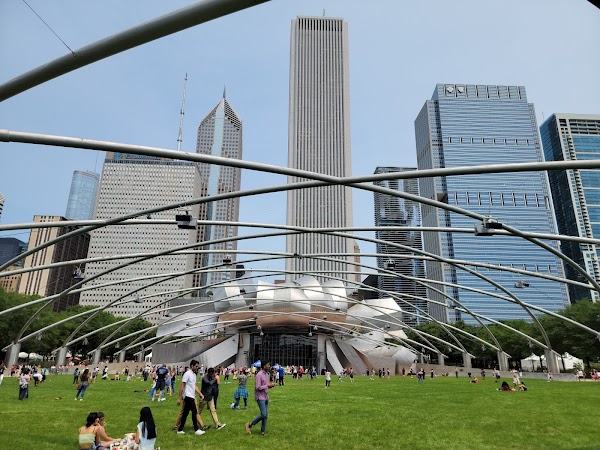
Millennium Park, a 24.5-acre urban oasis in the heart of Chicago's Loop, is a stunning blend of art, architecture, and landscape design. Its iconic Cloud Gate sculpture, affectionately known as "The Bean," reflects the city skyline in its polished surface, creating a captivating spectacle. The Jay Pritzker Pavilion, designed by Frank Gehry, hosts free concerts and events, while the Crown Fountain offers interactive water jets and video projections. Lurie Garden, a botanical masterpiece, showcases native perennials and bulbs, providing a tranquil escape amidst the bustling downtown. Maggie Daley Park, a kid's paradise, features a whimsical Play Garden and an 18-hole mini golf course. The McCormick Tribune Plaza & Ice Rink transforms into a winter wonderland, offering free ice skating against the backdrop of Cloud Gate. Millennium Park's commitment to accessibility and sustainability has earned it numerous awards, making it a must-visit destination for art enthusiasts, nature lovers, and urban explorers alike.Crown Fountain
The Crown Fountain, a mesmerizing interactive art installation at Millennium Park, captivates visitors with its unique blend of art, technology, and playfulness. Designed by Spanish artist Jaume Plensa, the fountain features two 50-foot glass towers adorned with LED screens displaying a mesmerizing array of faces from Chicago's diverse population. The faces periodically "spit" water into the shallow pool below, creating an enchanting spectacle that delights children and adults alike. The fountain's design evokes traditional gargoyles while paying homage to the city's vibrant spirit. The surrounding plaza invites visitors to wade and splash, providing respite from the urban heat and fostering a sense of community. The Crown Fountain has become an iconic symbol of Millennium Park, attracting millions of visitors annually with its innovative concept and captivating visual experience.Harris Theater
Nestled within the heart of Millennium Park, the Harris Theater stands as a testament to the vibrant performing arts scene in Chicago. Designed by renowned architect Thomas Beeby, this subterranean venue boasts exceptional acoustics and an intimate atmosphere that has captivated audiences since its opening in 2003. The theater's unique location beneath the Jay Pritzker Pavilion allows for seamless access to both indoor and outdoor performances. Its 1,499-seat auditorium provides an immersive experience, with all seats offering an unobstructed view of the stage. The state-of-the-art proscenium and flyspace cater to a wide range of productions, from intimate chamber concerts to grand-scale dance performances. Beyond its technical prowess, the Harris Theater is a hub for artistic innovation. It serves as a home base for numerous local performing arts organizations, providing them with subsidized rental, technical expertise, and marketing support. This nurturing environment has fostered the growth of Chicago's thriving arts community. The theater's commitment to accessibility extends beyond its physical design. Discounted parking and ticket programs ensure that the arts remain accessible to all. Its partnership with the Millennium Park Foundation further supports its mission of promoting the performing arts and enriching the cultural landscape of Chicago.
2
Cloud Gate
View on map
Audio Narrations
English
Introduction
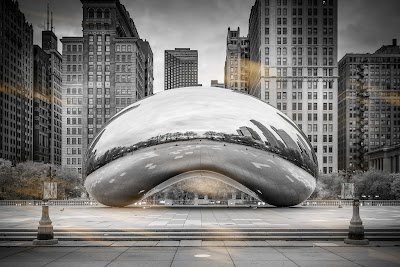
Cloud Gate, affectionately known as "The Bean," is a captivating public sculpture by renowned artist Anish Kapoor, gracing the heart of Chicago's Millennium Park. This iconic landmark, measuring an impressive 33 by 66 by 42 feet and weighing 110 tons, is a seamless masterpiece of 168 stainless steel plates welded together without visible seams. Its highly polished exterior reflects and distorts the city's skyline, creating a mesmerizing visual spectacle. Visitors can marvel at the sculpture's unique properties by walking around and under its 12-foot arch, discovering the "omphalos" beneath – a concave chamber that warps and multiplies reflections, offering an immersive and interactive experience. Cloud Gate's design draws inspiration from liquid mercury, symbolizing the fluidity and dynamism of the city it represents.Reflective Surface
Cloud Gate, the iconic sculpture in Chicago's Millennium Park, is renowned for its captivating reflective surface. Crafted from 168 stainless steel plates seamlessly welded together, its highly polished exterior creates a mirror-like effect, reflecting the city's skyline and the ever-changing sky above. The sculpture's elliptical shape distorts and warps the reflections, offering a unique and dynamic perspective on the surrounding environment. Visitors can walk around and under Cloud Gate's 12-foot arch, immersing themselves in a kaleidoscope of reflections that shift and transform with every step. The concave chamber beneath the sculpture, known as the "omphalos," further enhances the reflective experience, creating an infinite and disorienting play of light and form. Cloud Gate's reflective surface not only captures the essence of Chicago's urban landscape but also invites viewers to engage with their own reflections, fostering a sense of introspection and connection to the city.Omphalos
The Omphalos, a concave chamber located on the underside of Cloud Gate, is a captivating feature that invites visitors to engage with the sculpture in a unique and immersive way. Its mirrored surface creates multiple reflections, distorting and multiplying the images of those who stand beneath it. The apex of the Omphalos rises 27 feet above the ground, providing a distorted and disorienting perspective that challenges conventional notions of space and perception. This immersive experience transforms the Omphalos into a portal, blurring the boundaries between the physical and the ethereal, the real and the imagined.
3
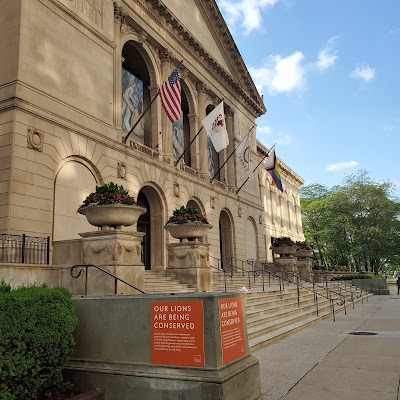
The Art Institute of Chicago
View on map
Audio Narrations
English
Introduction
The Art Institute of Chicago, a renowned art museum in the heart of Chicago, Illinois, boasts an impressive collection spanning over 5,000 years of human creativity. Its collection of Impressionist and Post-Impressionist paintings is considered one of the finest outside France, featuring masterpieces by Monet, Renoir, and Seurat. The museum also houses significant works from ancient Egypt, Greece, and Rome, as well as a vast collection of Asian art, including Japanese screens and Chinese bronzes. The Modern Wing, designed by renowned architect Renzo Piano, showcases 20th and 21st-century art, including works by Picasso, Matisse, and Warhol. With its diverse collection, educational programs, and stunning architecture, the Art Institute of Chicago offers an unparalleled artistic experience for visitors of all ages.Photography
The Art Institute of Chicago, a renowned institution in the art world, holds a significant collection of photography, showcasing the medium's evolution from its inception to contemporary practices. The museum's photography department actively acquires and exhibits works that push the boundaries of the art form, featuring both established and emerging artists. The Art Institute's photography collection boasts a diverse range of genres, including documentary, portraiture, landscape, and abstract photography. It houses iconic works by masters such as Ansel Adams, Dorothea Lange, and Man Ray, alongside contemporary photographers like Cindy Sherman, Jeff Wall, and Rineke Dijkstra. The museum's curatorial approach emphasizes the interplay between photography and other artistic disciplines, exploring its influence on painting, sculpture, and film. Beyond its collection, the Art Institute offers a dynamic program of photography-related exhibitions, workshops, and lectures. The museum's exhibitions often delve into specific themes or movements within photography, providing visitors with a deeper understanding of the medium's history and significance. Educational programs cater to enthusiasts of all levels, from beginner photographers to seasoned professionals. The Art Institute of Chicago's commitment to photography extends to its conservation and research initiatives. The museum's conservation team employs state-of-the-art techniques to preserve and restore photographic works, ensuring their longevity for future generations. Additionally, the museum's research library houses an extensive collection of books, periodicals, and archival materials related to photography, making it a valuable resource for scholars and researchers.Renzo Piano
Renzo Piano's Modern Wing at the Art Institute of Chicago is a masterpiece of contemporary architecture. The wing's flying-carpet canopy hovers over the building, capturing and directing light into the third-floor galleries. Its double-paned glass curtain wall conserves energy and maintains ideal gallery conditions. The Nichols Bridgeway, an airy bridge that soars 620 feet to the third floor of the Modern Wing, connects two hubs of Chicago’s civic life, the Modern Wing and Millennium Park. Piano's design for the Modern Wing is characterized by its lightness and airiness. The flying-carpet canopy is made of aluminum leaves that filter the sun to create the natural shaded light conditions ideal for viewing art. The Nichols Bridgeway is a slender, steel structure that seems to float above Monroe Street. The Modern Wing is home to the Art Institute's collection of modern and contemporary art, which includes works by Pablo Picasso, Henri Matisse, and Andy Warhol. The wing also houses the museum's Department of Architecture and Design, which has a collection of over 170,000 objects, drawings, models, and installations. Piano's Modern Wing is a significant addition to the Art Institute of Chicago. The wing's innovative design and its collection of modern and contemporary art make it a must-see for any visitor to Chicago.
4
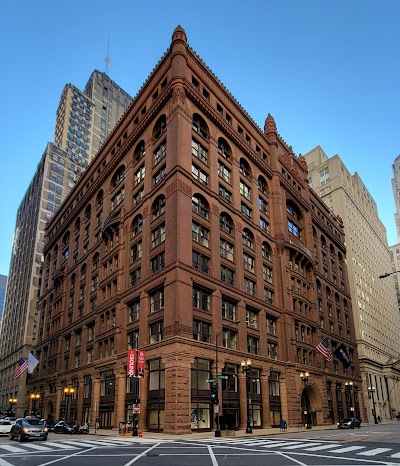
The Rookery Building
View on map
5

Chicago Board of Trade Building
View on map
6
Willis Tower
View on map
Audio Narrations
English
Introduction
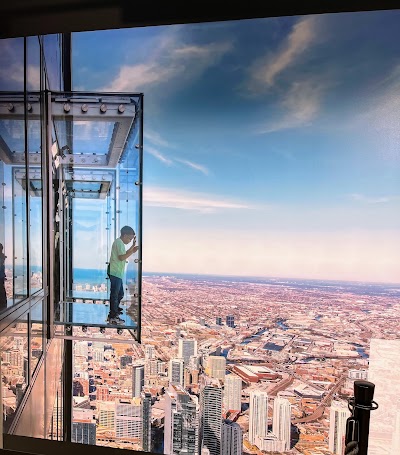
The Willis Tower, formerly known as the Sears Tower, is an iconic skyscraper in Chicago, Illinois. Standing at 110 stories and 1,450 feet tall, it was once the world's tallest building. Its innovative design features nine square "tubes" that form a 3x3 matrix, providing structural efficiency and ample space. The exterior is clad in black aluminum and bronze-tinted glass, with black bands marking the mechanical areas. The Skydeck on the 103rd floor offers breathtaking views of Chicago and beyond, including four glass boxes that extend from the building, known as "The Ledge." The Willis Tower is a testament to architectural ingenuity and a symbol of Chicago's skyline.Historical Landmark
Willis Tower, formerly known as the Sears Tower, is a historical landmark in Chicago, Illinois, United States, renowned for its architectural significance and cultural impact. Completed in 1973, it held the title of the world's tallest building for nearly 25 years. Its innovative design, featuring a bundled tube structural system, revolutionized skyscraper construction and set new standards for high-rise architecture. Willis Tower's striking silhouette, with its distinctive black anodized aluminum exterior, has become an iconic symbol of Chicago's skyline and a beloved landmark for locals and visitors alike. It has been featured in numerous films, television shows, and other cultural works, further solidifying its status as a cultural touchstone.Skyscraper Design
Willis Tower, formerly known as the Sears Tower, stands as a testament to innovative skyscraper design. Its bundled tube system, a pioneering concept in structural engineering, revolutionized the construction of supertall buildings. The tower comprises nine square tubes, each measuring 75 feet by 75 feet, bundled together to form a cellular-tube frame. This design distributes wind loads more efficiently, allowing the tower to withstand high winds and seismic activity. The setbacks at the 50th, 66th, and 90th floors create a distinctive tiered form, reducing wind resistance and providing ample natural light to the interior spaces. The exterior skin, composed of black aluminum and bronze-tinted glass, serves as an insulator, minimizing temperature fluctuations and reducing energy consumption. The tower's structural design also incorporates diagonal columns below each setback, eliminating the need for diagonal beams that would obstruct interior connections. This innovative approach allowed for flexible floor plans and uninterrupted views from the interior. Willis Tower's design has influenced numerous subsequent supertall buildings, demonstrating its enduring impact on skyscraper architecture.
7
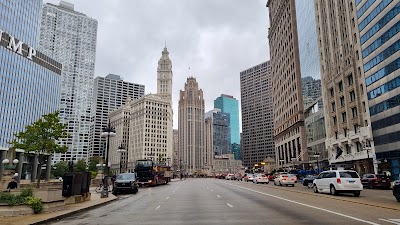
The Wrigley Building
View on map
Audio Narrations
English
Introduction
The Wrigley Building, a gleaming white beacon on Chicago's Magnificent Mile, stands proudly where Michigan Avenue crosses the Chicago River. Completed in 1924, this architectural marvel was the first major office building constructed north of the river, ushering in the rapid commercial development of North Michigan Avenue. Designed by the renowned firm Graham, Anderson, Probst & White, the Wrigley Building draws inspiration from the Giralda tower of Seville's Cathedral, boasting a blend of Spanish Colonial Revival and French Renaissance details. Its two towers, clad in glazed terra-cotta, offer stunning views of the city skyline. The south tower, adorned with a four-faced clock, reaches 30 stories, while the north tower stands at 21 stories. The Wrigley Building was Chicago's first air-conditioned office building and has been continuously floodlit since its completion, with only three exceptions: during World War II, a lighting upgrade in 1971, and the energy crisis of 1973-74. In a nod to its history, the building's name remains unchanged, even after its sale in 2011. Today, the Wrigley Building is not only a testament to Chicago's architectural heritage but also a vibrant hub for businesses and cultural events, offering a unique blend of history, elegance, and modern amenities.Spanish Colonial Revival
The Wrigley Building: A Spanish Jewel in Chicago's Crown The Wrigley Building, a towering landmark in Chicago's skyline, is a unique example of Spanish Colonial Revival architecture in a city known for its modern skyscrapers. Completed in 1924, the building was commissioned by chewing gum magnate William Wrigley Jr. and designed by architects Graham, Anderson, Probst & White. The Wrigley Building's Spanish Colonial Revival style is evident in its terracotta facade, adorned with intricate details like quatrefoil windows, decorative tilework, and wrought iron balconies. The building's two towers are reminiscent of Spanish mission bell towers, further emphasizing the architectural theme. The interior boasts a grand lobby with a vaulted ceiling, ornate plasterwork, and colorful tile murals depicting scenes from Spanish history and mythology. One of the most striking features of the Wrigley Building is its clock tower, which rises 325 feet above the street. The clock faces are made of opal glass and are illuminated at night, creating a beacon in the Chicago cityscape. The building's intricate details and vibrant colors stand in stark contrast to the surrounding modern architecture, making it a captivating landmark that embodies the spirit of Spanish Colonial Revival in the heart of Chicago. The Wrigley Building's unique architectural style has made it a popular tourist destination and a beloved icon of the city. It is a testament to the enduring appeal of Spanish Colonial Revival architecture and its ability to add a touch of old-world charm to a modern metropolis.Architectural Icon
The Wrigley Building, a majestic skyscraper in Chicago, Illinois, stands as a testament to architectural innovation and a symbol of the city's vibrant history. Its unique design and intricate details have earned it the status of an architectural icon, captivating the attention of architects, historians, and enthusiasts worldwide. One of the most striking features of the Wrigley Building is its distinctive white terra cotta facade, adorned with intricate carvings and sculptures. The building's design draws inspiration from the Giralda Tower in Seville, Spain, and features a blend of Spanish Renaissance and Gothic Revival styles. The intricate details, including gargoyles, grotesques, and heraldic shields, add a sense of grandeur and opulence to the structure. The Wrigley Building's clock tower, a prominent landmark in the Chicago skyline, is another notable architectural feature. The four-faced clock, adorned with intricate carvings and sculptures, is a masterpiece of craftsmanship. The clock tower's chimes, which play the Westminster Quarters melody, have become a familiar sound in the city. The building's interior is equally impressive, featuring a grand lobby with a vaulted ceiling, marble floors, and ornate bronze fixtures. The walls are adorned with murals depicting scenes from Spanish history and mythology. The building's attention to detail and its luxurious appointments reflect the high standards of the Wrigley Company, which commissioned its construction. The Wrigley Building's architectural significance extends beyond its aesthetics. The building's steel frame construction, a pioneering technique at the time, allowed for the creation of a taller and more slender structure than previously possible. The building's innovative design and construction methods have influenced countless skyscrapers around the world. In conclusion, the Wrigley Building is an architectural icon that embodies the spirit of innovation, grandeur, and craftsmanship. Its unique design, intricate details, and historical significance have made it a beloved landmark in Chicago and a testament to the city's architectural heritage.
8
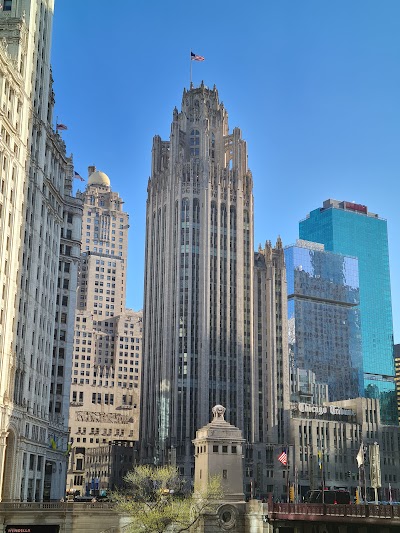
Tribune Tower
View on map
Audio Narrations
English
Introduction
The Tribune Tower, a majestic skyscraper in Chicago, Illinois, stands as a testament to the city's architectural prowess and rich journalistic history. Its distinctive Gothic Revival style, characterized by intricate carvings, flying buttresses, and a towering central spire, sets it apart from the city's predominantly modern skyline. The tower's exterior is adorned with a remarkable collection of stones and bricks from around the world, each bearing a unique story. Among these treasures are fragments from the Great Wall of China, the Taj Mahal, and the Roman Colosseum, creating a tangible connection to global history. Inside the Tribune Tower, a hidden gem awaits: the Tribune's "Wall of Fame." This extraordinary collection of autographed stones and bricks from famous individuals, including presidents, astronauts, and literary icons, offers a glimpse into the tower's rich past and its enduring legacy. Visitors can marvel at signatures from the likes of Winston Churchill, Albert Einstein, and Charles Lindbergh, each etched into the very fabric of the building. The Tribune Tower's unique design and historical significance have made it a beloved landmark in Chicago. Its intricate details, global connections, and hidden treasures continue to captivate visitors and locals alike, solidifying its place as a symbol of the city's architectural and cultural heritage.Haunted History
The Tribune Tower in Chicago, Illinois, is a skyscraper steeped in history and shrouded in eerie tales. Its construction, completed in 1925, was plagued by a series of misfortunes, including the deaths of several workers. These tragic events have led to the belief that the tower is haunted by their spirits. One of the most chilling stories associated with the Tribune Tower is the "Phantom Piper." Visitors and employees have reported hearing the faint sound of bagpipes echoing through the building, even though there is no piper present. Some believe that the sound is the ghost of a Scottish stonemason who died during construction. Another haunting tale involves the "Lady in Red." A woman in a red dress has been seen wandering the halls of the tower, particularly on the 13th floor. Some say that she is the ghost of a former employee who died in a fire. The Tribune Tower is also said to be haunted by the ghosts of Native Americans who were displaced when the building was constructed. Visitors have reported seeing shadowy figures and hearing strange noises in the basement, where the remains of an ancient burial ground were discovered. Despite its haunted reputation, the Tribune Tower remains a popular tourist destination. Visitors can take a guided tour of the building and learn about its history and its ghostly residents. The tower is also home to the Chicago Architecture Center, which offers exhibits on the city's architectural history. Whether you believe in ghosts or not, the Tribune Tower is a fascinating place with a rich history and a spooky atmosphere. If you're looking for a unique and eerie experience, be sure to add the Tribune Tower to your list of places to visit in Chicago.Gothic Revival Architecture
The Tribune Tower in Chicago, Illinois, stands as a testament to the Gothic Revival style, drawing inspiration from medieval European architecture. Its distinctive features, including intricate carvings, pointed arches, and flying buttresses, evoke a sense of grandeur and historical significance. One of the most striking elements of the Tribune Tower is its facade, adorned with intricate carvings that depict scenes from the history of journalism. These carvings, executed by renowned sculptor Rene Paul Chambellan, showcase the tower's dedication to the freedom of the press. The tower's pointed arches, a hallmark of Gothic architecture, create a sense of verticality and aspiration. These arches are supported by flying buttresses, which transfer the weight of the walls to the exterior, allowing for larger windows and a more open interior space. The Tribune Tower's gargoyles, grotesque figures that adorn the building's exterior, serve as both decoration and drainage spouts. These gargoyles, inspired by medieval cathedrals, add a touch of whimsy and mystery to the tower's design. The tower's interior also reflects the Gothic Revival style, with its vaulted ceilings, stained glass windows, and intricate woodwork. The grand lobby features a mosaic floor depicting the history of Chicago, while the walls are adorned with murals that celebrate the city's cultural heritage. In conclusion, the Tribune Tower in Chicago, Illinois, is a masterpiece of Gothic Revival architecture, showcasing the style's distinctive features and historical significance. Its intricate carvings, pointed arches, flying buttresses, gargoyles, and vaulted ceilings create a sense of grandeur and awe, making it a testament to the enduring legacy of Gothic architecture.
9
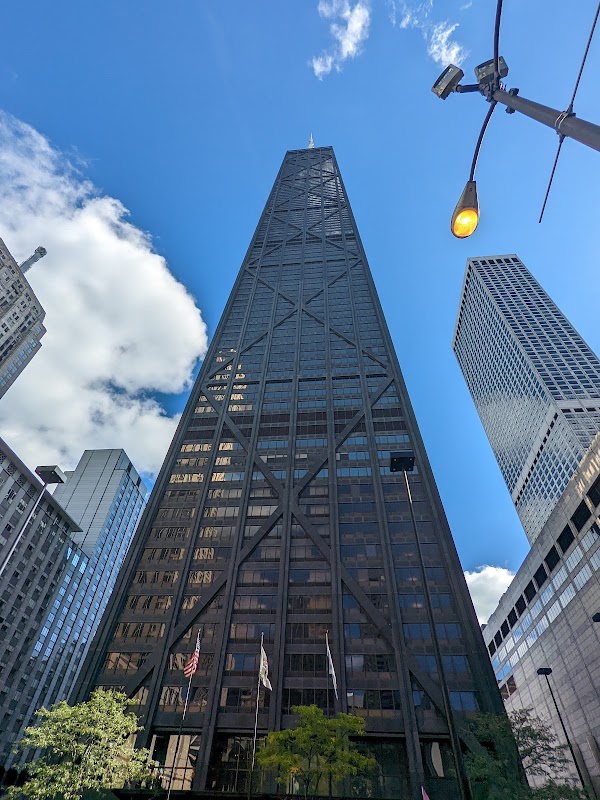
875 North Michigan Avenue
View on map
Audio Narrations
English
Introduction
875 North Michigan Avenue, formerly known as the John Hancock Center, is a 100-story skyscraper located in Chicago's Magnificent Mile district. Designed by renowned architect Bruce Graham and structural engineer Fazlur Rahman Khan, it stands as the fifth-tallest building in Chicago and the 13th-tallest in the United States. The building's distinctive X-braced exterior showcases its innovative "tubular system" engineering, which allows for greater height and open floor plans. 875 North Michigan Avenue is home to a mix of residential condominiums, retail spaces, and office areas. Its 94th-floor observatory, 360 Chicago, offers breathtaking panoramic views of the city and Lake Michigan. The building also features a 95th-floor restaurant and a 96th-floor bar, providing upscale dining experiences with stunning vistas.John Hancock Insurance
As the former namesake of 875 North Michigan Avenue, John Hancock Insurance played a pivotal role in the skyscraper's development and legacy. The company's decision to invest in the project transformed the Chicago skyline and established the building as a symbol of architectural innovation. The tower's distinctive black steel exterior, designed by Skidmore, Owings & Merrill, showcases the company's commitment to bold and visionary design. John Hancock Insurance's presence extended beyond the building's striking facade. The company occupied a significant portion of the office space, contributing to the building's status as a hub for commerce and finance. The 94th, 95th, and 96th floors were dedicated to the company's exclusive use, offering breathtaking views of the city and Lake Michigan. The 95th floor was home to the renowned Signature Room restaurant, providing diners with an unforgettable culinary experience amidst panoramic vistas. The building's amenities also reflected John Hancock Insurance's commitment to providing a premium experience for its employees and tenants. The 44th-floor sky lobby featured the highest indoor swimming pool in the United States, a luxurious perk that set the building apart from its contemporaries. The building's plaza, designed with a garden and waterfall, offered a tranquil oasis amidst the bustling city streets. John Hancock Insurance's association with 875 North Michigan Avenue extended beyond its physical presence. The company's name became synonymous with the building, solidifying its place in Chicago's architectural and cultural landscape. The building's renaming in 2018 marked the end of an era, but John Hancock Insurance's legacy remains etched in the tower's history, a testament to the company's vision and impact on the city of Chicago.Wind Engineering
875 North Michigan Avenue, also known as the John Hancock Center, stands as a testament to innovative wind engineering. Its unique design, featuring a tapered rectangular tube with giant trusses on each side, allows it to withstand the strong winds that buffet Chicago's skyline. The X-bracing on the building's exterior, a signature of engineer Fazlur Khan's "trussed tube system," provides exceptional lateral load resistance, reducing the need for internal columns and maximizing usable floor space. This design enabled the construction of a skyscraper that soared to unprecedented heights, revolutionizing the field of high-rise architecture. The building's wind-resistant design has been extensively studied and remains a benchmark for modern wind engineering practices.
Experience the Full Tour
Download the DocentPro app to access all tour stops, complete audio narrations in multiple languages, offline maps, and interactive features.