
Dubrovnik Delights: Unveiling the Pearl of the Adriatic

Walking Tour

0.4 km (0.3 miles)

6 min travel time

9 Stops

Dubrovnik, Croatia
Dubrovnik Delights: Unveiling the Pearl of the Adriatic
Tour Stops
1
Pile Gate
View on map
Audio Narrations
English
Introduction
Pile Gate, the main entrance to Dubrovnik's Old Town, has stood guard for centuries, its imposing structure a testament to the city's rich history. Its sturdy walls, once a vital defense mechanism, now offer a glimpse into Dubrovnik's past. Stepping through the gate is like stepping back in time, with the narrow cobbled streets and historic buildings transporting visitors to a bygone era. Beyond its historical significance, Pile Gate also holds a place in popular culture. Fans of the hit TV show Game of Thrones will recognize it as the King's Landing entrance, where Jamie Lannister arrives to visit his sister Cersei. The area just inside the gate served as the filming location for the King's Landing riot, where King Joffrey gets a taste of the crowd's displeasure. Today, Pile Gate remains a bustling hub, welcoming visitors from all corners of the globe. Its strategic location at the foot of Mount Srđ makes it an ideal starting point for exploring Dubrovnik's many attractions. Whether you're a history buff, a Game of Thrones enthusiast, or simply looking to soak up the city's unique atmosphere, Pile Gate is an unmissable landmark that offers a captivating blend of history, culture, and charm.Medieval Fortification
Pile Gate: A Bastion of Medieval Fortification in Dubrovnik Pile Gate, the main entrance to Dubrovnik's Old Town, stands as a testament to the city's robust medieval fortifications. Constructed in the 15th century, this imposing structure served as the first line of defense against invaders, guarding the city's strategic harbor. Its design reflects the ingenuity of medieval military engineering, incorporating several unique features that enhanced its defensive capabilities. The gate's most striking feature is its imposing drawbridge, originally raised and lowered using a complex system of ropes and pulleys. This ingenious mechanism allowed defenders to control access to the city, raising the bridge to prevent enemy entry and lowering it to grant passage to allies. The drawbridge was further protected by a portcullis, a heavy iron grate that could be dropped to block the entrance in case of an attack. Flanking the gate are two massive towers, each equipped with numerous gun ports and battlements. These towers provided archers and crossbowmen with elevated positions from which they could rain down projectiles on attackers attempting to breach the gate. The towers also housed artillery pieces, adding an extra layer of firepower to the city's defenses. The gate itself is constructed of thick stone walls, reinforced with iron bars and studded with iron spikes. This robust construction could withstand the impact of battering rams and other siege weapons, making it an formidable obstacle for any would-be invaders. Beyond its physical defenses, Pile Gate also incorporated clever psychological elements. The narrow passageway leading through the gate forced attackers to funnel into a confined space, making them vulnerable to concentrated fire from defenders positioned above. Additionally, the gate's imposing architecture and intricate defenses served as a powerful deterrent, discouraging potential attackers from even attempting to breach the city walls. Pile Gate stands as a remarkable example of medieval military architecture, showcasing the ingenuity and strategic thinking of the era. Its unique design and robust construction played a crucial role in safeguarding Dubrovnik's independence and prosperity throughout the Middle Ages. Today, it remains a captivating landmark, offering visitors a glimpse into the city's rich history and its enduring legacy as a fortified stronghold.UNESCO World Heritage Site
Pile Gate, the grand entrance to Dubrovnik's Old Town, stands as a testament to the city's rich history and cultural significance. Recognized as a UNESCO World Heritage Site in 1979, Pile Gate embodies the architectural brilliance and defensive prowess that characterized Dubrovnik's golden age. The gate, constructed in the 15th century, is a masterpiece of Renaissance architecture. Its imposing facade, adorned with intricate carvings and the city's patron saint, St. Blaise, reflects the artistic and cultural flourishing of the period. The gate's strategic location, nestled between two fortified towers, highlights its role as a crucial element of Dubrovnik's defense system. Beyond its aesthetic and defensive significance, Pile Gate served as a gateway to Dubrovnik's vibrant social and economic life. Merchants, diplomats, and travelers from across the Mediterranean passed through its arch, contributing to the city's prosperity and cosmopolitan character. The gate witnessed the exchange of ideas, goods, and cultures, shaping Dubrovnik's unique identity. Today, Pile Gate remains a symbol of Dubrovnik's enduring legacy. Its inscription on the UNESCO World Heritage List recognizes its exceptional universal value and its contribution to humanity's cultural heritage. As visitors step through the gate, they embark on a journey through time, experiencing the grandeur and resilience of a city that has stood the test of centuries.
2
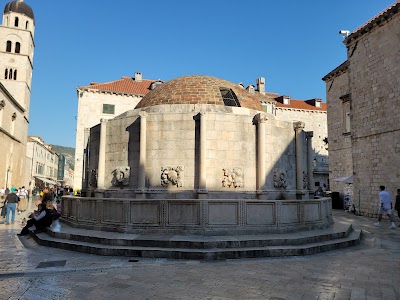
Onofrio's Large Fountain
View on map
3
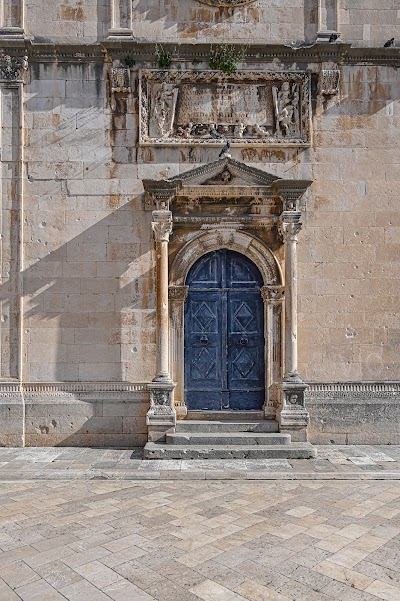
Church of St. Salvation
View on map
4
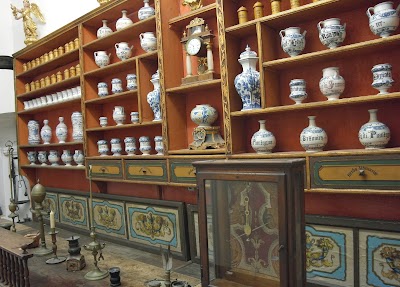
Franciscan Church and Monastery
View on map
5
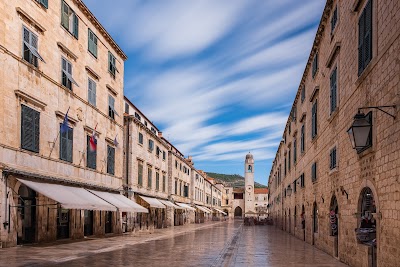
Stradun
View on map
6
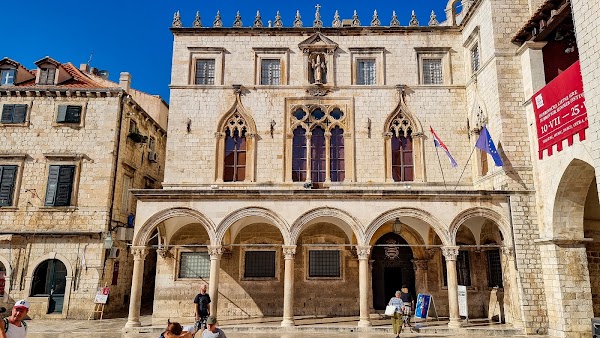
Sponza Palace
View on map
7
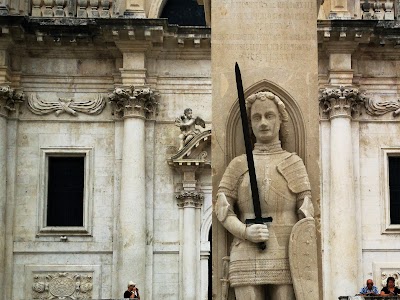
Orlando's Column
View on map
Audio Narrations
English
Introduction
Orlando's Column, a captivating monument in Dubrovnik's Old Town, stands as a testament to the city's rich history. Erected in 1418, this Gothic masterpiece is adorned with intricate reliefs depicting scenes from the life of St. Blaise, Dubrovnik's patron saint. The column's base features a statue of Orlando, a legendary knight who symbolizes the city's independence and bravery. Its slender shaft, adorned with a series of rings, culminates in a graceful capital topped by a statue of St. Blaise holding a model of the city. Orlando's Column has witnessed countless historical events, including the 1667 earthquake that devastated Dubrovnik. Today, it remains an iconic landmark, a symbol of the city's resilience and a reminder of its glorious past.Renaissance Statue
Orlando's Column, a captivating Renaissance statue in Dubrovnik, Croatia, stands as a testament to the city's rich history and artistic heritage. Carved in 1418 by the skilled hand of Antun Dubrovčanin, this stone column depicts a medieval warrior clad in armor, his sword and shield held high. The statue, a symbol of Dubrovnik's freedom and independence, is a masterpiece of Renaissance artistry. Its intricate details, from the warrior's flowing cloak to the intricate patterns on his armor, showcase the exceptional craftsmanship of the era. The column's placement between the Sponza Palace and the Church of St. Blaise further enhances its significance, creating a harmonious blend of architectural styles. As a Renaissance statue, Orlando's Column embodies the spirit of humanism and classical revival that characterized the period. Its lifelike depiction of the human form and its attention to detail reflect the Renaissance artists' fascination with realism and the study of anatomy. The column's enduring presence in Dubrovnik serves as a reminder of the city's enduring connection to the Renaissance era and its lasting legacy in art and culture.Symbol of Dubrovnik's Republic
Orlando's Column, a testament to Dubrovnik's independence and pride, stands tall between the Sponza Palace and the Church of St. Blaise. Erected in 1418 by Antun Dubrovčanin, this stone column features an intricate carving of a medieval warrior, a symbol of the city's unwavering spirit. The warrior, adorned in armor and wielding a sword and shield, represents the strength and resilience of the Dubrovnik Republic, which successfully defended its autonomy against numerous threats throughout history. The column served as a focal point for official ceremonies and proclamations, with the Republic's flag proudly flying atop it. From its pedestal, government announcements were read to the public, further emphasizing its significance as a symbol of Dubrovnik's self-governance. The column's enduring presence has made it an iconic landmark, embodying the city's rich history and its enduring legacy as a symbol of freedom and independence.
8
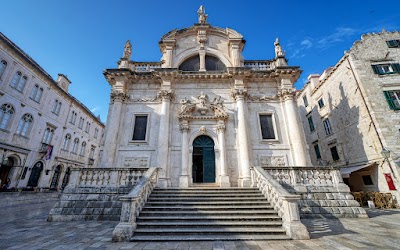
Church of St. Blaise
View on map
Audio Narrations
English
Introduction
Nestled in the heart of Dubrovnik's Old Town, the Church of St. Blaise stands as a testament to the city's rich history and enduring faith. Built in the 14th century, this Gothic masterpiece is dedicated to the city's patron saint, St. Blaise, who is believed to have saved Dubrovnik from a devastating plague in the 10th century. The church's striking facade features intricate carvings and a magnificent rose window, while its interior boasts a stunning collection of 15th-century frescoes depicting scenes from the life of St. Blaise. A unique feature of the church is its treasury, which houses a collection of precious relics, including the skull of St. Blaise, which is said to have miraculous healing powers. The Church of St. Blaise remains a beloved landmark in Dubrovnik, a symbol of the city's resilience and a testament to its enduring devotion to its patron saint.Baroque Architecture
The Church of St. Blaise, a Baroque masterpiece in Dubrovnik, Croatia, stands as a testament to the grandeur and opulence of the Baroque era. Built in the 18th century, the church showcases the distinctive characteristics of Baroque architecture, blending intricate details with a sense of drama and movement. Its facade, adorned with Corinthian columns and a semicircular gable, exudes a sense of grandeur. The interplay of curves and straight lines creates a dynamic composition, drawing the eye upward to the elaborate balustrade and statues of Saint Blaise, Faith, and Hope. The interior of the church is equally captivating, with its barrel-vaulted ceiling adorned with intricate frescoes and gilded stuccowork. The Corinthian columns supporting the cupola and lantern add a sense of height and spaciousness. The main altar, a masterpiece of white and polychrome marble, features a 15th-century Gothic statue of Saint Blaise, the patron saint of Dubrovnik. The church's rich ornamentation and theatrical lighting create a sense of awe and wonder, inviting visitors to immerse themselves in the Baroque aesthetic. Its harmonious proportions and attention to detail make it a prime example of Baroque architecture, showcasing the era's fascination with grandeur and spiritual expression.Historical Significance
The Church of St. Blaise, a Baroque masterpiece in Dubrovnik, holds immense historical significance as the city's patron saint and a symbol of its rich past. Built in 1715 on the foundations of a damaged medieval church, it was designed by Venetian architect Marino Gropelli, who drew inspiration from Sansovino's Venetian church of San Maurizio. The church's facade boasts four Corinthian columns, a semicircular gable, and a balustrade adorned with statues by Gropelli, including a central figure of St. Blaise flanked by personifications of Faith and Hope. Inside, the barrel-vaulted interior showcases intricate Baroque decorations, including Corinthian columns supporting the cupola and lantern, and blind cupolas in the nave's corners. The main altar features a precious 15th-century Gothic statue of St. Blaise, crafted by an unknown local master, depicting him holding a scale model of the Romanesque church destroyed in the 1667 earthquake. This statue miraculously survived the devastating fire of 1706, making it a cherished relic of Dubrovnik's history.
9
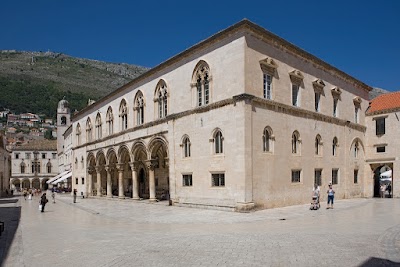
Rector's Palace
View on map
Experience the Full Tour
Download the DocentPro app to access all tour stops, complete audio narrations in multiple languages, offline maps, and interactive features.