
Gaudí's Masterpiece: Unveiling the Enchanting Park Güell

Walking Tour

0.7 km (0.4 miles)

11 min travel time

7 Stops

Barcelona, Spain
Gaudí's Masterpiece: Unveiling the Enchanting Park Güell
Tour Stops
1
Park Guell - main entrance for tours
View on map
Audio Narrations
English
Introduction
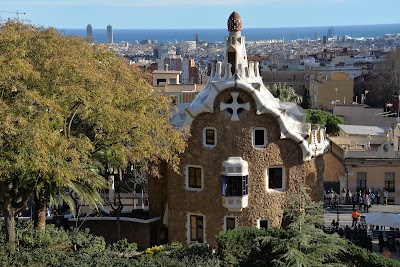
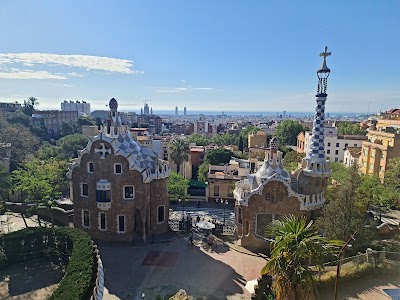
Flanked by whimsical gatehouses resembling gingerbread houses from a fairytale, the main entrance to Park Güell at Carrer d'Olot is more than just a gateway – it's a portal to Gaudí's boundless imagination. These iconic structures, with their undulating forms and vibrant mosaic-clad surfaces, offer a tantalizing glimpse into the architectural wonderland that awaits within. While many visitors are drawn to the park's famed mosaic salamander, few realize that the gatehouses themselves hold a hidden secret. Look closely, and you'll discover that one of these whimsical structures was intended to house the park's administration office, while the other was designed as a guardhouse, a testament to Gaudí's meticulous attention to detail and his ability to seamlessly blend artistry with functionality. Stepping through this enchanting entryway, one leaves behind the bustling city and enters a world of fantastical creations, where nature and architecture intertwine in a celebration of Catalan modernism.Public Space Design
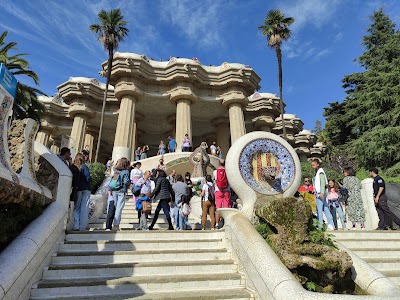
The main entrance of Park Güell, a triumph of Catalan Modernism, embodies Antoni Gaudí's innovative approach to public space design. Gaudí seamlessly blended architecture and landscape, blurring the lines between the built and natural environments. The entrance, flanked by whimsical gatehouses resembling gingerbread houses, immediately transports visitors into a fantastical realm. These structures, adorned with colorful mosaics and organic forms, showcase Gaudí's signature Trencadís technique, while their undulating roofs echo the curves of the surrounding hills. The grand staircase leading into the park, punctuated by the iconic mosaic dragon fountain, exemplifies Gaudí's mastery of creating functional yet theatrical public spaces. The staircase, divided by landings and flanked by curving benches, encourages social interaction and provides breathtaking views. Gaudí's use of local materials, such as broken tiles and stone, not only contributed to the park's unique aesthetic but also reflected his commitment to sustainability and local craftsmanship. The main entrance of Park Güell stands as a testament to Gaudí's visionary approach to public space design, where imagination and functionality intertwine to create a truly immersive and unforgettable experience.Urban Planning
Park Güell's main entrance, beyond its whimsical aesthetics, offers a compelling case study in urban planning. Gaudi's vision extended beyond mere aesthetics; he envisioned a utopian community integrated with the natural landscape. The entrance, with its iconic pavilions, embodies this vision. The pavilions, resembling gingerbread houses, were strategically placed to manage the flow of visitors, separating residential areas from public spaces. This subtle zoning, achieved through architectural whimsy, highlights Gaudi's understanding of pedestrian flow and urban functionality. The grand staircase, leading to the Hypostyle Room, further demonstrates this. Designed as a grand plaza, it accommodates large gatherings while subtly guiding visitors uphill through its meandering form. This clever use of space, blending functionality with artistry, is a hallmark of Gaudi's urban planning genius. Even the famed mosaic salamander fountain, beyond its artistic merit, served a practical purpose: acting as a drainage system for the plaza above. This integration of art and utility underscores the sophisticated urban planning principles embedded within Park Güell's design.
2
Escalinata monumental
View on map
Audio Narrations
English
Introduction
The Escalinata Monumental, a majestic stairway in Barcelona, Catalunya, Spain, is a hidden gem nestled within the Montjuïc district. This architectural marvel, constructed in 1929 for the International Exposition, boasts a captivating history and unique design elements that set it apart from other grand staircases. The Escalinata Monumental's grandeur is evident in its colossal dimensions, spanning 80 meters in width and 30 meters in height. Its cascading steps, adorned with intricate balustrades and flanked by towering lampposts, create a sense of awe and grandeur. The stairway's design seamlessly blends classical and modern influences, showcasing the architectural trends of the early 20th century. One of the Escalinata Monumental's most distinctive features is its cascading fountains, which gracefully flow down the sides of the stairway, adding a touch of tranquility and elegance to the overall composition. The fountains' rhythmic sounds and shimmering water create a mesmerizing spectacle, inviting visitors to linger and soak in the ambiance. Beyond its aesthetic appeal, the Escalinata Monumental holds historical significance. It served as the main entrance to the 1929 International Exposition, a pivotal event that showcased Barcelona's cultural and technological advancements to the world. The stairway's grand design and symbolic importance reflect the city's aspirations and its embrace of modernity. Today, the Escalinata Monumental remains a popular destination for locals and tourists alike. Its scenic views, tranquil atmosphere, and historical significance make it an ideal spot for leisurely strolls, photography sessions, and quiet contemplation. Whether admiring its architectural grandeur or simply enjoying the serenity of its surroundings, the Escalinata Monumental offers a unique and unforgettable experience.Historical Context
The Escalinata monumental in Barcelona, Catalunya, Spain, is a monumental stairway built in the early 20th century. It is located at the foot of Montjuïc, a hill overlooking the city. The stairway was designed by Josep Puig i Cadafalch, a Catalan architect who was one of the leading figures of the Catalan modernisme movement. The stairway is a symbol of Barcelona's industrial and commercial success in the early 20th century. It was built to connect the city center with the Montjuïc Exhibition, a world's fair that was held in Barcelona in 1929. The stairway is also a symbol of Barcelona's cultural and artistic heritage. It is located near the National Museum of Catalan Art and the Joan Miró Foundation. The stairway is a popular tourist destination and is often used for public events and celebrations.Architectural Significance
Architectural Significance of the Escalinata Monumental in Barcelona The Escalinata Monumental, also known as the "Gran Escalinata" or "Great Staircase," is a monumental stairway in Barcelona, Spain, that stands as a testament to the city's architectural prowess and historical significance. Designed by Josep Puig i Cadafalch, a renowned Catalan architect, the staircase was constructed between 1925 and 1929 as part of the urban development project for the 1929 International Exposition. The Escalinata Monumental is a masterpiece of Catalan modernism, showcasing Puig i Cadafalch's signature blend of traditional Catalan elements with modern design principles. The staircase features a grand, sweeping design with wide steps and ornate balustrades, adorned with sculptures and decorative motifs. The use of local materials, such as Montjuïc stone and ceramic tiles, adds to the staircase's authenticity and connection to the local landscape. The architectural significance of the Escalinata Monumental lies not only in its aesthetic beauty but also in its symbolic meaning. The staircase serves as a grand entrance to the National Palace of Catalonia, a building that embodies the cultural and political aspirations of the Catalan people. The upward climb of the stairs symbolizes the journey towards progress and national identity. Furthermore, the Escalinata Monumental plays a crucial role in the urban landscape of Barcelona. It connects the lower part of the city with the Montjuïc hill, creating a visual and physical link between the historical center and the modern developments of the 20th century. The staircase also serves as a gathering place for public events and celebrations, further solidifying its role as a significant landmark in the city's cultural fabric. In conclusion, the Escalinata Monumental in Barcelona stands as a remarkable example of Catalan modernism and architectural ingenuity. Its grand design, symbolic meaning, and urban significance make it a unique and captivating landmark that continues to inspire and awe visitors from around the world.
3
Hypostyle Room
View on map
4
The Greek Theatre
View on map
5
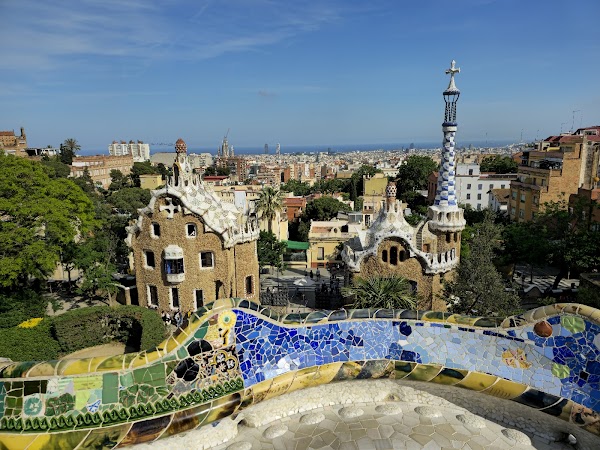
Park Güell
View on map
Audio Narrations
English
Introduction
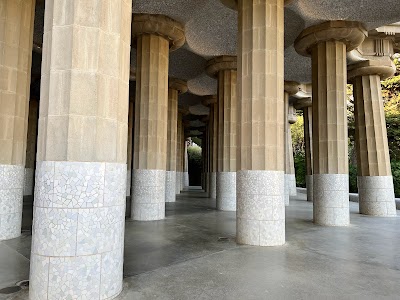
Park Güell, a mesmerizing urban park in Barcelona, Catalonia, Spain, is a testament to the visionary genius of Antoni Gaudí. This architectural masterpiece, a UNESCO World Heritage Site, is renowned for its whimsical and organic forms, seamlessly blending nature and art. Gaudí's inspiration for Park Güell stemmed from the English garden city movement. He envisioned a residential community where residents could enjoy fresh air and stunning views. However, the project's commercial failure led to its conversion into a public park in 1926. The park's most iconic feature is the serpentine bench adorned with colorful mosaic tiles, offering panoramic views of Barcelona. The monumental staircase, guarded by a majestic dragon fountain, leads to the Hypostyle Room, supported by 86 Doric columns. Park Güell's architectural highlights include the gingerbread-like Hansel and Gretel House, the whimsical Portico of the Washerwoman, and the Gaudí House Museum, where the architect once resided. The park also boasts a variety of plant life, including palm trees, olive trees, and aromatic herbs, creating a serene and verdant oasis amidst the bustling city.Catalan Symbolism
Park Güell, a whimsical wonderland conceived by Antoni Gaudí, is a testament to Catalan identity and aspirations. Its symbolic language, deeply rooted in Catalan culture, weaves a narrative that transcends mere aesthetics. The monumental staircase, adorned with colorful mosaics, features a fountain with a dragon's head, an emblem of Catalonia's patron saint, Saint George. The salamander fountain, symbolizing resilience and resistance, evokes the region's indomitable spirit. Gaudí's architectural genius is evident in the Hypostyle Hall, a subterranean market adorned with Doric columns that resemble ancient Catalan churches. The undulating bench, covered in vibrant trencadís, represents the Catalan flag, while the Greek theater-shaped plaza echoes the region's classical heritage. The park's show home, Casa-Museu Gaudí, showcases the architect's unique style and serves as a testament to his enduring legacy. Park Güell is a living testament to Catalan pride and a celebration of its rich cultural heritage. Its symbolic elements, woven into the very fabric of the park, invite visitors to delve into the heart of Catalan identity and appreciate the region's unique spirit.Mosaic Art
Park Güell, a whimsical wonderland designed by Antoni Gaudí, is a mosaic masterpiece that captivates the imagination. Gaudí's passion for nature and spirituality is evident in the intricate mosaic designs that adorn the park's structures. The famous lizard, known as "El Drac," is a testament to Gaudí's playful spirit and showcases the vibrant hues and intricate patterns that characterize his mosaic art. The park's benches, walkways, and walls are adorned with colorful ceramic tiles, creating a kaleidoscope of patterns and textures. Gaudí's use of broken tiles and recycled materials adds a unique charm to the mosaics, giving them a sense of history and authenticity. The mosaic art in Park Güell is not merely decorative; it serves as an integral part of the park's architecture, enhancing the overall aesthetic experience and creating a truly immersive environment for visitors.
6
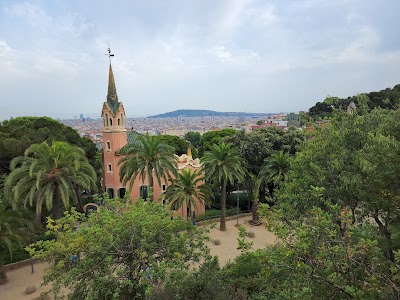
Gaudí House Museum
View on map
Audio Narrations
English
Introduction
The Gaudí House Museum, nestled within the enchanting Park Güell, offers a captivating glimpse into the mind of the visionary architect Antoni Gaudí. This charming house, once Gaudí's residence from 1906 to 1925, now stands as a museum showcasing his unique artistic vision. As you explore the house, you'll be transported to a world of intricate details, innovative designs, and a deep connection to nature. Each room tells a story, revealing Gaudí's dedication to craftsmanship and his unwavering commitment to his artistic ideals. The furniture, designed by Gaudí himself, is a testament to his ability to seamlessly blend form and function. The vibrant colors and whimsical shapes reflect his fascination with the natural world, while the intricate details showcase his meticulous attention to every element. Beyond the aesthetic beauty, the Gaudí House Museum offers a deeper understanding of the man behind the masterpieces. Personal belongings, sketches, and photographs provide insights into his life and creative process. You'll discover his passion for architecture, his religious beliefs, and his unwavering dedication to his craft. A visit to the Gaudí House Museum is not just a journey through architectural brilliance; it's a journey into the heart and mind of a genius. It's a chance to experience the world through Gaudí's eyes, to appreciate his unique perspective, and to be inspired by his boundless creativity. So, step into the world of Gaudí and let his artistic spirit ignite your imagination.Furniture and Design Collection
A Journey Through Gaudí's Vision: Furniture and Design Collection at the Gaudí House Museum Step into the Gaudí House Museum, and you'll be transported not just through time, but also through the mind of a visionary architect. While the museum showcases Gaudí's architectural brilliance, the Furniture and Design Collection offers a unique glimpse into his meticulous attention to detail and his holistic approach to design. Here, furniture is not merely functional; it's an extension of Gaudí's architectural language. The sinuous curves of the "Calvet Chair," inspired by nature, echo the undulating facade of Casa Milà. The intricate mosaic work on the "Güell Park Bench" mirrors the colorful embellishments found throughout Park Güell. Each piece is a testament to Gaudí's belief in the unity of art and life, where form and function seamlessly blend. The collection goes beyond furniture, encompassing everyday objects that reveal Gaudí's fascination with materials and textures. The hand-painted ceramic tiles, the intricately carved wooden frames, and the vibrant stained-glass windows all speak to his dedication to creating a harmonious and aesthetically pleasing environment. One of the highlights is the "Casa Milà Apartment," a meticulously recreated living space that showcases Gaudí's furniture design in its intended context. Here, you can truly appreciate the interplay between furniture, architecture, and decorative elements, offering a glimpse into the daily life of a bourgeois family in early 20th-century Barcelona. The Furniture and Design Collection at the Gaudí House Museum is not just a collection of objects; it's a testament to the boundless creativity and innovative spirit of a master architect. It's a journey through Gaudí's vision, where every detail, from the grand architectural flourishes to the humblest household item, reflects his unique artistic sensibility.Barcelona Tourist Destination
Nestled in the heart of Barcelona, the Gaudí House Museum offers a captivating glimpse into the life and creative genius of Antoni Gaudí, the renowned Catalan architect. This unique museum, housed in Gaudí's former residence, transports visitors to a world of architectural wonder and artistic expression. Step inside and immerse yourself in the vibrant colors, whimsical shapes, and intricate details that characterize Gaudí's signature style. Explore the various rooms, each showcasing a different aspect of his life and work. Admire the furniture, designed by Gaudí himself, and marvel at the innovative use of materials and techniques. One of the highlights of the museum is the rooftop terrace, which offers stunning panoramic views of Barcelona. From here, you can appreciate the city's architectural landscape and see how Gaudí's creations have shaped the urban fabric. A visit to the Gaudí House Museum is an unforgettable experience for anyone interested in architecture, art, or the history of Barcelona. It provides a deeper understanding of Gaudí's artistic vision and the enduring legacy he has left on the city. As a Barcelona Tourist Destination, the Gaudí House Museum offers a unique opportunity to connect with the city's cultural heritage and artistic spirit. It is a must-visit for anyone seeking an immersive and inspiring experience.
7
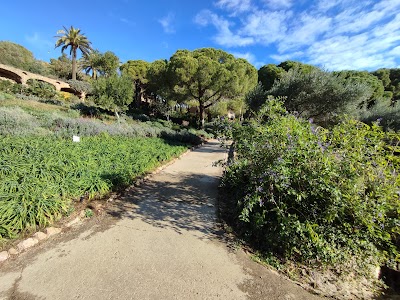
Austria Garden
View on map
Audio Narrations
English
Introduction
Nestled within the sprawling Park Güell, the Austria Gardens offer a tranquil oasis amidst the vibrant cityscape of Barcelona. Originally envisioned as part of a residential development, these verdant grounds were transformed into a public space following the project's alteration. Their name originates from a generous donation of trees from Austria in 1977, adding to the garden's diverse botanical collection. Visitors can meander through the winding paths, adorned with lush greenery and cascading waterfalls, reminiscent of a hidden sanctuary. The terraced balconies provide breathtaking panoramic views of the city, while the intricate mosaic benches, a hallmark of Gaudí's artistry, invite moments of contemplation. A hidden gem within the gardens is the Gaudí House Museum, once the residence of the renowned architect himself. This intimate space offers a glimpse into Gaudí's creative genius, showcasing his personal belongings and architectural models. The Austria Gardens stand as a testament to the harmonious blend of nature and art, a haven for those seeking respite from the bustling city life. As you stroll through its verdant pathways, imagine the lively community that once thrived here, and appreciate the enduring legacy of Gaudí's architectural vision.Donation of Trees from Austria
Austria Garden: A Flourishing Symbol of Friendship Rooted in Donated Trees Nestled amidst the bustling city of Barcelona, the Austria Garden stands as a vibrant testament to the enduring friendship between Austria and Spain. This verdant oasis owes its existence to a generous donation of trees from Austria in 1929, a gesture that cemented the bond between the two nations. The story begins with the International Exposition of 1929, held in Barcelona. Austria, eager to showcase its horticultural prowess, presented Spain with a collection of 250 trees, including majestic pines, graceful firs, and vibrant maples. These trees, carefully selected for their resilience and beauty, were planted in the newly established Austria Garden, a designated space within the Montjuïc park complex. This act of generosity not only adorned Barcelona with a touch of Austrian charm but also symbolized the deep-rooted friendship between the two countries. The trees, carefully nurtured over the decades, have flourished into a thriving symbol of this enduring bond. Today, the Austria Garden remains a cherished landmark, a tranquil haven where visitors can immerse themselves in the beauty of nature and reflect on the enduring power of international friendship. As you stroll through the garden, imagine the journey of these trees, their roots firmly planted in Austrian soil, now reaching towards the Spanish sky, a testament to the enduring connection between two nations.Green Oasis in Barcelona
Nestled amidst the bustling city of Barcelona, the Austria Garden offers a tranquil escape, a verdant haven where nature's serenity meets urban vibrancy. This hidden gem, tucked away in the Montjuïc district, transports visitors to a realm of lush greenery, a sanctuary of peace amidst the city's clamor. Step into the Austria Garden, and be greeted by a symphony of colors and textures. Towering palm trees sway gently in the breeze, their fronds casting intricate patterns of light and shadow. The air is fragrant with the sweet scent of blooming roses, their vibrant hues adding a touch of elegance to the landscape. Lush lawns invite leisurely strolls, while winding paths lead to secluded corners, perfect for quiet contemplation. The Austria Garden is not merely a green oasis; it is a testament to the enduring bond between Austria and Spain. Designed by renowned Austrian landscape architect Carl Theodor Sorensen, the garden reflects the harmonious blend of Catalan and Austrian influences. The central fountain, adorned with sculptures depicting mythological figures, evokes the grandeur of European gardens, while the surrounding flora showcases the rich biodiversity of the Mediterranean region. As you wander through the garden, you'll encounter hidden treasures, each whispering tales of history and artistry. The Rosaleda, a rose garden boasting over 2,000 rose bushes, is a fragrant paradise, a kaleidoscope of colors and intoxicating aromas. The Joan Maragall Garden, dedicated to the renowned Catalan poet, offers a serene setting for reflection, with its tranquil pond and weeping willows. The Austria Garden is more than just a green space; it is a living testament to the power of nature to heal, inspire, and connect. It is a place where urban dwellers can find solace, where families can create lasting memories, and where art and nature converge in perfect harmony. So, step into this verdant sanctuary, and let the Austria Garden transport you to a world of tranquility and beauty, a hidden gem in the heart of Barcelona.
Experience the Full Tour
Download the DocentPro app to access all tour stops, complete audio narrations in multiple languages, offline maps, and interactive features.