
Istanbul's Historic Treasures: A Journey Through Time #1

Walking Tour

2.5 km (1.6 miles)

36 min travel time

9 Stops

Istanbul, Turkey
Istanbul's Historic Treasures: A Journey Through Time #1
Tour Stops
1
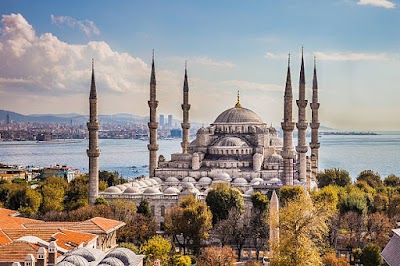
The Blue Mosque
View on map
Audio Narrations
Introduction
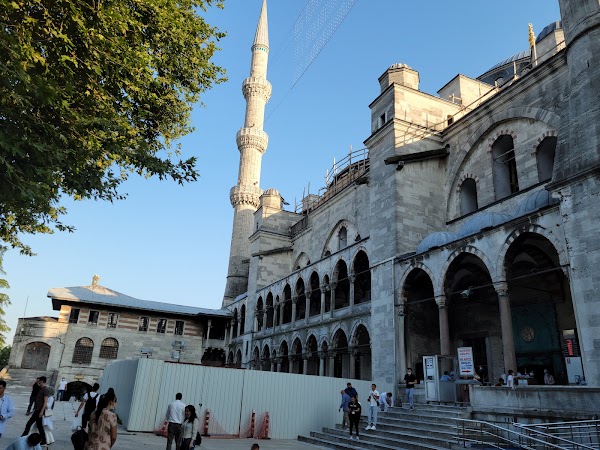
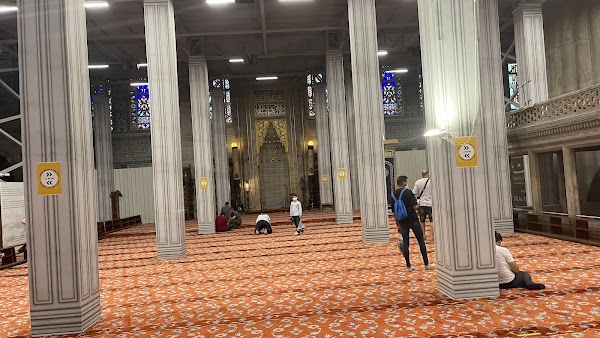
The Blue Mosque, a magnificent architectural marvel in Istanbul, Turkey, is renowned for its captivating blue tiles that adorn its interior walls. Constructed during the reign of Sultan Ahmed I between 1609 and 1616, the mosque is a testament to Ottoman architectural prowess and a symbol of Istanbul's rich cultural heritage. The Blue Mosque boasts an impressive exterior with six slender minarets, a feature unique among Ottoman mosques. Its vast courtyard, as large as the mosque itself, is surrounded by an elegant arcade and features a central hexagonal fountain. The mosque's interior is equally awe-inspiring, with over 20,000 handmade ceramic tiles in intricate tulip designs covering its lower levels. The upper levels are dominated by blue paint, creating a vibrant and ethereal atmosphere. Natural light floods the interior through more than 200 stained glass windows, casting a warm glow on the intricate decorations. The mosque's central dome, supported by four massive pillars, is a testament to the architectural ingenuity of its time. The mihrab, a finely carved marble niche indicating the direction of Mecca, is a focal point of the interior, surrounded by numerous windows and adorned with exquisite calligraphy. The Blue Mosque is not only a place of worship but also a living testament to the fusion of Islamic and Byzantine architectural styles. Its grandeur and beauty continue to captivate visitors from around the world, making it one of Istanbul's most iconic landmarks.Historical Significance
The Blue Mosque, a magnificent architectural marvel in Istanbul, stands as a testament to the Ottoman Empire's grandeur and the reign of Sultan Ahmed I. Built between 1609 and 1616, it was designed to rival the grandeur of the nearby Hagia Sophia, a former Byzantine cathedral. The mosque's six minarets, a unique feature among Ottoman mosques, were said to have been the result of a misunderstanding, with the Sultan requesting "golden" minarets but the architect interpreting it as "six" minarets. To avoid offending the Prophet Muhammad, whose mosque in Mecca had six minarets, Sultan Ahmed ordered a seventh minaret to be added to the Mecca mosque. The Blue Mosque's interior is adorned with over 20,000 handmade İznik tiles, giving it its distinctive blue hue. The tiles depict intricate floral and geometric patterns, creating a vibrant and awe-inspiring ambiance. The mosque's vast central dome, supported by four massive pillars, is a testament to the architectural prowess of the Ottoman era. The mihrab, or prayer niche, is carved from a single block of marble and is intricately decorated with calligraphy and floral motifs. Beyond its architectural splendor, the Blue Mosque holds immense historical significance. It was built during a period of transition for the Ottoman Empire, as it sought to maintain its power and prestige amidst growing European influence. The mosque's construction was a symbol of the empire's continued commitment to Islamic faith and its desire to leave a lasting legacy on the world stage. Today, the Blue Mosque remains a vibrant place of worship, attracting millions of visitors each year who come to marvel at its beauty and immerse themselves in its rich history.Sultan Ahmed
The Blue Mosque, a magnificent architectural marvel in Istanbul, stands as a testament to the grandeur of Sultan Ahmed's reign. Commissioned by the young sultan at the age of 19, the mosque was intended to rival the grandeur of the neighboring Hagia Sophia and assert the power of the Ottoman Empire. Ahmed's vision was realized through the architectural genius of Sedefkar Mehmed Ağa, who incorporated elements of Byzantine and Islamic architecture to create a masterpiece. The mosque's most striking feature is its six minarets, a unique design that sparked controversy but ultimately became a symbol of Ahmed's ambition. Inside, the mosque is adorned with over 20,000 handmade ceramic tiles from İznik, each intricately painted with floral and geometric patterns. The tiles depict tulips, carnations, and hyacinths, creating a vibrant and colorful interior that earned the mosque its popular name. Ahmed's personal touch is evident in the mosque's details. The marble mihrab, indicating the direction of prayer, is adorned with intricate calligraphy bearing his name. The tall and slender minbar, from which the imam delivers sermons, is a testament to the sultan's attention to detail. The Blue Mosque remains a living testament to Sultan Ahmed's legacy. It is not only a place of worship but also a symbol of his architectural patronage and the enduring power of the Ottoman Empire.
2
Sultanahmet Square
View on map
Audio Narrations
Introduction
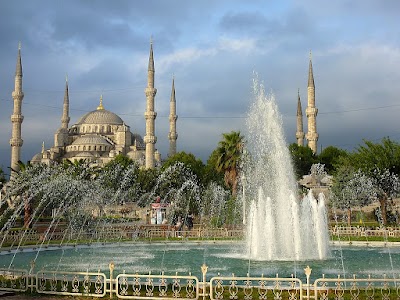
Sultanahmet Square, formerly known as the Hippodrome of Constantinople, is a historic public square located in the heart of Istanbul, Turkey. It is renowned for its rich history and architectural wonders, serving as a testament to Istanbul's diverse cultural heritage. The square was originally constructed as a chariot racing track during the Roman and Byzantine periods, serving as the social and sporting center of Constantinople. Over time, it witnessed numerous historical events and transformations, including the construction of impressive monuments and structures. Today, Sultanahmet Square is home to several iconic landmarks, including the Hagia Sophia, the Blue Mosque, and the Basilica Cistern. The Hagia Sophia, a former Greek Orthodox cathedral and later an imperial mosque, is renowned for its massive dome and exquisite Byzantine architecture. The Blue Mosque, known for its striking blue tiles, is an architectural masterpiece of the Ottoman era. The Basilica Cistern, an underground reservoir, showcases the engineering prowess of the Byzantine Empire. Beyond these architectural marvels, Sultanahmet Square offers a vibrant atmosphere with bustling markets, charming cafes, and traditional Turkish restaurants. Visitors can also enjoy leisurely strolls, admiring the picturesque surroundings and breathtaking views of the nearby Bosporus Strait. Sultanahmet Square is a captivating destination that encapsulates the rich history, architectural wonders, and cultural vibrancy of Istanbul. It is a must-visit for anyone seeking to delve into the heart of this vibrant metropolis.Architectural Wonders
Sultanahmet Square, a historical gem in Istanbul's heart, is a testament to the city's rich architectural heritage. The square is adorned with iconic structures that showcase the fusion of Byzantine and Ottoman influences. The Hagia Sophia, a former Byzantine basilica, captivates with its massive dome and intricate mosaics. Just across stands the Blue Mosque, renowned for its six minarets and stunning blue tiles. These architectural marvels exemplify the grandeur and artistry of their respective eras. Beyond these iconic landmarks, Sultanahmet Square boasts hidden architectural treasures. The German Fountain, a gift from Kaiser Wilhelm II, blends Ottoman and German styles, featuring intricate patterns and decorative elements. The Serpentine Column, a relic from the ancient Hippodrome, stands as a symbol of Roman power. The Obelisk of Theodosius, brought from Egypt, adds an exotic touch to the square's architectural tapestry. Exploring Sultanahmet Square is a journey through time, where architectural wonders from different periods coexist harmoniously. Each structure tells a story of Istanbul's rich past, inviting visitors to delve into the city's architectural legacy.Ancient Hippodrome
Sultanahmet Square, the heart of Istanbul's Old City, was once the bustling Hippodrome of Constantinople, a magnificent arena that hosted chariot races and other spectacles during the Byzantine era. Its grandeur is still evident in the square's elongated oval shape, a testament to its former glory. At the center of the square stands the Egyptian Obelisk, a towering monolith brought from Egypt by Theodosius I in the 4th century AD. Its hieroglyphics depict scenes of Pharaoh Thutmose III's military victories. Beside it is the Serpentine Column, a bronze pillar entwined with serpents, originally from the Temple of Delphi in Greece. The Column of Constantine, erected by Constantine VII in the 10th century, once adorned with bronze and silver plates. These were stripped by the Crusaders in 1204, leaving only the porphyry core. These monuments, remnants of the Hippodrome's past, evoke the grandeur of an era when the square reverberated with the roar of the crowd and the thunder of hooves. Today, Sultanahmet Square is a serene oasis amidst the vibrant city. Its green lawns and tranquil fountains offer respite from the bustling streets. Yet, beneath its tranquil surface lies the echo of a bygone era, when the Hippodrome was the epicenter of Byzantine life.
3
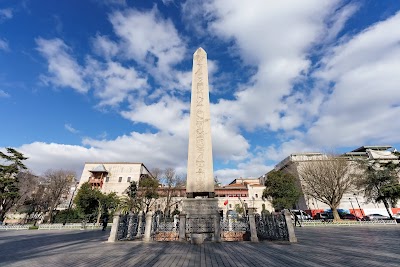
Obelisk of Theodosius
View on map
Audio Narrations
Introduction
The Obelisk of Theodosius, standing proudly in Istanbul's Hippodrome, is not merely an Egyptian artifact but a testament to Byzantine imperial ambition and adaptation. Originally erected by Pharaoh Thutmose III in the 15th century BC at the Temple of Karnak in Luxor, its journey to Constantinople involved a complex logistical feat orchestrated by Emperor Theodosius I in the late 4th century AD. What makes this obelisk particularly fascinating is its truncated form; the original was significantly taller, but damage during transport necessitated its shortening. The pink granite, sourced from Aswan, contrasts sharply with the marble base upon which it rests, a base adorned with intricate reliefs depicting Theodosius and his court observing chariot races, a direct connection to the Hippodrome's function. The hieroglyphs, though ancient, were reinterpreted within the Byzantine context, becoming symbols of imperial power and legitimacy. The obelisk's presence served as a visual link to the grandeur of ancient Egypt, appropriated and integrated into the new Christian Roman capital.Hippodrome Context
The Obelisk of Theodosius, originally erected by Pharaoh Thutmose III in Egypt around 1490 BC, found its place in Constantinople's Hippodrome in 390 AD, thanks to Emperor Theodosius I. This relocation was part of an effort to enhance the image of the new capital, with monuments adorning the spina, the Hippodrome's central barrier. The pink granite obelisk, sourced from Luxor's Temple of Karnak, was transported in sections to Constantinople. Today, only the top section remains, standing on a marble pedestal where Theodosius placed it. The marble pedestal of the Obelisk of Theodosius features bas-reliefs that depict scenes from the Hippodrome, including Emperor Theodosius I offering the crown of victory to a chariot race winner, set amidst spectators, musicians, and dancers. The pedestal also showcases a water organ, highlighting the vibrant atmosphere of the Hippodrome. Inscriptions on the pedestal, including one in Latin hexameters, provide historical context. The obelisk and its pedestal suffered damage and underwent restoration, with missing pieces replaced by porphyry cubes. The monument stands as a testament to the Hippodrome's significance as a social and sporting center in Constantinople, reflecting the city's rich history and the emperors' efforts to embellish their capital. Despite the Hippodrome's decline following the Fourth Crusade, the Obelisk of Theodosius remains a prominent feature of Sultanahmet Square, the site of the former Hippodrome.Egyptian Origins
Originally erected around 1490 BCE at the Temple of Karnak in Luxor, the Obelisk of Theodosius offers a tangible link to ancient Egypt within the heart of Istanbul. Commissioned by Pharaoh Thutmose III during the 18th dynasty, the red granite obelisk served as a monument to his military victories, particularly his triumph over the Mitanni around 1450 BC. Hieroglyphic inscriptions on each of its four faces celebrate Thutmose III's achievements, detailing his conquest and referring to him as "Lord of Jubilees." The inscriptions specifically mention his crossing of the Euphrates River in Syria, marking the northern extent of his dominion. The obelisk's journey from Egypt to Constantinople in 390 AD, orchestrated by Roman Emperor Theodosius I, highlights the engineering capabilities of the ancient world. It once stood, paired with another obelisk, south of the Seventh Pylon at Karnak. The monument's presence in Istanbul serves as a juxtaposition of Egyptian and Roman cultures, bridging two significant ancient civilizations. The pink granite monolith, originally over 30 meters tall, was damaged during transport, leaving it at its current height of approximately 19 meters. Despite this, the Obelisk of Theodosius remains the oldest monument in Istanbul, a lasting testament to Egyptian artistry and power.
4
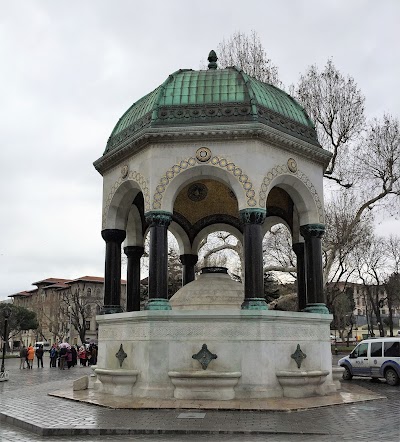
German Fountain
View on map
Audio Narrations
Introduction
The German Fountain, a neo-Byzantine structure in İstanbul's Sultanahmet Square, commemorates Kaiser Wilhelm II's second visit to the city in 1898. Its octagonal dome, supported by eight marble columns, is a striking feature, often overlooked in favor of the more prominent Hagia Sophia and Blue Mosque nearby. The fountain's interior, adorned with golden mosaics, was actually prefabricated in Germany and shipped to İstanbul for assembly, a testament to the engineering prowess of the era. A lesser-known detail is the intricate inscription work, a blend of German and Ottoman artistic styles, reflecting the diplomatic ties between the two empires. The fountain served not only as a gift but also as a symbol of the growing German influence in the Ottoman Empire during the late 19th century. Interestingly, the fountain's design subtly incorporates elements intended to evoke the grandeur of ancient Roman fountains, a deliberate choice to project an image of imperial power and continuity.Neo-Byzantine Architecture
The German Fountain in Istanbul stands as an exquisite example of Neo-Byzantine architecture, reflecting the artistic and political climate at the turn of the 20th century. Designed by Spitta and constructed by Schoele, with contributions from Carlitzik and Joseph Anthony, its architectural style commemorates the alliance between the German Empire and the Ottoman Empire. The fountain's defining feature is its octagonal dome, supported by eight elegant marble columns, a hallmark of Neo-Byzantine design that evokes the grandeur of Byzantine structures. Constructed in Germany and transported piece by piece to Istanbul for assembly, the fountain showcases the era's engineering capabilities and the commitment to preserving artistic integrity during relocation. The interior of the dome is adorned with golden mosaics, a characteristic element of Byzantine art, enhancing the fountain's majestic appearance and historical allure. These mosaics contribute to the fountain's visual richness, embodying the opulence associated with Byzantine imperial structures. The fountain's design diverges from traditional European and Ottoman fountain styles, opting instead for a high base and an octagonal shape crowned by a dome. Medallions adorn the arches connecting the columns, featuring Abdulhamit's signature on a green background and Wilhelm II's symbol on a Prussian blue background, further intertwining the architectural design with its historical context. The dark green columns supporting the dome and the bronze inscription in German, dedicating the fountain to Abdulhamit II, complete this Neo-Byzantine masterpiece.German-Ottoman Relations
The German Fountain in Istanbul stands as a potent symbol of the late 19th-century German-Ottoman relations. It was a gift from Kaiser Wilhelm II to Sultan Abdulhamid II, commemorating the German Emperor's second visit to Istanbul in 1898. This visit and the subsequent construction of the fountain were part of a broader strategy by the German Empire to cultivate closer ties with the Ottoman Empire, driven by economic and political ambitions. Germany sought to gain access to eastern resources and establish a strategic alliance with a European power. The fountain's neo-Byzantine architectural style is not merely aesthetic; it reflects the complex interplay between German and Ottoman identities. The style combines neo-Roman elements, which were part of a German national style in the 19th century, with the Byzantine heritage of Istanbul, celebrating the city's history as Constantinople. This fusion was intended to honor Istanbul's past while subtly asserting German influence. The German Fountain was manufactured in Germany, then disassembled, shipped to Istanbul, and reassembled on-site in 1900. The fountain served a practical purpose, providing drinking water to the public, but its primary function was symbolic. It represented the friendship between the two empires, a friendship that would endure through significant transformations in both nations. The monument embodies the political landscape and the reciprocal ambitions that characterized German-Ottoman relations at the turn of the century, marking a pivotal moment in their intertwined histories.
5
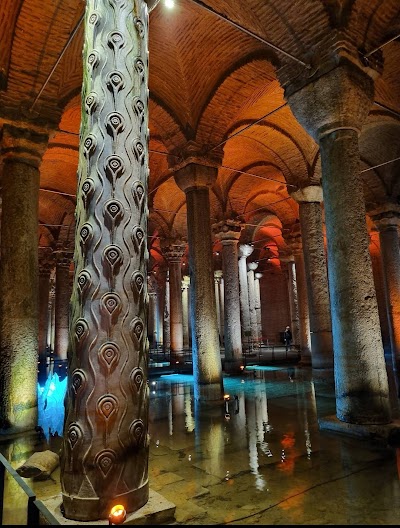
Basilica Cistern
View on map
Audio Narrations
Introduction
The Basilica Cistern, an architectural marvel in Istanbul, Türkiye, is the largest surviving underground cistern built by the Byzantines. Constructed in the 6th century under Emperor Justinian I, it supplied water to the Great Palace and surrounding buildings. Its vast interior, supported by 336 marble columns, creates a cathedral-like atmosphere. The cistern's unique features include two Medusa heads used as column bases, believed to have been repurposed from an ancient temple. One head is placed sideways, while the other is upside down, a testament to the cistern's rich history. Visitors can explore the dimly lit cavern, marveling at the intricate carvings and the play of light and shadow on the water's surface. The Basilica Cistern stands as a testament to the ingenuity and architectural prowess of the Byzantine era, offering a glimpse into Istanbul's fascinating past.Istanbul's Hidden Gem
Beneath the vibrant streets of Istanbul lies a hidden gem – the Basilica Cistern. This captivating underground marvel, dating back to the 6th century, was built as a water reservoir during the Byzantine era. Descend the stairs and enter a world unlike any other, bathed in an ethereal glow. Witness the mesmerizing array of 336 columns, many crafted from salvaged ancient materials, creating a forest-like atmosphere. Look closely and you'll spot the captivating Medusa heads adorning the base of two columns, remnants of a pagan temple that once stood on the site. The Basilica Cistern offers a unique glimpse into the ingenuity and resourcefulness of Byzantine engineers. Whether you're a history buff, fascinated by hidden wonders, or simply seeking a unique experience, the Basilica Cistern awaits to unveil its captivating story.Offbeat Exploration
Delve into the enigmatic depths of the Basilica Cistern, an architectural marvel concealed beneath the bustling streets of Istanbul. This subterranean labyrinth, once the lifeblood of the Byzantine Empire, invites offbeat explorers to unravel its secrets. Descend into the cistern's dimly lit chamber, where 336 towering columns, each a testament to Roman engineering, create an awe-inspiring forest of stone. Gaze upon the enigmatic Medusa head columns, their origins shrouded in myth and legend. Speculate on the purpose of these inverted heads, said to ward off evil spirits or neutralize the Gorgon's gaze. Explore the cistern's hidden corners, where faint whispers echo through the damp air. Discover the cistern's role in Istanbul's water system, a testament to the city's resilience and ingenuity. Imagine the bustling activity that once filled these chambers, as water flowed through the city's veins. As you wander through the cistern's labyrinthine corridors, let your imagination soar. Picture the cisterns as a secret meeting place, a refuge from the chaos above, or a stage for forgotten rituals. Embrace the offbeat allure of this subterranean wonder, where history, myth, and imagination intertwine.
6
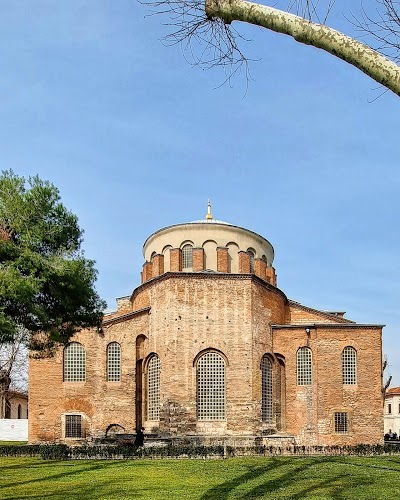
Hagia Irene
View on map
Audio Narrations
Introduction
Hagia Irene, nestled within the Topkapi Palace's outer courtyard in Istanbul, stands apart from its more famous neighbor, Hagia Sophia, in several key aspects. Its unique position as the only Byzantine church in Istanbul never converted into a mosque grants it a distinct architectural purity, showcasing its original Byzantine design largely unaltered. Unlike the opulent mosaics of Hagia Sophia, Hagia Irene's interior is characterized by a more austere aesthetic, dominated by a large cross mosaic in the apse, a testament to the Iconoclastic period of Byzantine history. This period, marked by the rejection of religious icons, resulted in the replacement of figurative depictions with simpler, symbolic representations. Furthermore, Hagia Irene's function shifted over time, serving as an armory during Ottoman rule, a role that contributed to its preservation. The building's acoustics are exceptional, leading to its current use as a concert hall, offering a unique experience where music resonates within the walls of ancient history. It is also believed to have been built upon the site of a pre-Christian temple.From Arsenal to Museum
Hagia Irene's transformation from a religious site to a repository of military artifacts marks a unique chapter in its history. Following the Ottoman conquest of Istanbul in 1453, Hagia Irene was not converted into a mosque, unlike many other Byzantine churches. Instead, its location within the outer courtyard of Topkapı Palace led to its repurposing as an arsenal, known as the İç Cebehane, or "Inner Arsenal." This role saw the church used for storing and repairing weapons, a function it served for a considerable period, even being referred to as Dar-ül Esliha, the "House of Weapons," in 1726. The shift towards its modern function began in 1846 when Ahmed Fethi Paşa, Marshal of the Imperial Arsenal, transformed the church into a military antiques museum, effectively making it the first museum of the Ottoman Empire. The collection of weapons that had been stored within its walls became the museum's initial exhibits. This transition involved some structural modifications, including the construction of double-winged stairs to access the galleries. Hagia Irene served as the Military Museum until 1978, with a brief period as the Imperial Museum (Museum-i Hümayun) in 1869 before its collection was moved to the Tiled Kiosk due to space constraints. Finally, the building was handed over to the Turkish Ministry of Culture. After a period of repairs, Hagia Irene was affiliated with the Hagia Sophia Museum Directorate in 1939. In 2014, after serving primarily as a concert hall, it was opened to the public as a museum, completing its journey from a storehouse of weaponry to a cultural institution.Byzantine Architectural Evolution
Hagia Irene represents a crucial transitional phase in Byzantine architectural evolution, bridging early Christian basilicas with the more complex, domed structures characteristic of later Byzantine design. Constructed in the 4th century, likely around 330 AD, it embodies an early example of Byzantine architecture, predating the Hagia Sophia by nearly two decades. Its original design as a three-nave basilica evolved into a domed basilica after a fire in 532, and further modifications following a destructive earthquake in 740 resulted in a cross-domed basilica. The church's layout, a square cross structure featuring a central dome supported by four massive pillars, marks a significant step toward the development of larger, more elaborate domes in subsequent Byzantine churches. While Hagia Irene's central dome is relatively low compared to that of Hagia Sophia, it demonstrates an impressive feat of engineering for its time. The interior, comprising a rectangular nave flanked by two aisles and adorned with a semi-dome at the apse, showcases a design that emphasizes light and space, contributing to a serene atmosphere. Unlike many other religious structures, Hagia Irene retained its Christian identity even after the Ottoman conquest of Constantinople in 1453. Its transformation into a military armory and later a museum allowed for the preservation of its architectural integrity, offering a unique glimpse into the progression of Byzantine architectural styles. The building's multiple restorations by different empires have resulted in a complex array of architectural features, making it a valuable case study for understanding the evolution of Byzantine architecture.
7
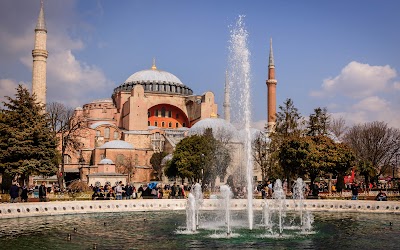
Hagia Sophia
View on map
Audio Narrations
Introduction
Hagia Sophia, a magnificent architectural marvel in Istanbul, Turkey, stands as a testament to the grandeur of Byzantine and Ottoman artistry. Built in the 6th century as a Christian cathedral, it was later transformed into a mosque after the Ottoman conquest in 1453. Its iconic dome, soaring 55.6 meters above the ground, is a masterpiece of engineering and design. The interior is adorned with breathtaking mosaics depicting biblical scenes and imperial portraits, while the exterior features four towering minarets added during the Ottoman era. Today, Hagia Sophia serves as a museum, welcoming visitors from around the world to marvel at its architectural splendor and historical significance.Hagia Sophia Mosque
Hagia Sophia, a UNESCO World Heritage Site, stands as a testament to the architectural brilliance of its time and the rich history of Istanbul. Once a cathedral, then a mosque, and now a museum, Hagia Sophia embodies the city's diverse cultural heritage. As a mosque, Hagia Sophia boasts unique features that distinguish it from its Christian origins. The mihrab, a niche indicating the direction of Mecca, and the minbar, a pulpit, were added during the Ottoman era. The four minarets, towering over the cityscape, are iconic symbols of Islamic architecture. Beyond its religious significance, Hagia Sophia is renowned for its exquisite mosaics. Depicting biblical scenes and imperial portraits, these mosaics offer a glimpse into the artistic prowess of the Byzantine Empire. The Deesis Mosaic, located in the southwest gallery, is a particularly notable example, showcasing the Virgin Mary, John the Baptist, and Jesus Christ. The Hagia Sophia Mosque also houses the tombs of several Ottoman sultans and their families, adding to its historical and cultural importance. The mausoleums, located outside the main building, provide a glimpse into the lives and legacies of these rulers. Despite its conversion into a museum in 1935, Hagia Sophia retains its spiritual significance for Muslims. The call to prayer still echoes through its hallowed halls, and visitors are welcome to observe Muslim worshippers during prayer times. Hagia Sophia Mosque stands as a testament to the enduring power of faith and the harmonious coexistence of different cultures. Its architectural grandeur, historical significance, and spiritual ambiance make it a must-visit destination for anyone seeking a deeper understanding of Istanbul's rich tapestry.Unique Mosaics
Hagia Sophia, a masterpiece of Byzantine architecture, boasts an array of unique mosaics that narrate the evolution of art and faith within its hallowed halls. The Latin Cross Mosaic, a vestige of its Christian past, depicts a cross in the southwestern gallery, a testament to its former role as a cathedral. The Seraphim Mosaics, featuring four distinct angels, adorn the pendentives, believed to guard God's throne. The Imperial Gate Mosaic, located above the central gate, portrays an emperor paying homage to Christ Pantocrator, flanked by Mary and the Archangel Gabriel. The Deesis Mosaic, situated in the south gallery, showcases Christ flanked by John the Baptist and Mary, a poignant depiction of intercession. The Empress Zoe and Komnenos Mosaics, found in the upper gallery, depict emperors and their families, symbolizing their contributions to Hagia Sophia's restoration. The Mosaic Tughra of Sultan Abdulmejid, a masterpiece of Islamic calligraphy, adorns the interior walls, a testament to the building's transformation into a mosque. These mosaics, with their intricate details and vibrant colors, offer a glimpse into the rich tapestry of Hagia Sophia's history, where Christian and Islamic influences intertwine to create a unique artistic legacy.
8
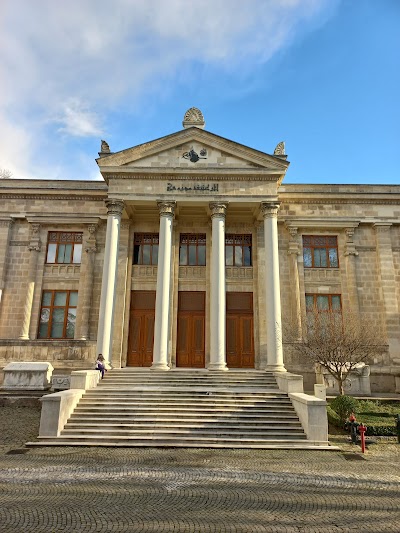
Istanbul Archaeological Museums
View on map
Audio Narrations
Introduction
The Istanbul Archaeological Museums, a complex of three museums, house over a million artifacts from various cultures brought from the imperial lands of the Ottoman Empire. The Archaeology Museum, Turkey's first museum, is renowned for its collection of over one million artifacts, including the Alexander Sarcophagus and Tabnit Sarcophagus, excavated from the Sidon King Necropolis. The Museum of Ancient Oriental Artifacts showcases pre-Islamic items from the Ottoman Empire, including an 8th-century BC Hittite molding and glazed-brick panels from ancient Babylon. The Tiled Kiosk Museum displays Seljuk, Anatolian, and Ottoman tiles and ceramics from the 12th to the 20th centuries, including the stunning mihrab from the İbrahim Bey İmaret in Karaman.Alexander the Great
Within the labyrinthine halls of the Istanbul Archaeological Museums, a treasure trove awaits those seeking the legacy of Alexander the Great. Among the myriad artifacts, the Alexander Sarcophagus stands as a testament to the legendary conqueror's enduring influence. Discovered in Sidon, Lebanon, this exquisite marble sarcophagus depicts intricate battle scenes, immortalizing Alexander's military prowess. Its vivid carvings narrate the clash between Greeks and Persians, a pivotal moment in the Hellenistic era. The museum also houses a captivating bust of Alexander the Great, believed to be a replica of the original statue by Lysippos, his personal sculptor. The bust captures the essence of Alexander's charisma and determination, offering a glimpse into the man who shaped the ancient world. Beyond these iconic artifacts, the Istanbul Archaeological Museums provide a comprehensive exploration of Alexander's impact. Exhibits showcase coins bearing his likeness, illustrating his role as a unifier of cultures. Cuneiform tablets recount his campaigns, shedding light on his strategic brilliance. Through these diverse artifacts, visitors gain an immersive understanding of Alexander the Great's legacy, his military conquests, and his profound influence on the course of history.Ancient History
Nestled in the heart of Istanbul, the Istanbul Archaeological Museums stand as a testament to the rich tapestry of ancient civilizations that have graced this region. The museums house an unparalleled collection of artifacts, offering a captivating glimpse into the lives, beliefs, and artistic achievements of our ancestors. Within the hallowed halls of the Archaeology Museum, visitors embark on a journey through time, encountering remnants of the Hittite Empire, the grandeur of ancient Egypt, and the enigmatic civilizations of Mesopotamia. The Ancient Orient Museum unveils the secrets of pre-Islamic Arabia, the splendor of Babylon, and the enigmatic kingdom of Urartu. One of the museum's most prized possessions is the Alexander Sarcophagus, a masterpiece of Hellenistic art that once held the remains of King Abdalonymus of Sidon. Its intricate carvings depict scenes from Alexander the Great's life, offering a glimpse into the legendary conqueror's legacy. The Tiled Kiosk Museum, housed in a 15th-century Ottoman palace, showcases exquisite examples of Islamic art, including intricate tiles, ceramics, and calligraphy. Its serene atmosphere transports visitors to a bygone era of opulence and refinement. For those seeking a deeper understanding of ancient history, the Istanbul Archaeological Museums provide a treasure trove of knowledge. Its vast collection, coupled with informative displays and knowledgeable staff, makes it a pilgrimage site for scholars and history enthusiasts alike.
9
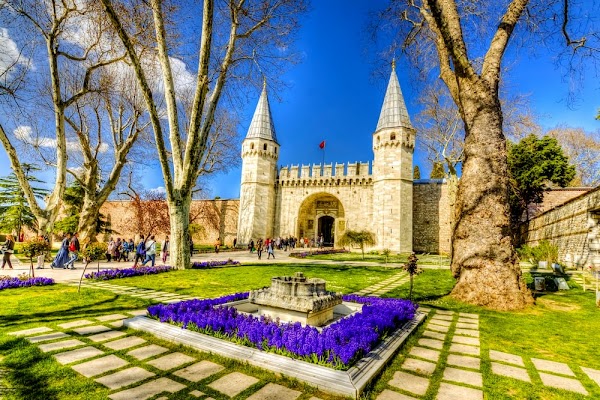
Topkapi Palace Museum
View on map
Audio Narrations
Introduction
Topkapi Palace Museum, a captivating monument to Ottoman history, stands as a testament to the empire's grandeur. Built in the 15th century, it served as the residence of Ottoman sultans for nearly four centuries, housing over 1,000 inhabitants within its sprawling complex. The palace's intricate architecture blends Islamic, Ottoman, and European influences, showcasing exquisite Iznik tiles, ornate domes, and graceful courtyards. Visitors can explore the palace's four main courtyards, each serving distinct purposes. The First Courtyard, once the bustling center of palace life, features the Hagia Irene Museum, a Byzantine church converted into an armory. The Second Courtyard, the administrative heart of the palace, houses the Imperial Council Chamber and the Outer Treasury, displaying an impressive collection of Ottoman and European arms. The Harem, a labyrinth of opulent chambers, offers a glimpse into the private lives of the sultans and their families. The Third Courtyard, the sultan's private domain, contains the Audience Chamber, where foreign ambassadors were received, and the Sacred Safekeeping Rooms, housing relics of the Prophet Muhammad. The Fourth Courtyard, a haven of pleasure pavilions, features the Mecidiye Kiosk, built in the 19th century, and the Revan Kiosk, commemorating the Ottoman victory over Yerevan. Topkapi Palace Museum is not only a repository of architectural wonders but also a treasure trove of artifacts. The Imperial Treasury boasts an extraordinary collection of jewels, including the famous Spoonmaker's Diamond, the fifth largest cut diamond in the world. The palace also houses a vast collection of robes, weapons, manuscripts, and ceramics, offering a comprehensive insight into Ottoman culture and craftsmanship.Historical Significance
Topkapi Palace Museum, a magnificent architectural marvel in Istanbul, Turkey, stands as a testament to the grandeur and legacy of the Ottoman Empire. Its historical significance is unparalleled, serving as the primary residence and administrative center of the Ottoman sultans for over four centuries. Constructed in the mid-15th century, the palace witnessed the rise and fall of one of the world's most powerful empires, housing generations of sultans and their vast courts. Within its opulent walls, history unfolded, shaping the course of empires and leaving an indelible mark on the world. Today, Topkapi Palace Museum invites visitors to delve into the rich tapestry of Ottoman history, offering a glimpse into the lives, traditions, and cultural achievements of a bygone era.Harem Secrets
Step into the opulent world of the Topkapi Palace Harem, a realm of intrigue and power that once housed the Sultan's family and concubines. This secluded section of the palace, forbidden to outsiders, offers a glimpse into the private lives of Ottoman rulers. Explore the intricate chambers adorned with exquisite tiles and lavish decor, each room telling a tale of luxury and status. Discover the apartments of the Queen Mother, the influential figure who ruled the Harem, and marvel at the opulent Privy Chamber of Murad III, a masterpiece of Ottoman architecture. Uncover the secrets of the Imperial Hall, where the Sultan received his guests, and the Courtyard of the Favorites, where concubines competed for the Sultan's attention. Imagine the hushed whispers and clandestine meetings that took place within these walls. Through the Harem's labyrinthine corridors, you'll encounter the Bath of the Tressed Halberdiers, where the Sultan's personal guards cleansed themselves, and the Pipe Room, where tobacco was prepared for the Sultan's pleasure. Delve into the lives of the Harem's inhabitants, from the concubines who sought the Sultan's favor to the eunuchs who guarded its secrets. Discover the power dynamics and hierarchies that shaped this hidden world, and gain a deeper understanding of the Ottoman Empire's inner workings.
Experience the Full Tour
Download the DocentPro app to access all tour stops, complete audio narrations in multiple languages, offline maps, and interactive features.