
Krakow's Timeless Charm: A Full-Day Exploration of History and Beauty

Walking Tour

3.7 km (2.3 miles)

51 min travel time

15 Stops

Krakow, Poland
Krakow's Timeless Charm: A Full-Day Exploration of History and Beauty
Tour Stops
1
Rynek Główny
View on map
Audio Narrations
English
Introduction
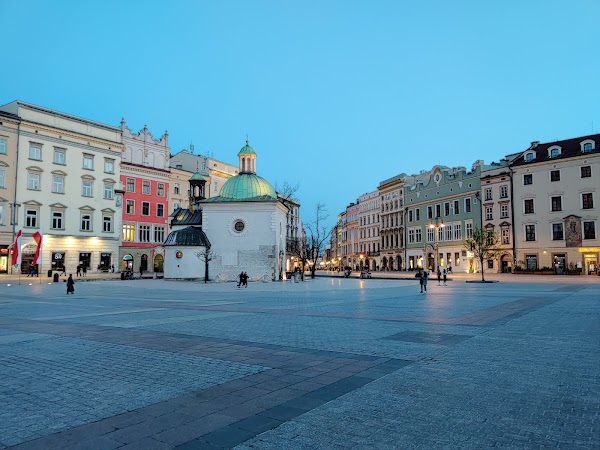
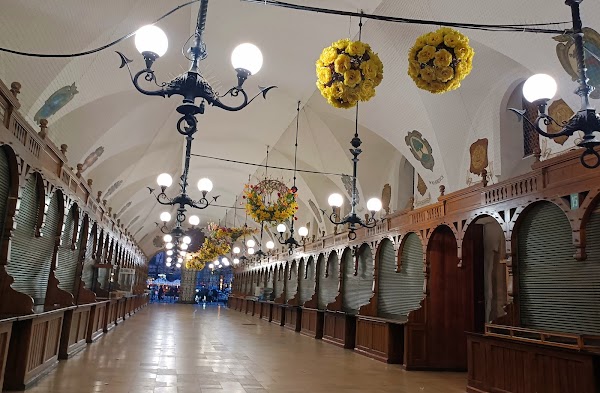
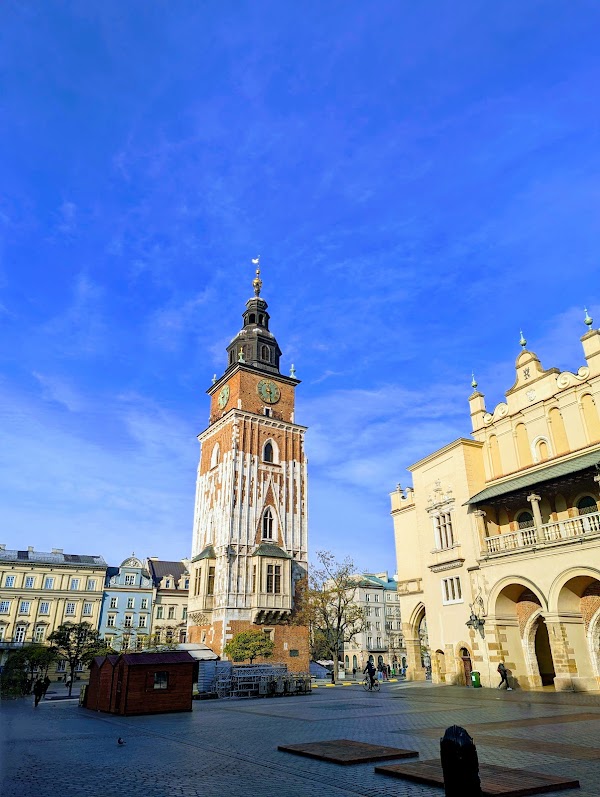
Rynek Główny, the heart of Kraków's Old Town, is a sprawling medieval square renowned for its architectural grandeur and vibrant atmosphere. Its centerpiece is the Cloth Hall, a 16th-century Renaissance edifice adorned with intricate carvings and topped by an attic with sculpted masks. Flanking the Cloth Hall are the Town Hall Tower and the 11th-century Church of St. Adalbert, while the Gothic towers of St. Mary's Basilica soar above the square. Rynek Główny has witnessed centuries of history, from royal ceremonies to public executions. It was here that King Casimir III the Great expanded the city's commercial role in the 14th century, and where Tadeusz Kościuszko announced the uprising against Russian rule in 1794. The square has also been a stage for mass demonstrations, including those of the Solidarity movement in the 1980s. Today, Rynek Główny is a bustling hub of activity, lined with historic townhouses, cafes, and restaurants. Its vibrant street life has earned it recognition as the World's Best Square by the Project for Public Spaces. Visitors can marvel at the square's architectural wonders, listen to the hourly heynal played from St. Mary's Basilica, and soak up the unique atmosphere of this historic and beloved landmark.Historic Monuments
Rynek Główny, the central square of Kraków's Old Town, stands as a testament to the city's rich history and architectural heritage. Designated as a UNESCO World Heritage Site, it is the largest medieval town square in Europe, spanning an impressive 40,000 square meters. The square's perimeter is adorned with a captivating array of historic townhouses, palaces, and churches, each contributing to the square's unique charm. At the heart of Rynek Główny lies the iconic Sukiennice, a Renaissance-era cloth hall that has been a central hub of commerce for centuries. Its ornate facade, topped by a magnificent attic adorned with carved masks, is a masterpiece of architectural design. Flanking the Sukiennice is the Town Hall Tower, a Gothic structure that offers panoramic city views. The square is further embellished by the presence of the Church of St. Adalbert, a 10th-century architectural gem, and the 19th-century Adam Mickiewicz Monument, a tribute to Poland's national poet. Dominating the skyline are the Gothic towers of St. Mary's Basilica, their intricate spires reaching towards the heavens. Rynek Główny's significance extends beyond its architectural beauty. It has been the stage for countless historical events, including royal coronations, market days, and public gatherings. The square's cobblestone streets have witnessed the passage of time, bearing witness to the city's triumphs and tribulations. Today, Rynek Główny remains a vibrant hub of activity, where locals and tourists alike gather to soak in its historic ambiance. Its numerous restaurants, cafes, and shops offer a glimpse into Kraków's culinary and cultural traditions. The square also hosts a variety of events throughout the year, including concerts, festivals, and markets, further enriching its cultural tapestry.Cultural Events
Rynek Główny, the heart of Kraków's Old Town, is a vibrant hub for cultural events that captivate visitors throughout the year. The square's rich history and stunning architecture provide a captivating backdrop for a diverse array of festivals, concerts, and performances. One of the most beloved events is the Lajkonik Festival, a centuries-old tradition that takes place annually in June. Donning a colorful costume and a hobbyhorse, the Lajkonik leads a procession through the square, symbolizing the city's victory over the Tartars. The lively atmosphere is filled with music, dance, and traditional crafts. Music lovers flock to Rynek Główny for the Summer Arts Festival, held in August. The square transforms into a stage for renowned musicians, from classical ensembles to contemporary bands. The festival's eclectic lineup caters to diverse tastes, creating an unforgettable musical experience. During the Christmas season, the square becomes a winter wonderland, adorned with twinkling lights and festive decorations. The annual Kraków szopka Festival showcases intricate nativity scenes handcrafted by local artisans, while the Christmas Eve tradition of decorating the Adam Mickiewicz Monument with flowers adds a touch of warmth and reverence. Throughout the year, Rynek Główny hosts a myriad of other cultural events, including art exhibitions, historical reenactments, and open-air markets. The square's unique atmosphere and central location make it an ideal venue for these gatherings, fostering a sense of community and cultural exchange.
2
Rynek Underground Museum
View on map
3
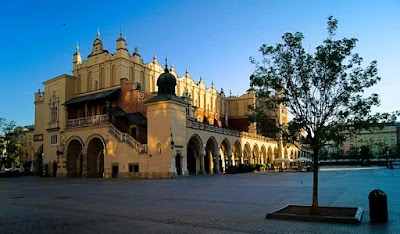
MNK Sukiennice
View on map
4
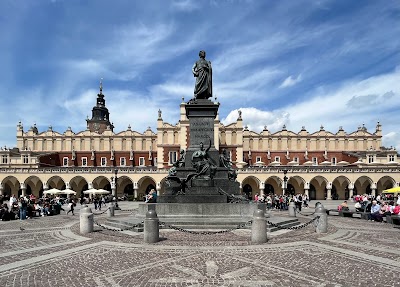
Adam Mickiewicz Monument, Kraków
View on map
5
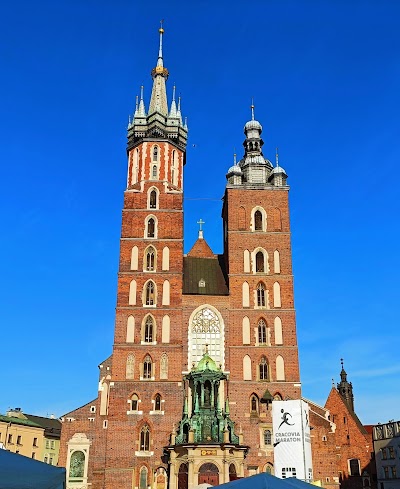
St. Mary's Basilica
View on map
Audio Narrations
English
Introduction
St. Mary's Basilica, an iconic landmark in Kraków, Poland, is a magnificent brick church known for its two towers of varying heights. Built in the 13th century, it underwent significant reconstruction in the 15th century, resulting in its current Gothic architectural style. The basilica's interior boasts an awe-inspiring wooden altarpiece by Veit Stoss, the largest of its kind in the world. Every hour, a trumpet call known as the "hejnał mariacki" resounds from the church's main tower, a tradition that dates back to the 13th century. The basilica's rich history and architectural splendor make it a must-see destination for visitors to Kraków.Tower Bugle Call
St. Mary's Basilica in Kraków, Poland, is renowned for its captivating Tower Bugle Call, a centuries-old tradition that echoes through the heart of the city. Every hour, on the hour, a trumpeter ascends the basilica's taller tower to perform the haunting melody, known as the "Hejnał Mariacki." This bugle call holds a profound significance in Kraków's history. Legend has it that during a 13th-century Tatar invasion, a trumpeter sounded the alarm from the tower. As he played, an arrow pierced his throat, abruptly cutting off the melody. To this day, the bugle call ends abruptly in mid-note, commemorating the trumpeter's sacrifice and the city's resilience. The Hejnał Mariacki has become an iconic symbol of Kraków, played not only from St. Mary's Basilica but also broadcast throughout Poland at noon on Saturdays. Its haunting notes evoke a sense of history, patriotism, and the enduring spirit of the city.Brick Gothic Architecture
St. Mary's Basilica in Kraków, Poland, stands as a testament to the grandeur of Brick Gothic architecture. Constructed in the 14th century, its exterior boasts intricate brickwork, showcasing the skilled craftsmanship of the era. The basilica's facade is adorned with decorative gables, pinnacles, and buttresses, creating a visually captivating silhouette. Inside, the nave features soaring vaulted ceilings supported by slender brick columns, creating a sense of spaciousness and awe. The ribbed vaults, a hallmark of Gothic architecture, are adorned with intricate patterns, adding to the basilica's visual appeal. The use of red brick throughout the structure gives it a warm and inviting ambiance, further enhanced by the stained-glass windows that bathe the interior in colorful light. St. Mary's Basilica is a prime example of Brick Gothic architecture, showcasing the beauty and ingenuity of this architectural style.
6
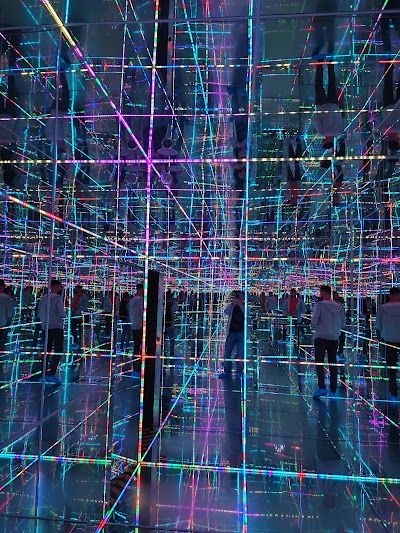
Lustrzany Labirynt
View on map
7
Wawel Royal Castle
View on map
Audio Narrations
English
Introduction
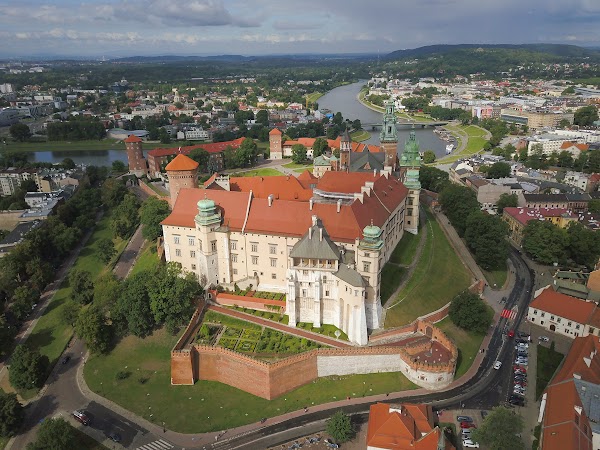
Wawel Royal Castle, a fortified architectural complex atop Wawel Hill in Kraków, Poland, stands as a testament to the country's rich history and cultural significance. Established by King Casimir III the Great in the 14th century, the castle has undergone numerous expansions and renovations over the centuries, resulting in a captivating blend of architectural styles. The castle's most notable feature is Wawel Cathedral, where Polish monarchs were crowned and buried. Its Gothic structure houses the tombs of prominent figures like King Casimir III the Great and King Sigismund I the Old. The cathedral's Sigismund Chapel, designed by Bartolomeo Berrecci, is renowned for its exquisite Renaissance architecture and houses the tombs of King Sigismund I and King Sigismund II Augustus. Other notable structures within the castle complex include the Silver Bell Tower, dating back to the 12th century, and the Royal Sigismund Bell, cast in 1520 and weighing nearly 13 tonnes. The castle's courtyards, adorned with Renaissance arcades, provide a glimpse into the grandeur of the past. Wawel Royal Castle has witnessed significant events throughout Polish history. It served as the residence of Polish kings until the capital was moved to Warsaw in 1596. During the 18th and 19th centuries, the castle fell into decline and was occupied by foreign powers. In the 20th century, it underwent extensive restoration and became a national museum, showcasing Poland's rich artistic and historical heritage. Today, Wawel Royal Castle is one of Poland's most visited museums, attracting over 2.56 million visitors in 2023. It houses a vast collection of paintings, sculptures, tapestries, and other artifacts, providing a captivating journey through Polish history and culture.Royal Tombs
Wawel Royal Castle in Kraków, Małopolskie, Poland, houses the remains of Polish monarchs, national heroes, and notable figures within the hallowed halls of Wawel Cathedral. The cathedral, a magnificent edifice standing adjacent to the castle, serves as the final resting place for 19 Polish kings, including Władysław I the Elbow-high, the first to be crowned within its sacred walls. Among the notable figures interred here are Tadeusz Kościuszko, a national hero who fought for Polish independence, and Jan III Sobieski, a renowned military leader who triumphed over the Ottoman Empire at the Battle of Vienna. The Royal Tombs, adorned with intricate sculptures and epitaphs, offer a glimpse into the lives and legacies of Poland's past rulers. The sarcophagus of King Sigismund I the Old, crafted from red marble and adorned with bronze reliefs, is a masterpiece of Renaissance art. The tomb of King Stephen Báthory, a Transylvanian prince who ruled Poland in the 16th century, features a life-size effigy of the monarch clad in full armor. Visitors can also explore the captivating Sigismund Chapel, a stunning example of Renaissance architecture commissioned by King Sigismund I the Old. The chapel houses the tombs of the king and his family, including his beloved wife, Bona Sforza. The chapel's walls are adorned with vibrant frescoes depicting scenes from the life of Christ, adding to the awe-inspiring ambiance of this sacred space. The Royal Tombs at Wawel Royal Castle stand as a testament to the rich history and cultural heritage of Poland. They offer a unique opportunity to delve into the lives and legacies of the nation's past rulers and luminaries, providing a profound experience for those seeking a deeper understanding of Poland's regal past.Preservation and Restoration
Wawel Royal Castle in Kraków, Małopolskie, Poland, stands as a testament to centuries of meticulous preservation and restoration efforts. Its rich history has left an imprint on its architecture, necessitating ongoing conservation to maintain its grandeur. One of the most notable restoration projects was the reconstruction of the castle's interiors after a devastating fire in 1930. The painstaking recreation of its opulent chambers, including the Royal Apartments and the Throne Room, involved the collaboration of skilled artisans and historians to restore the castle's former glory. Another significant undertaking was the restoration of the castle's fortifications. The walls and towers, weakened by time and warfare, underwent extensive repairs to ensure their structural integrity. This involved reinforcing the foundations, repairing damaged masonry, and restoring the defensive mechanisms. The restoration of the castle's courtyards and gardens also played a crucial role in preserving its aesthetic appeal. Beyond its architectural preservation, Wawel Royal Castle has also been the focus of extensive archaeological excavations. These efforts have uncovered remnants of earlier structures and artifacts, providing valuable insights into the castle's evolution and the lives of its inhabitants. The ongoing preservation and restoration work at Wawel Royal Castle is a testament to the enduring legacy of this architectural masterpiece and the commitment to safeguarding its historical and cultural significance for generations to come.
8
Wawel Cathedral
View on map
Audio Narrations
English
Introduction
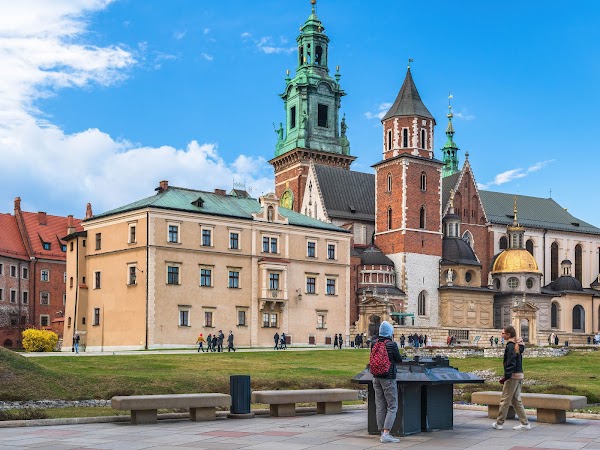
Wawel Cathedral, a magnificent architectural masterpiece, stands as a testament to Poland's rich history and cultural heritage. Located within the Wawel Royal Castle complex in Kraków, this Gothic cathedral has witnessed the coronations and burials of Polish monarchs for centuries. Its grandeur is evident in its intricate facade, adorned with sculptures and gargoyles, and its soaring spires that dominate the city skyline. Inside, the cathedral boasts an awe-inspiring nave, supported by massive pillars and illuminated by stained-glass windows. The elaborate Sigismund Chapel, a masterpiece of Renaissance architecture, houses the tombs of King Sigismund I the Old and his son, Sigismund II Augustus. The cathedral also features numerous side chapels, each with its own unique artistic and historical significance. Beyond its architectural beauty, Wawel Cathedral holds immense religious and cultural importance. It is the seat of the Archbishop of Kraków and a pilgrimage site for Catholics worldwide. The cathedral's treasury houses a collection of priceless artifacts, including the coronation sword of Polish kings and the relics of Saint Stanislaus, the patron saint of Poland. Wawel Cathedral remains a living testament to Poland's enduring spirit and a symbol of its national identity. Its architectural splendor, historical significance, and religious importance make it a must-visit destination for anyone seeking to delve into the heart of Polish culture and history.National Symbol
Wawel Cathedral, a majestic edifice nestled atop Wawel Hill in Kraków, Poland, stands as an enduring symbol of national identity and pride. Its towering spires and intricate Gothic architecture have witnessed centuries of Polish history, from royal coronations to solemn burials. As the final resting place of Polish monarchs and prominent figures, the cathedral embodies the nation's rich heritage and unwavering spirit. Beyond its architectural grandeur, Wawel Cathedral holds immense religious significance. It houses the relics of Saint Stanislaus, the patron saint of Poland, whose martyrdom in the 11th century cemented the cathedral's status as a sacred site. The cathedral's treasury boasts an opulent collection of royal regalia, ecclesiastical artifacts, and priceless works of art, further enhancing its symbolic importance. Throughout history, Wawel Cathedral has served as a stage for pivotal events that shaped Poland's destiny. It witnessed the coronation of the first Polish king, Bolesław I the Brave, in 1025, and the signing of the Union of Krewo in 1386, which united Poland and Lithuania. These momentous occasions underscore the cathedral's role as a symbol of national unity and sovereignty. Today, Wawel Cathedral remains a cherished landmark, attracting pilgrims, tourists, and locals alike. Its enduring presence serves as a testament to the resilience and unwavering spirit of the Polish people, making it a profound symbol of national identity and a beacon of Polish heritage.Cultural Icon
Wawel Cathedral, a magnificent edifice nestled within the Wawel Royal Castle complex in Kraków, Poland, stands as a testament to the nation's rich history and cultural heritage. As a symbol of Polish sovereignty and spirituality, the cathedral has witnessed countless coronations, royal weddings, and burials, solidifying its status as a cultural icon. Its architectural grandeur, spanning various epochs, reflects the artistic and religious influences that have shaped Poland over the centuries. The cathedral's Gothic structure, with its soaring spires and intricate ribbed vaults, is a testament to the architectural prowess of the 14th century. Its interior is adorned with an array of artistic masterpieces, including the exquisite Sigismund Chapel, a Renaissance gem designed by Bartolomeo Berrecci. The chapel's gilded dome and intricate sculptures showcase the fusion of Italian Renaissance and Polish Gothic styles. Beyond its architectural splendor, Wawel Cathedral holds immense religious significance. It houses the relics of Saint Stanislaus, Poland's patron saint, and serves as the burial ground for many Polish monarchs and national heroes. The cathedral's treasury boasts a collection of priceless artifacts, including the coronation sword, scepter, and orb, symbols of Polish sovereignty. Wawel Cathedral's cultural significance extends beyond its religious and historical importance. It has inspired countless works of art, literature, and music, becoming an enduring symbol of Polish identity. Its presence in the heart of Kraków serves as a reminder of the nation's resilience, its triumphs, and its enduring spirit.
9
Saints Peter and Paul Church
View on map
Audio Narrations
English
Introduction
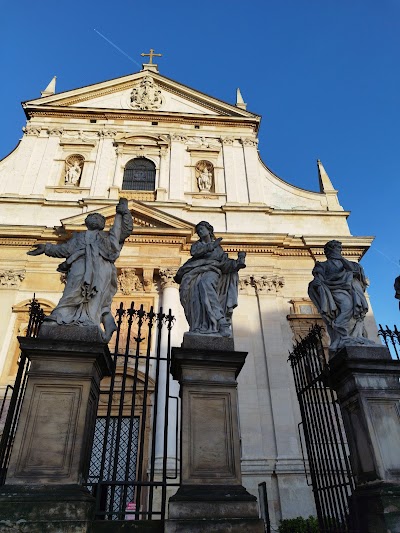
The Church of Saints Peter and Paul in Kraków stands as a pivotal architectural landmark, being the city's first entirely Baroque structure, a testament to the Counter-Reformation's influence in Poland. Conceived initially by Giovanni Maria Bernardoni and brought to its magnificent realization by Giovanni Battista Trevano, its grand facade, often likened to Rome's Il Gesù, immediately commands attention. This impressive front is further distinguished by the twelve monumental statues of the Apostles, each poised atop a pedestal, gazing towards the street, a truly unique outdoor sculptural ensemble. Inside, the opulent stucco work by Giovanni Battista Falconi adorns the vaults and altars, creating a dynamic, three-dimensional spectacle. A particularly fascinating and unexpected feature within this historic sacred space is the Foucault's pendulum, periodically suspended from the dome, visibly demonstrating the Earth's rotation to visitors, a striking juxtaposition of ancient faith and modern science. This Jesuit foundation, completed in the early 17th century, remains a powerful symbol of Baroque artistry and intellectual curiosity.Foucault's Pendulum
The Saints Peter and Paul Church in Kraków, Małopolskie, Poland, houses a distinctive scientific installation: the longest Foucault pendulum in the country. Measuring an impressive 46.5 meters, this instrument provides a direct and compelling demonstration of the Earth's rotational movement around its own axis. Its presence within the church offers a unique opportunity to observe a fundamental principle of physics in an unexpected setting. For those specifically interested in witnessing this phenomenon, the pendulum's operation is demonstrated on Thursdays. During these demonstrations, observers can clearly perceive the gradual shift in the pendulum's plane of oscillation, a visual testament to our planet's continuous turning beneath it. This particular Foucault pendulum is notable not only for its considerable length, making it a national record, but also for its regular public demonstrations, which enhance its educational value. While the accompanying explanations are provided in Polish, the visual evidence of the Earth's rotation is universally comprehensible. The church, therefore, serves as a remarkable venue where scientific inquiry into planetary motion is made accessible, offering a profound experience for visitors seeking a tangible connection to the mechanics of our solar system. This unique feature firmly establishes the Saints Peter and Paul Church as a significant site for both cultural and scientific exploration.Counter-Reformation Landmark
Saints Peter and Paul Church in Kraków stands as a quintessential example of Baroque architecture, directly embodying the artistic and ideological tenets of the Counter-Reformation. Its construction in the late 16th and early 17th centuries marked a deliberate and powerful response to the Protestant Reformation, aiming to reassert the grandeur, spiritual authority, and emotional resonance of the Catholic Church. The Baroque style, characterized by its dramatic flair, opulent ornamentation, and profound emotional intensity, was strategically employed to inspire awe and devotion among the faithful, distinguishing itself from the more restrained architectural forms that preceded it. This church's design was conceived to engage the senses and elevate the spirit, drawing worshippers into a more profound and immersive religious experience. Its imposing facade and richly decorated interior, typical of Counter-Reformation churches, were meticulously crafted to convey the triumph and unwavering strength of Catholicism in a period of significant religious upheaval. As one of Kraków's most significant Baroque structures, Saints Peter and Paul Church vividly illustrates how art and architecture were strategically utilized to reinforce doctrine and rekindle faith. The church’s very existence and its stylistic choices make it an indispensable landmark for understanding the Counter-Reformation's profound impact on Polish religious and cultural life, showcasing a clear departure from earlier architectural norms to serve a specific theological and political agenda. Its construction introduced a style that would dominate religious building for decades, emphasizing the Church's renewed confidence and its commitment to engaging the populace through magnificent visual displays.
10
Planty
View on map
11
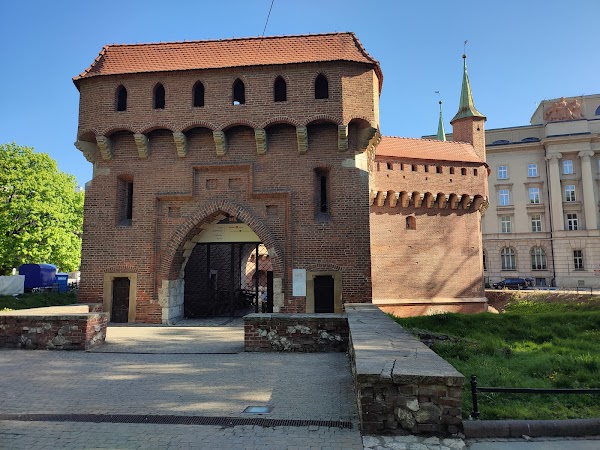
Kraków Barbican
View on map
12
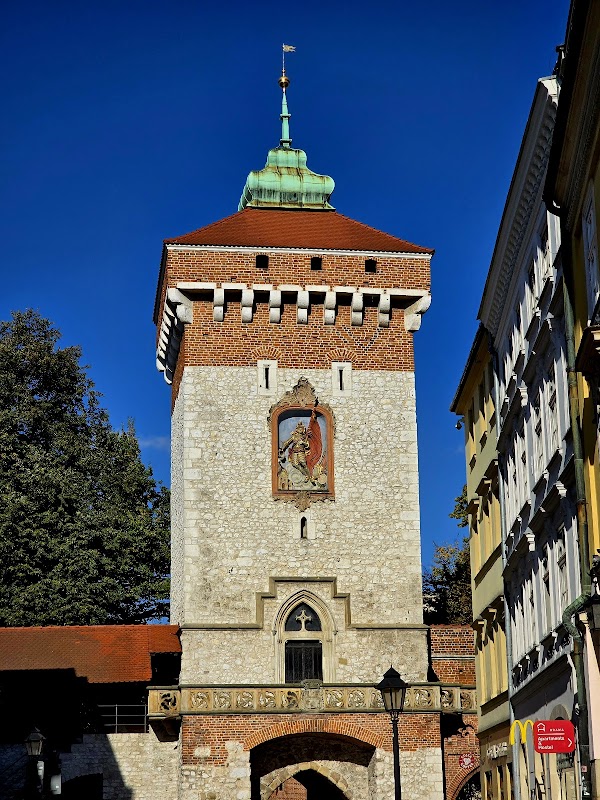
St. Florian's Gate
View on map
13
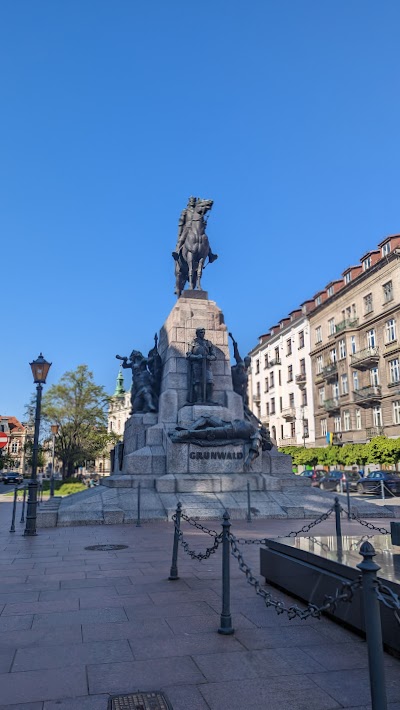
Grunwald Monument
View on map
14
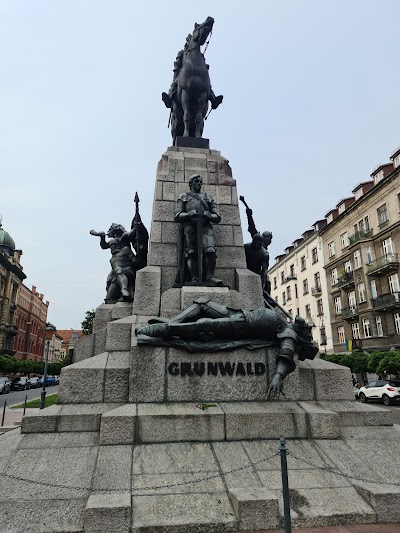
Jan Matejko Square
View on map
15
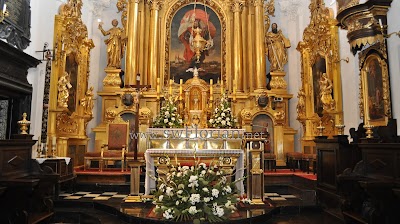
Bazylika św. Floriana w Krakowie
View on map
Experience the Full Tour
Download the DocentPro app to access all tour stops, complete audio narrations in multiple languages, offline maps, and interactive features.