
Lucerne's Historic Treasures: A Journey Through Time

Walking Tour

3.7 km (2.3 miles)

56 min travel time

9 Stops

Lucerne, Switzerland
Lucerne's Historic Treasures: A Journey Through Time
Tour Stops
1
Lucerne Culture and Congress Centre
View on map
Audio Narrations
English
Introduction
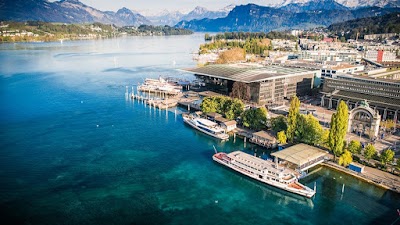
The Lucerne Culture and Congress Centre, an architectural masterpiece on the shores of Lake Lucerne, is far more than a mere venue. Designed by the renowned architect Jean Nouvel, the building itself is a conversation starter. Its most striking feature, a seemingly floating, cantilevered roof known as the "Salle Blanche," appears to hover weightlessly over the water, reflecting the sky and creating a dialogue between the natural and built environments. This interplay of light and reflection is a recurring theme throughout the centre. Nouvel, inspired by the city's water-bound setting, incorporated numerous water features within the building, blurring the lines between the interior and the surrounding landscape. Beyond its architectural significance, the centre is a vibrant hub for cultural expression, hosting a diverse range of events from world-class concerts and ballets to thought-provoking exhibitions and conventions. The centre's acoustics, particularly in its concert hall, are celebrated for their exceptional quality, attracting internationally acclaimed orchestras and performers.International Congress Destination
The Lucerne Culture and Congress Centre (KKL) distinguishes itself as an international congress destination by seamlessly blending a prestigious lakeside location with state-of-the-art facilities. Its unique position on the shores of Lake Lucerne, framed by breathtaking mountain vistas, provides an inspiring backdrop for global gatherings. Beyond its scenic setting, the KKL excels in accommodating large-scale international congresses. Its flexible design allows for multiple configurations, welcoming thousands of delegates across its various halls and breakout rooms. The Centre's commitment to sustainability, evident in its energy-efficient design and locally sourced catering options, aligns with the values of environmentally conscious organizations. Furthermore, the KKL's strategic location within walking distance of hotels and well-connected to international transport hubs ensures convenient logistical arrangements for attendees from around the world. This blend of natural beauty, cutting-edge infrastructure, and a commitment to sustainability positions the KKL as a prime choice for hosting impactful and memorable international congresses.Lakeside Architecture
The Lucerne Culture and Congress Centre, nestled on the edge of Lake Lucerne, embodies a captivating interplay between modern architecture and its lacustrine setting. Designed by French architect Jean Nouvel, the building's most striking feature is its expansive, cantilevered roof, known as the "Salle Blanche." This vast, white plane seems to float above the water, its underside reflecting the ever-changing hues of the lake and sky. This reflection creates a dialogue between the built and natural environment, blurring the lines between structure and landscape. The building's transparency, achieved through extensive use of glass, further enhances this connection. From the inside, visitors are treated to panoramic views of the lake and the surrounding mountains, seamlessly merging the cultural experience with the natural splendor of the setting. This interplay of light, reflection, and transparency makes the Lucerne Culture and Congress Centre a prime example of lakeside architecture that embraces and interacts with its watery surroundings.
2
Jesuit Church, Lucerne
View on map
Audio Narrations
English
Introduction
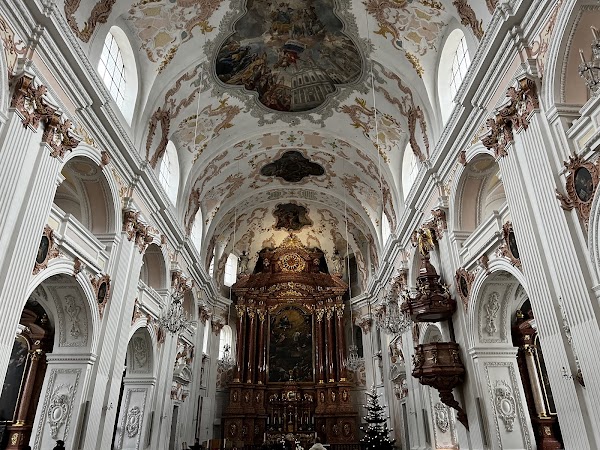
The Jesuit Church in Lucerne, Switzerland, is a masterpiece of early Baroque architecture, boasting a stunning white facade adorned with intricate sculptures and a majestic dome. Inside, the church's opulent interior features soaring columns, gilded stuccowork, and vibrant frescoes depicting scenes from the life of St. Ignatius Loyola, the founder of the Jesuit order. The church's most striking feature is its trompe l'oeil dome, an illusionistic painting that creates the impression of a vast, open sky. This breathtaking artwork, coupled with the church's rich ornamentation, transports visitors to a realm of spiritual grandeur. Beyond its aesthetic splendor, the Jesuit Church holds significant historical importance. Built in the 17th century during the Counter-Reformation, the church served as a powerful symbol of the Catholic Church's resurgence. Its construction marked a turning point in Lucerne's religious landscape, solidifying the city's Catholic identity. Today, the Jesuit Church remains a vibrant center of worship and a testament to the enduring legacy of the Jesuit order.Jesuit Art and Symbolism
The Jesuit Church in Lucerne, Switzerland, is a treasure trove of Jesuit art and symbolism. Built in the 17th century, the church is adorned with intricate frescoes, sculptures, and paintings that reflect the Jesuit order's commitment to education, faith, and service. One of the most striking features of the church is its ceiling frescoes, which depict scenes from the life of St. Ignatius Loyola, the founder of the Jesuits. These frescoes are a testament to the Jesuit emphasis on education and the importance of following in the footsteps of their founder. Another notable feature of the church is its high altar, which is decorated with sculptures of angels and saints. These sculptures represent the Jesuit belief in the power of intercession and the importance of seeking divine guidance. The Jesuit Church in Lucerne is also home to a number of paintings that depict scenes from the Bible. These paintings are a reminder of the Jesuit commitment to spreading the Christian faith and teaching the gospel to all people. The Jesuit Church in Lucerne is a testament to the Jesuit order's rich history and its commitment to art and symbolism. The church is a must-see for anyone interested in learning more about the Jesuits and their impact on the world. The church's architecture is also noteworthy, as it is a blend of Renaissance and Baroque styles. The facade of the church is decorated with statues of Jesuit saints, and the interior is adorned with frescoes and paintings that depict scenes from the life of Christ. The Jesuit Church in Lucerne is a testament to the Jesuit order's commitment to art and symbolism. The church is a must-see for anyone interested in learning more about the Jesuits and their impact on the world.Counter-Reformation in Switzerland
The Jesuit Church in Lucerne, Switzerland, stands as a testament to the Counter-Reformation's impact on the city. Constructed between 1666 and 1677, the church embodies the Baroque style, showcasing the movement's artistic and architectural influence during this period. Its ornate interior, adorned with frescoes and stuccowork, served as a powerful tool for conveying Catholic doctrine and captivating the senses of the faithful. The church's strategic location, situated near the Reuss River and the city's historic center, further underscores its significance. It served as a focal point for Catholic revival in Lucerne, a city that had been divided by religious tensions during the Reformation. The Jesuits, known for their educational and missionary work, played a crucial role in promoting Catholic teachings and combating Protestant ideas. The Jesuit Church's architecture reflects the Counter-Reformation's emphasis on emotional engagement and theatrical presentation. Its dramatic use of light and shadow, coupled with its dynamic sculptures and paintings, aimed to evoke awe and inspire religious devotion. The church's central dome, adorned with frescoes depicting scenes from the life of Christ, served as a visual reminder of Catholic beliefs and values. The Jesuit Church in Lucerne remains a tangible reminder of the Counter-Reformation's legacy in Switzerland. Its architectural grandeur and artistic embellishments continue to captivate visitors, offering a glimpse into the religious and cultural transformations that shaped the region during this pivotal era.
3
Chapel Bridge
View on map
Audio Narrations
English
Introduction
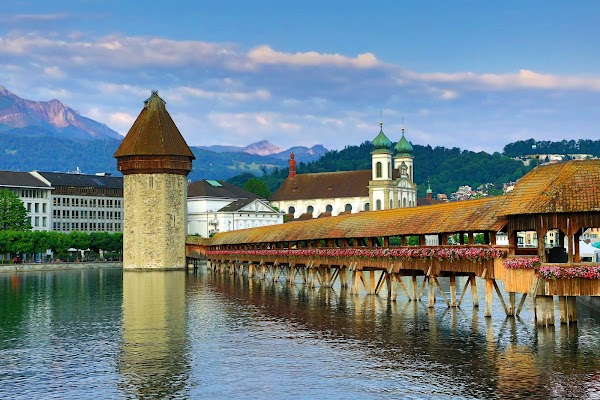
The Chapel Bridge, a historic landmark in Lucerne, Switzerland, is the oldest wooden covered bridge in Europe. Built in the 14th century, it spans the Reuss River, connecting the old and new towns. The bridge is adorned with 17th-century paintings depicting scenes from Swiss history and the lives of Lucerne's patron saints. Despite a devastating fire in 1993, the bridge was meticulously rebuilt, preserving its iconic status. The Chapel Bridge is not only a picturesque sight but also a testament to Lucerne's rich past. The paintings that line its interior offer a glimpse into the city's heritage, while the bridge itself stands as a symbol of resilience and architectural ingenuity. Its unique charm and historical significance make it a must-see destination for visitors to Lucerne.Medieval Architecture
The Chapel Bridge, a vestige of medieval engineering prowess, stands as a testament to the architectural ingenuity of the era. Its construction in the 14th century exemplifies the innovative use of wood as the primary building material, a testament to the skilled craftsmanship of the time. The bridge's covered gallery, a distinctive feature, not only provided shelter from the elements but also served as a canvas for a series of captivating paintings. These artworks, added in the 17th century, depict scenes from Lucerne's history and the lives of its patron saints, offering a glimpse into the city's rich past. The Chapel Bridge played a pivotal role in Lucerne's medieval defense system, serving as a fortified gateway to the city. Its strategic location over the Reuss River allowed for effective control of access and protection against potential invaders. The bridge's sturdy construction and defensive features, including its fortified towers, reflect the importance placed on safeguarding the city during this turbulent period. Beyond its military significance, the Chapel Bridge also held cultural and social importance. It served as a gathering place for locals and travelers alike, fostering a sense of community and providing a stage for various events and celebrations. The bridge's covered gallery offered shelter from the elements, making it an ideal venue for social interactions and artistic performances. Today, the Chapel Bridge stands as a beloved landmark, attracting visitors with its unique blend of architectural and historical significance. Its medieval origins, evident in its design and construction, continue to captivate those interested in the rich tapestry of the past.Cultural Landmark
The Chapel Bridge in Lucerne, Switzerland, is a captivating cultural landmark that embodies the city's rich history and artistic heritage. Built in the 14th century, it is one of the oldest and longest covered wooden bridges in Europe, spanning the Reuss River and connecting the Old Town to the New Town. The bridge's most striking feature is its intricate paintings, added in the 17th century. These vibrant murals depict scenes from Swiss history, including the lives of Lucerne's patron saints, St. Leodegar and St. Maurice. The paintings offer a glimpse into the city's past and provide a unique visual narrative for visitors. Beyond its historical significance, the Chapel Bridge has played a pivotal role in Lucerne's cultural life. It has served as a stage for numerous festivals and events, including the annual Lucerne Festival, which attracts world-renowned musicians and performers. The bridge's picturesque setting and unique atmosphere make it an ideal venue for cultural gatherings and celebrations. The Chapel Bridge is also a symbol of Lucerne's resilience. In 1993, a fire destroyed a significant portion of the bridge, but it was meticulously reconstructed using traditional techniques, preserving its historical integrity. This restoration demonstrates the city's commitment to preserving its cultural heritage and ensuring the bridge's legacy for future generations. Today, the Chapel Bridge remains a beloved landmark for locals and tourists alike. Its cultural significance extends beyond its architectural beauty, as it has become an integral part of Lucerne's identity and a testament to the city's vibrant cultural scene.
4
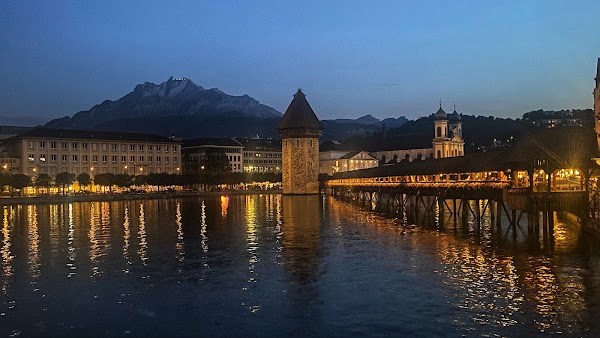
Luzern Altstadt
View on map
5
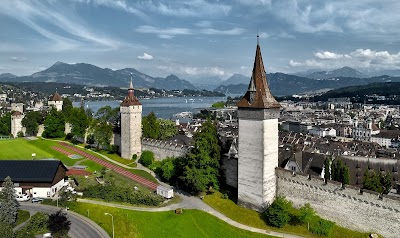
Museggmauer
View on map
6
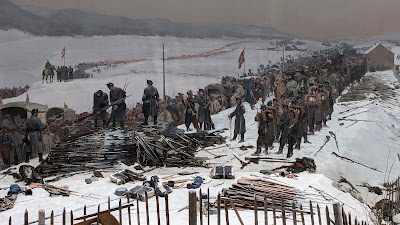
Bourbaki Panorama Lucerne
View on map
7
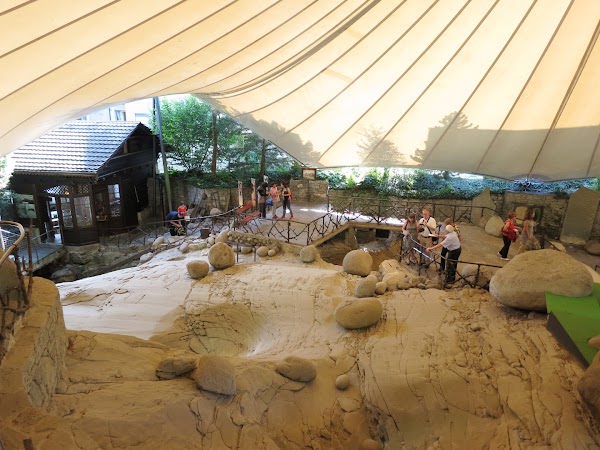
Glacier Garden of Lucerne
View on map
8
Lion Monument
View on map
Audio Narrations
English
Introduction
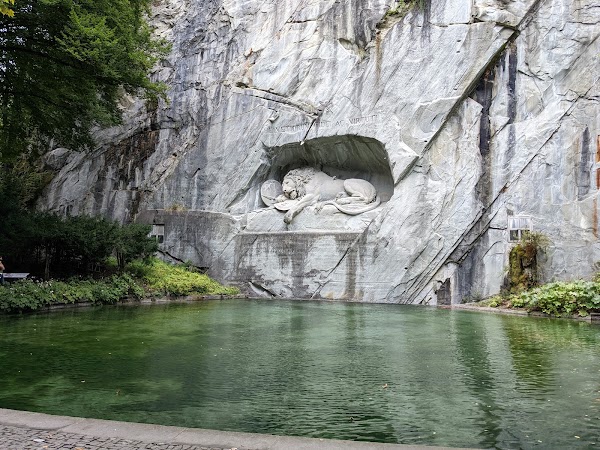
Nestled in a charming park setting in Lucerne, the Lion Monument stands as a poignant tribute to the Swiss Guards who lost their lives defending King Louis XVI during the French Revolution. The colossal sandstone sculpture, carved by Lucas Ahorn in 1821, depicts a dying lion impaled by a spear, its paw resting on a shield bearing the fleur-de-lis of the French monarchy. The monument's Latin inscription, "Helvetiorum Fidei ac Virtuti," translates to "To the loyalty and bravery of the Swiss." The Lion Monument has been a popular tourist attraction since its unveiling in 1821. Mark Twain famously described it as "the most mournful and moving piece of stone in the world." The monument's enduring appeal lies not only in its artistic beauty but also in its historical significance. It serves as a reminder of the sacrifice made by the Swiss Guards and the tumultuous events of the French Revolution. Beyond its historical importance, the Lion Monument is also a testament to the skill of its creator, Bertel Thorvaldsen. The intricate details and lifelike depiction of the lion's agony evoke a profound sense of emotion in viewers. The monument's setting, amidst a tranquil park and surrounded by the picturesque Swiss Alps, further enhances its impact.French Revolution
The Lion Monument in Lucerne, Switzerland, stands as a poignant tribute to the Swiss Guards who perished during the French Revolution. Commissioned by Karl Pfyffer von Altishofen, an officer who witnessed the tragedy, the monument was unveiled in 1821. Carved from sandstone, the majestic lion lies in its death throes, a spear piercing its side. Its paw rests upon a shield adorned with the fleur-de-lis, symbolizing the French monarchy it defended. The inscription "Helvetiorum Fidei ac Virtuti" (To the loyalty and bravery of the Swiss) pays homage to the guards' unwavering devotion. The monument's significance lies in its commemoration of the pivotal event of August 10, 1792, when a mob stormed the Tuileries Palace in Paris. Amidst the chaos, the Swiss Guards fought valiantly, defending King Louis XVI and his family. However, they were overwhelmed by the sheer force of the attackers, resulting in the deaths of hundreds of guards. The Lion Monument serves as a reminder of the sacrifices made by these brave soldiers. Its emotive depiction of the dying lion has deeply moved visitors, including Mark Twain, who described it as "the most mournful and moving piece of stone in the world." Beyond its artistic merit, the monument has also been a focal point of political controversy. Initially seen as a symbol of conservative, counter-revolutionary sentiments, it later became a rallying point for extreme right-wing movements. However, the city of Lucerne has taken steps to mitigate these associations, emphasizing the monument's historical significance and its role as a memorial to the fallen Swiss Guards.Luzern
Nestled within the heart of Luzern, the Lion Monument stands as a poignant tribute to the fallen Swiss Guards who valiantly defended the French monarchy during the tumultuous French Revolution. This iconic sculpture, carved into the natural rock face of a former quarry, depicts a majestic lion in its final moments, pierced by a spear and cradling a shield adorned with the fleur-de-lis. The monument's inscription, "Helvetiorum Fidei ac Virtuti," serves as a testament to the loyalty and bravery of these brave soldiers. Beyond its historical significance, the Lion Monument holds a special place in Luzern's cultural landscape. It has become an enduring symbol of the city's rich heritage and its deep connection to the Swiss Guards. The monument's serene setting, surrounded by lush greenery and a tranquil pond, invites visitors to pause and reflect on the sacrifices made by these courageous men. For those seeking a deeper understanding of Luzern's history and its relationship with the Lion Monument, guided tours are available, providing insights into the monument's creation, symbolism, and the broader context of the French Revolution. These tours offer a unique opportunity to explore the monument's significance beyond its aesthetic beauty, delving into the intricate tapestry of Luzern's past.
9
Hofkirche St. Leodegar
View on map
Experience the Full Tour
Download the DocentPro app to access all tour stops, complete audio narrations in multiple languages, offline maps, and interactive features.