
Madrid: A Journey Through History, Art, and Nature #2

Walking Tour

4.0 km (2.5 miles)

58 min travel time

13 Stops

Madrid, Spain
Madrid: A Journey Through History, Art, and Nature #2
Tour Stops
1
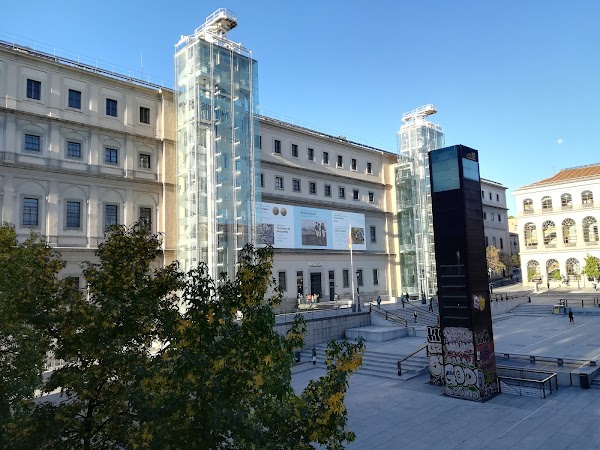
Museo Nacional Centro de Arte Reina Sofía
View on map
Audio Narrations
Introduction
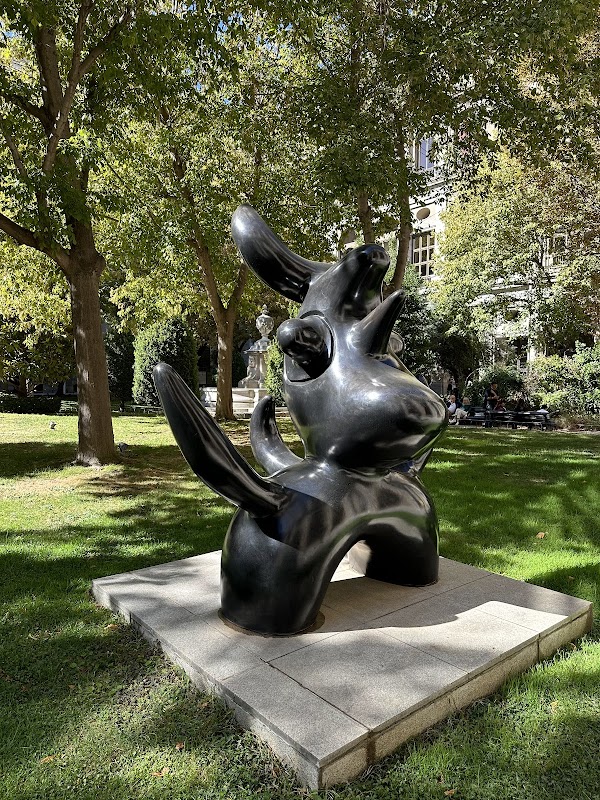
The Museo Nacional Centro de Arte Reina Sofía, located in Madrid, Spain, is a renowned art museum dedicated to 20th-century Spanish art. It houses a vast collection of works by renowned artists such as Pablo Picasso, Salvador Dalí, and Joan Miró. The museum's most famous masterpiece is Picasso's iconic painting, Guernica, a powerful depiction of the horrors of war. Beyond its extensive collection, the museum offers a diverse range of temporary exhibitions and educational programs. It also boasts a specialized library with over 100,000 books, 3,500 sound recordings, and nearly 1,000 videos. The museum's building itself is a historical landmark, having served as a hospital in the 18th century. Its architectural identity was transformed in 1989 by the addition of three glass circulation towers designed by Ian Ritchie. In 2005, an 8,000-square-meter expansion designed by French architect Jean Nouvel was added, providing additional exhibition spaces and amenities. The Reina Sofía is not only a repository of art but also a vibrant cultural hub. It hosts lectures, workshops, and film screenings, fostering dialogue and engagement with the public. Its commitment to preserving and promoting Spanish art makes it a must-visit destination for art enthusiasts and anyone seeking a deeper understanding of Spain's rich cultural heritage.Picasso
Museo Nacional Centro de Arte Reina Sofía in Madrid, Comunidad de Madrid, Spain, houses an extensive collection of Pablo Picasso's works, making it a must-visit destination for art enthusiasts. Among the highlights is Picasso's iconic masterpiece, Guernica, a powerful depiction of the horrors of war. The museum also boasts a significant collection of Picasso's early works, including his Blue Period and Cubist paintings. Visitors can trace the evolution of Picasso's artistic journey through these diverse pieces, gaining insights into his groundbreaking techniques and artistic vision. The museum's collection extends beyond Picasso, showcasing works by other renowned Spanish artists such as Salvador Dalí and Joan Miró, providing a comprehensive overview of Spanish art in the 20th century.Collection
Museo Nacional Centro de Arte Reina Sofía in Madrid, Comunidad de Madrid, Spain, houses an exceptional collection dedicated to Spanish art, particularly from the 20th century. The museum's collection is renowned for its masterpieces by Pablo Picasso, including the iconic "Guernica," a powerful depiction of the horrors of war. Another highlight is Salvador Dalí's surrealist works, showcasing his unique imagination and dreamlike imagery. Beyond these renowned artists, the museum boasts an impressive array of works by other Spanish masters, such as Joan Miró, Eduardo Chillida, and Antoni Tàpies. Their contributions have shaped the landscape of Spanish art, and their works provide valuable insights into the artistic and cultural movements of their time. The international art collection at Museo Nacional Centro de Arte Reina Sofía is equally impressive, featuring works by renowned artists such as Francis Bacon, Yves Klein, and Robert Delaunay. These pieces offer a broader perspective on the development of modern and contemporary art, allowing visitors to explore the connections and influences between Spanish and international artistic practices. The museum's collection is not limited to paintings and sculptures; it also includes a significant collection of drawings, prints, and photographs. These works provide a deeper understanding of the creative processes and techniques employed by the artists, offering a glimpse into their inspirations and artistic journeys. Overall, the Museo Nacional Centro de Arte Reina Sofía's collection is a treasure trove for art enthusiasts, showcasing the evolution of Spanish and international art from the 20th century to the present day. Through its diverse and captivating collection, the museum invites visitors to delve into the depths of artistic expression and explore the transformative power of art.
2
Real Jardín Botánico
View on map
Audio Narrations
Introduction
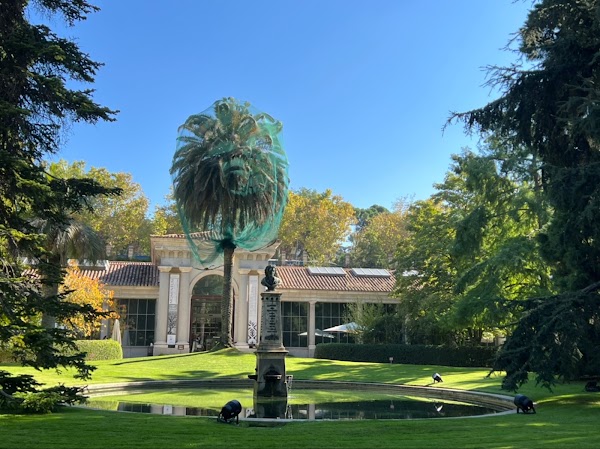
Nestled in the heart of Madrid, the Real Jardín Botánico is an 8-hectare botanical garden that boasts a rich history and diverse collection of plant life. Founded in 1755, it is one of the oldest botanical gardens in Europe and has played a pivotal role in the advancement of botanical research and education. The garden is home to over 5,000 species of plants, including a significant collection of roses. The Rosaleda, or rose garden, features over 2,000 square meters of blooming roses, showcasing a wide range of varieties from ancient species to modern hybrids. Beyond its botanical significance, the Real Jardín Botánico is also a haven of tranquility and beauty. Its serene atmosphere and picturesque landscapes make it a popular destination for locals and tourists alike. Visitors can stroll through the garden's various sections, admiring the vibrant colors and delicate fragrances of the plant life. One of the highlights of the garden is its collection of ancient trees, including a majestic 200-year-old cypress tree. These venerable specimens provide a glimpse into the garden's rich past and serve as a testament to the enduring power of nature. The Real Jardín Botánico is a living testament to the beauty and diversity of the plant kingdom. Its historical significance, extensive collections, and serene atmosphere make it a must-visit destination for anyone interested in botany, horticulture, or simply the wonders of nature.Conservation Efforts
Real Jardín Botánico in Madrid, Comunidad de Madrid, Spain, plays a pivotal role in plant conservation, boasting a seed bank that safeguards over 20,000 species. Its living collections serve as a valuable resource for scientific research and ex situ conservation, ensuring the preservation of rare and endangered plant species. The garden actively participates in international conservation initiatives, collaborating with botanical institutions worldwide to protect threatened flora. Through its educational programs, Real Jardín Botánico raises awareness about the importance of plant conservation and promotes sustainable practices among the public. Additionally, the garden's commitment to ex situ conservation extends to its role as a member of the International Agenda for Botanic Gardens in Conservation, further solidifying its dedication to safeguarding plant diversity.Architectural Beauty
The Real Jardín Botánico in Madrid, Comunidad de Madrid, Spain, is a botanical garden that stands out for its architectural beauty. Founded in 1755, it was designed by architects Francesco Sabatini and Juan de Villanueva, who created a harmonious blend of neoclassical and botanical elements. The garden's layout features seven outdoor gardens and five indoor greenhouses, each showcasing a distinct theme and origin. One of the highlights of the garden's architectural design is the "Terraza de Cuadros," a series of box-edged plots arranged around a fountain. These plots showcase medicinal, aromatic, and orchard-like plants, creating a vibrant and fragrant display. Another notable feature is the romantic English garden, with its lush trees and shrubs, evoking the charm of traditional English gardens. The garden's greenhouses are equally impressive, particularly the one that recreates a desert climate. This greenhouse allows visitors to experience an authentic desert environment without leaving continental Europe, showcasing the garden's commitment to botanical diversity and scientific research. Overall, the Real Jardín Botánico in Madrid, Comunidad de Madrid, Spain, is a testament to the harmonious integration of architecture and nature. Its diverse gardens and greenhouses, combined with its neoclassical design, create a visually stunning and intellectually stimulating space that celebrates the beauty of the natural world.
3
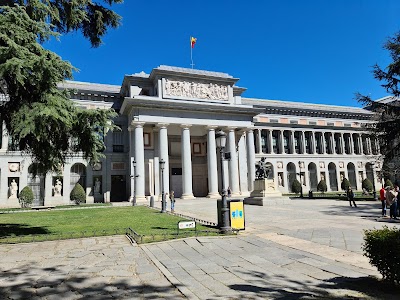
Museo Nacional del Prado
View on map
Audio Narrations
Introduction
The Museo Nacional del Prado, located in Madrid, Spain, is a renowned art museum that houses a vast collection of European art from the 12th to the early 20th century. Founded in 1819, the Prado is particularly celebrated for its exceptional holdings of Spanish art, including masterpieces by El Greco, Velázquez, and Goya. The museum's collection boasts over 8,200 drawings, 7,600 paintings, 4,800 prints, and 1,000 sculptures, in addition to numerous other works of art and historic documents. Among its highlights are "Las Meninas" by Velázquez, "The Third of May 1808" by Goya, and "The Garden of Earthly Delights" by Hieronymus Bosch. The Prado's building, designed by Juan de Villanueva, is an architectural marvel in its own right. A glass-roofed foyer now houses the museum's shops and cafeteria, while the 16th-century Cloister of Jerónimo has been carefully preserved and reassembled within the museum's extension. In 2009, the Prado made a selection of its most important paintings available for viewing in extremely high resolution on Google Earth and Google Maps, allowing art enthusiasts worldwide to explore the museum's treasures from the comfort of their own homes.Architectural Significance
The Museo Nacional del Prado, an architectural masterpiece in Madrid, Spain, stands as a testament to the grandeur of Neoclassical design. Conceived by architect Juan de Villanueva in 1785, the museum's imposing facade, adorned with Doric columns and triangular pediments, exudes an aura of timeless elegance. Its symmetrical layout and harmonious proportions create a sense of balance and order, reflecting the Enlightenment ideals of the time. The museum's interior is equally impressive, with a central gallery that soars to a height of 30 meters. Natural light floods the space through large windows, illuminating the masterpieces within. The galleries are arranged in a logical sequence, guiding visitors through the evolution of Spanish art from the Middle Ages to the 19th century. One of the most striking features of the Prado is its use of natural light. The large windows in the central gallery and the skylights in the other galleries allow visitors to appreciate the paintings in their natural light, which enhances the colors and textures of the works. The Prado's architectural significance extends beyond its Neoclassical facade. In the 20th century, the museum underwent several expansions, including the addition of the Jerónimos Cloister and the Casón del Buen Retiro. These additions, designed by renowned architects such as Rafael Moneo and Norman Foster, seamlessly blend modern and historical elements, creating a dynamic and visually appealing complex. Today, the Museo Nacional del Prado stands as one of the most important architectural landmarks in Madrid and a must-visit destination for art enthusiasts worldwide. Its unique blend of Neoclassical grandeur and modern functionality makes it a testament to the enduring power of architectural design.Art History
The Museo Nacional del Prado, a cornerstone of Madrid's "Golden Triangle of Art," stands as a testament to Spain's rich artistic heritage. Its collection, spanning the 12th to the early 20th centuries, offers a comprehensive journey through the evolution of European art. The Prado's Spanish holdings are unparalleled, boasting masterpieces by El Greco, Velázquez, and Goya. El Greco's "The Knight with his Hand on his Breast" and "The Holy Trinity" exemplify his unique style, while Velázquez's "Las Meninas" and "The Seamstresses" showcase his mastery of realism. Goya's "Third of May, 1808" and the haunting "Black Paintings" reflect the tumultuous political and social climate of his time. Beyond Spanish art, the Prado houses an impressive collection of Italian, Flemish, and Dutch works. Fra Angelico's "Annunciation," Titian's "Venus of Urbino," and Rubens' "The Three Graces" are among the highlights. The museum's Flemish collection includes masterpieces by Van der Weyden, Hieronymus Bosch, and Bruegel the Elder. The Prado's significance extends beyond its collection. It played a pivotal role in the rediscovery of Spanish Primitives and the elevation of Velázquez as a preeminent figure in Spanish art. Its galleries have inspired generations of avant-garde painters, solidifying its status as a beacon of artistic innovation and a treasure trove for art enthusiasts worldwide.
4
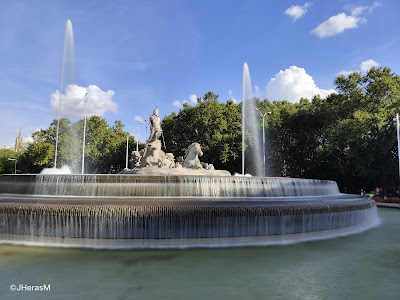
Neptune Fountain
View on map
Audio Narrations
Introduction
The Neptune Fountain, a captivating monument in Madrid's Plaza de Cánovas del Castillo, is a testament to the grandeur of the Spanish capital. Sculpted from pristine white marble, this masterpiece depicts Neptune, the Roman god of the sea, standing majestically on a chariot drawn by two sea horses. His commanding presence is further enhanced by the surrounding dolphins, symbolizing his dominion over the watery realm. The fountain's origins trace back to the reign of King Carlos III, who commissioned its creation in 1780. Sculptor Juan Pascual de Mena began the project, but it was completed in 1786 by his disciple, José Rodríguez. The fountain's intricate details and harmonious proportions have made it a beloved landmark, often serving as a gathering point for locals and tourists alike. Beyond its aesthetic appeal, the Neptune Fountain holds historical significance. It has witnessed countless events, including the jubilant celebrations of Atlético de Madrid football club victories. Its proximity to iconic landmarks such as the Prado Museum, the Ritz Hotel, and the Congreso de los Diputados further enhances its allure. The fountain's enduring charm lies in its ability to evoke a sense of awe and wonder. Its timeless beauty and symbolic representation of Neptune's power continue to captivate visitors, making it an unforgettable highlight of any visit to Madrid.Architectural Heritage
Neptune Fountain, a captivating work of art in Madrid's Paseo del Prado, stands as a testament to the city's rich architectural heritage. Commissioned by King Carlos III in the 18th century, this marble masterpiece was designed by Juan Pascual de Mena and completed by his disciple José Rodríguez. Its central figure, Neptune, the Roman god of the sea, is depicted standing majestically on a chariot drawn by two sea horses, surrounded by dolphins. The fountain's intricate details and allegorical symbolism reflect the Baroque and Neoclassical influences prevalent during its creation. Neptune Fountain's architectural significance lies in its harmonious fusion of sculpture and water elements. The fountain's basin, adorned with intricate carvings, serves as a stage for the dynamic interplay of water jets, creating a mesmerizing spectacle. The surrounding landscape, featuring lush gardens and stately buildings, further enhances the fountain's aesthetic appeal. As a symbol of Madrid's architectural heritage, Neptune Fountain has witnessed countless historical events and celebrations. It has become an iconic landmark, beloved by locals and admired by visitors worldwide. Its enduring presence serves as a reminder of the city's rich artistic and cultural legacy.Tourism Icon
Neptune Fountain, an iconic symbol of Madrid, stands majestically in the heart of Plaza de Cánovas del Castillo. This captivating work of art, attributed to Ventura Rodríguez, depicts the Roman god Neptune triumphantly riding a chariot drawn by two majestic sea-horses. The fountain's intricate details and symbolism invite visitors to delve into its rich history and cultural significance. Neptune, the ruler of the seas, is portrayed with his powerful trident and a coiled serpent, representing his dominion over both the ocean and the underworld. The fountain's central figure exudes strength and authority, making it a popular gathering spot for locals and tourists alike. Beyond its visual appeal, Neptune Fountain holds a special place in the hearts of Madrileños. It serves as a focal point for celebrations, particularly for fans of Atlético de Madrid football club. The fountain's proximity to the city's renowned museums, such as the Thyssen-Bornemisza Museum and the Prado Museum, further enhances its allure as a must-visit destination. Neptune Fountain is not just a beautiful work of art; it is a symbol of Madrid's vibrant culture and a testament to the city's rich history. Its captivating presence and unique symbolism make it a true tourism icon, beckoning visitors to explore its depths and immerse themselves in the captivating spirit of Madrid.
5
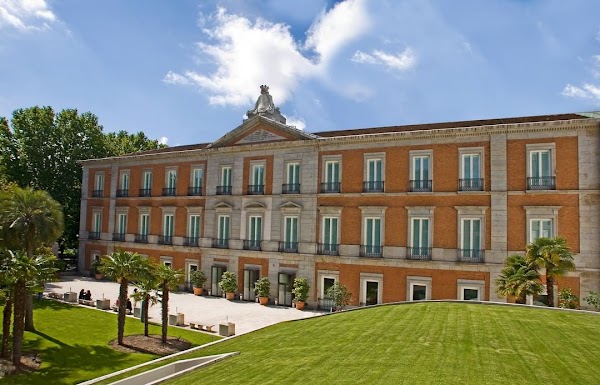
Thyssen-Bornemisza Museum
View on map
Audio Narrations
Introduction
The Thyssen-Bornemisza Museum in Madrid, Spain, houses an exceptional collection of Western art spanning the 13th to the 20th centuries. Its nearly 1,000 paintings include masterpieces by Van Eyck, Dürer, Caravaggio, Rembrandt, Monet, Van Gogh, and Picasso. The museum's origins trace back to the private collection of Baron Heinrich Thyssen-Bornemisza, who began acquiring works in the late 1920s. His son, Hans Heinrich, continued to expand the collection, amassing a vast array of styles and periods. The museum opened to the public in 1992, showcasing the Thyssen-Bornemisza family's legacy as passionate art collectors. Today, it stands as a testament to their discerning taste and the enduring power of artistic expression.Art Collection
The Thyssen-Bornemisza Museum in Madrid houses an exceptional art collection spanning centuries and artistic movements. Its American Art collection, a result of a research project funded by the Terra Foundation for American Art, offers a comprehensive exploration of American art and culture through the lens of history, politics, science, and urban life. The museum's collection boasts a wide selection of 19th-century American paintings, making it a significant reference point in Europe for this period. The Carmen Thyssen Collection, another highlight, showcases a diverse range of works from the 17th to the 20th centuries. It includes masterpieces by Old Masters like Jan Brueghel I and Fragonard, as well as a notable collection of Impressionist, Post-Impressionist, Expressionist, and North American paintings. The collection reflects the personal taste of Carmen Thyssen, with a particular emphasis on landscape painting and movements like Impressionism and German Expressionism. The Thyssen-Bornemisza Museum's collection is not limited to these two highlights. It encompasses a vast array of paintings from the 13th to the 20th century, featuring renowned artists such as Duccio, Van Eyck, Dürer, Caravaggio, Rembrandt, Canaletto, Monet, Degas, Morisot, Van Gogh, Gauguin, Kirchner, Mondrian, O'Keeffe, and Hopper. The museum's collection is constantly evolving, with temporary exhibitions and loans, ensuring a dynamic and ever-changing art experience for visitors.Educational Resource
The Thyssen-Bornemisza Museum in Madrid, Spain, stands as a beacon of educational resources for art enthusiasts and professionals alike. Since 2013, the museum's "Education +" initiative has hosted a series of thought-provoking discussions and workshops, inviting renowned experts to share their insights on pressing issues in museum education. These sessions, available in Spanish, offer a wealth of knowledge on best practices and innovative approaches in the field. The museum's commitment to accessibility extends to its resources. Visitors can download a comprehensive map in PDF format, ensuring they can navigate the museum's vast collection at their own pace. The museum's website provides detailed information on its services and resources, including accessibility features and educational programs. For those seeking a deeper dive into the museum's collection, the "Multimedia Resources" section offers a range of materials, including virtual tours, interactive exhibitions, and online publications. These resources allow educators and students to engage with the museum's masterpieces from anywhere in the world. The Thyssen-Bornemisza Museum's unwavering dedication to education makes it an invaluable resource for anyone seeking to expand their knowledge of art and museum practices. Its diverse offerings cater to a wide range of learners, fostering a lifelong appreciation for the transformative power of art.
6
Casa de América
View on map
7
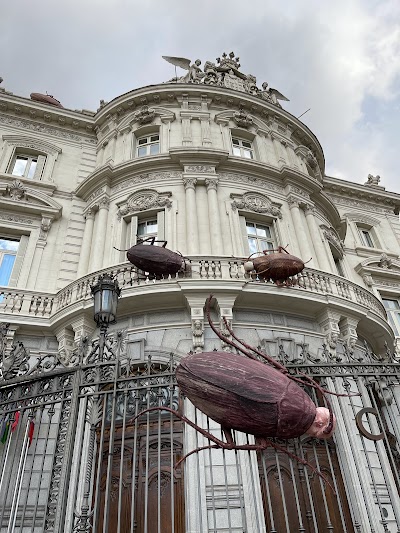
Linares Palace
View on map
8
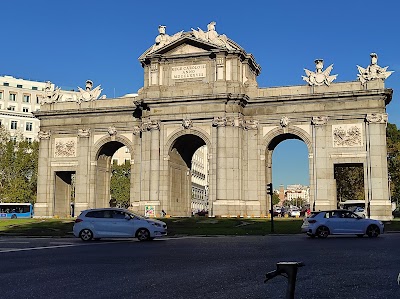
Puerta de Alcalá
View on map
Audio Narrations
Introduction
The Puerta de Alcalá, an iconic Neoclassical gate in Madrid, stands proudly in the Plaza de la Independencia. Commissioned by King Charles III in 1774, it was designed by Francesco Sabatini as a monumental entrance to the city, replacing an older gate. Inaugurated in 1778, the gate features intricate ornamental details sculpted by Francisco Gutiérrez and Roberto Michel, showcasing war trophies, the royal coat of arms, and allegorical figures representing cardinal virtues. Its central plaque bears the inscription "Rege Carolo III Anno MDCCLXXVIII." The gate's five arches, a unique feature among Madrid's city gates, symbolize the city's expansion beyond its medieval walls. Its name, Puerta de Alcalá, originates from the road leading to the nearby town of Alcalá de Henares, the birthplace of renowned author Miguel de Cervantes.Cultural Importance
Puerta de Alcalá, an iconic monument in Madrid, holds immense cultural significance. Constructed in the 18th century, it stands as a testament to the city's rich history and architectural prowess. The gate's neoclassical design, adorned with intricate sculptures and reliefs, reflects the Enlightenment ideals that shaped its era. Its five arches symbolize the city's openness and its role as a gateway to the world. Beyond its architectural merits, Puerta de Alcalá has become an enduring symbol of Madrid's cultural identity. It has witnessed countless historical events, from royal processions to popular uprisings. Its presence in literature, music, and art has cemented its place in the collective consciousness of the city's inhabitants. The gate has inspired countless works of art, including paintings, sculptures, and literary pieces, showcasing its enduring cultural relevance. Furthermore, Puerta de Alcalá serves as a stage for cultural events and celebrations. Its spacious plaza hosts concerts, exhibitions, and festivals, attracting both locals and tourists alike. The gate's symbolic significance and central location make it an ideal backdrop for cultural expression and community gatherings. In recognition of its exceptional cultural value, Puerta de Alcalá was declared a National Monument in 1904. Today, it stands as a beloved landmark, embodying the cultural heritage and spirit of Madrid.Symbol of Madrid
The Puerta de Alcalá, an iconic monument in Madrid, stands as a symbol of the city's rich history and vibrant spirit. Constructed in the 18th century as a grand entrance to the city, it has witnessed countless events that have shaped Madrid's identity. The gate's elegant neoclassical design, adorned with intricate sculptures and allegorical figures, reflects the city's architectural heritage and artistic prowess. Beyond its architectural significance, the Puerta de Alcalá has become deeply embedded in the cultural fabric of Madrid. It has served as a backdrop for countless celebrations, protests, and gatherings, becoming a focal point for the city's collective memory. Its presence in countless works of art, literature, and music further solidifies its status as a symbol of Madrid's cultural vitality. The gate's enduring popularity stems from its ability to evoke a sense of pride and belonging among Madrileños. Its image is widely used in souvenirs, postcards, and other memorabilia, representing the city's essence and serving as a reminder of its rich history and vibrant present. The Puerta de Alcalá is not merely a monument but an integral part of Madrid's identity, embodying the city's spirit of resilience, creativity, and unwavering optimism.
9
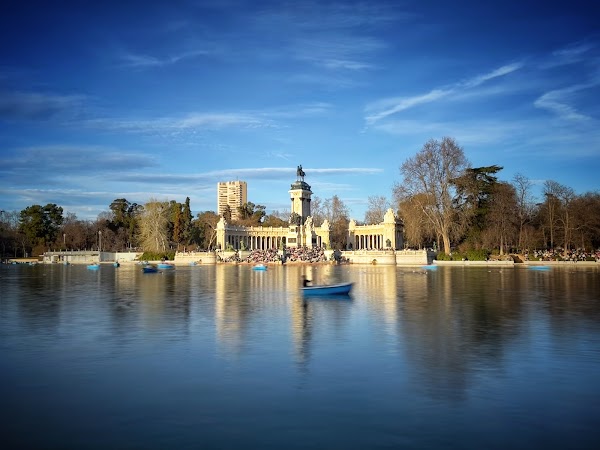
Great Pond of El Retiro
View on map
10
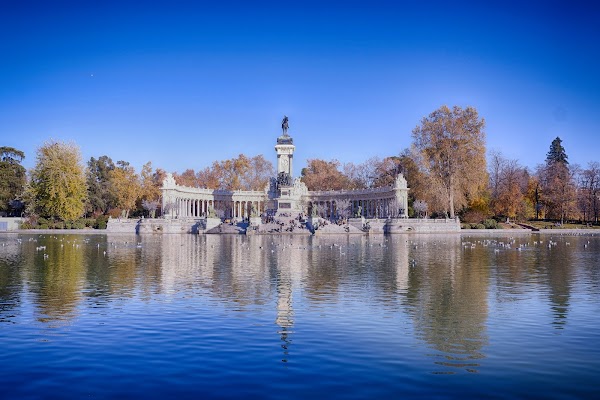
El Retiro Park
View on map
Audio Narrations
Introduction
El Retiro Park, a verdant oasis in Madrid's heart, boasts over 15,000 trees and spans 125 hectares. Designated a UNESCO World Heritage Site, it's a haven for locals and tourists alike. The park's centerpiece is the large artificial lake, where visitors can rent rowing boats. The Velázquez Palace and Glass Palace, now exhibition halls for the Reina Sofía Museum, are architectural gems. El Retiro is also renowned for its sculptures and fountains. The magnificent Monument to Alfonso XII overlooks the lake, while the statue of the Fallen Angel, the only sculpture in the world dedicated to the devil, stands at 666m above sea level. The Galápagos Fountain, built for Princess Isabella II, and the Teatro de Títeres, Europe's only theater dedicated to puppet shows, are other notable attractions. For nature enthusiasts, the ahuehuete or Montezuma cypress, believed to be Madrid's oldest tree, is a must-see. Planted in 1630, it's an exotic species that retains its foliage year-round. The park also houses a 627-year-old olive tree, the oldest in El Retiro. Whether you seek relaxation, exercise, or cultural enrichment, El Retiro Park offers a myriad of experiences. Its playgrounds, sports facilities, and outdoor cafés cater to diverse interests. The park's rich history, from its origins as a royal retreat to its transformation into a public space, adds to its allure.Environmental Significance
El Retiro Park, a verdant oasis in the heart of Madrid, stands as a testament to the harmonious coexistence of urban life and environmental preservation. Its sprawling 120 hectares encompass a rich tapestry of ecosystems, providing refuge for diverse flora and fauna. The park's towering trees, including majestic elms, horse chestnuts, and plane trees, form a verdant canopy that filters pollutants and releases oxygen, contributing to the city's air quality. El Retiro Park is a sanctuary for wildlife, with over 150 species of birds recorded within its boundaries. The tranquil waters of the lake attract a variety of waterfowl, including ducks, geese, and herons. The park's lush vegetation provides nesting and feeding grounds for numerous songbirds, such as nightingales, goldfinches, and blackcaps. Beyond its ecological value, El Retiro Park plays a vital role in mitigating the urban heat island effect. Its abundant vegetation absorbs sunlight and releases water vapor through transpiration, cooling the surrounding air. The park's large water bodies, such as the lake and the Crystal Palace pond, further contribute to temperature regulation by absorbing and releasing heat. El Retiro Park's environmental significance extends to its role as an urban oasis for recreation and respite. Its serene atmosphere and diverse landscapes provide a sanctuary for city dwellers to escape the hustle and bustle of urban life. The park's numerous gardens, including the Rose Garden and the Parterre Garden, showcase a kaleidoscope of colors and fragrances, offering a feast for the senses. El Retiro Park is a living testament to the importance of urban green spaces in fostering environmental sustainability and enhancing the well-being of city residents. Its rich biodiversity, air-purifying vegetation, and cooling effects make it an invaluable asset to the city of Madrid and a model for urban parks worldwide.Architectural Heritage
El Retiro Park, a UNESCO World Heritage Site, is a testament to Madrid's rich architectural heritage. The park boasts a diverse array of structures, each with its own unique story to tell. The centerpiece of the park is the Crystal Palace, a stunning glass and iron structure built in 1887. Originally designed as a greenhouse for an exhibition on the Philippines, it now serves as an exhibition space for contemporary art. Another architectural gem is the Velázquez Palace, a brick and tile building that houses temporary exhibitions. The park is also home to the Monument to Alfonso XII, a grand monument that commemorates the former king of Spain. The monument features a colonnade of Doric columns and a bronze statue of the king. These architectural wonders, along with the park's lush gardens and tranquil atmosphere, make El Retiro Park a must-visit destination for anyone interested in Madrid's architectural heritage.
11
Velázquez Palace
View on map
Audio Narrations
Introduction
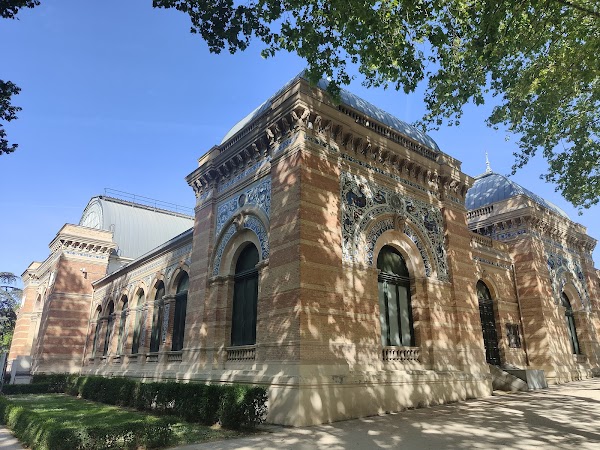
The Velázquez Palace, a striking neoclassical structure in Madrid's Buen Retiro Park, boasts a rich history and architectural significance. Built in 1883 by Ricardo Velázquez Bosco, the palace served as the main pavilion for the International Exposition of Mining, Metal Arts, Ceramics, Glasswork, and Mineral Waters. Inspired by London's Crystal Palace, the building features a spacious floor plan, vaulted ceilings with iron structures, and ample natural lighting thanks to its extensive glasswork. Today, the Velázquez Palace stands as a prominent exhibition space for Spain's National Museum of Modern Art, showcasing the works of renowned artists like Cindy Sherman, Nan Goldin, Juan Muñoz, and José Manuel Broto. Visitors can immerse themselves in contemporary art amidst the palace's elegant architecture, which seamlessly blends two-toned brickwork with colorful ceramic tiles designed by Daniel Zuloaga. Beyond its artistic offerings, the Velázquez Palace offers a glimpse into Madrid's architectural heritage. Its proximity to the Palacio de Cristal, another notable structure in the park, creates a unique juxtaposition of architectural styles. The palace also boasts impressive marble steps leading to its main entrance, adding to its grandeur. Whether you're an art enthusiast or an architecture aficionado, the Velázquez Palace is a must-visit destination in Madrid. Its captivating blend of history, art, and architectural brilliance promises an enriching and memorable experience.Neoclassical Design
Velázquez Palace: A Neoclassical Gem in Madrid The Velázquez Palace, a stunning example of Neoclassical architecture, stands as a testament to the 19th century's revival of classical ideals. Built between 1881 and 1900, the palace was designed by Ricardo Velázquez Bosco, a renowned architect who championed the Neoclassical style in Spain. The palace's exterior is a masterclass in Neoclassical design principles. Its imposing facade features a symmetrical composition, with a central portico supported by six towering Ionic columns. The use of clean lines, geometric shapes, and restrained ornamentation reflects the movement's emphasis on order, clarity, and rationality. Stepping inside, visitors are greeted by a grand entrance hall adorned with marble columns and intricate plasterwork. The palace's interior spaces are characterized by high ceilings, large windows, and a sense of spaciousness. The use of natural light and airy proportions creates a harmonious and elegant atmosphere. One of the most striking features of the Velázquez Palace is its grand staircase. The sweeping double staircase, with its intricate wrought iron balustrade and marble steps, is a masterpiece of Neoclassical design. The staircase serves as a focal point of the palace, connecting the different floors and creating a sense of grandeur. The Velázquez Palace is not only a testament to Neoclassical architecture but also a symbol of Spain's cultural heritage. It houses the Museo Nacional Centro de Arte Reina Sofía, one of the world's leading museums of modern and contemporary art. The museum's collection includes masterpieces by Pablo Picasso, Salvador Dalí, and Joan Miró, showcasing the rich artistic legacy of Spain. In conclusion, the Velázquez Palace stands as a remarkable example of Neoclassical design in Madrid. Its elegant architecture, spacious interiors, and rich history make it a must-visit destination for anyone interested in art, architecture, and Spanish culture.19th-Century Architecture
The Velázquez Palace in Madrid, Spain, stands as a testament to the architectural transition from the Neoclassical style of the 18th century to the eclecticism of the 19th century. Built between 1881 and 1883, the palace was designed by Ricardo Velázquez Bosco, a prominent architect of the time. One of the most striking features of the Velázquez Palace is its eclectic facade, which blends elements of Neoclassical, Renaissance, and Moorish architecture. The main entrance is adorned with a grand archway flanked by Corinthian columns, while the upper floors feature a series of balconies and windows with intricate carvings. The use of red brick and white stone adds to the visual richness of the facade. Inside the palace, the grand staircase is a masterpiece of 19th-century design. The sweeping staircase features a wrought-iron balustrade and a stained-glass skylight, creating a sense of grandeur and elegance. The palace also boasts a number of richly decorated rooms, including the Throne Room, the Ballroom, and the Library. The Velázquez Palace is a significant example of 19th-century architecture in Madrid. Its eclectic design reflects the changing tastes of the time, while its grand interiors showcase the opulence and craftsmanship of the era. The palace is a testament to the architectural genius of Ricardo Velázquez Bosco and a valuable cultural heritage site.
12
Palacio de Cristal
View on map
Audio Narrations
Introduction
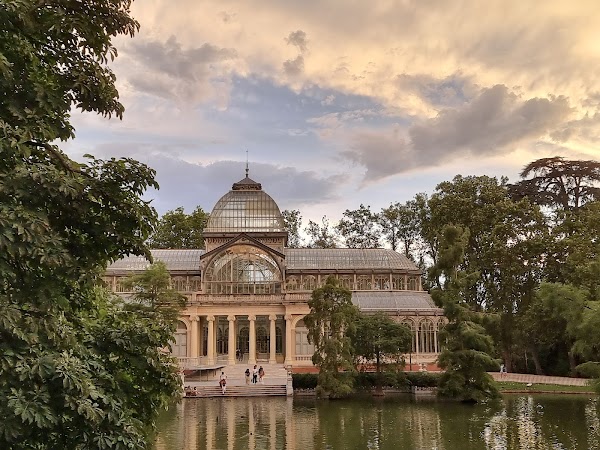
Palacio de Cristal, a magnificent glass and iron structure, graces the Buen Retiro Park in Madrid, Spain. Designed by Ricardo Velazquez Bosco, it mirrors London's Crystal Palace, showcasing a blend of glass and metal within its iron framework. The palace's cupola elevates its height to over 22 meters, while its brick base is adorned with intricate ceramic decorations by Daniel Zuloaga. Originally intended as a greenhouse for exotic flora from the Philippines, it now serves as an exhibition space for contemporary art under the management of the Reina Sofia Museum. The palace's idyllic setting beside a tranquil lake, surrounded by lush greenery, offers a picturesque backdrop for both the art within and the natural beauty outside.Exhibition Venue
Palacio de Cristal, a stunning glass and iron structure nestled within the verdant expanse of Madrid's El Retiro Park, stands as a testament to architectural innovation and artistic expression. Originally conceived as a greenhouse for the 1887 Philippines Exposition, this iconic venue has since evolved into a captivating exhibition space, showcasing a diverse range of contemporary art installations. The Palacio de Cristal's unique design, inspired by London's Crystal Palace, features a soaring glass cupola and intricate iron framework, creating an ethereal and light-filled ambiance. Its spacious interior, devoid of supporting columns, offers unparalleled flexibility for curators to envision immersive and thought-provoking exhibitions. Over the years, the Palacio de Cristal has hosted groundbreaking works by renowned artists, including Cindy Sherman, Nan Goldin, and José Manuel Broto. Its exhibitions often explore themes of identity, colonialism, and the human condition, inviting visitors to engage with art on a profound level. The venue's unique setting, surrounded by lush greenery and tranquil waters, further enhances the contemplative experience, fostering a dialogue between art and nature. As an exhibition venue, the Palacio de Cristal is not merely a backdrop but an integral part of the artistic experience. Its transparent walls blur the boundaries between interior and exterior, allowing natural light to bathe the artworks and creating a sense of harmony with the surrounding parkland. This interplay between art, architecture, and environment elevates the Palacio de Cristal beyond a traditional exhibition space, transforming it into a captivating destination for art enthusiasts and curious minds alike.Symbol of Madrid
Palacio de Cristal, a magnificent glass and iron structure nestled within the verdant expanse of Buen Retiro Park, stands as a testament to Madrid's architectural prowess and a symbol of the city's vibrant spirit. Built in 1887 for the National Exhibition of Mining, Metallurgy, and Geology, the palace was originally intended as a greenhouse to showcase exotic plants from the Philippines, then a Spanish colony. Its intricate framework, reminiscent of London's Crystal Palace, allowed natural light to flood the interior, creating an ethereal ambiance. Today, the Palacio de Cristal serves as a versatile exhibition space, hosting art installations, cultural events, and even fashion shows. Its transparent walls offer breathtaking views of the surrounding park, making it a popular spot for photography and leisurely strolls. As a symbol of Madrid, the Palacio de Cristal embodies the city's embrace of modernity and its commitment to preserving its natural beauty.
13
Rose Garden
View on map
Experience the Full Tour
Download the DocentPro app to access all tour stops, complete audio narrations in multiple languages, offline maps, and interactive features.