
Milan's Cultural Treasures: A Journey Through Art and History

Walking Tour

3.8 km (2.4 miles)

52 min travel time

10 Stops

Milan, Italy
Milan's Cultural Treasures: A Journey Through Art and History

10 places on the map
Explore the map in the DocentPro app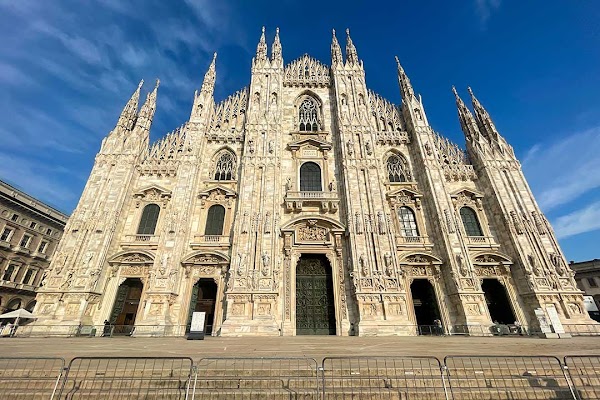
Tour Stops
1
Duomo di Milano
View on map
Audio Narrations
Introduction
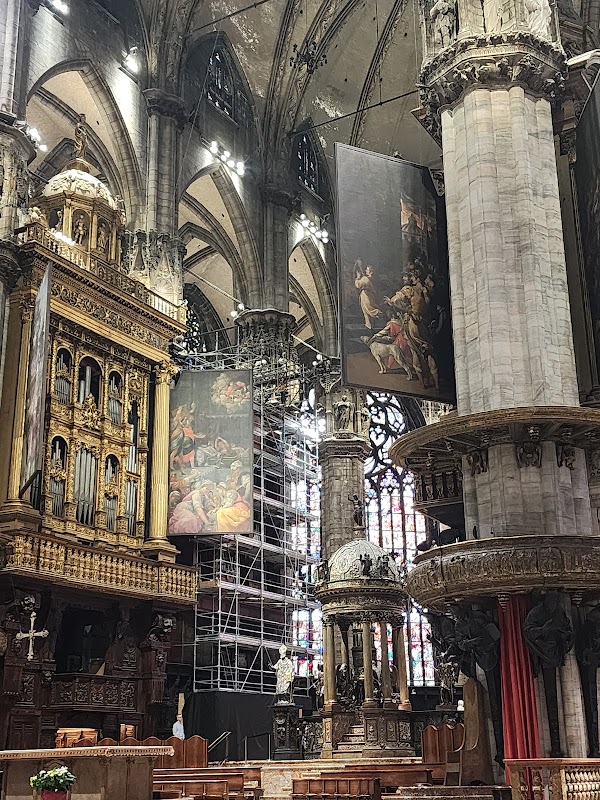
The Duomo di Milano, a magnificent cathedral in the heart of Milan, Italy, is a testament to the grandeur of Gothic architecture. Its intricate facade, adorned with over 3,000 statues, is a sight to behold. The interior, while somber and dimly lit, boasts an awe-inspiring collection of artwork, including the famous "Pietà Rondanini" by Michelangelo. The cathedral's rooftop offers breathtaking panoramic views of the city, making it a popular destination for tourists and locals alike. Despite its centuries-old history, the Duomo remains a vibrant and active place of worship, hosting religious services and attracting visitors from around the world.Symbol of Milan
The Duomo di Milano, an architectural marvel and the heart of Milan, stands as an enduring symbol of the city's rich history and unwavering faith. Its intricate Gothic facade, adorned with over 3,400 statues, narrates the stories of saints, martyrs, and biblical figures. The towering spires, reaching towards the heavens, symbolize the city's aspirations and unwavering spirit. At the pinnacle of the Duomo's Main Spire, the gilded copper statue of the Madonnina, a representation of the Virgin Mary, has become an iconic symbol of Milan. Its presence atop the city's highest point signifies the deep devotion of the Milanese people and serves as a beacon of hope and protection. The Duomo's construction, spanning nearly six centuries, reflects the unwavering determination and artistry of the Milanese. It embodies the city's resilience, having endured wars, fires, and political turmoil. Today, the Duomo remains a testament to the enduring spirit of Milan and its people, a symbol of their faith, heritage, and unwavering pride.Cultural Heritage
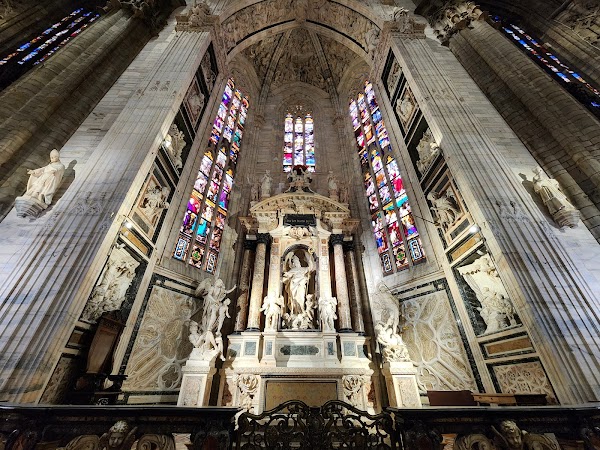
Duomo di Milano, a magnificent Gothic masterpiece, stands as a testament to Milan's rich cultural heritage. Its construction, spanning centuries, involved a diverse group of artists and artisans, creating a unique blend of architectural styles. The intricate facades, adorned with countless sculptures and carvings, depict biblical scenes and historical events, offering a glimpse into the religious and cultural beliefs of the time. Inside, the vast interior boasts soaring pillars, stained glass windows, and an awe-inspiring altar, showcasing the artistry and craftsmanship of its creators. The Duomo's rooftop terraces provide panoramic views of the city, revealing the intricate details of its spires and buttresses. As a UNESCO World Heritage Site, the Duomo di Milano is not only a symbol of Milan's architectural prowess but also a repository of invaluable cultural and historical significance.
2
Galleria Vittorio Emanuele II
View on map
Audio Narrations
Introduction
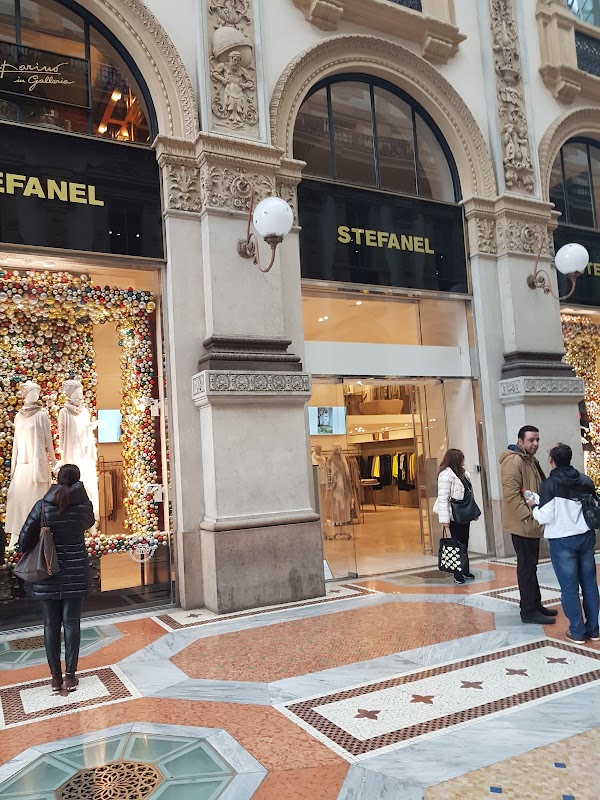
The Galleria Vittorio Emanuele II, an iconic landmark in Milan, Italy, is a stunning 19th-century shopping arcade that connects the Piazza del Duomo to the Piazza della Scala. Designed by Giuseppe Mengoni and built between 1865 and 1877, this architectural marvel is renowned for its grandeur and elegance. The Galleria's four-story double arcade is topped by a glass and iron roof, creating a breathtaking spectacle. At the heart of the octagonal central space, a mosaic depicts the coats of arms of Turin, Florence, Rome, and Milan. Legend has it that spinning three times with a heel on the bull from Turin's coat of arms brings good fortune, resulting in a worn spot on the mosaic. The Galleria is not just a shopping destination but also a social hub, earning it the nickname "Milan's drawing room." Its numerous luxury boutiques, restaurants, and cafes make it a popular meeting place for locals and tourists alike.Luxury Retail Hub
Step into the opulent Galleria Vittorio Emanuele II, a shopper's paradise and a testament to Milan's reign as a luxury retail hub. This architectural marvel, a glass-domed arcade connecting the Duomo and Teatro alla Scala, houses an exclusive collection of boutiques, each a beacon of sartorial excellence. Prada, Gucci, and Louis Vuitton grace its hallowed halls, their window displays a symphony of exquisite craftsmanship and timeless designs. The Galleria is not merely a shopping destination; it's a stage where fashion icons and discerning clientele converge, seeking the latest creations from the world's most coveted brands. Its central octagon, adorned with intricate mosaics, serves as a meeting point for the city's elite, where conversations dance around the latest trends and exclusive acquisitions. As you stroll through the Galleria, marvel at its soaring ceilings and the interplay of light filtering through the glass dome, creating an ethereal ambiance that complements the exquisite merchandise on display. The Galleria Vittorio Emanuele II is more than just a shopping mall; it's a sanctuary for those who appreciate the finer things in life, a place where luxury and elegance intertwine seamlessly.Famous Mosaic Floor
The Galleria Vittorio Emanuele II in Milan, Italy, boasts an exquisite mosaic floor that captivates visitors with its intricate designs and historical significance. The floor, a masterpiece of mosaic art, depicts the coats of arms of the three capitals of the Kingdom of Italy: Turin, Florence, and Rome, along with Milan's own emblem. Each coat of arms is meticulously crafted with vibrant colors and intricate details, adding to the floor's overall grandeur. One of the most intriguing aspects of the mosaic floor is the tradition associated with the coat of arms of Turin. Legend has it that spinning three times with one's heel on the bull's testicles brings good luck. While this practice has caused some damage to the mosaic, it remains a popular ritual among tourists and locals alike. Beyond its aesthetic appeal, the mosaic floor holds historical significance. Its completion marked the unification of Italy in 1861, making it a symbol of national pride and unity. The floor has witnessed countless historical events, from royal processions to political rallies, adding to its rich tapestry of stories. Today, the mosaic floor of the Galleria Vittorio Emanuele II stands as a testament to the artistry and craftsmanship of its time. It is not only a beautiful work of art but also a tangible reminder of Italy's rich history and cultural heritage.
3
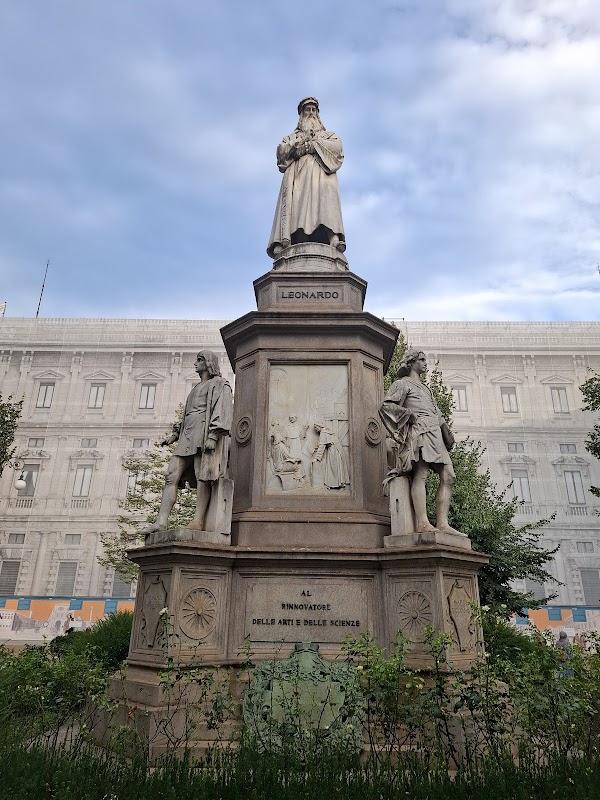
Statua di Leonardo da Vinci
View on map
Audio Narrations
Introduction
The Statua di Leonardo da Vinci in Milan, Lombardy, Italy, stands prominently in Piazza della Scala, a tribute to the Renaissance master's profound impact on the city. Sculpted by Pietro Magni and unveiled in 1872, the statue depicts Leonardo not as the aloof genius, but as a teacher surrounded by his four most prominent students: Marco d'Oggiono, Giovanni Antonio Boltraffio, Cesare da Sesto, and Andrea Salai. Each student is rendered with distinct characteristics, reflecting their individual artistic styles and contributions. The statue's placement is particularly significant, facing the Teatro alla Scala, symbolizing the enduring legacy of Italian artistic innovation. Interestingly, the initial design faced considerable criticism for its perceived lack of grandeur, prompting Magni to subtly enhance the statue's scale and detail before its final installation. The monument serves as a constant reminder of Leonardo's time in Milan, a period during which he created some of his most celebrated works, including "The Last Supper," forever intertwining his name with the city's cultural identity.Pietro Magni's Sculpture
Pietro Magni's 1872 marble sculpture of Leonardo da Vinci stands in Piazza della Scala, Milan, Italy, a testament to the Renaissance polymath. The statue, central to the monument, portrays Leonardo in a thoughtful pose, his hands clasped to his chest. Magni's signature, "PIETRO MAGNI FECE," is inscribed on the back of the statue's base, while the name "LEONARDO" is inscribed on the front. The monument's construction, initiated by Elia Lombardini, faced initial hostility, not due to Magni's artistry, but because of its association with the Austrian government prior to Italy's unification. Lombardini presented Leonardo as the "true creator of hydraulic science" to gain acceptance for the monument after unification. The unveiling of Magni's sculpture occurred on September 4, 1872, coinciding with the opening of Milan's first congress of engineers and architects. Prince Umberto attended the ceremony, during which the monument was revealed to thunderous applause. The four pedestals with statues of students, initially planned as separate, were joined to the central octagonal base in the final design. The monument, including Magni's statue, stands on a plinth of pink granite from Baveno, reaching a total height of 7.08 meters. The statue of Leonardo itself measures 4.40 meters high. The central body of the plinth has an octagonal shape with unequal sides and is aligned with the Galleria Vittorio Emmanuele II.Monument's Tumultuous History
Milan's history, marked by periods of destruction and restoration, profoundly influenced the artistic landscape, including monuments dedicated to figures like Leonardo da Vinci. The city's tumultuous past, characterized by conflicts between city-states and foreign powers, shaped the environment in which Leonardo lived and worked. Milan endured destruction at the hands of Frederick I Barbarossa in 1162, followed by a period of prosperity as a trade center. Later, under the Visconti and Sforza families, Milan experienced both economic growth and artistic flourishing, attracting figures like Leonardo da Vinci. Leonardo's presence in Milan, particularly during the Sforza era, left an indelible mark on the city. He contributed to various projects, including improvements to the Navigli canal system and the creation of "The Last Supper." The Castello Sforzesco, where Leonardo worked, underwent numerous transformations due to war damage and subsequent restorations under Spanish, Austrian, and Napoleonic rule, reflecting Milan's turbulent history. The castle's Biblioteca Trivulziana houses Leonardo's autographed notebook, a testament to his enduring legacy amidst Milan's ever-changing fortunes. The city's resilience, demonstrated through repeated rebuilding and artistic revivals, underscores the complex historical backdrop against which monuments like the statue of Leonardo da Vinci stand.
4
Piazza della Scala
View on map
Audio Narrations
Introduction
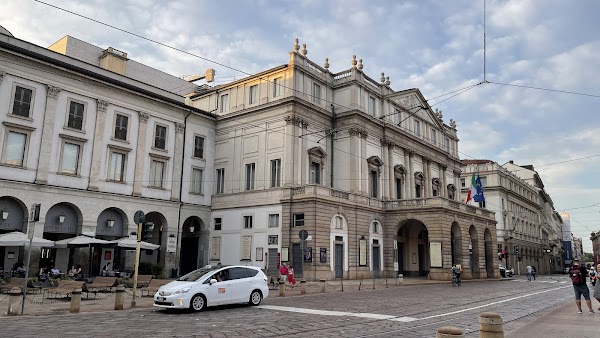
Piazza della Scala, the heart of Milan's cultural district, is more than just a square; it's a carefully orchestrated stage. The Teatro alla Scala, its namesake and dominant feature, casts a long shadow, influencing the piazza's very purpose. Unlike other grand Italian piazzas designed for civic gatherings, this space primarily serves as a prelude to the operatic experience. The central monument, a statue of Leonardo da Vinci by Pietro Magni, is not merely decorative; it's a deliberate placement, acknowledging the Renaissance genius's significant contributions to Milanese art and engineering, subtly linking him to the innovative spirit of the opera house. The piazza's understated elegance, achieved through its restrained architecture and muted color palette, allows the Scala's performances to take center stage. Interestingly, the piazza's design intentionally minimizes distractions, focusing attention on the theatrical world within. The surrounding buildings, including Palazzo Marino, Milan's city hall, contribute to the piazza's dignified atmosphere, reinforcing its role as a cultural and administrative nexus.Opera History
Piazza della Scala in Milan is intrinsically linked to the history of opera through the Teatro alla Scala, one of the world's most celebrated opera houses. Built on the site of the former church of Santa Maria della Scala, the theater's inauguration in 1778 marked a new chapter in Italian opera. Many of Italy's greatest operatic artists, and indeed the finest singers from across the globe, have graced its stage. La Scala's significance grew exponentially in the 19th century, particularly through its association with Giuseppe Verdi. Although initial disputes over modifications to his music led to a temporary estrangement, La Scala eventually hosted the premieres of his later masterpieces, Otello and Falstaff, cementing its place in operatic history. The theater has also premiered operas by Antonio Salieri. Beyond performances, La Scala houses the Museo Teatrale alla Scala, offering a collection of paintings, drafts, statues, costumes, and documents that chronicle the theater's history and opera in general. The Accademia Teatro alla Scala provides professional training in music, dance, stagecraft, and stage management, ensuring the legacy of Italian opera continues. The loggione, a gallery above the boxes, is known for its critical opera aficionados, the loggionisti, whose reactions can significantly impact a singer's career. The Filarmonica della Scala orchestra was established in 1982 to develop a symphonic repertoire, further enriching La Scala's operatic tradition.Architectural Significance
Piazza della Scala's architectural importance is rooted in its mid-nineteenth-century redesign, which involved demolishing palaces to enlarge the square and create a more imposing space. The focal point, Teatro alla Scala, designed in neoclassical style by Piermarini and commissioned in 1776 by Maria Theresa of Austria, opened two years later. Its construction on the site of the former church of Santa Maria della Scala, from which it derives its name, marks a significant architectural and cultural transition. Facing the theatre is Palazzo Marino, which has served as Milan's City Hall since the Unification of Italy. Originally dating back to the sixteenth century, its facade was rebuilt in the nineteenth century, reflecting evolving architectural tastes. Flanking the square are the Banca Commerciale Italiana buildings, constructed between 1912 and 1920. The first of these buildings is home to the Museum of the Galleries of Italy. The square's layout and the positioning of these buildings contribute to its overall architectural harmony, creating a balanced urban space. The integration of cultural institutions, government buildings, and commercial establishments within the piazza underscores its role as a center of Milanese life. The square's design facilitates pedestrian flow, connecting it seamlessly to the Galleria Vittorio Emanuele II and Piazza Duomo, further enhancing its architectural and urbanistic significance.
5
Teatro alla Scala
View on map
Audio Narrations
Introduction
Teatro alla Scala, a prestigious opera house in Milan, Italy, stands as a testament to the city's rich artistic heritage. Inaugurated in 1778, it has hosted legendary opera singers and musicians, including Maria Callas and Luciano Pavarotti. The theater's season opens annually on December 7th, Saint Ambrose's Day, and features a diverse repertoire of operas and ballets. Beyond its performances, La Scala boasts a renowned museum that houses a collection of paintings, costumes, and artifacts chronicling the history of opera. It also has an associate school, the Accademia Teatro alla Scala, which trains aspiring musicians, dancers, and stage professionals. One of La Scala's unique features is its "loggione," a gallery where less affluent patrons can watch performances. Known for their critical enthusiasm, the "loggionisti" can be both ecstatic and merciless in their reactions, adding an element of excitement to the atmosphere. Over the years, La Scala has undergone renovations and expansions, including a major restoration in the early 2000s that enhanced its acoustics and stage capabilities. It remains a symbol of Italian artistic excellence and a must-visit destination for opera enthusiasts worldwide.Prestigious Performances
Teatro alla Scala, a world-renowned opera house in Milan, Italy, has been the stage for countless prestigious performances throughout its illustrious history. Since its inauguration in 1778, La Scala has hosted premieres of iconic operas by renowned composers such as Verdi, Puccini, and Rossini. The theater's reputation for artistic excellence has attracted legendary singers, conductors, and musicians, making it a pilgrimage site for opera enthusiasts. Beyond its architectural grandeur, La Scala's allure lies in its unwavering commitment to preserving operatic traditions while embracing innovation. The theater's season, which runs from December to June, features a diverse repertoire that includes both classic and contemporary works. Each performance is meticulously crafted, with elaborate sets, stunning costumes, and world-class musicianship. For those seeking an unforgettable operatic experience, La Scala offers exclusive opportunities. The theater's "Scala Experience" package provides behind-the-scenes access, allowing visitors to explore the stage, rehearsal rooms, and costume workshops. Additionally, La Scala hosts masterclasses and workshops led by renowned artists, providing aspiring singers and musicians with invaluable insights into the world of opera. Attending a performance at Teatro alla Scala is not merely a cultural event but a transformative experience. The theater's opulent ambiance, coupled with the passion and artistry on display, creates an atmosphere of enchantment that lingers long after the curtain falls. For those who appreciate the pinnacle of operatic achievement, Teatro alla Scala stands as a beacon of artistic excellence, where prestigious performances continue to captivate and inspire audiences worldwide.World-Renowned Opera House
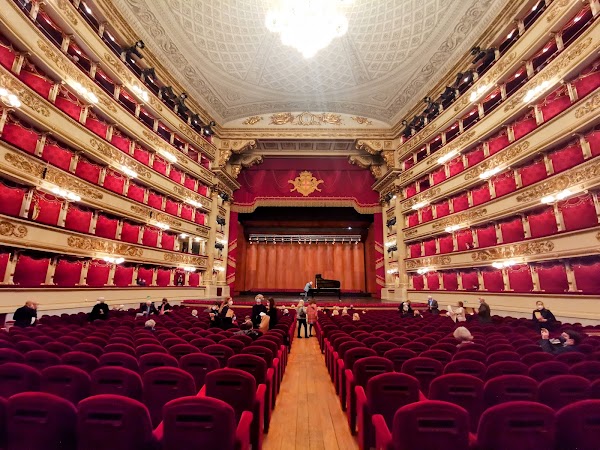
Teatro alla Scala in Milan, Italy, stands as a beacon of operatic excellence, renowned globally for its unparalleled acoustics, opulent ambiance, and rich history. This architectural masterpiece, inaugurated in 1778, has witnessed the triumphs of legendary performers and premiered iconic operas that have shaped the art form. La Scala's horseshoe-shaped auditorium, adorned with crimson velvet and gilded embellishments, exudes an aura of grandeur. Its six tiers of boxes, each meticulously decorated by their aristocratic owners, create an intimate and exclusive atmosphere. The vast stage, one of the largest in Italy, has hosted countless unforgettable performances, from Verdi's "Aida" to Puccini's "Tosca." Beyond its architectural splendor, La Scala is renowned for its unwavering commitment to artistic innovation. It was here that the legendary conductor Arturo Toscanini introduced radical ideas that transformed opera, including the use of foreign composers and the establishment of a permanent orchestra. Today, La Scala continues to push boundaries, showcasing contemporary works alongside timeless classics. The theater's reputation as a crucible for operatic talent is unparalleled. Its stage has nurtured the careers of countless renowned singers, including Maria Callas, Luciano Pavarotti, and Renata Tebaldi. The annual La Scala Season, which runs from December to June, attracts opera enthusiasts from around the world, eager to witness the magic that unfolds within these hallowed halls.
6
Pinacoteca di Brera
View on map
Audio Narrations
Introduction
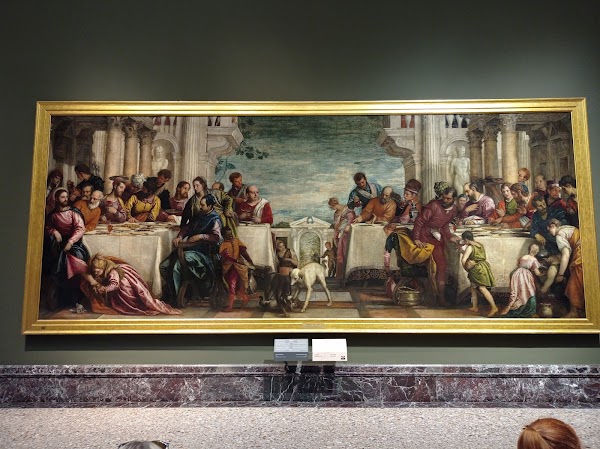
The Pinacoteca di Brera, a treasure chest of art, is nestled within the majestic Palazzo di Brera in Milan, Italy. This renowned art gallery houses an extensive collection of Venetian, Lombard, Tuscan, and Central Italian paintings. Masterpieces by Tintoretto, Tiepolo, Piero della Francesca, and Caravaggio grace its walls, offering visitors a captivating journey through centuries of artistic brilliance. Beyond its celebrated collection, the Pinacoteca di Brera is also home to a remarkable collection of 20th-century art. The gallery's commitment to showcasing the evolution of artistic expression is evident in its diverse holdings, which include works by renowned modernists. The Pinacoteca di Brera stands as a testament to the rich cultural heritage of Milan and Italy. Its collection, spanning from the 13th to the 20th century, provides a comprehensive exploration of the development of Western art. Whether you're an art enthusiast or simply appreciate the beauty of human creativity, a visit to the Pinacoteca di Brera is an unforgettable experience.Venetian Painting
Pinacoteca di Brera, a treasure trove of art in Milan, boasts an impressive collection of Venetian paintings that captivates art enthusiasts. Among its masterpieces is Giovanni Bellini's "Madonna and Child with Saints," a serene depiction of the Virgin Mary with the infant Jesus, accompanied by saints. Another highlight is Titian's "Venus of Urbino," a sensual portrayal of the goddess of love, renowned for its rich colors and enigmatic gaze. Tintoretto's "The Finding of the Body of Saint Mark" showcases his dynamic brushwork and dramatic lighting, capturing the moment when the saint's remains are discovered. Visitors can also admire works by Giorgione, Veronese, and Tiepolo, each contributing to the rich tapestry of Venetian art. These masterpieces, housed within the elegant halls of the Pinacoteca di Brera, offer a captivating journey through the Venetian artistic tradition, providing a glimpse into the unique style, techniques, and themes that have made Venetian painting an enduring legacy in the art world.Art Gallery
Nestled within the heart of Milan's Brera district, the Pinacoteca di Brera stands as a testament to the city's rich artistic heritage. Founded in 1809, this renowned art gallery boasts an impressive collection of over 400 masterpieces spanning six centuries of Italian art history. The Pinacoteca's collection is particularly strong in works from the Lombard and Venetian schools, with notable pieces by Tintoretto, Caravaggio, and Piero della Francesca. One of the gallery's most celebrated works is Raphael's "Marriage of the Virgin," a groundbreaking painting that introduced a new perspective to Renaissance art. Beyond its permanent collection, the Pinacoteca also hosts temporary exhibitions, showcasing the works of both established and emerging artists. The gallery's commitment to contemporary art is evident in its collection of 20th-century masterpieces, including works by Guttuso and Mafai. The Pinacoteca di Brera is not just a repository of art but also a vibrant center for cultural exchange. The gallery hosts lectures, workshops, and educational programs, fostering a deep appreciation for art among visitors of all ages. Its elegant exhibition spaces, housed within the historic Palazzo Brera, provide a stunning backdrop for the masterpieces on display. For art enthusiasts seeking an immersive and enriching experience, the Pinacoteca di Brera offers a unique journey through the history of Italian art. Its diverse collection, coupled with its commitment to contemporary art and cultural engagement, makes it a must-visit destination for anyone passionate about the visual arts.
7
Sforzesco Castle
View on map
Audio Narrations
Introduction
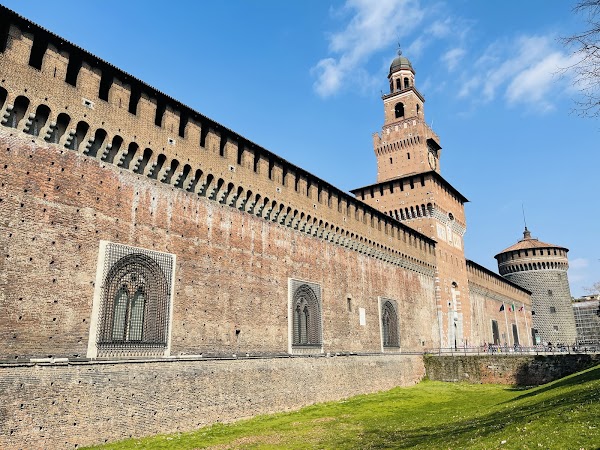
Sforzesco Castle, a majestic fortress in Milan, Italy, stands as a testament to the city's rich history. Built in the 14th century by the Visconti family, it was later expanded and transformed into a magnificent ducal palace by the Sforza dynasty. The castle's imposing walls, adorned with intricate carvings and sculptures, enclose a labyrinth of courtyards, halls, and museums. Among its many treasures is the Sala delle Asse, where Leonardo da Vinci's enchanting frescoes depict a verdant forest canopy. The castle's museums house an impressive collection of art, including works by Michelangelo and Caravaggio. Today, Sforzesco Castle remains a vibrant cultural hub, hosting exhibitions, concerts, and events that celebrate Milan's artistic heritage.Defensive Stronghold
Sforzesco Castle, a formidable defensive stronghold in the heart of Milan, stands as a testament to the city's rich military history. Its origins trace back to 1360, when Galeazzo II Visconti, the ruler of Milan, commissioned a fortress to safeguard the city against external threats. Over the centuries, the castle underwent several expansions and modifications, each aimed at bolstering its defensive capabilities. In the 15th century, Francesco Sforza, the founder of the Sforza dynasty, transformed the castle into a magnificent residence while maintaining its strategic importance. He commissioned renowned architects and engineers to design imposing fortifications, including a moat, drawbridges, and massive walls reinforced with towers. The castle's layout was meticulously planned to provide multiple lines of defense, with each section offering a unique vantage point for surveillance and resistance. During the Spanish domination, the castle underwent further fortification, becoming one of the largest citadels in Europe. Its star-shaped bastions, designed to withstand artillery fire, were a testament to the castle's unwavering defensive prowess. The garrison, numbering thousands of soldiers, was equipped with the latest weaponry, ensuring the castle's readiness to repel any attack. Throughout its history, Sforzesco Castle played a pivotal role in defending Milan against numerous sieges and invasions. Its formidable fortifications proved their worth, withstanding attacks from French, Austrian, and German forces. The castle's strategic location and its ability to control access to the city made it a crucial stronghold, shaping the course of Milan's military history.Architectural Marvel
Sforzesco Castle, a majestic architectural marvel in the heart of Milan, stands as a testament to the city's rich history and artistic prowess. Its imposing brick facade, adorned with intricate carvings and elegant towers, reflects the grandeur of the Renaissance era. The castle's courtyards, once bustling with knights and nobles, now house museums showcasing priceless artworks, including Leonardo da Vinci's preparatory drawings for "The Last Supper." Beyond its aesthetic beauty, Sforzesco Castle boasts innovative architectural features. The Sala delle Asse, a vaulted chamber, features stunning frescoes by Leonardo, creating an illusion of a verdant arbor. The Torre del Filarete, a cylindrical tower, showcases intricate terracotta decorations and offers panoramic views of the city. The castle's moat, once a defensive measure, has been transformed into a serene park, providing a tranquil oasis amidst the urban landscape. Sforzesco Castle is a living testament to the architectural ingenuity of its creators. Its blend of military prowess and artistic splendor makes it a must-visit destination for anyone seeking to delve into the architectural marvels of Milan and the Italian Renaissance.
8
Parco Sempione
View on map
Audio Narrations
Introduction
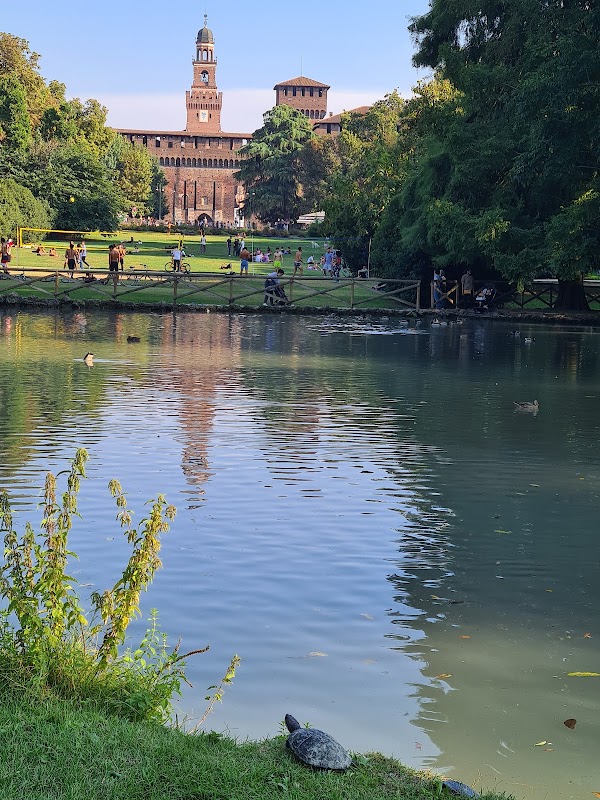
Parco Sempione, a sprawling 95-acre urban oasis in the heart of Milan, is a testament to the city's rich history and vibrant culture. Established in 1888, the park was designed by Emilio Alemagna and features a captivating blend of natural beauty and architectural marvels. Anchored by the historic Sforza Castle, the park's layout is defined by two intersecting axes. The first leads northwest to the Arch of Peace, while the second is flanked by the oval Arena Civica and the Palazzo dell'Arte, a permanent exhibition hall built for the 1933 Triennale di Milano. Towering over the park is the steel Torre Branca, designed by Gio Ponti and offering panoramic views from its 108-meter height. Parco Sempione's origins can be traced back to the Visconti ducal park, which was later expanded by the Sforza family to include exotic animals and hunting grounds. After falling into disuse, the land was transformed into a parade ground during the Napoleonic era. The park's current incarnation emerged after the unification of Italy, when the area was designated for public use. Today, Parco Sempione is a beloved destination for locals and visitors alike. Its winding paths, ornamental ponds, and eclectic collection of public art create a serene and inspiring environment. The park also hosts cultural events, concerts, and exhibitions, making it a vibrant hub of activity throughout the year.Symbol of Milan
Parco Sempione, a verdant oasis nestled behind the majestic Castello Sforzesco, stands as a cherished symbol of Milan. Created in the 19th century, the park was designed to provide a tranquil escape from the bustling city center. Its sprawling lawns, adorned with elegant statues and fountains, invite visitors to stroll, relax, and soak in the beauty of nature. At the heart of the park lies the iconic Arco della Pace, a triumphal arch that commemorates Milan's victory over Napoleon. This grand monument, adorned with intricate carvings, serves as a poignant reminder of the city's resilience and pride. Parco Sempione is not merely a green space but a cultural hub. It houses the Triennale di Milano, a renowned exhibition space dedicated to showcasing contemporary art and design. The park also boasts the Torre Branca, a slender steel tower that offers breathtaking panoramic views of the city skyline. Beyond its aesthetic charm, Parco Sempione holds deep historical significance. It was once the hunting grounds of the Sforza dukes, who ruled Milan during the Renaissance. The park's name, Sempione, pays homage to the Simplon Pass, a strategic Alpine route that connected Milan to Central Europe. Today, Parco Sempione remains a beloved destination for locals and tourists alike. It is a place where history, nature, and culture intertwine, creating a unique and unforgettable experience that embodies the spirit of Milan.Urban Green Space
Parco Sempione, a verdant oasis nestled in the heart of Milan, stands as a testament to the city's commitment to urban green spaces. Designed in the late 19th century, this sprawling park boasts a rich tapestry of natural wonders and cultural landmarks. At the heart of Parco Sempione lies a tranquil pond, a haven for waterfowl and a picturesque backdrop for leisurely strolls. Towering trees, including majestic oaks and towering cedars, provide ample shade, creating a serene atmosphere amidst the urban hustle and bustle. The park's meticulously manicured lawns invite visitors to bask in the sun or engage in recreational activities. Beyond its natural beauty, Parco Sempione is also a vibrant cultural hub. The Triennale di Milano, a renowned exhibition space, showcases cutting-edge art and design, while the Civic Aquarium captivates visitors with its diverse marine life. The park's open-air theater hosts a variety of performances, from concerts to plays, enriching the cultural fabric of the city. Parco Sempione's commitment to sustainability is evident in its innovative design. The park's irrigation system utilizes rainwater, reducing water consumption. Native plant species have been carefully selected to promote biodiversity and attract local wildlife. The park's numerous benches and picnic areas encourage visitors to linger and connect with nature. As an urban green space, Parco Sempione offers a sanctuary for both residents and tourists alike. It provides respite from the urban sprawl, promotes physical and mental well-being, and fosters a sense of community. Its rich history, cultural significance, and unwavering dedication to sustainability make Parco Sempione a truly exceptional urban green space.
9
Santa Maria delle Grazie
View on map
Audio Narrations
Introduction
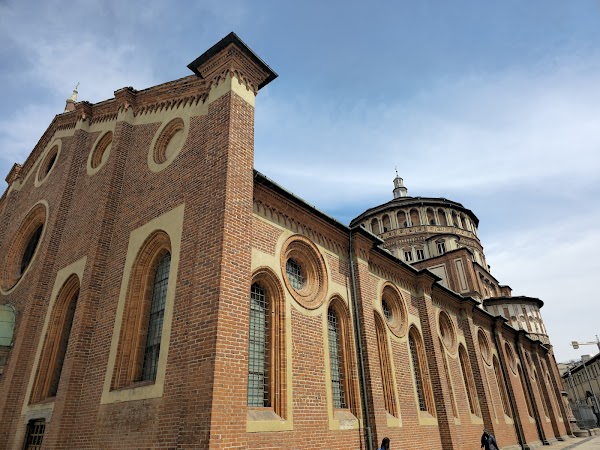
Santa Maria delle Grazie, a Dominican convent and church in Milan, Italy, is renowned for housing Leonardo da Vinci's iconic fresco, "The Last Supper." The complex, a UNESCO World Heritage Site, was built in the 15th century and showcases the architectural brilliance of Guiniforte Solari. Its elegant Lombard Gothic basilica boasts a nave and two aisles, adorned with seven chapels on each side. The church's highlight, however, is the refectory, where Leonardo's masterpiece depicts the moment Christ reveals his impending betrayal. The fresco's innovative techniques and profound emotional depth have captivated art enthusiasts for centuries. Beyond its artistic significance, Santa Maria delle Grazie also holds historical importance as the intended burial site for the Sforza family, the ruling dynasty of Milan during the Renaissance.Mural Painting
Santa Maria delle Grazie, a Dominican convent in Milan, houses one of the world's most renowned mural paintings: Leonardo da Vinci's "The Last Supper." This iconic fresco, created between 1495 and 1497, depicts the final meal of Jesus with his disciples. Da Vinci's innovative techniques, such as the use of sfumato and aerial perspective, have made this mural a masterpiece of the High Renaissance. Beyond "The Last Supper," Santa Maria delle Grazie boasts other significant mural paintings. The Chapel of the Holy Crown features Titian's "Crowning with Thorns," while the Chapel of the Adoring Virgin showcases Gaudenzio Ferrari's frescoes. The Great Cloister, once adorned with frescoes by Bramantino, offers a glimpse into the artistic heritage of the convent. The church's interior is a testament to the Lombard Gothic style, with its ribbed vaults and pointed arches. However, the apse, attributed to Donato Bramante, exhibits early Renaissance influences, showcasing the architectural transition of the period. Santa Maria delle Grazie stands as a testament to the artistic patronage of the Sforza family, who commissioned many of the murals and renovations. The convent and its mural paintings have survived centuries of war and restoration, remaining a living testament to the enduring power of art.UNESCO World Heritage Site
Santa Maria delle Grazie, a Dominican convent in Milan, Italy, stands as a testament to the convergence of art and history. Recognized by UNESCO as a World Heritage Site in 1980, the complex is renowned for housing Leonardo da Vinci's iconic masterpiece, "The Last Supper." This exceptional fresco, painted on the refectory wall, depicts the profound moment of Jesus' revelation of his impending betrayal. The church itself, a splendid example of early Renaissance architecture, boasts an impressive central dome designed by Donato Bramante. Beyond its artistic significance, Santa Maria delle Grazie holds historical importance. Commissioned by Ludovico Sforza, Duke of Milan, in the 15th century, the complex served as a burial chapel for the Sforza family. The church's intricate details, including the Chiostro delle Rane (Cloister of the Frogs), adorned with charming bronze frog fountains, reflect the era's artistic sensibilities. Santa Maria delle Grazie's designation as a UNESCO World Heritage Site underscores its exceptional universal value. The complex represents a fusion of architectural brilliance and artistic genius, embodying the spirit of the Italian Renaissance. Its enduring legacy continues to inspire awe and admiration, solidifying its place as a cherished cultural treasure.
10
The Last Supper Museum
View on map
Audio Narrations
Introduction
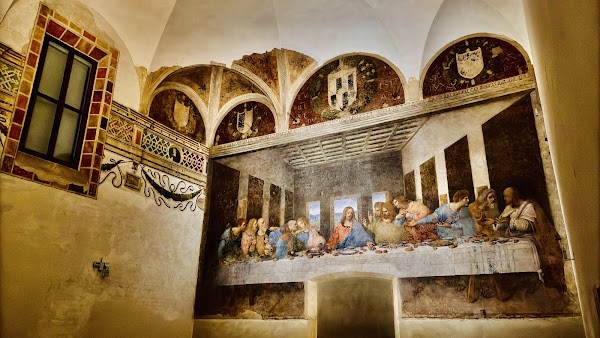
The Last Supper Museum in Milan, Italy, houses Leonardo da Vinci's iconic masterpiece, "The Last Supper." This 15th-century mural depicts the final meal Jesus shared with his disciples before his crucifixion. The museum's unique design ensures optimal viewing of the delicate artwork. Visitors enter a temperature-controlled chamber where they can admire the mural's intricate details and vibrant colors. The museum also offers multimedia presentations and interactive exhibits that delve into the history and symbolism of the painting. One of the most fascinating aspects of the museum is the ongoing restoration efforts. Since the 1950s, experts have been working to preserve the mural, which has suffered from centuries of wear and tear. Visitors can learn about the complex restoration process and see firsthand the painstaking work involved in preserving this priceless masterpiece. Another unique feature of the museum is its focus on the scientific study of "The Last Supper." Researchers use advanced technology to analyze the painting's composition, pigments, and brushstrokes. This ongoing research provides valuable insights into da Vinci's artistic techniques and the history of the mural. The Last Supper Museum offers a truly immersive experience for art lovers and history buffs alike. By combining cutting-edge technology with a deep appreciation for da Vinci's genius, the museum provides a unique opportunity to engage with one of the world's most iconic works of art.Iconic Religious Artwork
The Last Supper: A Masterpiece Unveiled The Last Supper Museum in Milan houses Leonardo da Vinci's iconic fresco, not merely a painting but a theological treatise in visual form. Unlike traditional depictions, Christ isn't the central figure. Instead, the focus is on the psychological impact of his announcement of betrayal, with each disciple reacting uniquely. The use of perspective draws the viewer into the scene, making them a silent participant in the drama. The fading pigment and damaged sections only add to the mystique, hinting at the secrets hidden beneath the surface. Beyond the artistic mastery, the fresco offers a window into 15th-century religious thought. The frugal meal, the lack of halos, and the depiction of Judas as a shadow all reflect the Dominican order's emphasis on humility and sacrifice. The museum itself is a testament to the ongoing efforts to preserve this masterpiece. The controlled environment, limited visitor access, and ongoing restoration projects ensure that future generations can appreciate da Vinci's genius. Visiting the Last Supper Museum isn't just about seeing a painting; it's about experiencing a pivotal moment in art history and religious iconography. It's a chance to contemplate the human condition, the power of faith, and the enduring legacy of a true artistic visionary.Historical and Artistic Significance
The Last Supper: A Timeless Masterpiece in Historical and Artistic Context The Last Supper, Leonardo da Vinci's iconic mural housed within the Convent of Santa Maria delle Grazie in Milan, transcends its religious significance to occupy a pivotal position in both art history and the broader narrative of Western culture. Stepping into the refectory where the fresco resides is akin to stepping into a time capsule, transporting the viewer to 15th-century Milan and offering a glimpse into the artistic and social climate of the Renaissance. The historical context of The Last Supper is deeply intertwined with the political and religious landscape of its time. Commissioned by Duke Ludovico Sforza, the mural served as a testament to his power and piety, solidifying his position as a prominent figure in Renaissance Italy. The fresco's subject matter, depicting the final meal shared by Jesus and his disciples before his crucifixion, resonated deeply with the religious sensibilities of the era, serving as a powerful reminder of faith and sacrifice. Beyond its historical significance, The Last Supper stands as a groundbreaking artistic achievement. Da Vinci's mastery of perspective, light, and shadow creates a sense of depth and realism that was unprecedented at the time. His innovative use of sfumato, a technique that softens outlines and creates a hazy effect, imbues the figures with an ethereal quality, adding to the emotional impact of the scene. The composition, with its central vanishing point focused on Christ, draws the viewer into the heart of the narrative, making them a silent participant in the unfolding drama. The Last Supper's enduring legacy lies not only in its artistic brilliance but also in its ability to spark dialogue and inspire reflection. The mural's portrayal of human emotions, from betrayal and sorrow to love and acceptance, transcends cultural and temporal boundaries, offering a timeless meditation on the complexities of human nature. Its historical context provides a window into the past, while its artistic mastery continues to captivate and inspire generations of artists and viewers alike. Visiting the museum housing The Last Supper is an opportunity to engage with a masterpiece that has shaped the course of art history and continues to resonate with audiences today. It is a journey through time, a testament to human creativity, and a profound reflection on the enduring power of art.
Experience the Full Tour
Download the DocentPro app to access all tour stops, complete audio narrations in multiple languages, offline maps, and interactive features.