
Naples: A Journey Through Ancient Wonders

Walking Tour

4.2 km (2.6 miles)

1h 0min travel time

9 Stops

Naples, Italy
Naples: A Journey Through Ancient Wonders

Tour Stops
1
Piazza del Plebiscito
View on map
Audio Narrations
English
Introduction
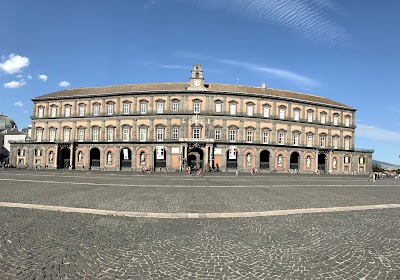
Piazza del Plebiscito, the grandest piazza in Naples, is a vast, airy expanse in the heart of the city. Its elegant design features a curving colonnade reminiscent of St. Peter's Square in Rome, creating an intimate ambiance within the spacious square. The piazza is home to notable monuments, including the domed Basilica of San Francesco da Paola, modeled after the Pantheon in Rome. Two pastel-hued palaces, Palazzo della Prefettura and Palazzo Salerno, anchor the square, while equestrian statues of Charles III of Spain and Ferdinand I stand guard. The renowned Gran Caffe Gambrinus occupies a corner of Palazzo della Prefettura. Piazza del Plebiscito has served as a gathering spot, playground, and central focal point for the city since its inception. It is a must-see destination for any visit to Naples, offering a glimpse into the city's rich history and vibrant culture.Basilica of San Francesco da Paola
Basilica of San Francesco da Paola, a magnificent Pantheon-style basilica, stands proudly in Piazza del Plebiscito, the heart of Naples. Built between 1816 and 1836, it was inspired by the grandeur of St. Peter's Basilica in Rome. Its imposing dome and elegant portal echo the architectural marvel of the Pantheon. The basilica's semi-circular colonnade, reminiscent of its Roman counterpart, was designed by Joachim Murat, who envisioned the piazza as a grand court for the city. Inside, the basilica's interior is a testament to Neapolitan artistry. The bright and airy space is adorned with white marble, while the altar features exquisite lapis lazuli inlay. The walls are adorned with stunning paintings by Luca Giordano and other renowned Neapolitan artists, depicting scenes from the lives of saints and gospel themes. The basilica's dome, a masterpiece of engineering, mimics the form of the Pantheon, creating an awe-inspiring sense of space and light. The basilica's construction holds historical significance. It was built to honor Saint Francis of Paola, a Calabrian saint, and to atone for Murat's destruction of the monastery that once stood on the site. The Bourbon king Ferdinand IV dedicated the basilica to the saint and marked the return of his family to the throne of the Kingdom of the Two Sicilies. Today, the Basilica of San Francesco da Paola remains a beloved landmark in Naples, a testament to the city's rich history, architectural prowess, and enduring faith.Legends and Stories, Piazza del Plebiscito
Piazza del Plebiscito, the grand square in Naples, is steeped in legends and stories that have captivated locals and visitors alike for centuries. One enduring tale is that of Queen Margherita, who is said to have granted pardons to prisoners who could successfully cross the square blindfolded. However, a curse she cast upon the square is believed to have prevented anyone from completing the challenge, ensuring that the prisoners remained incarcerated. Another legend revolves around the statues of the Neapolitan kings that adorn the Royal Palace. It is said that Charles of Hapsburg once asked who was urinating on the wall, to which Charles III replied that he did not know, while Joachim Murat admitted his guilt. Victor Emmanuel II, known for his stern demeanor, is depicted as keeping the peace by threatening to punish the culprit. The peculiar shape of the square, with its half-semicircular and half-rectangular structure, has also given rise to a unique tradition. Locals and tourists alike attempt to cross the square blindfolded, starting from the Royal Palace and aiming for the two horse statues in the center. Despite the seemingly straightforward path, the slight slope and irregular paving stones make it nearly impossible to walk in a straight line, leading to amusing and often unsuccessful attempts.
2
Royal Palace of Naples
View on map
Audio Narrations
English
Introduction
The Royal Palace of Naples, a majestic edifice nestled in the heart of Napoli, stands as a testament to the city's rich history and artistic heritage. Built in the 17th century for the Spanish viceroy, the palace boasts a captivating blend of architectural styles, from the austere grandeur of the Spanish Baroque to the playful elegance of the Rococo. Its opulent interiors, adorned with frescoes, stuccoes, and intricate tapestries, transport visitors to a bygone era of royal splendor. One of the palace's most striking features is its grand staircase, a masterpiece of Baroque architecture. The sweeping curves and intricate details of the balustrade create a sense of awe and grandeur, while the vibrant frescoes adorning the walls depict scenes from Neapolitan history and mythology. The Royal Apartments, once home to the Bourbon monarchs, offer a glimpse into the lavish lifestyle of the ruling class. The Throne Room, with its gilded furnishings and opulent décor, served as the setting for official ceremonies and receptions. The adjoining Ballroom, with its soaring ceilings and crystal chandeliers, hosted extravagant balls and social gatherings. Beyond its architectural and artistic treasures, the Royal Palace of Naples also houses a remarkable collection of historical artifacts. The Museum of the Palace displays a wide range of objects, from ancient Roman sculptures to 18th-century porcelain. The Capodimonte Gallery, located within the palace grounds, boasts an impressive collection of paintings by Italian masters, including Titian, Raphael, and Caravaggio. A visit to the Royal Palace of Naples is a journey through time, offering a glimpse into the city's rich cultural heritage and the opulent lifestyle of its former rulers. From its awe-inspiring architecture to its exquisite art collection, the palace stands as a symbol of Naples' enduring legacy as a center of art, culture, and power.Art and Culture Hub
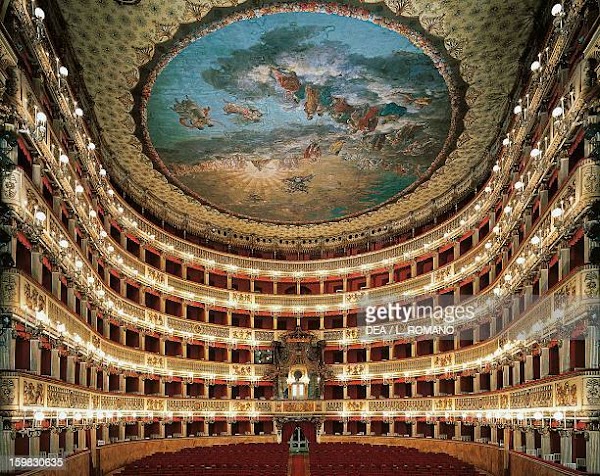
Nestled in the heart of Naples, the Royal Palace stands as a testament to the city's rich artistic and cultural heritage. Beyond its opulent halls and grand architecture, the palace unveils a treasure trove of artistic wonders, transforming it into a vibrant hub for art and culture enthusiasts. Step into the opulent Teatro di San Carlo, a jewel of the Neapolitan cultural scene. Its gilded balconies, plush seating, and exquisite acoustics have witnessed centuries of operatic masterpieces, from the works of Rossini to the premieres of Verdi's operas. The adjoining Museum of the Teatro di San Carlo offers a glimpse into the theater's fascinating history, showcasing costumes, set designs, and original scores. Venture into the Royal Apartments, where the walls whisper tales of royal life and artistic patronage. Admire the exquisite frescoes by Battistello Caracciolo and the intricate tapestries woven with scenes from mythology and history. The palace's collection boasts masterpieces by Titian, Guido Reni, and Luca Giordano, offering a captivating journey through the evolution of Italian art. Descend into the evocative underground spaces, where the remains of a Roman theater lie hidden. These ancient ruins, unearthed during the palace's construction, offer a glimpse into Naples' layered history and its enduring connection to the arts. The Royal Palace of Naples is not merely a historical monument but a living testament to the city's artistic spirit. Its ongoing exhibitions, concerts, and cultural events breathe life into its storied walls, making it a dynamic hub for art and culture lovers. Whether you're captivated by the grandeur of opera, the allure of Renaissance masterpieces, or the echoes of ancient Roman theater, the Royal Palace of Naples promises an unforgettable journey through the heart of Neapolitan art and culture.Architectural Masterpiece
The Royal Palace of Naples, a majestic architectural masterpiece, stands as a testament to the city's rich history and artistic heritage. Its grandeur and intricate details have captivated visitors for centuries, making it a must-see destination for architecture enthusiasts. One of the palace's most striking features is its imposing facade, adorned with intricate carvings, sculptures, and columns. The main entrance, adorned with a grand archway and flanked by towering statues, creates a sense of awe and grandeur. The palace's interior is equally impressive, with its opulent halls, lavishly decorated rooms, and stunning frescoes. The palace's design is a testament to the architectural genius of the time. The use of symmetry, balance, and proportion creates a sense of harmony and order. The intricate details, such as the coffered ceilings, marble floors, and gilded moldings, add to the palace's opulence and sophistication. The Royal Palace of Naples is not only an architectural masterpiece but also a repository of art and history. Its walls are adorned with paintings by renowned artists, including Titian, Raphael, and Caravaggio. The palace also houses a collection of sculptures, tapestries, and furniture that reflect the tastes and styles of the Neapolitan court. In conclusion, the Royal Palace of Naples is a true architectural masterpiece that embodies the city's rich history and artistic heritage. Its grandeur, intricate details, and opulent interiors make it a must-see destination for architecture enthusiasts and art lovers alike.
3
San Carlo Theatre
View on map
4
Galleria Umberto I
View on map
5
Fountain of Neptune
View on map
6
Castel Nuovo
View on map
Audio Narrations
English
Introduction
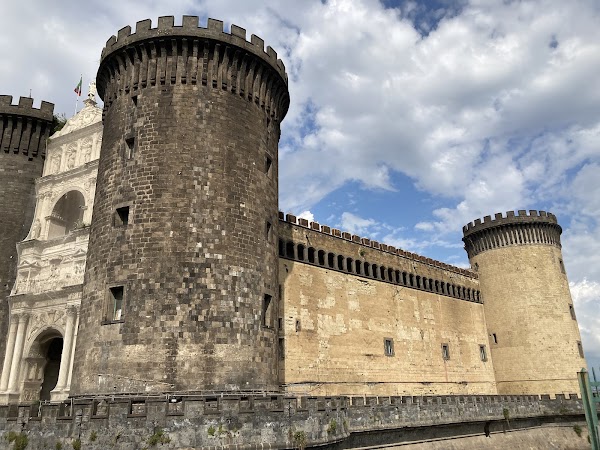
Castel Nuovo, also known as Maschio Angioino, is a medieval castle in Naples, Italy. Built in 1279 by Charles I of Anjou, it served as a royal seat for kings of Naples, Aragon, and Spain until 1815. The castle's imposing size and strategic location made it a significant architectural landmark. It features five cylindrical towers, a moat, and a triumphal arch designed by Francesco Laurana. Inside, visitors can explore the Palatine Chapel, adorned with frescoes by Maso di Banco and sculptures by Domenico Gagini. The Hall of the Barons, once the main hall, is known for its octagonal vault and frescoed ceiling. The castle also houses a civic museum with a collection of paintings, sculptures, and archaeological artifacts.Neapolitan Society of Homeland History
Castel Nuovo, also known as Maschio Angioino, stands as a testament to Naples' rich history and the Neapolitan Society of Homeland History's dedication to preserving it. The society, headquartered within the castle's walls, plays a pivotal role in safeguarding the legacy of this architectural marvel. Neapolitan Society of Homeland History members have meticulously chronicled the castle's evolution from its inception in 1279 as a royal residence and fortress to its current status as a cultural hub. They have unearthed fascinating tales of the monarchs, artists, and scholars who graced its halls, including Giotto, Petrarca, and Boccaccio. The society's research has shed light on the castle's architectural significance, highlighting the blend of Gothic and Renaissance elements that make it a masterpiece. They have documented the intricate details of its towers, courtyards, and grand halls, each imbued with historical significance. Furthermore, the society has played a crucial role in preserving the castle's priceless collection of artifacts and artwork. The civic museum housed within the complex showcases sculptures, paintings, and objects spanning centuries, offering a glimpse into Naples' artistic heritage. Through its unwavering commitment to preserving and promoting Castel Nuovo, the Neapolitan Society of Homeland History ensures that this iconic landmark remains a source of pride and inspiration for generations to come.Gothic Architecture
Castel Nuovo, a majestic fortress in Naples, stands as a testament to the grandeur of Gothic architecture. Its imposing cylindrical towers, each adorned with intricate merlons, soar towards the heavens, their rugged surfaces hinting at the castle's rich history. The imposing triumphal arch, a later addition by Alfonso V of Aragon, is a masterpiece of Renaissance architecture, yet it harmoniously complements the Gothic elements, creating a captivating blend of styles. The castle's interior reveals an equally captivating spectacle. The Sala dei Baroni, or Baron's Hall, is a breathtaking example of Gothic grandeur. Its vaulted ceiling, supported by slender columns, creates an ethereal atmosphere, while the walls are adorned with exquisite frescoes, some attributed to Giotto himself. The intricate details and vibrant colors of these frescoes transport visitors back to the vibrant era of the Angevin dynasty. Castel Nuovo's Gothic heritage is further evident in its numerous pointed arches, ribbed vaults, and stained-glass windows. These elements, combined with the castle's strategic location overlooking the Bay of Naples, create a sense of awe and wonder that has captivated visitors for centuries. As a testament to its enduring legacy, Castel Nuovo remains a beloved landmark, offering a glimpse into the architectural brilliance of the Gothic era.
7
Museo Cappella Sansevero
View on map
Audio Narrations
English
Introduction
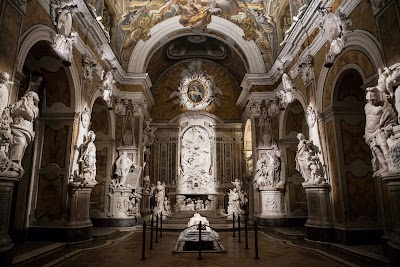
Museo Cappella Sansevero, a captivating chapel-museum in Naples, Italy, is renowned for its exquisite marble sculptures and Baroque splendor. The chapel's patron, Raimondo di Sangro, commissioned leading 18th-century Italian artists to create a masterpiece that reflects his dynastic pride and fascination with science and the occult. Among the chapel's highlights is Giuseppe Sanmartino's "Veiled Christ," a breathtakingly realistic sculpture that depicts the crucified Christ covered in a delicate veil. Other notable works include Francesco Queirolo's "Disillusion," Antonio Corradini's "Modesty," and the elaborate High Altar by Francesco Celebrano and Paolo Persico. The chapel's intriguing atmosphere is further enhanced by its anatomical machines, which showcase di Sangro's scientific interests. Visitors can marvel at the intricate details and symbolism embedded in these sculptures, making Museo Cappella Sansevero a must-see destination for art enthusiasts and those seeking a glimpse into Naples' rich cultural heritage.Death and Mortality
Museo Cappella Sansevero in Napoli, Campania, Italy, is an extraordinary chapel renowned for its captivating collection of anatomical sculptures and artworks that delve into the mysteries of death and mortality. The centerpiece of the chapel is the breathtaking Veiled Christ, a marble masterpiece by Giuseppe Sanmartino, where the delicate veil draped over the body of Christ appears as if it were woven from the finest silk, capturing the essence of mortality with exquisite detail. Another highlight is the Anatomical Machines, a series of life-size human figures with their circulatory and nervous systems meticulously preserved through a groundbreaking technique invented by Dr. Giuseppe Salerno. These figures offer a glimpse into the intricate workings of the human body and the fragility of life. The chapel also houses the enigmatic Christ with a Crown of Thorns, a sculpture that depicts the suffering of Christ with haunting realism. Museo Cappella Sansevero is a testament to the Neapolitan fascination with death and the afterlife. Its collection invites visitors to confront the inevitability of mortality while marveling at the beauty and complexity of the human form. It is a place where art and science converge to explore the profound mysteries of life and death.Marble Sculptures
Museo Cappella Sansevero, a chapel in Naples, Italy, houses an extraordinary collection of marble sculptures that have captivated art enthusiasts for centuries. The chapel's most renowned masterpiece is the Veiled Christ by Giuseppe Sanmartino, a life-size depiction of the crucified Christ shrouded in a delicate marble veil. The veil's intricate folds and the lifelike details of the body beneath create an illusion of transparency, leaving visitors in awe of the sculptor's mastery. Other notable sculptures include Modesty by Antonio Corradini, a graceful figure draped in a flowing marble robe that seems to billow in the wind, and Disillusion by Francesco Queirolo, a poignant representation of a woman's despair. The chapel also features an anatomical machine, a display of preserved human bodies with their vascular systems intact, showcasing the scientific curiosity of Raimondo di Sangro, the chapel's patron. The chapel's unique blend of art and science, coupled with the exquisite craftsmanship of its marble sculptures, makes it a must-visit destination for those seeking an immersive experience in the realm of artistic excellence.
8
Duomo di Napoli
View on map
Audio Narrations
English
Introduction
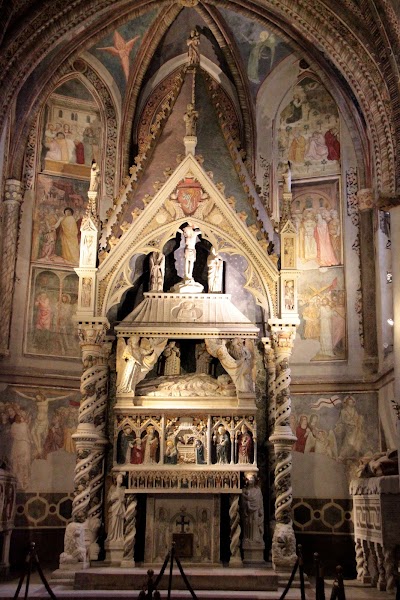
The Duomo di Napoli, also known as the Cathedral of Santa Maria Assunta, is a magnificent example of Gothic architecture and a symbol of Naples' history. Its origins date back to the 4th century AD, with the construction of the Basilica of Santa Restituta and the Baptistery of San Giovanni in Fonte. The current structure was largely completed under the reign of Roberto d'Angiò in 1314, incorporating elements of French and Italian craftsmanship. The Duomo's interior boasts a Latin cross plan with a central nave adorned with a 17th-century coffered ceiling. The transept, rebuilt in the 19th century, showcases a blend of neo-Gothic and Baroque styles. The Cappella del Succorpo, added in the 15th century, houses the relics of Saint Gennaro, Naples' patron saint. The Basilica of Santa Restituta, accessible from the Duomo, is an early Christian basilica featuring the oldest baptistery in the Western world. The Duomo's significance extends beyond its architectural beauty. It is the site of the annual miracle of the liquefaction of Saint Gennaro's blood, which occurs three times a year. This phenomenon, attributed to the saint's intercession, attracts countless pilgrims and devotees. The Duomo di Napoli stands as a testament to the city's rich history, religious fervor, and enduring cultural heritage.Cultural Symbol
Duomo di Napoli, a majestic cathedral in the heart of Naples, stands as a testament to the city's rich history and cultural heritage. Its grand facade, adorned with intricate sculptures and mosaics, reflects the fusion of Gothic, Renaissance, and Baroque architectural styles. The interior is equally awe-inspiring, boasting a vast nave, soaring columns, and a stunning dome adorned with vibrant frescoes. Beyond its architectural splendor, the Duomo holds immense cultural significance for the Neapolitan people. It is the seat of the Archbishop of Naples and a focal point for religious ceremonies and festivals. The most renowned of these is the annual Miracle of Saint Januarius, where the dried blood of the city's patron saint is said to liquefy in a solemn ritual. This event draws thousands of pilgrims and spectators, solidifying the Duomo's status as a symbol of Neapolitan faith and tradition. Moreover, the Duomo has played a pivotal role in shaping Naples' cultural identity. Its presence has fostered a vibrant artistic community, with renowned painters and sculptors contributing to its decoration throughout the centuries. The cathedral's vast collection of religious artifacts, including relics and precious objects, provides a glimpse into the city's spiritual and artistic heritage. In essence, Duomo di Napoli is not merely a religious edifice but an embodiment of Naples' cultural soul. It is a living testament to the city's enduring spirit, a symbol of its faith, and a source of pride for its people.Basilica di Santa Restituta
Nestled within the grand Duomo di Napoli, the Basilica di Santa Restituta stands as a testament to the city's rich Christian heritage. Originally dedicated to the Savior, this ancient basilica dates back to the 4th century, making it the oldest in Naples. Once a standalone structure with an independent facade and multiple entrances, it was incorporated into the Duomo during the 13th century, becoming a significant chapel within the larger cathedral. Despite its reduced size, Santa Restituta retains its architectural grandeur. Its interior boasts a series of stunning mosaics, including a 14th-century depiction of the Virgin Mary enthroned between Saint Januarius and Saint Restituta. The apse mosaic, created by the Italian artist Lello da Orvieto, is a masterpiece of medieval art. The basilica also houses the Battistero di San Giovanni in Fonte, considered the oldest baptistery in the Western world. Built between 364 and 410, it features remnants of its original 4th-century mosaic decoration. The baptismal font, supported by deer symbolizing purity, is a poignant reminder of the basilica's early Christian origins. Santa Restituta's significance extends beyond its artistic treasures. It was once the primary cathedral of Naples, serving as the seat of the bishop until the 9th century. Its rich history is intertwined with the city's own, making it a captivating destination for those seeking to delve into the spiritual and cultural heritage of Naples.
9

National Archaeological Museum of Naples
View on map
Audio Narrations
English
Introduction
The National Archaeological Museum of Naples stands as a treasure chest of antiquity, its halls whispering tales of empires long gone. Within its walls reside not just artifacts, but fragments of life frozen in time, offering an unparalleled glimpse into the Roman world. The museum boasts the Farnese Collection, a renowned assemblage of Roman sculptures including the imposing Hercules Farnese and the hauntingly beautiful Bull Farnese, a colossal marble masterpiece. Journey deeper and discover the Gabinetto Segreto, once holding scandalous erotic art from Pompeii, now a testament to the complex morality of the past. Beyond the grandeur of Roman sculptures, the museum safeguards a collection of mosaics unearthed from Pompeii and Herculaneum, their vibrant colors defying the passage of centuries. These intricate pieces depict scenes of daily life, mythical tales, and even gladiatorial combat, each tessera a pixel in a vibrant tableau of the past. The museum's collection of everyday objects, from oil lamps to delicate glassware, offers a poignant reminder that these were not just historical figures, but individuals who lived, loved, and ultimately perished under the shadow of Vesuvius.Epigraphic Collection
The National Archaeological Museum of Naples houses an epigraphic collection of astounding breadth and depth, offering a unique window into the ancient world. Holding over 2,000 Greek inscriptions and more than 10,000 Latin examples, the collection provides unparalleled insights into the daily life, languages, and laws of ancient Rome and its neighboring civilizations. Many of these inscriptions were discovered in the Vesuvian cities, buried by the eruption of Mount Vesuvius in 79 AD, offering a snapshot of life frozen in time. Visitors can explore funerary epitaphs revealing societal hierarchies and familial relationships, public notices outlining legal codes and building projects, and even personal messages etched onto everyday objects. The collection is particularly renowned for its examples of electoral propaganda and graffiti, offering glimpses into the humor, concerns, and daily lives of the Pompeian people. The museum's meticulous preservation and display of these fragile artifacts, alongside translations and contextual information, make the epigraphic collection an invaluable resource for scholars and enthusiasts alike, bringing the voices of the past back to life.Archaeological Conservation
The National Archaeological Museum of Naples stands as a testament to not only the treasures of the past but also to the intricate art of archaeological conservation. The museum houses a dedicated laboratory, unseen by most visitors, where experts meticulously preserve fragile artifacts. Utilizing cutting-edge technology alongside traditional restoration techniques, these conservators combat the ravages of time on a vast collection spanning millennia. One remarkable example lies in the conservation of the vibrant Roman frescoes from Pompeii and Herculaneum. These delicate artworks, buried under volcanic ash for centuries, require painstaking cleaning, stabilization, and gap-filling to restore their original splendor. The museum's commitment to transparency is evident in its displays, often showcasing artifacts alongside photographs and descriptions of the conservation process. This approach provides visitors with a rare glimpse into the meticulous work that breathes new life into ancient relics, highlighting the museum's role as a leader in the field of archaeological preservation.
Experience the Full Tour
Download the DocentPro app to access all tour stops, complete audio narrations in multiple languages, offline maps, and interactive features.