
Parisian Majesty: An Architectural Promenade Through the Latin Quarter

Walking Tour

3.4 km (2.1 miles)

48 min travel time

10 Stops

Paris, France
Parisian Majesty: An Architectural Promenade Through the Latin Quarter
Tour Stops
1
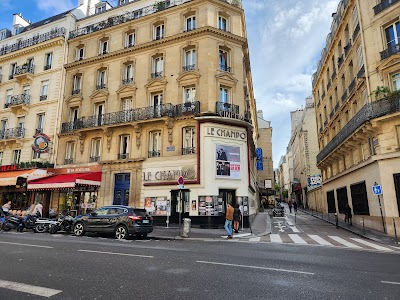
Le Champo
View on map
Audio Narrations
Introduction
Nestled in the heart of Paris's Latin Quarter, Le Champo has been a beacon for cinephiles since its inception in 1938. Originally replacing a bookshop, this arthouse cinema quickly became a sanctuary for film enthusiasts. Its intimate screening rooms and iconic Art Deco facade have endured the test of time, making Le Champo not just a place to watch films but a cherished cultural landmark deeply entwined with Paris's rich cinematic heritage.A Legacy of Film Culture
Le Champo’s significance in Parisian cinema culture is further amplified by its close ties with the Cinémathèque Française. Founded in the same year as Le Champo, the Cinémathèque is dedicated to preserving and celebrating the history of cinema. Together, they offer audiences the chance to experience cinematic masterpieces, often accompanied by insightful discussions led by renowned film historians and critics. This collaboration not only enriches Paris’s cultural landscape but also reinforces Le Champo’s role in promoting film culture and education.Historical Significance
More than just a cinema, Le Champo is a living testament to Paris's cinematic history. Over the decades, it has been a hub for cinephiles, intellectuals, and artists. Directors like Jean-Luc Godard and François Truffaut found a home here, using Le Champo as a platform to showcase films that challenged conventional storytelling and helped define the French New Wave movement. This dedication to independent and auteur cinema has cemented Le Champo’s reputation as a bastion of cinematic innovation, ensuring that the art of film remains an integral part of Parisian culture.
2
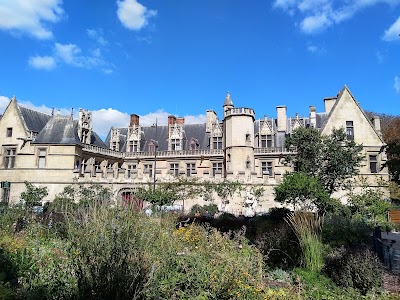
Musée de Cluny
View on map
Audio Narrations
Introduction
The Musée de Cluny, nestled in the heart of Paris's Latin Quarter, is a treasure trove of medieval art and history. Housed within a magnificent 15th-century mansion, the museum boasts a collection spanning centuries, from the early Middle Ages to the Renaissance. Step into the dimly lit Roman baths, dating back to the 3rd century, and marvel at their intricate mosaics and vaulted ceilings. Ascend the spiral staircase to the Lady and the Unicorn tapestries, a masterpiece of medieval weaving depicting the five senses and a sixth, enigmatic scene. Be captivated by the exquisite stained glass windows, casting vibrant hues across the Gothic halls. The museum's collection extends beyond its walls, encompassing the ruins of the Roman baths and the captivating Cluny Garden. This verdant oasis, adorned with medieval sculptures and fragrant rose bushes, offers a tranquil escape from the bustling city. A visit to the Musée de Cluny is a journey through time, immersing you in the rich tapestry of medieval life. From the grandeur of the Roman baths to the delicate artistry of the tapestries, the museum unveils the secrets of a bygone era, leaving you spellbound.Parisian History
Nestled in the heart of Paris's Latin Quarter, the Musée de Cluny unveils a hidden chapter of Parisian history. This medieval museum, housed within a 14th-century abbey, transports visitors to a bygone era, offering a glimpse into the city's rich tapestry. The museum's foundations lie in the Roman baths of the Palais des Thermes, remnants of the city's ancient past. As centuries passed, the site evolved into a Benedictine abbey, Cluny Abbey, leaving behind a legacy of Gothic architecture and intricate sculptures. Within the museum's walls, a treasure trove of medieval artifacts awaits. The Lady and the Unicorn tapestries, woven with vibrant colors and symbolism, stand as masterpieces of the era. Romanesque sculptures, intricate ivories, and stained glass windows offer a glimpse into the artistic and religious expressions of medieval Paris. The Musée de Cluny delves deeper into Parisian history through its collection of archaeological finds. Roman coins, pottery shards, and everyday objects unearthed from the city's depths paint a vivid picture of daily life in ancient Lutetia. Beyond its artifacts, the museum itself stands as a testament to Parisian history. The medieval architecture, with its soaring arches and vaulted ceilings, evokes the city's past grandeur. The tranquil gardens, once part of the abbey's grounds, offer a serene escape amidst the bustling city. A visit to the Musée de Cluny is a journey through time, weaving together the threads of Parisian history from Roman times to the Middle Ages. It is a place where visitors can immerse themselves in the city's rich past, uncovering hidden stories and appreciating the enduring legacy of a bygone era.Lady and the Unicorn Tapestries
Nestled within the heart of Paris, the Musée de Cluny unveils a captivating tapestry of history, where the walls whisper tales of medieval grandeur and artistic mastery. Among its treasures, the Lady and the Unicorn tapestries stand as a crown jewel, their vibrant hues and enigmatic symbolism transporting visitors to a realm of allegory and wonder. Woven in the late 15th century, these six tapestries narrate a tale of a noblewoman and her encounters with a unicorn, a mythical creature symbolizing purity and grace. Each tapestry depicts a scene brimming with symbolism, from the lady's interactions with the unicorn to the accompanying figures and heraldic emblems. The intricate details, from the lady's flowing garments to the lush vegetation, showcase the unparalleled skill of the weavers. The tapestries' enigmatic nature has captivated scholars and art enthusiasts for centuries. Theories abound regarding their meaning, with interpretations ranging from the five senses and the virtues to courtly love and the quest for salvation. The ambiguity adds to their allure, inviting viewers to contemplate their own interpretations and delve into the rich tapestry of symbolism. Beyond their artistic brilliance, the Lady and the Unicorn tapestries offer a glimpse into the world of medieval aristocracy. The opulent fabrics, the intricate designs, and the heraldic motifs all speak to the wealth and status of their patrons. The tapestries served not only as decorative elements but also as a testament to the power and prestige of their owners. Today, the Lady and the Unicorn tapestries reside in the Musée de Cluny, a fitting home for these masterpieces. The museum's medieval setting provides the perfect backdrop for appreciating the tapestries' historical and artistic significance. Visitors can immerse themselves in the world of the tapestries, surrounded by artifacts and architectural elements that evoke the era in which they were created. A visit to the Musée de Cluny to witness the Lady and the Unicorn tapestries is an unforgettable experience. It is a journey through time, art, and symbolism, offering a glimpse into a world of medieval splendor and captivating storytelling. The tapestries' enduring allure lies not only in their beauty but also in their ability to spark curiosity, inspire imagination, and transport viewers to a realm of timeless wonder.
3
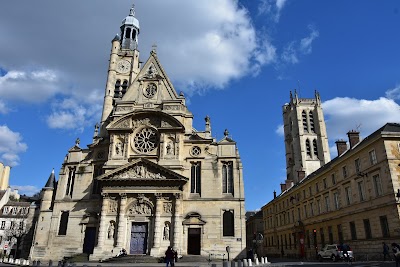
Church of Saint-Étienne-du-Mont
View on map
Audio Narrations
Introduction
The Church of Saint-Étienne-du-Mont, nestled in the heart of Paris's 5th arrondissement, stands as a testament to the city's rich history and architectural prowess. Its Gothic facade, adorned with intricate carvings and gargoyles, whispers tales of medieval craftsmanship. Stepping inside, one is greeted by soaring vaulted ceilings and stained-glass windows that bathe the interior in a kaleidoscope of colors. The church's most captivating feature, however, lies hidden beneath its floor: the crypt, where the remains of some of France's most renowned figures, including Blaise Pascal and Jean Racine, rest in eternal slumber. A closer look reveals the church's unique connection to the literary world. Its pews once hosted the likes of Ernest Hemingway and James Joyce, who sought solace and inspiration within its hallowed walls. The church's association with literature extends beyond its visitors, as its very construction is intertwined with the written word. Legend has it that the church was built on the site of a former Roman temple dedicated to the goddess Diana, and that the stones used in its construction were salvaged from the ruins of the ancient library of Alexandria. Today, Saint-Étienne-du-Mont continues to captivate visitors with its blend of history, architecture, and literary allure. Whether one is drawn to its Gothic grandeur, its connection to the literary giants of the past, or the whispers of ancient secrets buried beneath its floor, this Parisian gem offers a unique and unforgettable experience.Burial Place of Sainte Geneviève
Nestled in the heart of Paris's 5th arrondissement, the Church of Saint-Étienne-du-Mont stands as a testament to faith and history. While its Gothic architecture and stained-glass windows captivate visitors, the church holds a deeper significance as the final resting place of Saint Genevieve, the patron saint of Paris. Genevieve, a 5th-century shepherdess, rose to prominence for her piety and unwavering faith. During the siege of Paris by Attila the Hun, she rallied the city's inhabitants to resist, inspiring them with her unwavering belief in God's protection. After her death in 512, Genevieve was canonized and her remains were interred in the Abbey of Saint-Pierre-des-Fossés. In the 13th century, the abbey was demolished to make way for the construction of the Church of Saint-Étienne-du-Mont. Genevieve's remains were transferred to the new church, where they were placed in a magnificent marble tomb designed by the renowned sculptor François Anguier. The tomb, adorned with intricate carvings and sculptures, became a pilgrimage site for devotees seeking Genevieve's intercession. Today, visitors to Saint-Étienne-du-Mont can pay their respects at Genevieve's tomb, located in the ambulatory behind the main altar. The tomb is a poignant reminder of her unwavering faith and the profound impact she had on the city of Paris. The church also houses a reliquary containing Genevieve's skull, which is displayed during special occasions. Beyond its architectural beauty, the Church of Saint-Étienne-du-Mont holds a special place in the hearts of Parisians as the eternal resting place of their beloved patron saint. Genevieve's legacy continues to inspire generations, reminding them of the power of faith, courage, and unwavering belief in the face of adversity.Renaissance Architecture
The Church of Saint-Étienne-du-Mont in Paris, Île-de-France, France, stands as a testament to the transition from Gothic to Renaissance architecture. While its construction began in the late 15th century, the church's design incorporates elements of both styles, reflecting the evolving architectural landscape of the period. One of the most striking Renaissance features of Saint-Étienne-du-Mont is its facade. The lower level showcases a distinctly Gothic aesthetic, with pointed arches and intricate tracery. However, the upper level reveals a shift towards Renaissance principles. The large, round-headed windows and the use of pilasters, a classical architectural element, mark a clear departure from the Gothic style. The interior of the church further exemplifies this architectural blend. The nave, with its tall, pointed arches and ribbed vaulting, is undeniably Gothic. However, the inclusion of Renaissance elements, such as the coffered ceiling and the use of round arches in the side chapels, creates a harmonious fusion of styles. The Church of Saint-Étienne-du-Mont also boasts several notable Renaissance artworks. The rood screen, a masterpiece of Renaissance sculpture, features intricate carvings and delicate figures. Additionally, the church houses the tomb of the renowned philosopher and mathematician Blaise Pascal, a significant figure of the Scientific Revolution. In conclusion, the Church of Saint-Étienne-du-Mont stands as a unique example of the intersection of Gothic and Renaissance architecture. Its blend of styles, coupled with its rich artistic heritage, makes it a captivating destination for those seeking to explore the architectural and cultural landscape of Renaissance Paris.
4
Panthéon
View on map
Audio Narrations
Introduction
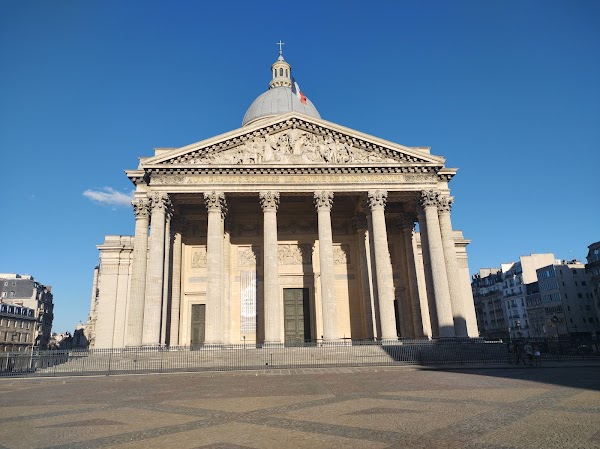
The Panthéon, a majestic neoclassical monument in the heart of Paris, stands as a testament to France's rich history and enduring spirit. Originally conceived as a church dedicated to Saint Genevieve, the patron saint of Paris, the Panthéon's purpose evolved over time, becoming a secular mausoleum honoring the nation's most distinguished citizens. Within its imposing walls lie the remains of luminaries such as Voltaire, Rousseau, Victor Hugo, and Marie Curie, their contributions to French culture and society forever etched in the nation's memory. The Panthéon's grand dome, adorned with intricate frescoes depicting scenes from French history, soars 83 meters above the city, offering breathtaking views of the Parisian skyline. Beneath the dome, the crypt houses the tombs of these national icons, each adorned with elaborate sculptures and inscriptions that pay tribute to their achievements. Visitors can wander through the crypt, marveling at the artistry and reflecting on the lives and legacies of these remarkable individuals. The Panthéon's significance extends beyond its role as a mausoleum. It has served as a stage for pivotal moments in French history, hosting the funerals of presidents, the signing of the Treaty of Paris in 1815, and the celebration of the liberation of Paris in 1944. Today, the Panthéon remains a vibrant cultural hub, hosting exhibitions, concerts, and conferences that explore French history, art, and literature. Its towering presence and rich history continue to inspire awe and reflection, reminding visitors of the enduring legacy of France's most celebrated figures.Panthéon Dome
The Panthéon's dome, a majestic architectural feat, stands as a testament to the building's grandeur and historical significance. Soaring 83 meters above the Parisian skyline, the dome is the second-largest in the city, surpassed only by the Sacré-Coeur Basilica. Its construction, completed in 1790, was a marvel of engineering, employing innovative techniques and materials. The dome's double shell design, with an inner and outer layer, provides exceptional stability and acoustics. The inner dome features a magnificent oculus, a circular opening that floods the interior with natural light, creating a sense of awe and inspiration. The dome's exterior is adorned with intricate sculptures and bas-reliefs, depicting scenes from French history and mythology. These intricate details offer a glimpse into the artistic and cultural landscape of 18th-century France. The dome's summit is crowned by a lantern, a small, open structure that provides ventilation and serves as a symbolic beacon. From the lantern, visitors can enjoy breathtaking panoramic views of Paris, encompassing iconic landmarks such as the Eiffel Tower and the Louvre Museum. The Panthéon's dome has played a pivotal role in French history. It has witnessed the burial of numerous national heroes, including Voltaire, Rousseau, and Victor Hugo. The dome's inscription, "Aux grands hommes la patrie reconnaissante" (To the great men, the grateful homeland), reflects the building's purpose as a national mausoleum and a tribute to France's most distinguished figures. The dome's grandeur and symbolism have made it an enduring icon of French culture and a must-visit destination for visitors to Paris.Cultural Heritage Site
The Panthéon in Paris stands as a monument to France's cultural heritage, embodying the nation's history, ideals, and artistic achievements. Originally conceived as a church dedicated to Saint Genevieve, the patron saint of Paris, the Panthéon's transformation into a mausoleum for prominent French figures reflects the evolving relationship between religion and secularism in the country. The building's neoclassical architecture, inspired by the Pantheon in Rome, showcases France's embrace of Enlightenment ideals and its admiration for classical antiquity. Its imposing dome, visible from various points in the city, serves as a reminder of the nation's aspirations and its commitment to intellectual and artistic excellence. The Panthéon's interior houses the tombs of renowned individuals who have shaped France's cultural landscape, including writers, scientists, philosophers, and political figures. Among them are Voltaire, Rousseau, Victor Hugo, Marie Curie, and Louis Braille. Their presence within the Panthéon underscores the importance of intellectual and artistic contributions to the nation's identity. The Panthéon's significance extends beyond its architectural grandeur and the individuals it honors. It serves as a stage for national ceremonies and commemorations, further solidifying its role as a symbol of French unity and cultural heritage. The annual Panthéonization ceremony, during which the remains of distinguished individuals are transferred to the mausoleum, underscores the nation's ongoing recognition of its cultural icons. The Panthéon's evolution from a religious edifice to a secular mausoleum reflects France's complex history and its changing values. It stands as a testament to the nation's enduring respect for its cultural heritage and its commitment to honoring those who have made significant contributions to its intellectual and artistic landscape.
5
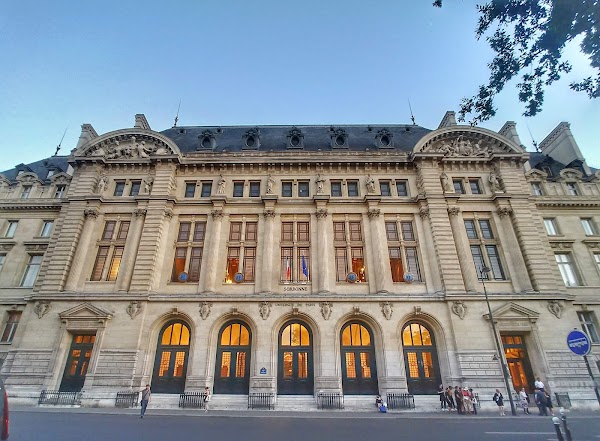
Panthéon-Sorbonne University
View on map
Audio Narrations
Introduction
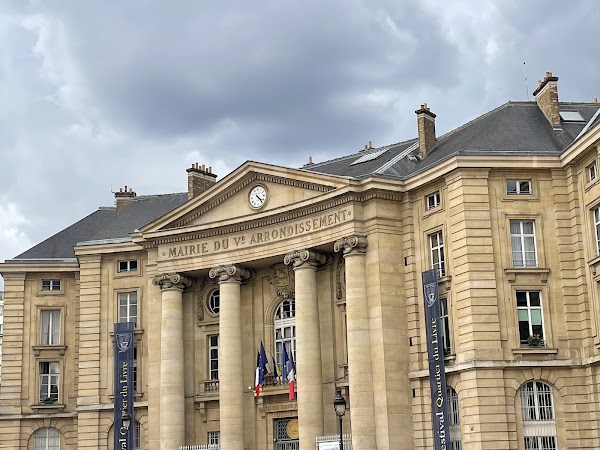
Panthéon-Sorbonne University: A Legacy of Interdisciplinarity in the Heart of Paris Founded in 1971 from the ashes of the historic University of Paris, Panthéon-Sorbonne University stands as a testament to interdisciplinary education. Nestled in the heart of the Latin Quarter, the university occupies iconic buildings like the Sorbonne and the Panthéon, echoing its rich history and commitment to the humanities, law, economics, and political science. Panthéon-Sorbonne boasts a vibrant student life, welcoming thousands of international students each year. Its commitment to internationalization is evident in its diverse faculty, numerous exchange programs, and dedicated support services for international students. Beyond its academic excellence, Panthéon-Sorbonne is renowned for its stunning architecture. The Centre Sorbonne houses departments like Management, History, Philosophy, and Political Science, while the Centre Panthéon, housed in the historic Faculty of Law building, offers a glimpse into the university's past. The Pierre Mendès-France Center, a modern high-rise, accommodates thousands of students in human sciences, economics, and management. Panthéon-Sorbonne's impact extends beyond its walls. The university actively participates in international research programs, hosts conferences, and boasts a network of alumni who hold prominent positions in various fields. A unique feature of Panthéon-Sorbonne is its commitment to social responsibility. The university actively engages with the local community, offering programs for students in exile and participating in initiatives that promote social justice and equality. Whether you're drawn to its rich history, diverse academic offerings, or vibrant student life, Panthéon-Sorbonne University offers a unique and enriching educational experience in the heart of Paris.Economic and Management Focus
Panthéon-Sorbonne University: A Haven for Economic and Management Studies Nestled in the heart of Paris, Panthéon-Sorbonne University stands as a beacon of academic excellence, particularly in the realm of economics and management. Its rich history, renowned faculty, and diverse program offerings make it a top choice for aspiring economists, financiers, and business leaders. Panthéon-Sorbonne boasts a legacy of pioneering economic thought, tracing its roots back to the 18th century. Its graduates include Nobel laureates and influential figures who have shaped economic policies and business practices worldwide. This legacy translates into a dynamic learning environment where students engage with cutting-edge research and theoretical frameworks. The university offers a comprehensive range of programs, from undergraduate degrees in Economics and Management to specialized Master's programs in Finance, Marketing, and International Business. These programs are designed to equip students with the analytical skills, critical thinking, and practical knowledge needed to thrive in today's globalized economy. Beyond the classroom, Panthéon-Sorbonne provides a vibrant hub for networking and career development. Its strong alumni network connects students with industry leaders and opens doors to internship and employment opportunities. Additionally, the university's location in the heart of Paris grants students access to a wealth of cultural and professional resources. Whether you aspire to become an economist, a financial analyst, or a business leader, Panthéon-Sorbonne University offers an unparalleled platform for academic and professional growth. Its rigorous curriculum, renowned faculty, and unique Parisian setting create an environment where students can develop the knowledge, skills, and connections needed to excel in the dynamic world of economics and management.Interdisciplinary Education
Panthéon-Sorbonne University: A Hub for Interdisciplinary Exploration Panthéon-Sorbonne University stands out as a champion of interdisciplinary education in the heart of Paris. Its rich history and diverse academic offerings provide a unique environment for students seeking to explore the intersections of various disciplines. The university boasts a long-standing commitment to fostering cross-disciplinary collaboration. This is evident in its numerous research centers and institutes dedicated to interdisciplinary inquiry, such as the Centre d'études interdisciplinaires du XXe siècle and the Institut des sciences sociales du politique. These centers bring together scholars from diverse fields to tackle complex societal challenges, fostering a dynamic exchange of ideas and perspectives. Panthéon-Sorbonne's curriculum reflects this commitment, offering a wide range of interdisciplinary programs and courses. Students can pursue degrees in fields like "Humanities, Literature, and Languages" with a focus on "Intercultural Studies" or delve into the "Law and Economics" program, bridging the gap between these traditionally separate disciplines. Additionally, the university encourages students to personalize their academic journeys by creating their own interdisciplinary pathways through its "Parcours libres" program. Beyond the classroom, Panthéon-Sorbonne fosters interdisciplinary exchange through its vibrant intellectual community. Regular conferences, seminars, and workshops bring together students, faculty, and researchers from different disciplines to engage in critical dialogue and explore new avenues of knowledge. This dynamic environment allows students to develop a holistic understanding of complex issues and cultivate the critical thinking skills necessary to thrive in an interconnected world. For those seeking an interdisciplinary education that transcends traditional boundaries, Panthéon-Sorbonne University offers a stimulating and intellectually enriching environment. Its commitment to cross-disciplinary collaboration, diverse academic offerings, and vibrant intellectual community provide the perfect platform for students to explore the intersections of knowledge and forge their own unique academic paths.
6
Wall of Philippe II Augustus
View on map
Audio Narrations
Introduction
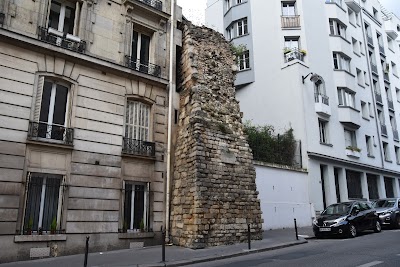
The Wall of Philippe II Augustus, a formidable stone barrier that once encircled Paris, stood as a testament to the city's resilience and ambition. Constructed in the 12th and 13th centuries, the wall stretched for over 3 kilometers, punctuated by 77 towers and 16 gates, effectively safeguarding the burgeoning metropolis. Its imposing presence not only deterred invaders but also facilitated the collection of taxes on goods entering the city. As Paris expanded beyond its confines, the wall gradually lost its defensive significance. By the 17th century, sections of the wall were demolished to make way for new developments. Today, only fragments of this once-mighty structure remain scattered throughout the city, offering glimpses into Paris's medieval past. One of the most notable remnants is the Tour Jean-sans-Peur, a 25-meter-tall tower that served as a prison during the Middle Ages. Another surviving section, the Porte Saint-Denis, stands as a triumphal arch commemorating French victories. These fragments, though weathered and worn, continue to captivate visitors with their historical significance and architectural grandeur. The Wall of Philippe II Augustus, though largely vanished, remains an integral part of Paris's identity. Its legacy is woven into the city's fabric, a reminder of its evolution from a fortified town to a global metropolis. As you stroll through the streets of Paris, keep an eye out for these remnants of the past, silent witnesses to the city's remarkable journey through time.Defensive Architecture
The Wall of Philippe II Augustus: A Legacy of Defense in Paris The Wall of Philippe II Augustus, constructed in the 12th and 13th centuries, stands as a testament to the evolving art of defensive architecture in medieval Paris. This mighty fortification, encircling the city, played a crucial role in safeguarding its inhabitants and shaping its urban development. Unlike its Roman predecessor, the Wall of Philippe II Augustus was designed to withstand the evolving siege tactics of the era. Its impressive thickness, ranging from 2.5 to 3 meters, offered formidable resistance to battering rams and other siege weapons. The wall's height, reaching 9 meters in some sections, provided archers and defenders a significant advantage in repelling attacks. The wall's design incorporated numerous defensive features, including 77 towers strategically positioned to provide flanking fire and observation points. These towers, some square and others round, housed archers and served as strongpoints against attackers. The wall also featured a moat, further hindering the enemy's approach and adding an extra layer of protection. The construction of the Wall of Philippe II Augustus marked a significant shift in defensive architecture. It represented a move away from the passive, enclosure-focused approach of earlier fortifications towards a more active, defense-oriented strategy. The wall's design reflected the growing importance of ranged combat and the need for greater protection against increasingly sophisticated siege techniques. Today, the Wall of Philippe II Augustus stands as a silent guardian, its imposing presence a reminder of Paris's turbulent past. While much of the original wall has been demolished or incorporated into later structures, its remaining sections offer a glimpse into the city's medieval defenses and the ingenuity of its builders. The wall serves as a testament to the enduring legacy of defensive architecture, a legacy that continues to shape the urban landscape of Paris.Medieval Fortifications
The Wall of Philippe II Augustus, a formidable edifice that once encircled the city of Paris, stands as a testament to the ingenuity and strategic prowess of medieval fortification design. Constructed in the late 12th and early 13th centuries, this massive wall, stretching over 4 kilometers in length, was a masterpiece of military architecture. Its imposing height, estimated to have reached 9 meters, and its substantial thickness, ranging from 2.5 to 3 meters, presented a formidable obstacle to any would-be attackers. The wall's design incorporated several innovative features that enhanced its defensive capabilities. Its curtain wall, punctuated by strategically placed towers, provided archers and crossbowmen with elevated firing positions, allowing them to rain down projectiles upon the enemy. The towers, some of which were square and others round, were further fortified with arrow slits and machicolations, enabling defenders to harass attackers at close range. The wall's perimeter was also reinforced by a moat, which served as an additional barrier and made it more difficult for attackers to approach the wall's base. The construction of the Wall of Philippe II Augustus marked a significant advancement in medieval fortification technology. Its innovative design and robust construction made it one of the most formidable defenses of its time, effectively safeguarding Paris from external threats for centuries. Today, the remains of the wall stand as a reminder of the city's rich history and its enduring legacy as a center of power and culture.
7
Rue Mouffetard
View on map
Audio Narrations
Introduction
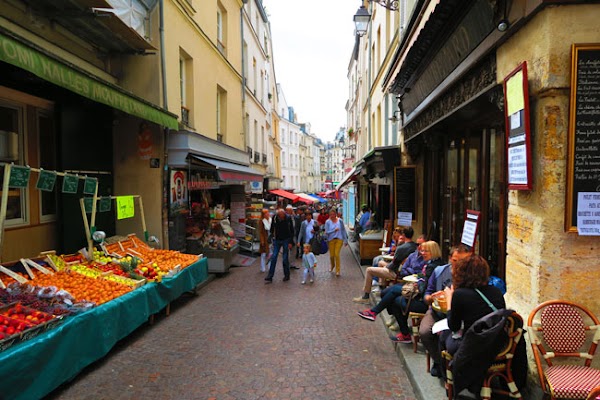
Rue Mouffetard, a vibrant artery of the 5th arrondissement in Paris, is one of the city's oldest and most captivating streets. Its name, possibly derived from the Roman "mont Cetardus," has evolved through the centuries, reflecting the street's rich history. Dating back to Neolithic times, Rue Mouffetard was once a Roman road connecting the city to Italy. During the Middle Ages, it became the heart of the "bourg Saint-Médard," a bustling village that was later incorporated into Paris. The street's medieval character is still evident in its narrow cobblestone lanes, historic buildings, and lively atmosphere. Rue Mouffetard is a haven for foodies, with a daily market offering fresh produce, artisanal cheeses, and delectable pastries. The street is also lined with charming cafes, restaurants, and shops, each with its own unique character. One of the street's most notable features is the Place de la Contrescarpe, a lively square where locals and tourists gather to enjoy the sunshine, street performers, and the vibrant atmosphere. The square is also home to the Église St. Médard, a 9th-century church with beautiful stained-glass windows. Rue Mouffetard is a place where history and modernity intertwine. It has escaped the modernization efforts of Baron Haussmann, preserving its old-world charm. The street has also been a source of inspiration for artists and writers, including Victor Hugo and Ernest Hemingway. Whether you're a history buff, a food lover, or simply looking for a unique Parisian experience, Rue Mouffetard is a must-visit destination. Its narrow lanes, historic buildings, and vibrant atmosphere offer a glimpse into the heart and soul of the city.Medieval Charm
Rue Mouffetard, a winding, cobblestoned street in the heart of Paris, whispers tales of a bygone era, where medieval charm lingers in every nook and cranny. This ancient artery, dating back to the 12th century, transports visitors to a time when merchants hawked their wares, artisans honed their craft, and the aroma of freshly baked bread filled the air. Step into a world where time seems to stand still. Admire the half-timbered houses, their weathered facades adorned with intricate carvings and wrought-iron balconies. Imagine the clatter of horse-drawn carts echoing through the narrow alleyways, and the lively chatter of market vendors touting their produce. Rue Mouffetard is a treasure trove of medieval secrets. Seek out the hidden courtyard of the Église Saint-Médard, where ancient tombs and gargoyles whisper stories of a forgotten past. Explore the narrow passageways, where centuries-old shops display their wares, from antique books to handcrafted jewelry. As you wander, let your senses be captivated by the sights, sounds, and smells of a medieval marketplace. The aroma of freshly baked bread from the Boulangerie Poilâne, the vibrant colors of the fruit and vegetable stalls, and the rhythmic clanging of the blacksmith's hammer all contribute to the immersive experience. Rue Mouffetard is not just a street; it's a living testament to Paris's rich medieval heritage. It's a place where history comes alive, where the past and present intertwine, and where the spirit of the Middle Ages continues to enchant and inspire.Historic Market Street
Rue Mouffetard, nestled in the heart of Paris's 5th arrondissement, is a historic market street that has served as a vibrant commercial hub for centuries. Its cobbled lanes, lined with quaint shops and bustling stalls, transport visitors back to a bygone era. The street's origins date back to the 12th century, when it was a muddy path leading to a nearby abbey. Over time, it evolved into a marketplace, attracting merchants and artisans from across the city. Today, Rue Mouffetard retains its medieval charm, with its narrow buildings and colorful awnings. One of the street's most distinctive features is its open-air market, held every Tuesday, Thursday, and Sunday mornings. Here, vendors display an array of fresh produce, from seasonal fruits and vegetables to artisanal cheeses and cured meats. The market is a feast for the senses, with the aroma of freshly baked bread mingling with the chatter of locals and tourists alike. Beyond the market, Rue Mouffetard is home to a diverse range of shops, including traditional bakeries, butcher shops, and wine merchants. Visitors can find everything from crusty baguettes and flaky croissants to succulent steaks and aged wines. The street is also known for its antique shops, where treasure hunters can unearth hidden gems from the past. As one strolls down Rue Mouffetard, it's easy to imagine the street's rich history. In the 16th century, it was a popular haunt for students from the nearby Sorbonne University. In the 19th century, it became a center for the city's bohemian scene, attracting artists, writers, and intellectuals. Today, Rue Mouffetard continues to be a melting pot of cultures, with a lively mix of residents, students, and tourists. A visit to Rue Mouffetard is a journey through time, offering a glimpse into the past while embracing the present. Its historic market, charming shops, and vibrant atmosphere make it a must-see destination for anyone seeking a taste of authentic Parisian life.
8
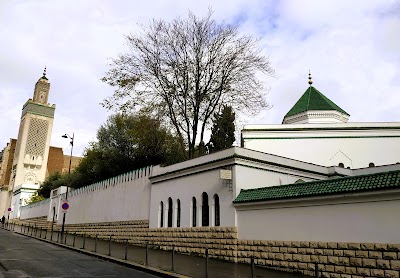
Grande Mosquée de Paris
View on map
Audio Narrations
Introduction
The Grande Mosquée de Paris, a majestic landmark in the heart of Paris, transcends its role as a place of worship to embody a vibrant cultural hub. Its intricate Moorish architecture, a symphony of horseshoe arches, colorful mosaics, and towering minarets, transports visitors to a realm of exotic beauty. Stepping inside, the serenity of the prayer hall, adorned with intricate calligraphy and bathed in soft light filtering through stained-glass windows, offers a profound sense of tranquility. Beyond its spiritual significance, the Grande Mosquée de Paris is a testament to the rich tapestry of Franco-Islamic relations. Its construction in the 1920s served as a poignant tribute to the Muslim soldiers who fought alongside France during World War I. Today, the mosque continues to foster intercultural dialogue through its diverse offerings, including a library, a hammam, and a restaurant serving traditional Moroccan cuisine. A hidden gem within the mosque's grounds is the magnificent Andalusian Garden, a tranquil oasis inspired by the Moorish gardens of Spain. The gentle murmur of water fountains, the sweet fragrance of orange blossoms, and the vibrant hues of blooming flowers create a sensory feast for visitors seeking a moment of respite. The Grande Mosquée de Paris stands as a beacon of cultural exchange, a testament to the enduring legacy of Franco-Islamic collaboration, and a captivating destination for those seeking a glimpse into the world of Islamic art and architecture.Architectural Masterpiece
The Grande Mosquée de Paris, a stunning architectural masterpiece, stands as a testament to the rich cultural tapestry of Paris. Built in the Moorish Revival style, it draws inspiration from the Alhambra palace in Granada, Spain, and the Great Mosque of Cordoba. Its horseshoe arches, intricate tilework, and towering minaret transport visitors to a realm of Islamic architectural splendor. One of the most striking features of the mosque is its courtyard, a serene oasis adorned with lush greenery and a central fountain. The rhythmic sound of water cascading into the basin creates a tranquil ambiance, inviting contemplation and reflection. The courtyard's arcades, adorned with intricate geometric patterns, provide a glimpse into the mosque's exquisite craftsmanship. Stepping inside the prayer hall, visitors are greeted by a breathtaking display of Islamic art and architecture. The soaring columns, adorned with intricate carvings, support a series of horseshoe arches that create a sense of awe and grandeur. The mihrab, a niche indicating the direction of Mecca, is adorned with colorful mosaics and intricate calligraphy, showcasing the mosque's artistic mastery. Beyond its aesthetic beauty, the Grande Mosquée de Paris holds historical significance. Built in the aftermath of World War I, it served as a symbol of gratitude to the Muslim soldiers who fought alongside France. The mosque's minaret, a beacon of hope and unity, stands as a testament to the enduring legacy of these brave individuals. Today, the Grande Mosquée de Paris remains a vibrant center of Islamic culture and education. It offers daily prayers, religious classes, and cultural events, fostering a sense of community and understanding. Its architectural brilliance, coupled with its historical significance, makes the Grande Mosquée de Paris an architectural masterpiece that continues to inspire and captivate visitors from around the world.Moorish Revival Architecture
The Grande Mosquée de Paris, a stunning example of Moorish Revival architecture, stands as a testament to the enduring influence of Islamic art and design in the Western world. Completed in 1926, the mosque's architectural features are a harmonious blend of traditional Islamic elements and contemporary French design sensibilities. The mosque's horseshoe arches, a hallmark of Moorish architecture, grace the doorways and windows, creating a sense of grandeur and elegance. Intricate geometric patterns, inspired by Islamic calligraphy and arabesque motifs, adorn the walls and ceilings, adding a touch of visual complexity and sophistication. The use of colorful tiles, a signature element of Moorish design, adds vibrancy and depth to the mosque's interior spaces. The mosque's minaret, a slender tower that rises above the cityscape, is a prominent landmark in Paris. Its intricate carvings and decorative elements are reminiscent of the minarets found in mosques across the Islamic world. The minaret serves as a call to prayer, reminding Muslims of their religious obligations and connecting them to the wider Islamic community. The Grande Mosquée de Paris is not only a place of worship but also a cultural center that promotes understanding and dialogue between different faiths and cultures. Its Moorish Revival architecture serves as a bridge between Islamic and Western traditions, showcasing the shared heritage and artistic influences that have shaped both cultures.
9
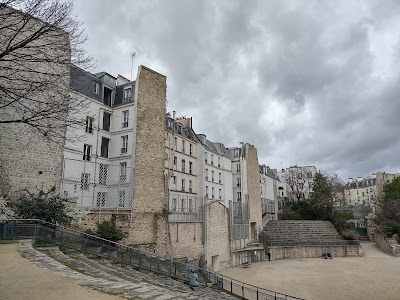
Arènes de Lutèce
View on map
Audio Narrations
Introduction
The Arènes de Lutèce, nestled in the heart of Paris's 5th arrondissement, stands as a testament to the city's ancient Roman past. This remarkably preserved amphitheater, dating back to the 1st or 2nd century AD, once hosted gladiatorial combats and public spectacles, transporting spectators to the heart of the Roman Empire. Unlike its grander counterparts in other cities, the Arènes de Lutèce offers a glimpse into a more intimate side of Roman entertainment. Its modest size, with a capacity of around 15,000 spectators, creates a sense of immediacy and connection to the events that unfolded within its walls. The exposed stonework and remnants of seating evoke a sense of time travel, transporting visitors to a bygone era. Beyond its historical significance, the Arènes de Lutèce also serves as a vibrant community space. Locals gather here for picnics, leisurely strolls, and open-air concerts, breathing new life into the ancient arena. The juxtaposition of ancient ruins and modern-day activities creates a unique atmosphere, where history and contemporary life intertwine seamlessly. For those seeking a deeper dive into the site's past, the adjacent Musée Carnavalet offers a rich collection of artifacts and exhibits related to the Arènes de Lutèce and the history of Paris. From gladiatorial helmets to intricate mosaics, these relics provide tangible evidence of the amphitheater's vibrant past. A visit to the Arènes de Lutèce is not merely a journey through time; it is an immersive experience that connects visitors to the ancient world, offering a glimpse into the daily lives and entertainment of Roman Parisians. Whether exploring the ruins, picnicking on the grounds, or delving into the museum's treasures, the Arènes de Lutèce provides a unique window into the city's rich and multifaceted history.Roman Amphitheater
Arènes de Lutèce: A Hidden Gem of Roman Amphitheater History Nestled in the heart of Paris' 5th arrondissement, the Arènes de Lutèce stands as a testament to the city's rich Roman past. This remarkably well-preserved amphitheater, dating back to the 1st or 2nd century AD, offers a unique glimpse into the daily lives and entertainment of the ancient Lutetia Parisians. Unlike its grander counterparts in Rome or Nîmes, the Arènes de Lutèce was a modest structure, originally accommodating around 15,000 spectators. Its elliptical arena, measuring 130 meters by 100 meters, hosted gladiatorial combats, public spectacles, and even theatrical performances. The tiered seating, built into the natural slope of the hill, provided excellent views for the crowds. What sets the Arènes de Lutèce apart is its intimate setting. Unlike the imposing grandeur of other Roman amphitheaters, this one exudes a sense of tranquility and charm. The surrounding park, the Jardin de l'Arènes de Lutèce, adds to the ambiance, offering a peaceful escape from the bustling city life. Despite its smaller scale, the Arènes de Lutèce boasts several unique features. The remains of the original wooden stage and the intricate drainage system beneath the arena floor offer insights into the amphitheater's engineering and functionality. Additionally, the nearby Musée Carnavalet houses a collection of artifacts unearthed from the site, providing further context to the lives of the people who once frequented this historic venue. Today, the Arènes de Lutèce stands as a silent witness to a bygone era. Its weathered stones whisper tales of gladiatorial battles, roaring crowds, and the vibrant life of Roman Lutetia. This hidden gem, often overlooked by tourists, offers a captivating glimpse into the past, inviting visitors to step back in time and imagine the spectacle that once unfolded within its walls.Gallo-Roman History
The Arènes de Lutèce, nestled in the heart of Paris' 5th arrondissement, stands as a testament to the city's rich Gallo-Roman past. This ancient amphitheater, dating back to the 1st century AD, offers a glimpse into the daily lives and entertainment of the city's inhabitants during the Roman era. Unlike its grander counterparts in other parts of the empire, the Arènes de Lutèce was a more modest structure, capable of holding around 15,000 spectators. Its primary function was to host gladiatorial combats, a popular form of entertainment in Roman society. The arena's elliptical shape and tiered seating provided an intimate setting for these spectacles, where crowds would gather to witness the skill and courage of gladiators. Beyond gladiatorial contests, the Arènes de Lutèce also served as a venue for public executions, athletic competitions, and theatrical performances. It was a central gathering place for the city's residents, reflecting the Romanization of Gallic culture and the integration of Roman customs into daily life. Today, the Arènes de Lutèce stands as a poignant reminder of Paris' Gallo-Roman heritage. Its partially preserved structure, including sections of the seating and the arena floor, allows visitors to imagine the vibrant atmosphere of this ancient entertainment complex. The site also houses a museum that showcases artifacts unearthed during excavations, providing further insights into the lives of the people who once frequented this arena. For those interested in Gallo-Roman history, the Arènes de Lutèce offers a unique opportunity to connect with the past. It is a tangible link to a bygone era, where gladiators clashed, crowds roared, and Roman culture flourished in the heart of what would become one of the world's most iconic cities.
10
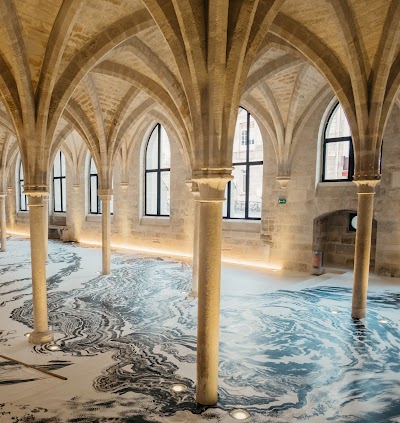
Collège des Bernardins
View on map
Audio Narrations
Introduction
The Collège des Bernardins, a 13th-century masterpiece nestled in the heart of Paris's historic Latin Quarter, stands as a testament to the city's rich architectural heritage. This former abbey, once home to a community of Cistercian monks, has undergone a remarkable transformation, emerging as a vibrant cultural hub and a beacon of intellectual discourse. Stepping into the Collège des Bernardins is akin to stepping back in time. The soaring Gothic arches, intricate stained-glass windows, and the serene cloister evoke a sense of awe and tranquility. The building's history is palpable, whispering tales of scholarly pursuits, religious devotion, and architectural ingenuity. Beyond its historical significance, the Collège des Bernardins has carved a niche as a contemporary center for dialogue and debate. Its diverse programming encompasses conferences, exhibitions, concerts, and workshops, attracting renowned thinkers, artists, and scholars from across the globe. The institution's commitment to fostering interdisciplinary exchange and promoting critical thinking has earned it a reputation as a leading platform for intellectual exploration. One of the Collège des Bernardins' unique features is its "murmures," a series of intimate conversations between prominent figures from various fields. These candid dialogues offer a rare glimpse into the minds of leading thinkers, sparking thought-provoking discussions on a wide range of topics. The Collège des Bernardins is not merely a historical relic; it is a living testament to the enduring power of knowledge and the transformative potential of dialogue. As it continues to evolve, the institution promises to remain a vibrant hub for intellectual engagement and cultural enrichment in the heart of Paris.Medieval Architecture
The Collège des Bernardins in Paris, Île-de-France, France, stands as a testament to the evolution of Gothic architecture in the 13th and 14th centuries. Its construction began in 1248, commissioned by Étienne de Lexington, the abbot of Clairvaux. The college was intended to serve as a center of theological learning for the Cistercian order. The most striking feature of the Collège des Bernardins is its vast, open-plan interior. The nave is supported by slender columns that rise to a height of 22 meters, creating a sense of spaciousness and luminosity. The absence of a transept and the minimal use of ornamentation reflect the Cistercian emphasis on simplicity and austerity. The building's exterior is equally impressive, showcasing the transition from Early to High Gothic styles. The pointed arches, ribbed vaults, and flying buttresses are characteristic of the High Gothic period, while the lancet windows and rose window are reminiscent of the Early Gothic style. The interplay of these elements creates a harmonious and visually captivating facade. One of the unique aspects of the Collège des Bernardins is its cloister, which is considered one of the most beautiful in Paris. The cloister's serene atmosphere is enhanced by its delicate tracery and the lush greenery that surrounds it. The cloister served as a place for contemplation and meditation for the monks who resided at the college. The Collège des Bernardins underwent several renovations and additions over the centuries. In the 17th century, the building was remodeled in the Baroque style, and in the 19th century, it was used as a military hospital. Today, the Collège des Bernardins has been restored to its former glory and serves as a cultural center and a venue for conferences, exhibitions, and concerts. For those interested in Medieval architecture, the Collège des Bernardins offers a wealth of insights into the development of Gothic style. Its unique blend of architectural elements, its historical significance, and its serene atmosphere make it a must-visit destination for anyone seeking to delve deeper into the world of medieval architecture.Humanities Institute
Nestled in the heart of Paris, the Collège des Bernardins stands as a vibrant hub for the Humanities Institute, offering a unique platform for interdisciplinary dialogue and exploration. This historic institution, steeped in centuries of intellectual discourse, provides a fertile ground for scholars and enthusiasts alike to delve into the complexities of the human experience. At the Collège des Bernardins, the Humanities Institute fosters a dynamic environment where diverse perspectives converge. Through its thought-provoking seminars, workshops, and conferences, the Institute encourages critical engagement with a wide range of topics, from philosophy and history to literature and the arts. Renowned scholars and emerging voices come together to share their insights, sparking lively debates and fostering a deeper understanding of the human condition. Beyond its academic pursuits, the Humanities Institute at the Collège des Bernardins recognizes the importance of fostering a sense of community. Its welcoming atmosphere invites individuals from all walks of life to participate in its programs, fostering a spirit of intellectual curiosity and exchange. Whether you are a seasoned scholar or simply someone with a passion for learning, the Institute provides a space for you to connect with others who share your interests and engage in meaningful conversations. As a center for the Humanities, the Collège des Bernardins plays a vital role in bridging the gap between academia and the wider public. Its commitment to public outreach programs ensures that the insights generated within its walls reach a broader audience, enriching the cultural landscape of Paris and beyond. Through lectures, exhibitions, and online resources, the Institute makes its wealth of knowledge accessible to all, fostering a deeper appreciation for the humanities and their enduring relevance in today's world. In conclusion, the Collège des Bernardins, through its Humanities Institute, offers a unique and enriching experience for those seeking to explore the depths of the human experience. Its interdisciplinary approach, vibrant community, and commitment to public engagement make it a cornerstone of intellectual life in Paris, providing a platform for meaningful dialogue, critical thinking, and the pursuit of knowledge.
Experience the Full Tour
Download the DocentPro app to access all tour stops, complete audio narrations in multiple languages, offline maps, and interactive features.