
Pisa's Architectural Wonders: A Journey Through History

Walking Tour

1.4 km (0.9 miles)

19 min travel time

7 Stops

Pisa, Italy
Pisa's Architectural Wonders: A Journey Through History
Tour Stops
1
Piazza del Duomo
View on map
Audio Narrations
English
Introduction
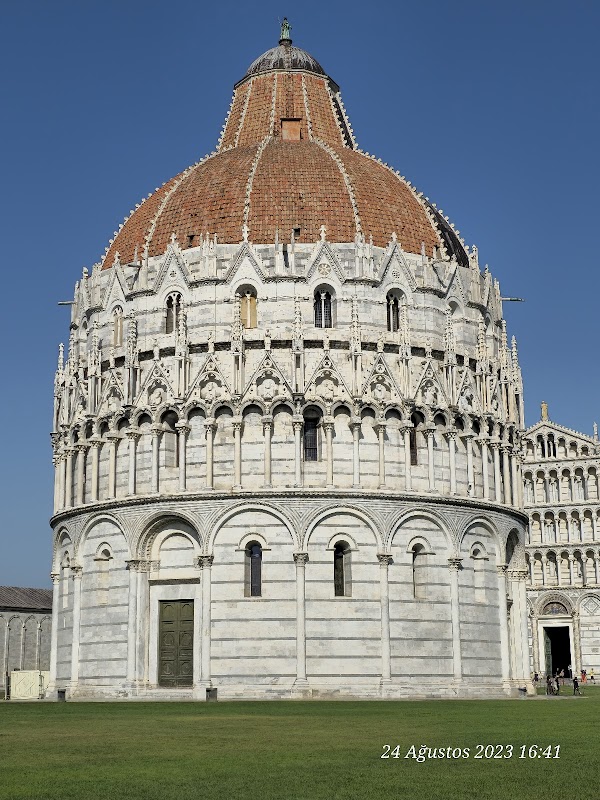
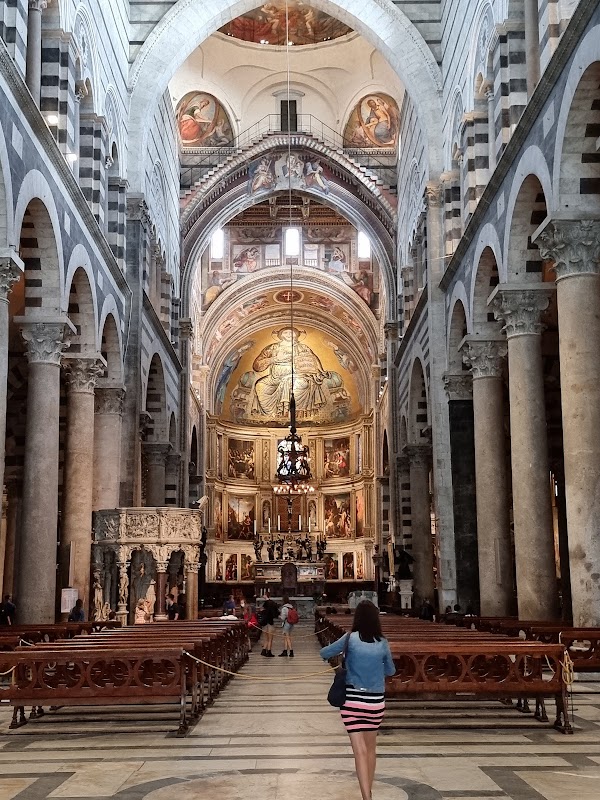
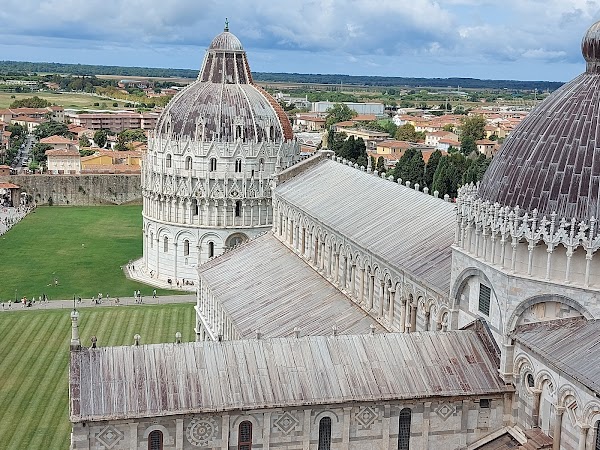
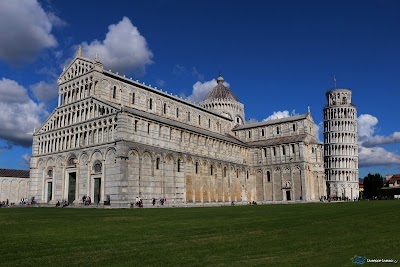
The Piazza del Duomo in Pisa, Tuscany, Italy, is a walled, 8.87-hectare compound that houses four great religious edifices: Pisa Cathedral, the Pisa Baptistery, the Leaning Tower of Pisa, and the Camposanto Monumentale. The square's popular name, "Field of Miracles," was coined by Italian writer Gabriele D'Annunzio, who described it as a "meadow of miracles" in his 1910 novel. Pisa Cathedral, the medieval cathedral of the Archdiocese of Pisa, is dedicated to Santa Maria Assunta. Its construction began in 1064 and set the model for the distinctive Pisan Romanesque style of architecture. The cathedral has two aisles on either side of the nave and a transept consisting of three aisles. The Pisa Baptistery, the largest in Italy, was begun in 1152 and completed in the 14th century. It combines typical Romanesque and Gothic elements and houses the pulpit by Nicola Pisano. The Leaning Tower of Pisa, the cathedral's campanile or bell tower, is the most famous landmark in the square. Its construction began in 1173, and its inclination is due to the shifting ground in the subsoil. The Camposanto Monumentale, a monumental cemetery, was built around a shipload of sacred soil from Calvary. Its walls are adorned with frescoes, including the famous "Triumph of Death" by Buonamico Buffalmacco.Religious Center
Piazza del Duomo in Pisa, Tuscany, Italy, is a captivating religious center that embodies the essence of medieval Christian architecture. Its iconic monuments, including the Cathedral, Baptistery, Bell Tower, and Camposanto, stand as testaments to the city's rich religious heritage. The Cathedral, dedicated to Santa Maria Assunta, boasts intricate mosaics and bronze doors, showcasing the fusion of Byzantine and Pisan Romanesque styles. The Baptistery, the largest in Italy, features an octagonal font and a renowned pulpit sculpted by Nicola Pisano, a precursor to the Italian Renaissance. The Bell Tower, known as the Leaning Tower of Pisa, is a marvel of engineering, its distinctive tilt adding to its allure. The Camposanto, a monumental cemetery, houses a remarkable collection of frescoes depicting biblical scenes and the Triumph of Death, offering a poignant reminder of mortality. Together, these structures form an unparalleled ensemble that has influenced religious architecture throughout history, making Piazza del Duomo a must-visit destination for those seeking a profound connection to the spiritual heart of Pisa.Pisan Romanesque Architecture
Piazza del Duomo in Pisa, Tuscany, Italy, is a stunning architectural ensemble that epitomizes the unique characteristics of Pisan Romanesque architecture. This style emerged in the 11th century and flourished during the golden age of the Pisan Maritime Republic. The piazza's most iconic structures, including the cathedral, baptistery, bell tower (Leaning Tower), and Camposanto Monumentale, showcase the defining elements of Pisan Romanesque. The cathedral, begun in 1064, features a Latin cross plan with five naves. Its exterior is adorned with alternating bands of white and dark marble, a hallmark of Pisan Romanesque. The interior boasts monolithic granite columns, intricate mosaics, and an elliptical dome, reflecting influences from both ancient Roman and Eastern architecture. The baptistery, constructed in the 12th century, is an octagonal structure with a conical dome. Its exterior is decorated with blind arcades and intricate carvings, while the interior features a baptismal font supported by sculpted figures. The bell tower, known as the Leaning Tower, is a freestanding campanile that began to tilt during its construction due to the soft soil beneath. Despite its inclination, the tower remains a testament to the ingenuity of Pisan architects. The Camposanto Monumentale, a rectangular cloister, houses a collection of Roman sarcophagi and medieval frescoes. Its walls are adorned with vibrant depictions of biblical scenes and allegorical figures, showcasing the artistic prowess of Pisan Romanesque masters. Overall, Piazza del Duomo in Pisa is a living testament to the innovative and influential Pisan Romanesque architectural style. Its harmonious blend of classical, Byzantine, and Islamic elements has left an enduring legacy on Italian art and architecture.
2
Cattedrale di Pisa
View on map
3
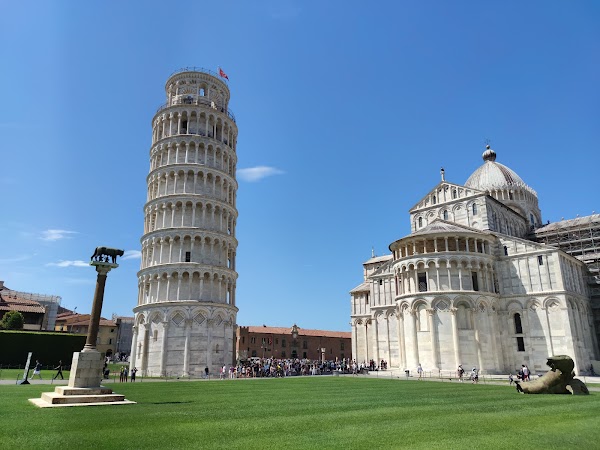
Leaning Tower of Pisa
View on map
Audio Narrations
English
Introduction
The Leaning Tower of Pisa, a captivating architectural marvel in Pisa, Tuscany, Italy, is renowned for its distinctive tilt. Its construction began in 1173 as the bell tower of the city's cathedral, but due to unstable ground conditions, it began to lean during its early stages. Despite this, construction continued, with the upper floors built with a slight curve to compensate for the tilt. The tower stands at 56 meters tall and has eight floors, accessible via 294 steps. Its unique appearance has made it a beloved tourist destination, attracting visitors from around the world.Cultural Icon
The Leaning Tower of Pisa, an iconic symbol of Italy, stands as a testament to architectural ingenuity and a captivating cultural phenomenon. Its distinctive tilt, caused by unstable ground during construction, has made it an enduring symbol of resilience and a beloved subject of art, literature, and popular culture. As a cultural icon, the tower has inspired countless works of art, from paintings and sculptures to films and music, capturing the imagination of generations. Its unique appearance has also made it a popular tourist destination, attracting millions of visitors each year who marvel at its architectural marvel and the intriguing story behind its construction. The Leaning Tower of Pisa remains an enduring symbol of Italian heritage and a cherished cultural icon, embodying the country's rich history, artistic achievements, and enduring spirit.Construction Blunder
The Leaning Tower of Pisa, an iconic architectural marvel, owes its distinctive tilt to a colossal construction blunder. Its foundation, laid in 1173 on soft, unstable soil, proved inadequate to support the tower's ambitious height. As construction progressed, the tower began to sink, resulting in the gradual development of its famous lean. Despite attempts to compensate for the tilt by adding taller columns and arches on the sinking side, the tower continued to lean. The construction was halted for nearly a century, allowing the soil to settle and preventing the tower's collapse. However, upon resumption, the lean worsened due to the added weight of the upper floors. The tower's lean became a source of concern in the late 20th century, prompting extensive restoration efforts. In 1990, a comprehensive project was undertaken to stabilize the tower. Earth was carefully removed from beneath the foundations, reducing the lean by 17 inches. The tower continued to straighten until 2008, when sensors indicated that the movement had ceased. Today, the Leaning Tower of Pisa stands as a testament to the unintended consequences of architectural miscalculations. Its lean, once a symbol of instability, has become an enduring symbol of resilience and a reminder of the challenges faced by builders throughout history.
4
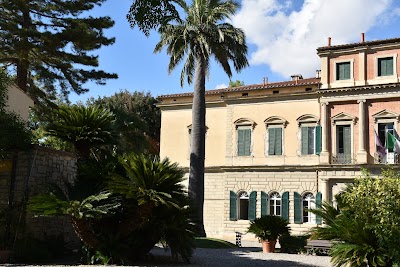
Botanical Garden and Museum
View on map
5
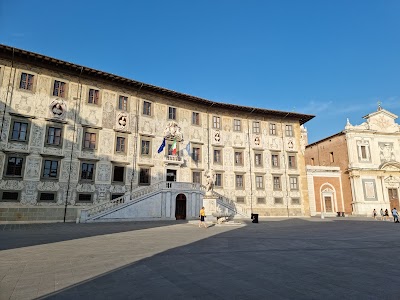
Piazza dei Cavalieri
View on map
6
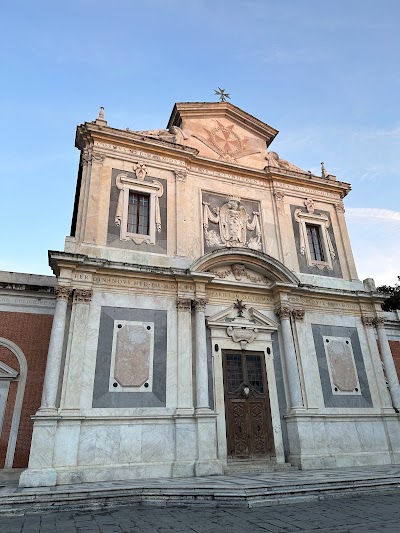
Chiesa di Santo Stefano dei Cavalieri
View on map
7
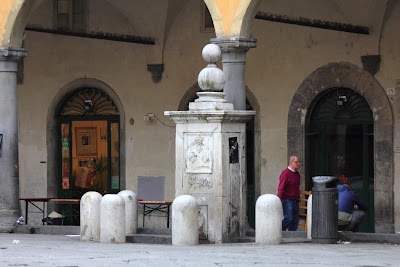
Piazza delle Vettovaglie
View on map
Audio Narrations
English
Introduction
The Piazza delle Vettovaglie, nestled in the heart of Pisa's historic center, is a vibrant square steeped in history and local charm. Its name, translating to "Provisions Square," hints at its past as a bustling marketplace where farmers and merchants gathered to sell their wares. Today, the piazza retains its lively atmosphere, serving as a popular gathering spot for locals and tourists alike. The square's centerpiece is the imposing Palazzo delle Vettovaglie, a 16th-century edifice that once housed the city's food market. Its elegant Renaissance architecture, featuring a series of arched loggias and a clock tower, adds a touch of grandeur to the piazza. Beneath the loggias, a vibrant market continues to thrive, offering fresh produce, local crafts, and souvenirs. Beyond the market, the Piazza delle Vettovaglie is adorned with charming cafes and restaurants, inviting visitors to linger and soak up the atmosphere. The aroma of freshly brewed coffee and the sound of lively chatter fill the air, creating a warm and welcoming ambiance. As the sun sets, the square transforms into a romantic haven, illuminated by the soft glow of streetlights and the twinkling lights of nearby restaurants. A hidden gem within the piazza is the small but captivating Museo delle Navi Antiche, showcasing a collection of ancient Roman ships unearthed during excavations in the area. This unique museum offers a glimpse into Pisa's maritime past and the city's role as a thriving port in the ancient world. Whether strolling through the bustling market, savoring a leisurely meal at a local cafe, or exploring the treasures of the Museo delle Navi Antiche, the Piazza delle Vettovaglie offers a captivating glimpse into the heart and soul of Pisa. Its rich history, vibrant atmosphere, and charming local character make it a must-visit destination for anyone seeking an authentic Italian experience.Medieval Market Square
In the heart of Pisa, nestled between the iconic Leaning Tower and the Arno River, lies the Piazza delle Vettovaglie, a historical square that once pulsed with the vibrant energy of a medieval market. This rectangular piazza, paved with smooth grey stone, was the stage for a bustling commercial hub where merchants and artisans from across the region converged. The square's name, "Piazza delle Vettovaglie," translates to "Provisions Square," a testament to its primary function as a marketplace for essential goods. Farmers, bakers, fishmongers, and other vendors set up their stalls, offering an array of fresh produce, baked goods, fish, meat, and other daily necessities. The air was thick with the aroma of freshly baked bread, the calls of vendors, and the lively chatter of locals bartering for the best deals. Beyond its commercial significance, the Piazza delle Vettovaglie served as a social gathering place. Townspeople met to exchange news, gossip, and engage in lively discussions. Public announcements were made from the square, and it was often the site of festivals, celebrations, and even public executions. One of the most striking features of the Piazza delle Vettovaglie is its architectural ensemble. The square is surrounded by a collection of medieval buildings, each with its own unique charm and history. The Palazzo delle Vettovaglie, the former customs house, stands as a testament to the square's commercial past. Its elegant facade, adorned with coats of arms and heraldic symbols, reflects the wealth and prosperity of Pisa during the medieval era. Another notable building is the Logge dei Banchi, a series of arcades that once housed shops and workshops. The graceful arches and columns of the loggia provided shelter from the sun and rain, creating a pleasant atmosphere for shoppers and merchants alike. Today, the Piazza delle Vettovaglie retains its medieval charm, transporting visitors back to a time when commerce, community, and culture intertwined in the heart of Pisa. While the market stalls and bustling crowds are gone, the square's historical significance and architectural beauty continue to captivate those who wander through its cobblestone streets.Architectural Gem
Nestled in the heart of Pisa, Piazza delle Vettovaglie stands as a testament to the city's rich architectural heritage. This historic square, once a bustling marketplace, is now a hidden gem, offering a glimpse into Pisa's medieval past. The piazza's centerpiece is the Palazzo delle Vettovaglie, a magnificent structure dating back to the 13th century. Its imposing facade, adorned with intricate carvings and elegant arches, speaks to the skill of its builders. The palace's interior, with its soaring ceilings and grand halls, once served as the city's grain market, a vital hub for commerce and trade. Surrounding the palazzo are a collection of charming buildings, each with its own unique character. The Logge dei Banchi, with its graceful arches and open-air design, provided a space for merchants to display their wares. The Torre dei Gualandi, a slender tower that once served as a watchtower, offers panoramic views of the city. The piazza's cobblestone streets and intimate atmosphere create a sense of timelessness. As you wander through its narrow alleyways, you can almost hear the echoes of merchants haggling over prices and the clatter of carts carrying goods. Piazza delle Vettovaglie is more than just a historical landmark; it is a living testament to Pisa's enduring spirit. Its architectural beauty and rich history continue to captivate visitors from around the world.
Experience the Full Tour
Download the DocentPro app to access all tour stops, complete audio narrations in multiple languages, offline maps, and interactive features.