
Salonica's Tapestry of Time: A Journey Through History and Culture

Walking Tour

5.7 km (3.5 miles)

1h 29min travel time

9 Stops

Salonica, Greece
Salonica's Tapestry of Time: A Journey Through History and Culture
Tour Stops
1
White Tower of Thessaloniki
View on map
Audio Narrations
English
Introduction
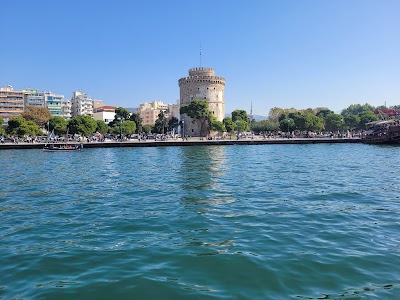
The White Tower of Thessaloniki, an iconic cylindrical stone monument and museum, stands proudly on the waterfront boulevard of Nikis Street in Thessaloniki, Greece. Constructed in the 15th century by the Ottomans, it replaced an older Byzantine fortification and served as a fortress, garrison, and prison. Its sinister reputation as the "Tower of Blood" or "Red Tower" stems from the countless executions that took place within its walls, particularly the massacre of rebellious Janissaries in 1826. In 1890, the tower received its current name after a convict whitewashed its exterior in exchange for his freedom. It has since become a symbol of Thessaloniki, its buff-colored exterior contrasting with the vibrant city life below. Today, the White Tower houses a museum dedicated to the city's rich history, offering visitors a glimpse into Thessaloniki's past through exhibitions, artifacts, and historical documents.Symbol of Thessaloniki
The White Tower of Thessaloniki, an iconic landmark and symbol of the city, stands as a testament to Thessaloniki's rich history and resilience. Constructed by the Ottomans in the 15th century, it served as a fortress, prison, and execution site during the Ottoman period, earning it the grim nickname "Tower of Blood." However, after Greece gained independence, the tower was whitewashed and renamed, becoming a symbol of freedom and renewal. Today, it houses a museum that chronicles Thessaloniki's past, from its Byzantine origins to its modern transformation. Visitors can ascend to the tower's top floor for panoramic views of the city and the Thermaic Gulf, making it a must-visit destination for anyone seeking to delve into the heart and soul of Thessaloniki.Whitewashing
The White Tower of Thessaloniki, a cylindrical stone monument, gained its distinctive name from the whitewashing it received in the 19th century. This act of whitewashing, carried out by a convict in exchange for his freedom, transformed the tower's appearance and marked a symbolic gesture of purification after Thessaloniki's liberation from Ottoman rule in 1912. The tower, once known as the "Tower of Blood" due to its grim history as a prison and execution site, underwent a remarkable transformation, shedding its sinister past and embracing a brighter future. Today, the White Tower stands as a beacon of hope and resilience, its whitewashed exterior a testament to the city's ability to overcome adversity and emerge anew.
2
Archaeological Museum of Thessaloniki
View on map
3
Arch of Galerius
View on map
Audio Narrations
English
Introduction
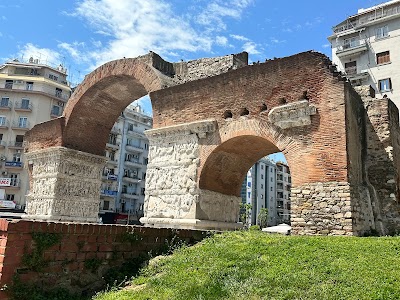
The Arch of Galerius, also known as Kamara, is a triumphal monument in Thessaloniki, Greece, built in 298-299 AD to commemorate Emperor Galerius' victory over the Persians. The arch was part of a larger architectural complex that included the Rotunda and the Palace of Galerius. The arch originally had eight pillars, but only three remain today, each adorned with marble slabs depicting scenes from Galerius' campaigns against the Persians. The central archway was 9.7 meters wide and 12.5 meters high, while the secondary openings were 4.8 meters wide and 6.5 meters high. The arch celebrated Galerius' military might and the power of the Tetrarchy, a system of four co-emperors that ruled the Roman Empire at the time. The arch's reliefs provide valuable insights into the art and propaganda of the late Roman Empire.The Arch and the City: Galerius' Monument in Urban Context
The Arch of Galerius, a triumphal monument in Thessaloniki, Greece, stands as a testament to the city's Roman past and its enduring legacy. Built in the early 4th century AD by Emperor Galerius to commemorate his victory over the Persians, the arch was strategically positioned at the intersection of two major thoroughfares, Via Egnatia and Via Regia, serving as a grand entrance to the imperial palace complex. Its prominent location symbolized Galerius' power and the city's importance as a major administrative and military center. The arch's architectural design reflects the grandeur of Roman imperial architecture. Its massive marble pillars, adorned with intricate reliefs depicting scenes of Galerius' triumph, convey a sense of awe and majesty. The arch's proximity to the Rotunda, another significant Roman structure, further emphasizes the interconnectedness of the imperial complex and its role in shaping the urban landscape. Over the centuries, the Arch of Galerius has witnessed the rise and fall of empires, the ebb and flow of civilizations, and the transformation of Thessaloniki from a Roman stronghold to a vibrant modern metropolis. Today, it stands as a poignant reminder of the city's rich history and its enduring connection to its Roman roots.Splendor and Majesty: The Architectural Legacy of Galerius' Arch
The Arch of Galerius, a magnificent triumphal arch in Thessaloniki, Greece, stands as a testament to the grandeur and architectural prowess of the Roman Empire. Built in 303 AD to commemorate Emperor Galerius' victory over the Persians, this awe-inspiring structure is a masterpiece of Roman engineering and artistic expression. Its towering columns, intricate reliefs, and imposing presence evoke a sense of imperial power and triumph. The arch's reliefs depict scenes of Galerius' military campaigns, showcasing the emperor's valor and the might of the Roman legions. The arch's architectural details, such as its Corinthian capitals and elaborate moldings, further enhance its splendor and majesty. As one of the most significant surviving monuments from the Roman period in Greece, the Arch of Galerius remains an enduring symbol of the empire's architectural legacy and the enduring power of its imperial ambitions.
4
Rotunda
View on map
5
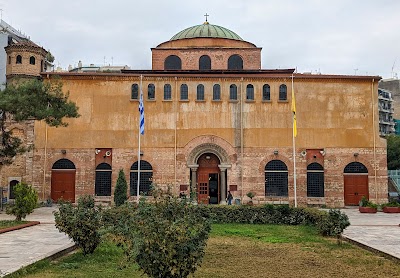
Holy Church of Hagia Sophia
View on map
6
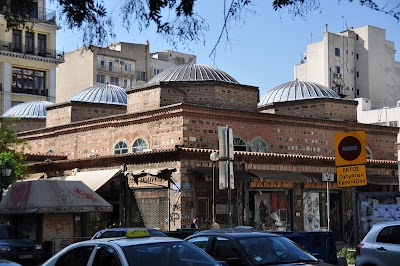
Bezesteni Ottoman Market
View on map
7
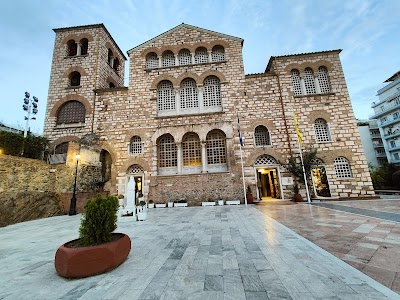
Holy Church of Saint Demetrius, Patron Saint of Thessalonica
View on map
8
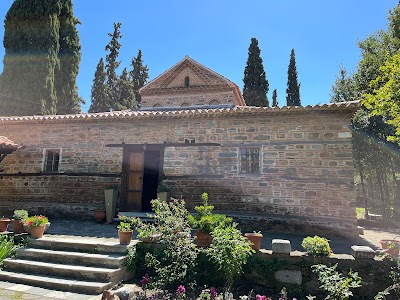
Holy Church of Saint Nicholas Orphanos
View on map
9
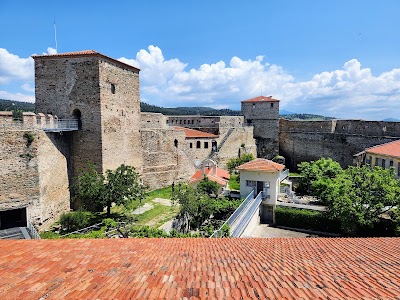
Heptapyrgion of Thessaloniki
View on map
Experience the Full Tour
Download the DocentPro app to access all tour stops, complete audio narrations in multiple languages, offline maps, and interactive features.