
Santiago's City Symphony: A Stroll Through the Heart of Chile

Walking Tour

8.3 km (5.2 miles)

2h 16min travel time

15 Stops

Santiago, Chile
Santiago's City Symphony: A Stroll Through the Heart of Chile
Tour Stops
1
Plaza de Armas
View on map
Audio Narrations
English
Introduction
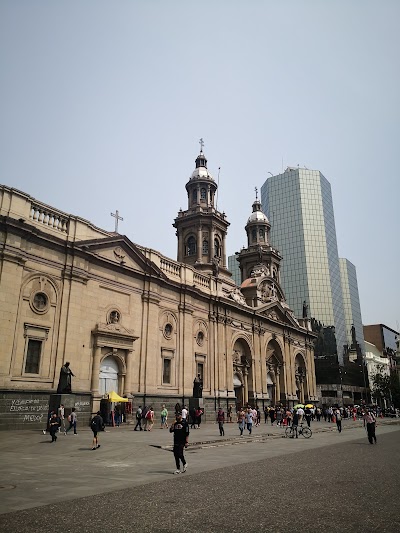
Plaza de Armas, the heart of Santiago, Chile, is a central square brimming with historical significance and architectural grandeur. Its coordinates, -33.437492, -70.651062, pinpoint its location in the heart of the city. Surrounding the square are iconic buildings that narrate Santiago's rich past. The Metropolitan Cathedral of Santiago, with its imposing neoclassical façade, stands as a testament to the city's religious heritage. The Palacio de la Real Audiencia de Santiago, once the seat of colonial power, now houses the Museo Histórico Nacional, showcasing Chile's captivating history. The Central Post Office Building, a masterpiece of neoclassical architecture, adds to the square's architectural allure. Monuments grace the square, paying homage to Chile's past and present. The Monumento a la Libertad Americana, an allegory of freedom, stands tall at the square's center. The Monemento al Pueblo Indígena honors the indigenous heritage of the land. Plaza de Armas is not just a historical site; it's a vibrant hub of activity. Street vendors offer local delicacies, while musicians fill the air with melodies. The square transforms into a lively gathering place, where locals and tourists alike soak in the city's vibrant atmosphere.Freedom of Latin America Monument
At the heart of Plaza de Armas, Santiago's central square, stands the Freedom of Latin America Monument, a poignant tribute to the region's liberation from colonial rule. Unveiled in 1836, this Carrara marble masterpiece by Francesco Orselino depicts an allegorical figure of Freedom breaking the chains of an indigenous woman. The monument replaced an earlier bronze fountain, symbolizing the city's transition from Spanish dominion to independence. The monument's central figure, a majestic female form, embodies the spirit of liberty that swept across Latin America in the early 19th century. Her outstretched wings and broken chains represent the triumph over oppression, while the indigenous woman at her feet signifies the indigenous roots of the continent's liberation movements. The monument's placement in the heart of the city underscores its profound significance as a symbol of both national and regional pride. Over the years, the Freedom of Latin America Monument has witnessed countless celebrations, protests, and gatherings. It serves as a constant reminder of the struggles and sacrifices made by those who fought for Latin America's freedom. Today, it remains a beloved landmark, visited by locals and tourists alike, who come to pay homage to the spirit of liberation that continues to inspire the region.Inca Settlement History
Plaza de Armas, the heart of Santiago, holds a profound connection to the Inca civilization that once thrived in this region. Archaeological evidence suggests that beneath the bustling square lies an ancient Inca settlement, a testament to the city's rich pre-Columbian heritage. In the 15th century, the Inca Empire expanded its reach into the Maipo Valley, establishing a strategic urban center where Plaza de Armas now stands. This settlement served as a hub for trade, agriculture, and mining, with roads radiating outward to connect it to the vast Inca Trail network. The Inca settlement was meticulously planned, featuring a grid-like layout and advanced water management systems. Its inhabitants practiced hydro-agriculture, utilizing irrigation channels to cultivate crops in the fertile valley. They also engaged in gold and silver mining, exploiting the region's mineral wealth. When the Spanish conquistadors arrived in the 16th century, they recognized the strategic importance of the Inca settlement and established their own city on its foundations. However, the legacy of the Inca civilization remained deeply embedded in the urban fabric of Santiago. Today, Plaza de Armas serves as a poignant reminder of the Inca presence in Chile. Its central location and historical significance make it a must-visit destination for anyone interested in exploring the rich tapestry of Santiago's past.
2
National History Museum of Chile
View on map
Audio Narrations
English
Introduction
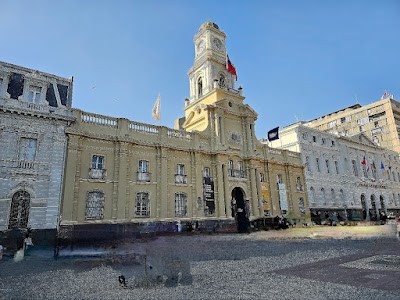
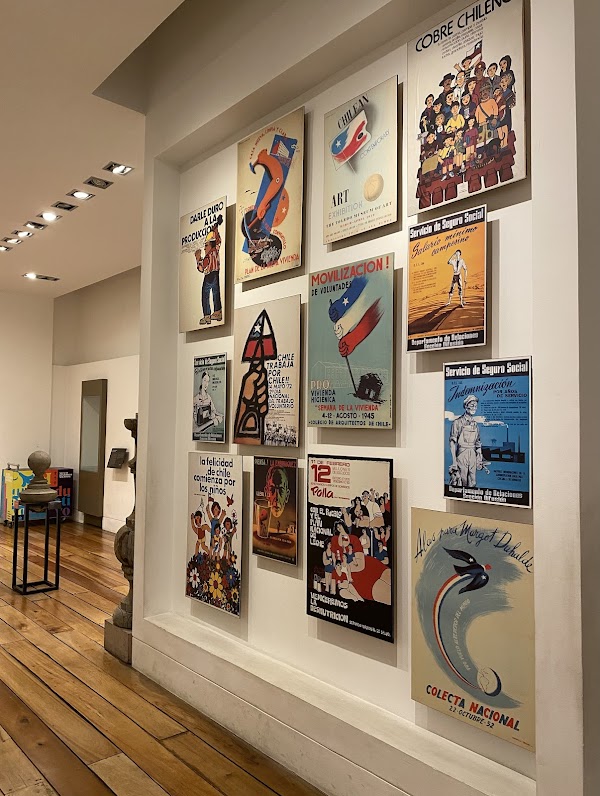
The National History Museum of Chile, nestled in Santiago's Región Metropolitana, occupies the Palacio de la Real Audiencia, a building itself steeped in history, having served as the seat of Spanish colonial administration. Unlike many national museums, its collection strategy emphasizes the social and cultural dimensions of Chilean history, often showcasing everyday objects alongside grand historical artifacts. One intriguing aspect is its focus on the often-overlooked contributions of indigenous populations and marginalized communities to the nation's narrative. The museum possesses a significant collection of Chilean folk art, providing a vibrant counterpoint to more formal historical accounts. A lesser-known treasure is its archive of historical photographs, offering a compelling visual record of Chilean society across different eras. The museum's exhibits frequently challenge conventional interpretations of Chilean history, fostering critical engagement with the past. It is a place where the grand sweep of national events intersects with the intimate details of daily life, offering a nuanced perspective on the Chilean experience.Chilean Historical Narrative
The National History Museum, situated in the Palacio de la Real Audiencia on Santiago's Plaza de Armas, vividly encapsulates Chile's historical narrative. Originally constructed between 1804 and 1807, the building itself played a significant role in the Spanish colonial era, later transitioning to house a collection of 12,000 objects that narrate Chile's evolving story. The museum's location is historically significant, as the Plaza de Armas has been the central stage for pivotal events in Chilean history. The museum's exhibits provide insights into the nation's cultural evolution, from its colonial roots to its republican advancements. The museum's collection reflects the tangible aspects of Chilean heritage, offering visitors a chronological journey through the nation's defining moments. The building's transformation from the seat of the Real Audiencia to a repository of historical artifacts mirrors Chile's own transformation. Its presence on the Plaza de Armas underscores its role as a guardian of collective memory. The museum stands as a testament to Chile's commitment to preserving and interpreting its past, offering a space for reflection on the forces that have shaped the nation. It serves as a reminder of the complex interplay between colonial legacies and the aspirations of an independent republic.Palacio de la Real Audiencia
The Palacio de la Real Audiencia de Santiago, originally constructed in the early 17th century, serves as the home of the Museo Histórico Nacional (National History Museum) since 1982. The Palacio's history is intertwined with Chile's evolution, initially commissioned in 1607 by the Royal Court of Justice under King Philip III of Spain to administer justice during colonial rule. Following Chile’s independence in 1818, the Palacio transitioned from a symbol of colonial authority to housing various government offices. Declared a National Monument in 1941, recognizing its historical and architectural significance, the Palacio underwent modifications and expansions over the centuries, incorporating neoclassical and baroque elements into its original austere 17th-century structure. Restoration efforts, including a major project in the late 20th century, have preserved its historical integrity, repairing earthquake damage and the effects of time. Visitors to the Museo Histórico Nacional within the Palacio can explore exhibits that chronicle Chilean history from pre-Columbian times to the mid-1970s. Photography is permitted in most areas, though flash and tripods are generally prohibited. The Palacio is wheelchair accessible, with ramps and elevators available. The building stands on the Plaza de Armas, the main square of Santiago, which was designed with a square grid pattern by Pedro de Gamboa in 1541. The square may also sit atop an old Inca settlement.
3
Metropolitan Cathedral of Santiago de Chile
View on map
4
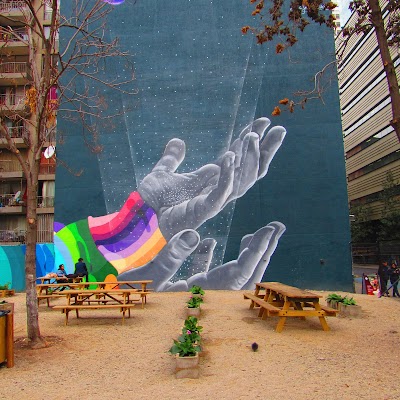
Plaza de Bolsillo Santo Domingo
View on map
5
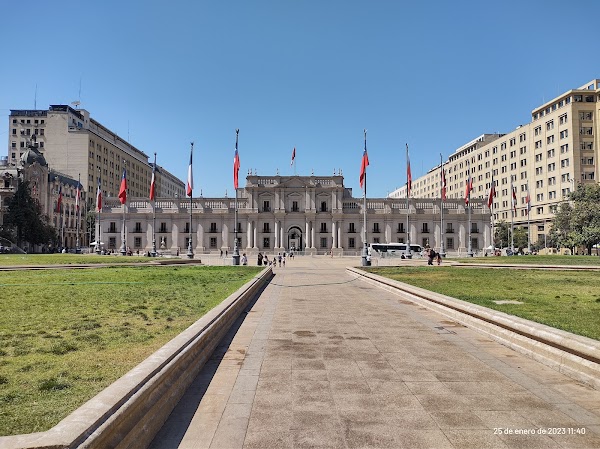
La Moneda Palace
View on map
6
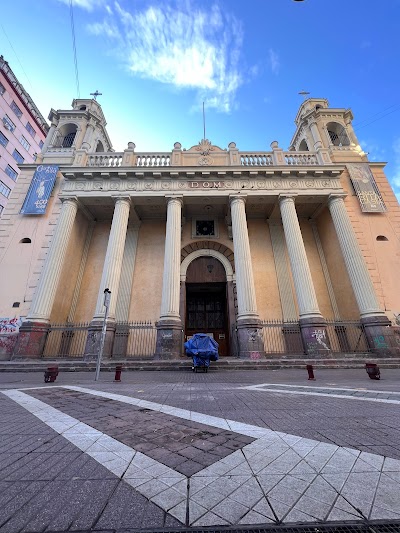
Church of St. Augustine, Augustinians
View on map
7
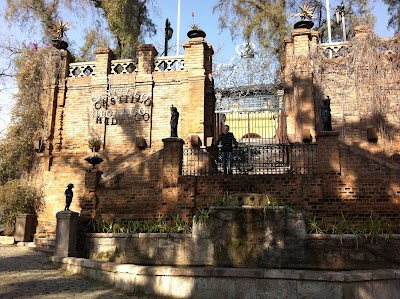
Hidalgo Castle
View on map
8
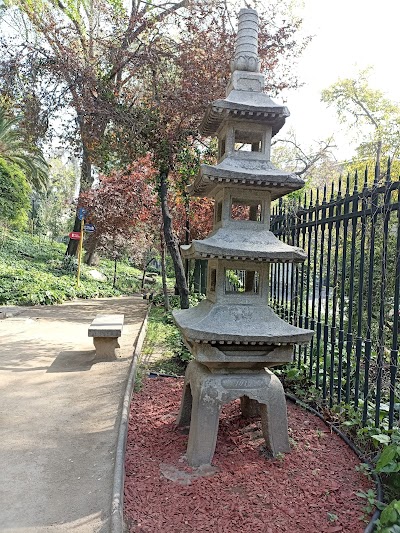
Japonés Garden
View on map
9
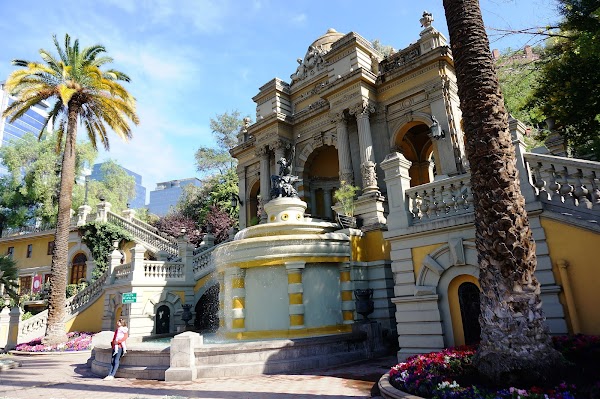
Santa Lucía Hill
View on map
10
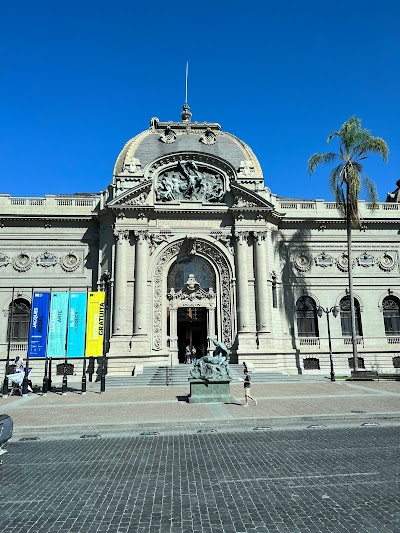
National Museum of Fine Arts
View on map
Audio Narrations
English
Introduction
Established in 1910, the National Museum of Fine Arts in Santiago, Chile, stands as the first museum in South America dedicated primarily to Chilean art. Its impressive collection spans from colonial times to the present day, showcasing over 5,000 works. The museum's neo-classical/baroque architecture adds to its allure, making it one of the city's most captivating spaces. Among its notable exhibits are portraits of Liberator Bernardo O'Higgins by José Gil de Castro and extensive compositions by the prominent Chilean expressionist painter Israel Roa. The museum also boasts a collection of Italian drawings from the 15th to 17th centuries, Spanish paintings, and African sculptures. Its intimate galleries and rotating exhibitions provide a dynamic and engaging experience for art enthusiasts.Neoclassical Architecture
The National Museum of Fine Arts in Santiago, Chile, stands as a testament to the grandeur and elegance of Neoclassical architecture. Its imposing facade, adorned with stately columns and intricate moldings, evokes the architectural principles of ancient Greece and Rome. The museum's symmetrical design and harmonious proportions create a sense of balance and order, characteristic of the Neoclassical style. Upon entering the museum, visitors are greeted by a grand foyer, its high ceilings supported by graceful Ionic columns. The interior spaces are characterized by clean lines, geometric forms, and an abundance of natural light, reflecting the Neoclassical emphasis on clarity and simplicity. The museum's collection of fine arts is housed in a series of galleries, each designed to complement the works on display. The galleries feature high ceilings, large windows, and neutral color palettes, allowing the artworks to take center stage. The National Museum of Fine Arts in Santiago is not only a repository of artistic treasures but also a masterpiece of Neoclassical architecture. Its elegant facade, harmonious proportions, and carefully designed interior spaces make it a must-visit destination for anyone interested in the history of architecture and the beauty of the Neoclassical style.Fine Arts
The National Museum of Fine Arts in Santiago, Chile, stands as a testament to the nation's rich artistic heritage. Founded in 1880, it boasts a vast collection of over 5,000 works spanning from colonial times to the present day. The museum's neoclassical architecture provides a grand setting for its diverse collection, which includes paintings, sculptures, drawings, and engravings. One of the museum's highlights is its extensive collection of Chilean art. Visitors can trace the evolution of Chilean painting from its colonial roots to the vibrant contemporary scene. Notable works include portraits by José Gil de Castro, landscapes by Alfredo Helsby, and abstract compositions by Roberto Matta. The museum also houses a significant collection of international art, featuring works by European masters such as Francisco Goya, Rembrandt, and Eugène Delacroix. Beyond its permanent collection, the museum hosts temporary exhibitions that showcase both Chilean and international artists. These exhibitions provide a platform for emerging talents and offer visitors a glimpse into the latest trends in contemporary art. The museum's educational programs, including guided tours, workshops, and lectures, further enhance the visitor experience. For those seeking an in-depth exploration of Chilean and international fine arts, the National Museum of Fine Arts in Santiago is an essential destination. Its comprehensive collection, diverse exhibitions, and educational initiatives make it a vibrant hub for art enthusiasts and scholars alike.
11
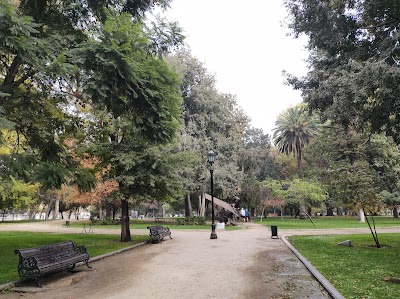
Parque Forestal
View on map
Audio Narrations
English
Introduction
Parque Forestal, a verdant oasis in the heart of Santiago, Chile, stretches from Plaza Baquedano to Mercado Central. This graceful 19th-century park is a haven for locals and visitors alike, offering respite from the bustling city. Its landscape is adorned with public art, inviting leisurely strolls and contemplation. The park's eastern end seamlessly transitions into Balmaceda Park, forming an unbroken stretch of greenery along the Mapocho River. Within the park's embrace lies the Chilean National Museum of Fine Arts, housed in the same building as the Santiago Museum of Contemporary Art. The distinctive feature of Parque Forestal is its three lines of platanus orientalis trees, creating a picturesque canopy overhead. Visitors can explore the park's hidden gems, such as the Palacio Bruna, located just across the street on Merced Street. While Parque Forestal is a delightful destination during the day, it's advisable to exercise caution at night. The park's wild dog population frequents the area after dark, making it less suitable for evening strolls.Historical Promenade
Parque Forestal, a historical promenade in Santiago, Chile, offers a captivating journey through the city's past. Established in the early 20th century on reclaimed land from the Mapocho River, the park boasts a rich tapestry of historical landmarks and architectural gems. Strolling along the park's central axis, visitors encounter the iconic Palacio de Bellas Artes, a neoclassical masterpiece that houses the National Museum of Fine Arts. Further along, the Museo de Arte Contemporáneo (MAC) showcases a diverse collection of modern and contemporary art. The park's verdant lawns and towering trees provide a serene backdrop for exploring its historical monuments. The Fuente Alemana, a monumental fountain donated by the German community in 1910, stands as a testament to the city's multicultural heritage. The Fuente de Neptuno, with its intricate sculptures and cascading waters, evokes the grandeur of Roman mythology. Beyond the fountains, the Paseo de las Esculturas features a collection of bronze sculptures by renowned Chilean artists, offering a glimpse into the country's artistic legacy. The park's perimeter is adorned with stately buildings, including the former National Congress building, now housing the Museo Histórico Nacional, which chronicles Chile's political and social history. Parque Forestal's historical promenade invites visitors to immerse themselves in Santiago's rich past, where art, architecture, and nature harmoniously converge.Mapocho Riverfront
Parque Forestal, a verdant oasis in Santiago, Chile, unfolds along the picturesque Mapocho Riverfront, offering a captivating blend of natural beauty and urban allure. This linear park, stretching over 4 miles, seamlessly connects three distinct parks: Parque de los Reyes, Parque Forestal, and Parque Balmaceda. At the heart of Parque Forestal lies the Museo de Arte Contemporaneo, a haven for modern art enthusiasts. The park also boasts the Museum of Pharmacy, a testament to the city's rich medical history. Amidst the lush greenery, monuments and sculptures pay homage to Chile's past, while the iconic Baquedano Square, dating back to 1875, serves as a vibrant gathering place. Strolling along the riverfront promenade, visitors can admire the majestic Oriental Plane trees that line the sidewalks, providing respite from the bustling city streets. The park's tranquil ambiance invites leisurely walks, bike rides, or simply relaxing by the river's edge, soaking in the serene atmosphere. For those seeking a more active experience, the park offers ample opportunities for recreation. Joggers and cyclists can take advantage of the dedicated paths that wind through the park, while playgrounds and open spaces cater to families and children. As the sun dips below the horizon, Parque Forestal transforms into a magical realm illuminated by twinkling lights. The riverfront promenade becomes a popular spot for evening strolls, offering breathtaking views of the city skyline reflected in the shimmering waters of the Mapocho River.
12
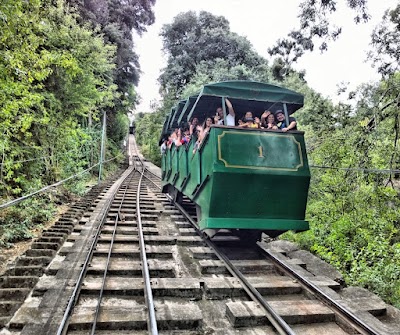
Estación Pío Nono Funicular Santiago by Turistik
View on map
13
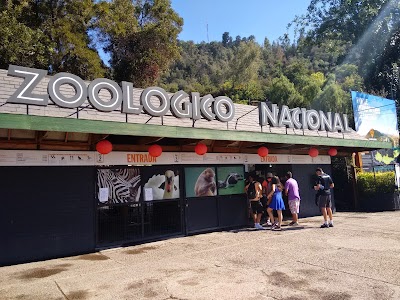
National Zoo
View on map
14
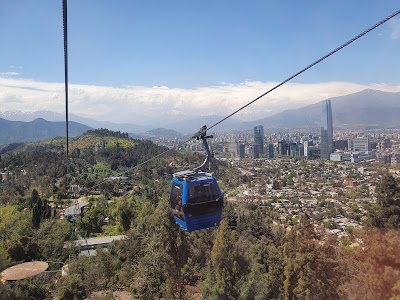
Metropolitan Park of Santiago
View on map
Audio Narrations
English
Introduction
Nestled within the heart of Santiago, the Metropolitan Park of Santiago is an expansive urban oasis that sprawls across 722 hectares. This verdant sanctuary encompasses the San Cristóbal, Chacarillas, and Los Gemelos hills, offering a breathtaking panorama of the city and the majestic Andes beyond. The park's crown jewel is the iconic San Cristóbal Hill, accessible via a scenic cable car or funicular. Ascending to its summit, visitors are greeted by the towering statue of the Virgin Mary, a symbol of Santiago's faith and resilience. From this vantage point, one can marvel at the city's sprawling cityscape, dotted with skyscrapers and historic landmarks. Beyond the hilltops, the park unfolds into a tapestry of natural wonders. The Tupahue and Antilén pools provide respite from the summer heat, while the Mapulemu Botanic Garden showcases Chile's diverse flora. Hikers and cyclists traverse the park's winding trails, immersing themselves in its tranquil ambiance. The park also houses the Chilean National Zoo, home to thousands of animals representing over 150 species. Visitors can observe majestic lions, playful penguins, and a myriad of other creatures from around the globe. As the sun begins its descent, the park transforms into a vibrant hub of activity. Locals and tourists alike gather at the summit of San Cristóbal Hill to witness the mesmerizing sunset over the Andes, a spectacle that paints the sky in hues of gold and crimson.Japanese Garden and Mapulemu Botanic Garden
Nestled within the sprawling Metropolitan Park of Santiago, the Japanese Garden and Mapulemu Botanic Garden offer a tranquil oasis amidst the urban landscape. Inaugurated in 1997 by Prince Hitachi of Japan, the Japanese Garden transports visitors to the serene ambiance of the Orient. Its centerpiece, a lotus pond, reflects the delicate beauty of cherry trees and Japanese maples, creating a picturesque setting for contemplation. In contrast, the Mapulemu Botanic Garden, established in 1945, showcases the rich diversity of Chilean flora. Spanning over 8 acres, it features interpretative information that unveils the secrets of native plant species. Visitors can wander through its verdant paths, discovering the wonders of the Chilean ecosystem. Together, these gardens provide a unique blend of Eastern serenity and native biodiversity. Whether seeking a moment of tranquility or a deeper understanding of Chile's natural heritage, the Japanese Garden and Mapulemu Botanic Garden offer an unforgettable experience within the heart of Santiago's Metropolitan Park.Panoramic City Views
Metropolitan Park of Santiago, nestled in the heart of Recoleta, offers breathtaking panoramic city views that will leave you spellbound. Ascend to the summit of Cerro San Cristóbal, the park's iconic hill, and witness the sprawling metropolis unfold before your eyes. From this vantage point, the city's landmarks, including the towering skyscrapers of the financial district and the historic buildings of the city center, create a mesmerizing tapestry. The Andes Mountains, with their snow-capped peaks, form a majestic backdrop, adding to the panoramic splendor. The park's winding trails and viewpoints provide ample opportunities to capture the city's beauty from different angles. Whether you're a photography enthusiast seeking the perfect shot or a nature lover yearning for breathtaking vistas, Metropolitan Park of Santiago is a haven for panoramic city views.
15
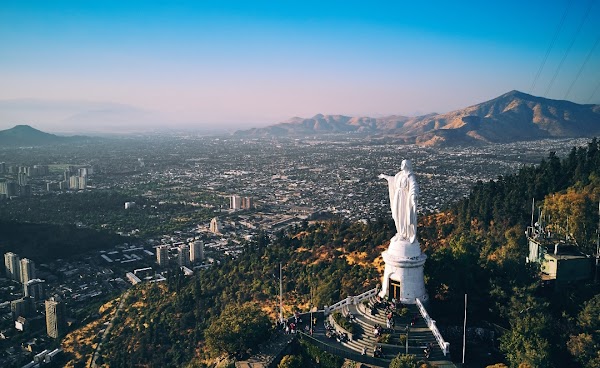
San Cristóbal Hill
View on map
Experience the Full Tour
Download the DocentPro app to access all tour stops, complete audio narrations in multiple languages, offline maps, and interactive features.