
Sevilla's Soul: A Historic Journey Through Time

Walking Tour

4.2 km (2.6 miles)

56 min travel time

7 Stops

Sevilla, Spain
Sevilla's Soul: A Historic Journey Through Time
Tour Stops
1
Royal Alcázar of Seville
View on map
Audio Narrations
English
Introduction
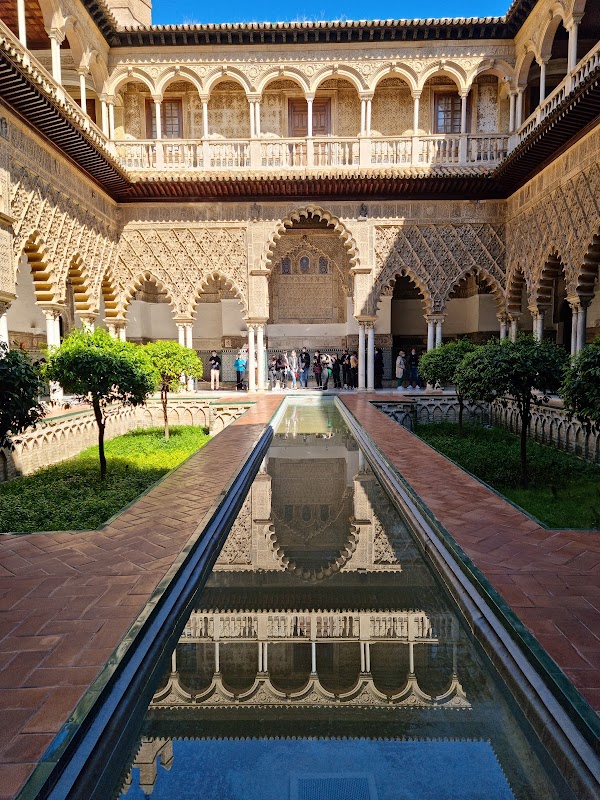
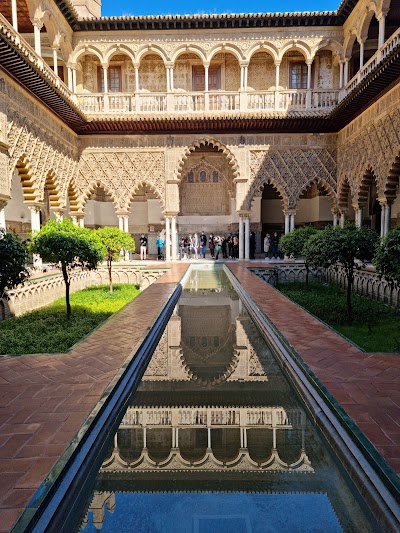
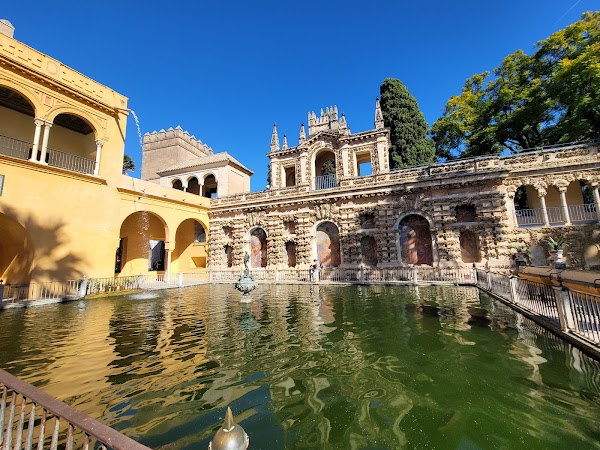
The Royal Alcázar of Seville, a UNESCO World Heritage Site, is a captivating blend of architectural styles, reflecting its rich history. The palace, still in use by the Spanish royal family, boasts a fascinating evolution from its 10th-century Moorish origins to its 14th-century Mudéjar transformation. Step through the Lion's Gate and enter the Patio del León, the original garrison yard. Admire the intricate plasterwork and artesonado ceiling of the Sala de la Justicia, built by King Alfonso XI. The Patio del Yeso, a 12th-century Almohad palace reconstruction, showcases Islamic artistry. The Patio de la Montería, dominated by the Mudéjar Palace, was once the gathering point for royal hunts. Explore the Casa de la Contratación, which housed Spain's trade with its American colonies. The Salón del Almirante displays historical paintings and a collection of intricate fans. Venture into the Cuarto Real Alto, the royal family's private quarters, and marvel at the Mudéjar tiles and plasterwork in the 14th-century Salón de Audiencias. The Palacio de Don Pedro, a masterpiece of Mudéjar architecture, features the stunning Patio de las Doncellas, surrounded by exquisite arches and tilework. Discover the sunken garden, uncovered in 2004, and the Alcoba Real with its breathtaking ceilings. The delicate Granada-style decoration of the Patio de las Muñecas and the intricate gold ceiling of the Cuarto del Príncipe are not to be missed. The Salón de Embajadores, with its magnificent wooden dome symbolizing the universe, is a testament to Pedro I's grandeur. Explore the Gothic palace, featuring the Salone de los Tapices with its vast tapestries. The Patio del Crucero, with its raised walkways and sunken gardens, offers a glimpse into the Almohad era. Wander through the Alcázar's gardens, including the formal gardens with pools and fountains, the Jardín de la Danza, and the Baños de Doña María de Padilla. The Galeria de Grutesco, a raised gallery with porticoes, and the fun hedge maze add to the charm. The Royal Alcázar of Seville is a journey through time, showcasing the artistic and cultural influences that have shaped this magnificent palace. From its Islamic roots to its Mudéjar splendor, the Alcázar is a testament to Seville's rich heritage and a must-see for any visitor to the city.Patio de las Doncellas
Nestled within the opulent Royal Alcázar of Seville, the Patio de las Doncellas (Patio of the Maidens) stands as a testament to Mudéjar artistry and architectural ingenuity. This enchanting courtyard, constructed during the reign of King Pedro I in the 14th century, derives its name from the legend of the Christian maidens who were held captive within its walls. The Patio de las Doncellas is a rectangular space adorned with intricate horseshoe arches supported by slender marble columns. The courtyard's focal point is a rectangular pond, reflecting the surrounding beauty and providing a sense of tranquility. The walls are adorned with exquisite azulejo tiles, depicting scenes from the palace's history and showcasing the vibrant colors of Islamic art. One of the most striking features of the Patio de las Doncellas is the intricate plasterwork that adorns the arches and galleries. The delicate patterns and motifs, inspired by both Islamic and Gothic influences, create a sense of depth and movement. The courtyard's ceiling is adorned with wooden beams, adding to its warmth and charm. The Patio de las Doncellas has served as a stage for countless historical events, from royal weddings to diplomatic gatherings. Its serene atmosphere and architectural splendor have inspired artists and writers for centuries. Today, it remains a popular destination for visitors seeking to experience the rich cultural heritage of Seville.UNESCO World Heritage Site
The Royal Alcázar of Seville, a UNESCO World Heritage Site, is a magnificent palace complex that embodies the rich cultural tapestry of Seville, Spain. Its architectural grandeur and historical significance make it a treasure trove for those seeking a deeper understanding of the city's heritage. The Alcázar's unique blend of Islamic and Christian influences is evident in its intricate Mudéjar architecture, a testament to the centuries-long coexistence of different cultures in Seville. The Mudéjar style, characterized by its horseshoe arches, decorative tilework, and geometric patterns, is a prominent feature of the palace's courtyards, halls, and chambers. The Alcázar's UNESCO inscription recognizes its exceptional universal value as a cultural landmark. Its historical significance lies in its role as the seat of the Spanish monarchy for centuries, witnessing pivotal events in the nation's history. The palace's opulent interiors, adorned with exquisite tapestries, paintings, and furniture, offer a glimpse into the lives of Spain's royalty. The Alcázar's gardens, a UNESCO-listed World Heritage Site, are a masterpiece of landscape design. The lush greenery, fragrant flowers, and serene water features create a tranquil oasis in the heart of the bustling city. The gardens are a testament to the Moorish influence on Andalusian architecture, with their intricate pathways, fountains, and pavilions. The Alcázar's UNESCO World Heritage status underscores its importance as a symbol of cultural exchange and tolerance. Its architectural fusion of Islamic and Christian elements reflects the city's rich history and its role as a crossroads of civilizations. The palace's inscription on the World Heritage List recognizes its outstanding universal value and its contribution to the world's cultural heritage.
2
Palacio de San Telmo
View on map
Audio Narrations
English
Introduction
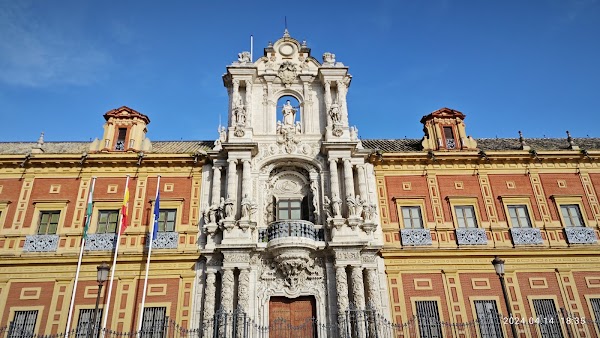
The Palacio de San Telmo, a magnificent Baroque edifice in Seville, Spain, boasts a rich history and architectural splendor. Originally constructed in the 17th century as the Universidad de Mareantes, a school for orphaned children and aspiring sailors, the palace has undergone several transformations over the centuries. Its exterior is a testament to Sevillian Baroque architecture, featuring a grand Churrigueresque entrance adorned with intricate sculptures and allegorical figures representing the nautical arts and sciences. The main façade is further embellished with statues of twelve illustrious Sevillians, including the renowned painter Bartolomé Esteban Murillo and the poet Fernando de Herrera. Stepping inside, visitors are greeted by a series of opulent courtyards, including the central courtyard with its lush greenery and ornate fountain. The chapel, a masterpiece by architect Leonardo de Figueroa, showcases the talents of sculptor Pedro Duque y Cornejo and painter Domingo Martínez. Its centerpiece is an early 17th-century statue of Nuestra Señora del Buen Aire, the patron saint of sailors. The palace's history is as captivating as its architecture. It served as the residence of the Duke and Duchess of Montpensier in the 19th century and later became a seminary before being designated as the seat of the Andalusian Autonomous Government in 1989. A meticulous restoration project in the 1990s and 2000s meticulously preserved the palace's historical features while incorporating modern amenities. Today, the Palacio de San Telmo stands as a testament to Seville's rich cultural heritage, offering visitors a glimpse into its fascinating past and present.Royal Residence
Palacio de San Telmo: A Royal Residence Steeped in History The Palacio de San Telmo in Seville, Andalusia, Spain, stands as a testament to the city's rich royal history. Originally constructed in the 17th century as a seminary for sailors, the palace underwent a significant transformation in the 19th century when it became the official residence of the Dukes of Montpensier, the younger sister of Queen Isabella II. This royal connection imbued the palace with an air of grandeur and elegance, evident in its opulent interiors and meticulously landscaped gardens. The Dukes of Montpensier spared no expense in embellishing the palace, commissioning renowned artists and architects to create a space befitting their royal status. The result is a breathtaking blend of architectural styles, from the Baroque facade to the Neoclassical interiors. The grand Salón de Baile, with its soaring ceilings and intricate frescoes, served as a stage for lavish balls and receptions, while the private apartments offered a glimpse into the opulent lifestyle of the royal family. Beyond its architectural splendor, the Palacio de San Telmo also played a significant role in shaping Seville's political landscape. During the reign of King Alfonso XII, the palace served as the official residence of the Spanish monarchs, hosting important state visits and political gatherings. This period cemented the palace's status as a symbol of power and authority, a legacy that continues to resonate today. Today, the Palacio de San Telmo remains a vibrant center of cultural and political life in Seville. It houses the headquarters of the Andalusian regional government, serving as a testament to the region's rich history and its enduring connection to the Spanish monarchy. Visitors can explore the palace's opulent interiors, marvel at its artistic treasures, and delve into the fascinating stories of the royal figures who once graced its halls. The Palacio de San Telmo stands as a captivating reminder of Seville's royal past, offering a glimpse into a world of elegance, power, and intrigue.Educational Institution
Palacio de San Telmo: A Historical Seat of Education in Seville Beyond its stunning Baroque architecture and rich history, Palacio de San Telmo in Seville holds a unique position as a prestigious educational institution. Founded in 1849 as a Seminary College, it has evolved into a renowned center for higher learning, boasting a legacy of academic excellence and fostering intellectual growth for generations. The Palacio's educational journey began with the establishment of the "Colegio Seminario de San Telmo," offering theological and philosophical studies. Over time, it transitioned into a secular institution, embracing diverse fields of knowledge. Today, it houses the headquarters of the University of Seville's Pablo de Olavide Foundation, a vibrant hub for research and postgraduate studies. The Palacio's classrooms, once echoing with theological debates, now resonate with discussions on contemporary issues, scientific advancements, and artistic expressions. Its historic halls host conferences, seminars, and workshops, fostering intellectual exchange and collaboration among scholars and students. The Palacio's commitment to education extends beyond its academic offerings. Its stunning architecture and historical significance serve as a living testament to the region's cultural heritage, providing students with a unique learning environment that inspires creativity and critical thinking. Palacio de San Telmo stands as a symbol of Seville's dedication to education, its evolution reflecting the city's dynamic intellectual landscape. From its theological roots to its contemporary academic pursuits, the Palacio continues to shape the minds of future generations, leaving an indelible mark on the educational landscape of Seville and beyond.
3
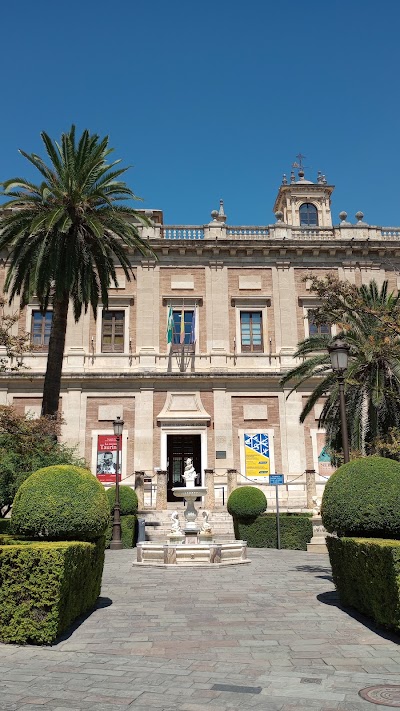
Archivo de Indias
View on map
Audio Narrations
English
Introduction
The Archivo de Indias, nestled in the heart of Seville, Spain, is a treasure trove of historical documents chronicling the captivating saga of Spain's overseas empire. This architectural gem, originally conceived as the Lonja de Mercaderes, was meticulously designed by Juan de Herrera and completed in 1646. Its imposing structure, adorned with intricate carvings and a grand central patio, stands as a testament to the architectural prowess of the era. In 1785, under the visionary guidance of King Carlos III, the Archivo de Indias was transformed into a repository for documents pertaining to Spain's vast colonial holdings. These invaluable records, spanning centuries of exploration, conquest, and administration, offer a glimpse into the lives, cultures, and struggles of those who shaped the New World. The archive's collection encompasses an astonishing 43,000 volumes, with over 80 million pages and 80,000 maps and drawings. Among its treasures are the personal accounts of Christopher Columbus, the decrees of Spanish monarchs, and the meticulously crafted maps that guided explorers across uncharted territories. The Archivo de Indias is not merely a repository of historical artifacts; it is a vibrant hub for scholars and researchers seeking to unravel the complexities of Spain's colonial past. Its meticulously preserved documents provide invaluable insights into the social, economic, and political dynamics that shaped the Americas and the Philippines. Beyond its historical significance, the Archivo de Indias is an architectural marvel. Its grand staircases, soaring ceilings, and intricate carvings transport visitors to a bygone era of grandeur and exploration. The building itself is a testament to the enduring legacy of Spain's colonial empire. A visit to the Archivo de Indias is an immersive journey into the heart of Spain's colonial past. Its vast collection of documents, coupled with its architectural splendor, offers a unique opportunity to explore the rich tapestry of history that unfolded across continents.Conquistadors
For the Conquistadors, the Archivo de Indias in Seville was a treasure trove of information and a testament to their achievements. Within its walls lay the records of their voyages, conquests, and governance, chronicling their triumphs and struggles in the New World. The Conquistadors were drawn to the Archivo de Indias for its wealth of primary sources. They could consult official documents, maps, and letters that provided firsthand accounts of their expeditions. These records were essential for understanding the geography, cultures, and political landscape of the lands they conquered. The Archivo de Indias also served as a repository for the Conquistadors' personal papers. Here, they could find wills, testaments, and other documents that shed light on their motivations, beliefs, and relationships. These records offered a glimpse into the inner world of the Conquistadors, revealing their hopes, fears, and ambitions. Through the lens of the Conquistadors, the Archivo de Indias becomes a stage where history unfolds. We witness the planning of expeditions, the execution of conquests, and the establishment of colonial rule. We hear the voices of the Conquistadors themselves, their triumphs and tragedies echoing through the centuries. The Archivo de Indias is not merely a repository of documents; it is a portal to the past, offering a unique perspective on the Conquistadors and their impact on the world. For those seeking to understand the Conquistadors' legacy, the Archivo de Indias is an invaluable resource, providing a wealth of information and insights that cannot be found anywhere else.New World Exploration
Nestled in the heart of Seville, Spain, the Archivo de Indias stands as a treasure trove of historical documents chronicling the epic saga of New World exploration. Established in 1785, this repository houses an unparalleled collection of over 43,000 maps, charts, and manuscripts, offering a window into the voyages, conquests, and cultural encounters that shaped the Americas. Within its hallowed halls, one can delve into the journals of intrepid explorers like Christopher Columbus, Hernán Cortés, and Francisco Pizarro, tracing their routes across uncharted waters and into the unknown. The archive also preserves the voices of indigenous peoples, their accounts of first contact and the subsequent transformations wrought by European arrival. The Archivo de Indias is not merely a repository of historical records; it is a living testament to the human spirit of adventure, the thirst for knowledge, and the transformative power of cross-cultural exchange. Its documents illuminate the triumphs and tragedies, the alliances and conflicts that marked the dawn of a new era in human history. For those seeking to understand the intricate tapestry of New World exploration, the Archivo de Indias offers an unparalleled journey of discovery. Its vast collection provides a platform for scholars, historians, and enthusiasts alike to explore the complexities of this pivotal period, shedding light on the motivations, experiences, and consequences of this extraordinary human endeavor.
4
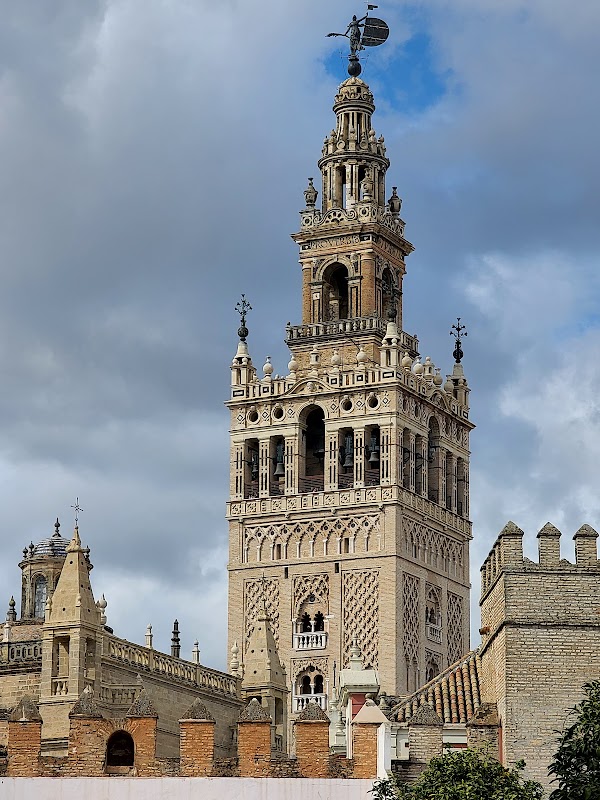
La Giralda
View on map
Audio Narrations
English
Introduction
The Giralda, a towering testament to Seville's rich history, stands as a symbol of the city's cultural tapestry. Its origins trace back to the 12th century when it served as the minaret of the Great Mosque during the Almohad dynasty. The intricate brickwork and decorative motifs, a blend of Islamic and European influences, reflect the city's vibrant artistic heritage. The Giralda's ascent offers breathtaking views of Seville, showcasing the city's architectural gems, from the majestic cathedral to the winding streets of the old town. As you climb the 35 ramps, the story of Seville unfolds before your eyes, whispering tales of Moorish rulers, Christian conquistadors, and the city's enduring spirit. At the summit, the Giraldillo, a bronze weathervane, stands as a beacon, its graceful silhouette a symbol of Seville's resilience and its ability to embrace change. The Giralda, a testament to Seville's cultural crossroads, continues to inspire awe and wonder, inviting visitors to delve into the city's rich tapestry and discover its hidden treasures.Historical Landmark
La Giralda: A Tower Steeped in History La Giralda, the iconic bell tower of Seville Cathedral, stands as a testament to the city's rich and tumultuous past. Its origins lie in the 12th century when the Almohad dynasty, a Muslim Berber faction, ruled Seville. They constructed a minaret, the Giralda, as part of a grand mosque. This soaring structure, adorned with intricate geometric patterns and Quranic inscriptions, served as a symbol of Islamic power and religious devotion. Following the Christian reconquest of Seville in 1248, the mosque was converted into a cathedral. The Giralda, however, remained largely intact, its Islamic architecture now juxtaposed with the newly built Gothic elements of the cathedral. A Renaissance belfry was added in the 16th century, crowning the tower with a bronze statue of Faith, known as El Giraldillo. This addition transformed the Giralda into a Christian landmark, while preserving its Islamic heritage. Today, La Giralda stands as a unique blend of architectural styles, reflecting the diverse cultural influences that have shaped Seville's history. Its 35 ramps, a testament to its original function as a minaret, offer visitors a panoramic view of the city. Ascend the tower and witness the intricate details of its brickwork, the remnants of Arabic script, and the stunning views that stretch across the Andalusian landscape. La Giralda is a living testament to Seville's past, a symbol of cultural exchange, and a reminder of the city's enduring spirit.Islamic Art
La Giralda: A Minareted Legacy of Islamic Art in Seville La Giralda, the iconic bell tower of Seville Cathedral, stands as a testament to the rich tapestry of Islamic art in Spain. Originally constructed as the minaret of the Great Mosque of Seville during the Almohad dynasty in the 12th century, it embodies the architectural and decorative brilliance of Islamic Spain. The Giralda's towering structure, reaching 104 meters, reflects the Almohads' penchant for monumental architecture. Its square base transitions into a cylindrical shaft adorned with intricate geometric patterns and Kufic inscriptions. These decorative elements, hallmarks of Islamic art, showcase the sophisticated mathematical and artistic skills of the period. The minaret's crowning glory is its exquisite sebka, a decorative motif composed of interlacing arches and niches. This intricate design, reminiscent of honeycomb, creates a mesmerizing play of light and shadow, a characteristic feature of Islamic architecture. Following the Christian Reconquista in the 13th century, the Giralda underwent a transformation. A Renaissance belfry was added, replacing the original mosque lantern. Despite this alteration, the Islamic foundation remains evident, making the Giralda a unique fusion of architectural styles. Today, La Giralda stands as a symbol of Seville's multicultural heritage, a testament to the enduring legacy of Islamic art in Spain. Its intricate details and towering presence continue to captivate visitors, offering a glimpse into the rich artistic traditions of a bygone era.
5
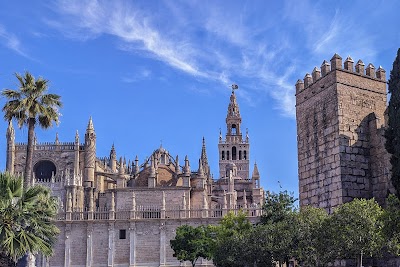
Catedral de Sevilla
View on map
Audio Narrations
English
Introduction
The Seville Cathedral, a magnificent Gothic masterpiece, stands as a testament to the city's rich history and artistic heritage. Its construction, spanning over a century from 1401 to 1506, involved renowned architects like Carlín, Ximón, and Alfonso Rodríguez. The cathedral boasts the largest Gothic nave in Spain, soaring to a height of 42 meters. Its interior is adorned with intricate stained glass windows, a colossal retable depicting scenes from Christ's life, and the tomb of Christopher Columbus. The Giralda, the cathedral's iconic bell tower, was once the minaret of the mosque that stood on the site. Its intricate carvings and stunning views make it a must-visit for any traveler. The cathedral also houses a treasure trove of artwork, including paintings by Murillo, Zurbarán, and Goya. The Sacristía Mayor, a Renaissance masterpiece, showcases a collection of religious artifacts and sculptures. Beyond its artistic splendor, the Seville Cathedral holds significant cultural and religious importance. It is the seat of the Archdiocese of Seville and hosts numerous religious ceremonies throughout the year. The annual Corpus Christi procession, a vibrant celebration of faith, draws thousands of visitors to the city. The cathedral also serves as a repository of historical artifacts, including the Pendón de San Fernando, a banner believed to have been carried by King Ferdinand III during the conquest of Seville. A visit to the Seville Cathedral is an unforgettable experience, offering a glimpse into the city's rich history, artistic legacy, and spiritual heart. From its soaring Gothic arches to its exquisite artwork, the cathedral stands as a testament to human ingenuity and devotion.Cultural Tourism
The Catedral de Sevilla, a UNESCO World Heritage Site, stands as a testament to the city's rich cultural tapestry. Its Gothic and Renaissance architecture, a blend of Christian and Islamic influences, reflects the city's diverse history. The cathedral houses the tomb of Christopher Columbus, a symbol of Spain's Age of Exploration. Visitors can admire the intricate stained-glass windows, the Giralda bell tower, and the world's largest altarpiece. The cathedral also offers guided tours that delve into its history, art, and architecture, providing a deeper understanding of its cultural significance. The Catedral de Sevilla is a must-visit destination for cultural tourists seeking to immerse themselves in the city's heritage. Its unique blend of architectural styles, historical artifacts, and religious significance make it a captivating experience. The cathedral's guided tours offer an opportunity to gain insights into its cultural and artistic treasures, enriching the visitor's understanding of Seville's rich past.UNESCO World Heritage Site
The Catedral de Sevilla, a magnificent Gothic masterpiece in Seville, Spain, stands as a testament to the city's rich history and cultural heritage. This awe-inspiring edifice, inscribed as a UNESCO World Heritage Site in 1987, embodies the architectural brilliance and artistic splendor of the 15th and 16th centuries. As the largest Gothic cathedral in the world, the Catedral de Sevilla boasts an impressive collection of architectural marvels. Its soaring spires, intricate carvings, and stained-glass windows create an atmosphere of grandeur and spirituality. The Giralda, the cathedral's iconic bell tower, was once the minaret of a mosque, showcasing the city's Islamic past. The cathedral's interior is equally breathtaking, adorned with exquisite works of art and religious artifacts. The Capilla Mayor, the main chapel, houses the tomb of Christopher Columbus, while the Sacristía Mayor displays a stunning collection of paintings by renowned artists such as Murillo and Zurbarán. Beyond its architectural and artistic significance, the Catedral de Sevilla holds immense historical value. It served as the site of the marriage of King Ferdinand and Queen Isabella, a pivotal event in Spanish history. The cathedral also played a crucial role in the Age of Discovery, as it was from here that many expeditions set sail to explore the New World. As a UNESCO World Heritage Site, the Catedral de Sevilla is recognized for its outstanding universal value. Its architectural grandeur, artistic treasures, and historical significance make it a symbol of Spain's cultural heritage and a testament to the enduring legacy of Gothic architecture.
6
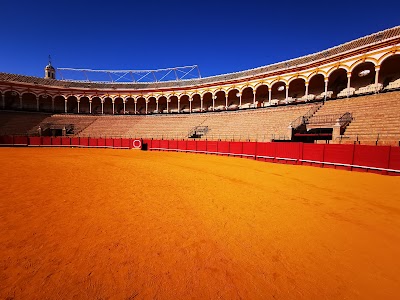
Plaza de Toros de la Real Maestranza de Caballería de Sevilla
View on map
Audio Narrations
English
Introduction
The Plaza de Toros de la Real Maestranza de Caballería de Sevilla, a magnificent bullring in Seville, Spain, stands as a testament to the city's rich history and vibrant culture. Constructed between the 18th and 19th centuries, this architectural marvel boasts a unique blend of Baroque and Neoclassical styles, showcasing the artistry of renowned architects like Vicente San Martín and Juan Talavera de la Vega. The plaza's exterior features an impressive facade adorned with intricate carvings and sculptures, while its interior reveals a spacious arena surrounded by tiered seating. The iconic "Palco del Príncipe," a royal box reserved for the Spanish royal family, adds a touch of grandeur to the venue. Beyond its architectural splendor, the Plaza de Toros de la Real Maestranza de Caballería de Sevilla is renowned for hosting some of the most prestigious bullfighting events in the world. During the annual Seville Fair, the plaza comes alive with the electrifying spectacle of bullfighting, attracting aficionados from across the globe. The plaza also houses the Museo Taurino, a fascinating museum dedicated to the history and art of bullfighting. Visitors can explore a vast collection of artifacts, including paintings, sculptures, and bullfighters' costumes, offering a glimpse into the world of this controversial yet deeply rooted tradition. The Plaza de Toros de la Real Maestranza de Caballería de Sevilla stands as a symbol of Seville's cultural heritage, offering visitors a unique opportunity to experience the city's passion for bullfighting and its rich architectural legacy.Tourism Destination
A Timeless Arena: Unveiling the Secrets of Seville's Maestranza Step into the heart of Seville's bullfighting tradition at the Plaza de Toros de la Real Maestranza de Caballería. This iconic arena, steeped in history and controversy, offers a unique glimpse into Spanish culture and the art of toreo. Beyond the spectacle of the corrida, the Maestranza is a treasure trove of architectural and artistic wonders. Its Baroque facade, adorned with intricate details, hints at the grandeur within. Step inside to discover a world of hidden courtyards, elegant galleries, and a museum showcasing centuries of bullfighting memorabilia. For the discerning traveler, the Maestranza offers exclusive experiences. Take a guided tour to delve into the arena's secrets, from the toril where bulls await their fate to the capilla where matadors seek solace before facing the beast. Learn about the intricate rituals and traditions that govern the corrida, and gain a deeper understanding of this controversial yet captivating art form. Beyond the corrida, the Maestranza transforms into a vibrant cultural hub. Attend a flamenco performance, a concert, or even a fashion show held within its hallowed walls. Savor the atmosphere as the setting sun casts long shadows across the arena, creating a truly magical ambiance. The Maestranza is more than just a bullring; it's a living testament to Seville's rich cultural heritage. Whether you're a passionate aficionado or a curious visitor, this historic landmark promises an unforgettable experience. So, step into the arena, embrace the spirit of Spain, and discover the secrets that lie within the Maestranza's walls.Historical Significance
Plaza de Toros de la Real Maestranza: A Legacy of Tradition and Controversy The Plaza de Toros de la Real Maestranza de Caballería de Sevilla, a majestic bullring in Seville, Spain, boasts a rich history deeply intertwined with the controversial tradition of bullfighting. Its construction began in 1749, replacing a wooden structure that had stood since 1587. The Maestranza, as it's affectionately known, stands as a testament to the city's enduring fascination with the art of tauromachy. This arena is not merely a venue for spectacle; it's a living museum of bullfighting history. Its walls whisper tales of legendary matadors like Juan Belmonte and Joselito, whose daring feats captivated audiences for generations. The albero, the sand covering the ring, has absorbed the blood, sweat, and tears of countless bulls and toreros, forever etching their struggles into the Maestranza's memory. Beyond the spectacle, the Maestranza embodies the complex relationship between Spain and its national pastime. It has witnessed moments of both triumph and tragedy, reflecting the evolving societal views on bullfighting. While some hail it as a cultural treasure, others condemn it as a barbaric practice. This ongoing debate adds another layer to the Maestranza's historical significance, making it a focal point for discussions on tradition, animal rights, and the evolving cultural landscape of Spain. The Maestranza's historical significance extends beyond the bullring itself. Its museum houses a vast collection of artifacts, paintings, and costumes, offering a glimpse into the world of bullfighting and its evolution through the centuries. This collection serves as a valuable resource for historians and enthusiasts alike, providing insights into the cultural and artistic significance of this controversial tradition. In conclusion, the Plaza de Toros de la Real Maestranza de Caballería de Sevilla stands as a powerful symbol of Spain's cultural heritage, embodying both the beauty and the brutality of bullfighting. Its historical significance lies not only in its architectural grandeur and the legendary figures who graced its arena, but also in its role as a platform for ongoing discussions about tradition, animal rights, and the evolving identity of Spain.
7
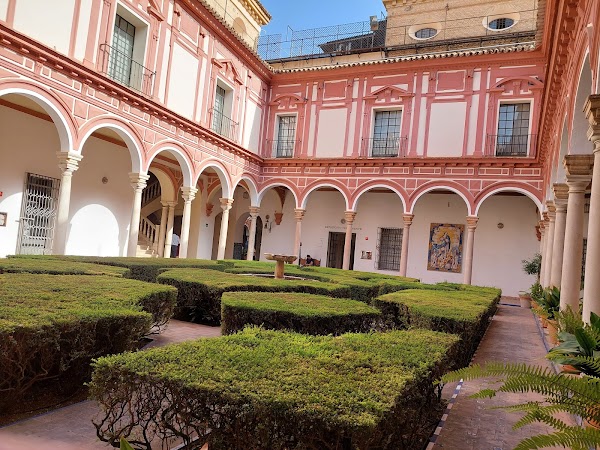
Seville Museum of Fine Arts
View on map
Experience the Full Tour
Download the DocentPro app to access all tour stops, complete audio narrations in multiple languages, offline maps, and interactive features.