
Venetian Echoes: A Journey Through Time and History

Walking Tour

3.1 km (1.9 miles)

46 min travel time

11 Stops

Venice, Italy
Venetian Echoes: A Journey Through Time and History
Tour Stops
1
Doge's Palace
View on map
Audio Narrations
English
Introduction
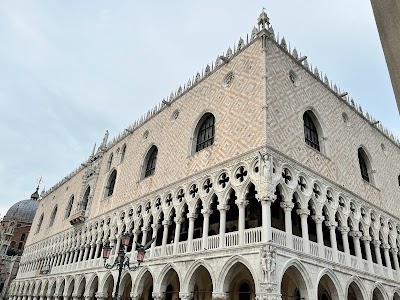
The Doge's Palace, a masterpiece of Venetian Gothic architecture, stands as a testament to the grandeur and power of the Venetian Republic. Its intricate façade, adorned with sculptures and tracery, overlooks the Venetian lagoon. The palace served as the seat of government for centuries, housing the doge, the supreme authority of Venice. Within its walls, the palace boasts a labyrinth of chambers and halls, each adorned with opulent frescoes and sculptures. The Great Council Chamber, the largest room in the palace, is renowned for its vast ceiling mural by Tintoretto, depicting the glory of paradise. The Doge's Apartments, once the private residence of the doge, offer a glimpse into the luxurious lifestyle of Venice's rulers. Beyond its architectural splendor, the Doge's Palace played a pivotal role in Venetian history. It was the center of political power, where the doge and his councils governed the republic. The palace also housed the Venetian navy's command center, overseeing the vast maritime empire that made Venice a global force. Today, the Doge's Palace is a museum, showcasing the artistic and historical treasures of Venice. Visitors can explore its grand halls, marvel at its masterpieces, and delve into the fascinating history of the Venetian Republic.Art and Architecture
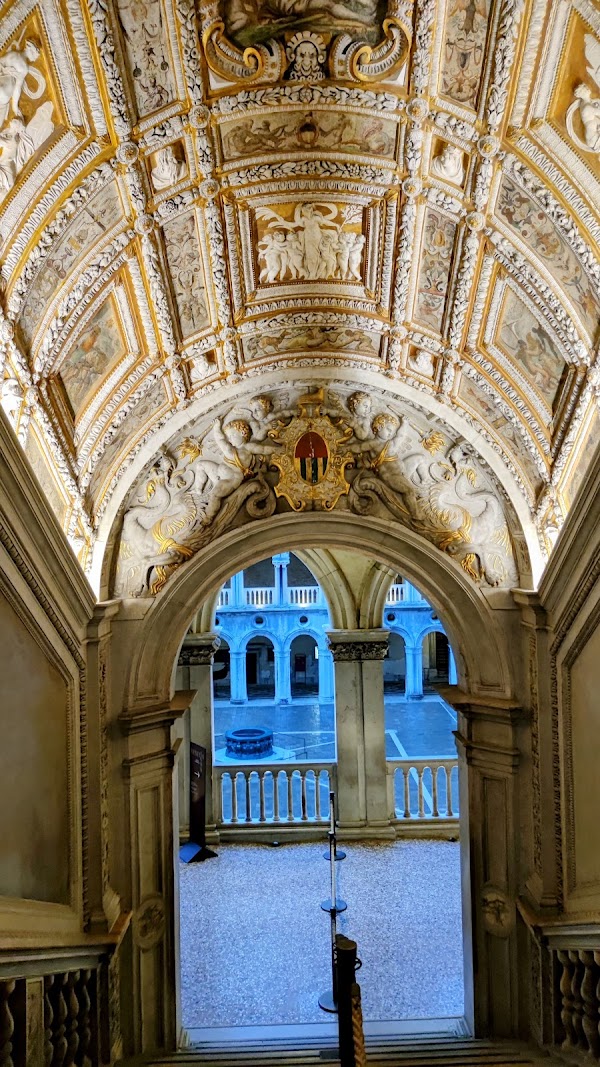
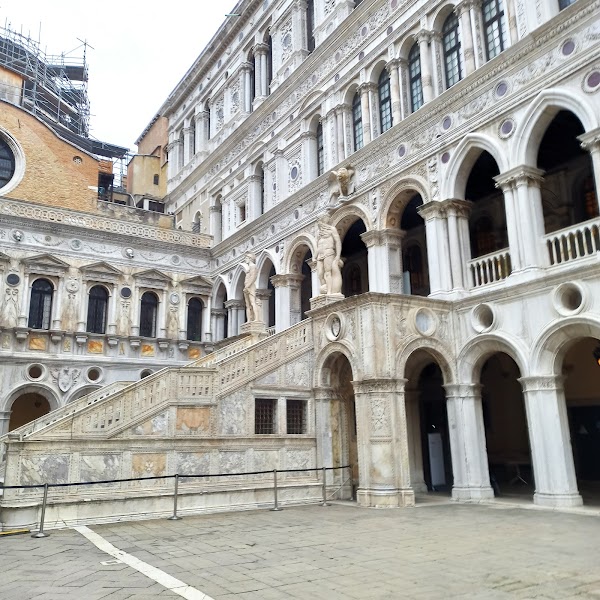
Doge's Palace, an architectural masterpiece in Venetian Gothic style, stands as a testament to the artistic prowess of its time. Its intricate facade boasts an open portico, a second-floor balcony, and patterned brickwork, showcasing the skill of Filippo Calendario, the palace's chief architect. The Porta della Carta, an ornate entrance gate, exemplifies the Gothic style with its spires, carved trefoils, and statues. Inside, the palace is adorned with grand staircases, gilded ceilings, and frescoed walls. The Scala dei Giganti, flanked by statues of Mars and Neptune, leads to the main floor, while the Scala d'Oro, with its gilded stucco ceiling, provided a grand entrance for dignitaries. The Museo dell'Opera houses original capitals and architectural elements from the palace's early incarnations. The Doge's Apartments, once the residence of the Doge, feature elaborate ceilings, fireplaces, and a collection of paintings, including works by Titian and Giovanni Bellini. The Sala del Maggior Consiglio, the largest room in the palace, is renowned for its immense size and Tintoretto's monumental paintings. Throughout the palace, visitors can marvel at the exquisite craftsmanship, attention to detail, and artistic vision that have made Doge's Palace an enduring symbol of Venetian art and architecture.Secret Itineraries
Unveiling the hidden depths of the Doge's Palace, the Secret Itineraries tour grants exclusive access to the palace's concealed chambers and forgotten corners. Journey through secret passageways, once used by the Doge to move unseen, and discover the grim realities of the palace's past. Explore the eerie prisons, where prisoners languished in darkness, and the chilling torture chamber, where interrogations unfolded. Ascend the infamous Bridge of Sighs, where condemned prisoners took their last glimpse of freedom before crossing into the depths of the palace's dungeons. This captivating tour unveils the palace's clandestine history, offering a glimpse into the shadowy underbelly of Venetian power and intrigue.
2
St Mark's Campanile
View on map
3
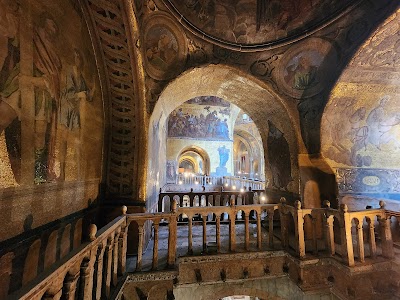
St. Mark’s Museum
View on map
4
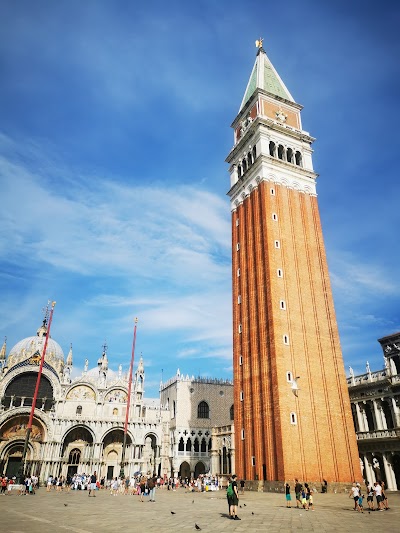
St. Mark's Square
View on map
Audio Narrations
English
Introduction
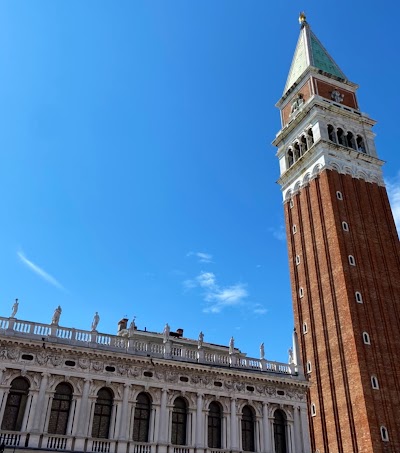
St. Mark's Square, the heart of Venice, is a trapezoidal piazza renowned for its architectural marvels and vibrant atmosphere. Dominated by the iconic St. Mark's Basilica, the square is adorned with intricate mosaics and houses the treasured Pala d'Oro, a priceless golden altar-piece. The Doge's Palace, once the seat of Venetian power, stands adjacent, showcasing its Gothic grandeur. The square's perimeter is lined by the Procuratie Vecchie and Nuove, elegant arcades housing shops and cafes. The Bell Tower of St. Mark, a 99-meter-tall masterpiece, offers panoramic city views. Caffe Florian, the oldest coffee house in the world, has hosted literary luminaries like Goethe and Byron. Despite the crowds that flock to this iconic square, it remains a testament to Venice's rich history, artistic legacy, and enduring charm.Historical Significance
St. Mark's Square, the heart of Venice, holds immense historical significance. Once the political and religious center of the Venetian Republic, it witnessed the rise and fall of a maritime empire that spanned centuries. The square's iconic landmarks, including St. Mark's Basilica, the Doge's Palace, and the Campanile, stand as testaments to Venice's glorious past. The basilica, a masterpiece of Byzantine architecture, houses the relics of Saint Mark, the city's patron saint, and was once the private chapel of the Doge. The Doge's Palace, once the seat of Venetian government, showcases stunning Gothic architecture and houses priceless works of art. The Campanile, a 16th-century bell tower, offers panoramic views of the city and was once used as a watchtower to spot approaching ships. St. Mark's Square has been the stage for countless historical events, from lavish festivals and processions to public executions and political uprisings. Its rich history is woven into every corner of the square, making it a living testament to Venice's enduring legacy.Architectural Marvel
St. Mark's Square, the heart of Venice, is an architectural masterpiece that showcases a harmonious blend of Byzantine, Gothic, and Renaissance styles. The square is dominated by the awe-inspiring St. Mark's Basilica, a testament to Venetian opulence. Its intricate golden mosaics, soaring domes, and elaborate facade captivate visitors with their grandeur. The Doge's Palace, once the residence of Venetian rulers, boasts an impressive Gothic exterior and lavish interiors adorned with stunning frescoes and sculptures. The Procuratie Vecchie and Nuove, flanking the basilica, form elegant arcades that add to the square's architectural charm. The Torre dell'Orologio, a 15th-century clock tower, stands as a symbol of Venetian craftsmanship, featuring intricate astrological symbols and moving figures that mark the hours. St. Mark's Square is a living testament to the architectural prowess of Venice, where every edifice tells a tale of the city's rich history and artistic heritage.
5
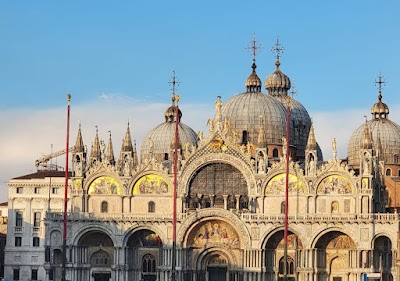
Saint Mark's Basilica
View on map
Audio Narrations
English
Introduction
Saint Mark's Basilica, a magnificent cathedral in Venice, Italy, is renowned for its opulent Byzantine architecture and stunning golden mosaics. Originally built in the 9th century, it was enlarged and embellished over centuries, reflecting Venice's growing wealth and power. The basilica's exterior boasts intricate marble encrustations, while the interior is adorned with over 8,000 square meters of shimmering mosaics depicting biblical scenes and the life of Saint Mark. The Pala d'Oro, an exquisite Byzantine altarpiece adorned with thousands of gems, is a testament to the basilica's artistic heritage. Visitors can also explore the crypt, where the relics of Saint Mark are said to be housed, and climb to the terrace for panoramic views of Venice.Religious Center
Saint Mark's Basilica, a magnificent edifice in the heart of Venice, stands as a testament to the city's deep-rooted religious fervor. Originally conceived as an extension of the Doge's Palace, its construction in the 9th century was driven by the acquisition of Saint Mark's relics, transforming it into a sacred repository. Over the centuries, the basilica underwent extensive modifications, blending Byzantine, Romanesque, and Gothic influences into a captivating architectural masterpiece. As a religious center, Saint Mark's Basilica holds immense significance. It is the seat of the Patriarch of Venice, the head of the Catholic Church in the region. The basilica's interior is adorned with over 85,000 square feet of mesmerizing mosaics, depicting biblical scenes and the life of Christ. These intricate artworks, crafted with real gold, glass, and marble, narrate the stories of faith and devotion. Beyond its artistic splendor, Saint Mark's Basilica is a place of pilgrimage and worship. The crypt houses the relics of Saint Mark, drawing countless believers seeking spiritual connection. The basilica's treasury showcases a collection of precious objects, including the Pala d'Oro, an exquisite altarpiece adorned with thousands of gems. These treasures reflect the basilica's role as a repository of religious wealth and devotion. Saint Mark's Basilica remains a vibrant center of religious life in Venice. It hosts daily masses, special services, and liturgical events that attract both locals and visitors alike. Its grandeur and spiritual significance make it a must-visit destination for those seeking a deeper understanding of Venice's religious heritage and the enduring power of faith.Artistic Masterpiece
Saint Mark's Basilica stands as a testament to the artistic prowess of its creators, showcasing a harmonious blend of Byzantine and Gothic architectural styles. Its opulent interior is adorned with over 85,000 square feet of mesmerizing mosaics, crafted with real gold, glass, and marble tesserae. These intricate artworks depict biblical tales with vibrant colors and intricate designs, narrating centuries-old stories with unparalleled craftsmanship. The basilica's Pala d'Oro, an exquisite altarpiece adorned with 1,300 pearls, 300 sapphires, and countless other precious gems, is a testament to the wealth and artistic patronage of Venice during its golden age. The basilica's Treasury houses a remarkable collection of sacred relics and precious objects, including the Quadriga, a set of four gilded bronze horses that once adorned the Hippodrome of Constantinople. These masterpieces, along with the basilica's stunning architecture and rich history, make it a true artistic treasure that continues to captivate visitors from around the world.
6
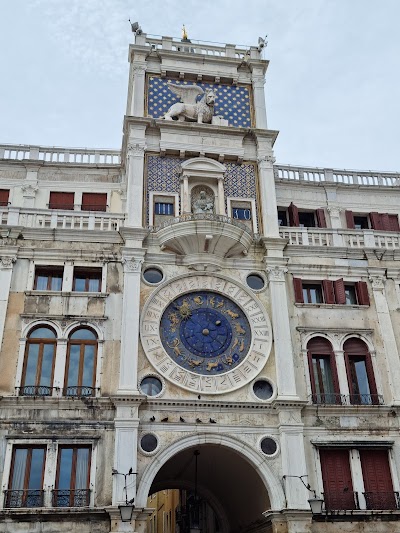
Clock Tower
View on map
7
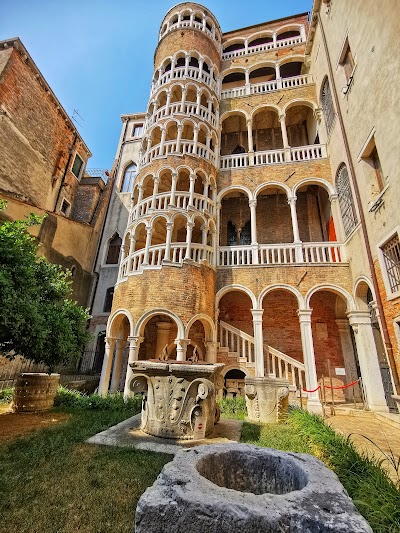
Palazzo Contarini del Bovolo
View on map
Audio Narrations
English
Introduction
Nestled in the heart of Venice's San Marco district, the Palazzo Contarini del Bovolo stands as a testament to the city's architectural prowess. Built in the 14th century, the palace boasts a unique spiral staircase known as the Scala Contarini del Bovolo, which was added in 1499. This elegant staircase, constructed of Istrian stone and exposed bricks, ascends 26 meters, offering breathtaking views of Venice from its cylindrical tower. The palace's facade is adorned with intricate floral frescoes, while its interior features 17th and 18th-century paintings. Once a residence for the Contarini family, the palace has also served as a lodging house and the headquarters of the Congregazione di Carità. Today, it is owned by the I.P.A.V. and serves as its administrative headquarters.Venetian Palazzo
Palazzo Contarini del Bovolo, a captivating Venetian Palazzo, stands out with its distinctive spiral staircase, the Scala Contarini del Bovolo. This architectural marvel, built in 1499, ascends through a cylindrical tower, offering breathtaking panoramic views of Venice. The staircase's intricate design, with its arches and columns, showcases the fusion of Gothic and Renaissance styles. The Palazzo's origins date back to the 13th century as a "fontego" house, a warehouse for goods. In the 15th century, the Contarini family transformed it into their residence, embellishing it with frescoes and the iconic staircase. The Palazzo's strategic location, equidistant from Rialto and San Marco, reflects the Contarini family's prominence in Venetian society. Over the centuries, the Palazzo has witnessed a rich history. It served as a lodging house in the 19th century, inspiring the character of Corto Maltese in Hugo Pratt's comics. Notably, German astronomer Ernst Wilhelm Tempel made astronomical discoveries while residing here. Today, the Palazzo is the headquarters of I.P.A.V., the Venetian welfare services organization. Palazzo Contarini del Bovolo epitomizes the grandeur and architectural ingenuity of Venetian Palazzi. Its unique spiral staircase, historical significance, and panoramic views make it a must-visit destination for those seeking an immersive experience of Venice's architectural heritage.Famous Filming Location
Palazzo Contarini del Bovolo, an architectural gem in Venice, has graced the silver screen in several notable films. Its distinctive spiral staircase, a masterpiece of Venetian Gothic architecture, has served as a captivating backdrop for scenes in "The Tourist" (2010), where it played a pivotal role in a thrilling chase sequence. The film's depiction of the palazzo's opulent interiors and stunning views from its rooftop terrace further showcased its cinematic allure. In "Casanova" (2005), the palazzo's intricate facade and grand staircase provided an authentic setting for scenes set in 18th-century Venice. The film's portrayal of the palazzo's lavish parties and romantic encounters captured the essence of Casanova's legendary escapades. The palazzo's unique architectural features have also made it a favorite location for fashion shoots and music videos. Its spiral staircase, with its graceful curves and intricate carvings, has served as a backdrop for stunning visuals, while its rooftop terrace has offered breathtaking views for aerial shots. Palazzo Contarini del Bovolo's cinematic legacy continues to attract filmmakers and photographers seeking to capture its timeless beauty and historical charm. Its unique architectural features and evocative atmosphere make it an ideal location for stories set in different eras and genres, ensuring its enduring presence in the world of cinema.
8
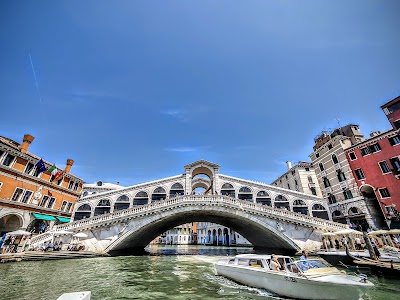
Rialto Bridge
View on map
Audio Narrations
English
Introduction
The Rialto Bridge, a renowned architectural marvel, spans the Grand Canal in Venice, Italy. Designed by Antonio da Ponte and completed in 1591, this single-arch stone bridge is a testament to Renaissance engineering. Its construction involved driving 6,000 timber piles into the soft soil to support its massive arch. The bridge features two ramps leading to a central portico, flanked by rows of shops. Its unique design has made it an iconic symbol of Venice, attracting countless tourists who marvel at its beauty and historical significance.Renaissance Architecture
The Rialto Bridge, an architectural marvel spanning the Grand Canal in Venice, stands as a testament to the ingenuity and artistry of the Renaissance era. Designed by Antonio da Ponte and completed in 1591, this single-arch stone bridge embodies the principles of Renaissance architecture with its harmonious proportions and innovative engineering. The bridge's most striking feature is its wide, single arch, a daring feat of engineering for its time. The arch, spanning over 28 meters, is supported by 12,000 wooden piles driven into the soft alluvial soil, demonstrating the advanced understanding of structural mechanics during the Renaissance. The bridge's deck, adorned with two arcades of shops, is a testament to the commercial importance of the Rialto area. These shops, initially occupied by goldsmiths, jewelers, and craftsmen, contributed to the bridge's status as a bustling hub of commerce and social interaction. The Rialto Bridge's architectural details showcase the refined aesthetics of the Renaissance. The bridge's balustrades are adorned with intricate carvings, while the keystones of the arch feature elaborate sculptural decorations. These embellishments reflect the humanist spirit of the Renaissance, emphasizing the importance of beauty and ornamentation in civic architecture. The bridge's design also reflects the influence of classical architecture. The use of a single arch, reminiscent of Roman aqueducts, and the symmetrical arrangement of the shops on either side of the deck evoke the grandeur and order of ancient Roman structures. The Rialto Bridge remains a masterpiece of Renaissance architecture, showcasing the era's advancements in engineering, aesthetics, and urban planning. Its enduring beauty and functionality have made it an iconic landmark of Venice and a testament to the enduring legacy of the Renaissance.Stone Arch Bridge
The Rialto Bridge, a magnificent stone arch bridge in Venice, Italy, stands as a testament to the city's architectural prowess. Built in the late 16th century, it is the oldest bridge spanning the Grand Canal and a remarkable example of Renaissance engineering. The bridge's single stone arch, spanning 25 meters, is supported by 6,000 timber piles driven deep into the soft alluvial soil. This innovative design ensures stability in the challenging Venetian environment. The bridge's wide rectangular deck carries two arcades of shops, adding to its commercial significance. The lower chord of the bridge is only 83 feet in length, while the width is 66 feet, creating a harmonious and visually striking structure. The Rialto Bridge remains a vital part of Venice's urban fabric, connecting the districts of San Marco and San Polo, and serving as a popular tourist destination.
9
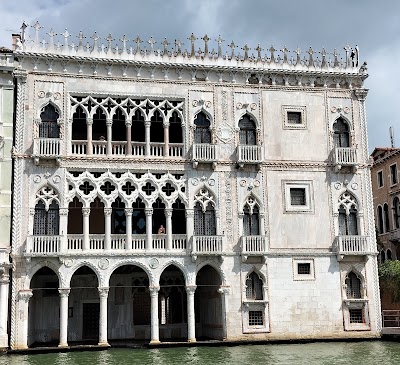
Galleria Giorgio Franchetti alla Ca' d'Oro
View on map
10
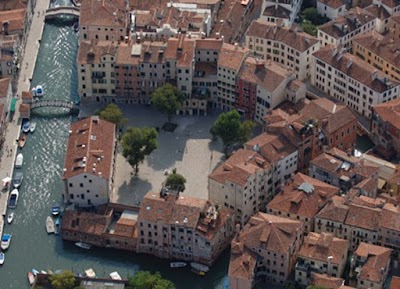
Jewish Museum of Venice
View on map
11
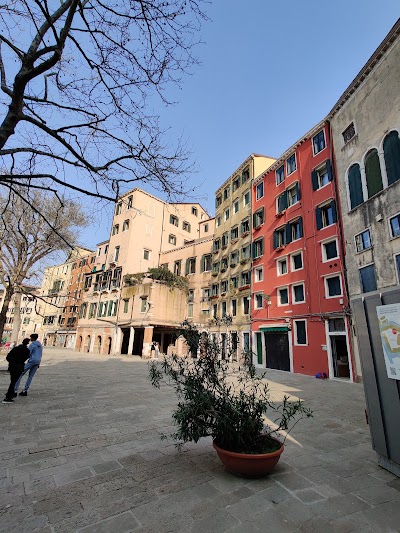
Ghetto Ebraico - Comunità Ebraica di Venezia
View on map
Experience the Full Tour
Download the DocentPro app to access all tour stops, complete audio narrations in multiple languages, offline maps, and interactive features.