
Venetian Enchantment: A Day of Discovery in the Floating City

Walking Tour

4.0 km (2.5 miles)

56 min travel time

15 Stops

Venice, Italy
Venetian Enchantment: A Day of Discovery in the Floating City
Tour Stops
1
Doge's Palace
View on map
Audio Narrations
Introduction
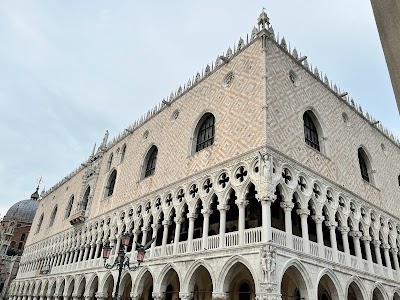
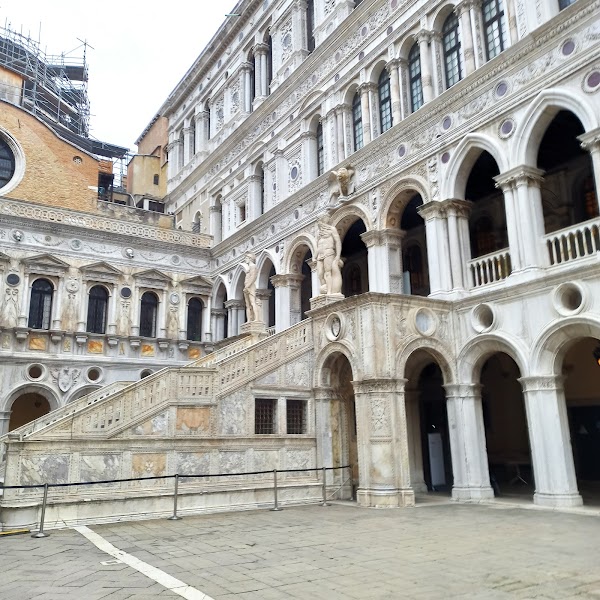
The Doge's Palace, a masterpiece of Gothic architecture, stands as the iconic symbol of Venice. Its construction began in the 14th century, with subsequent expansions and modifications reflecting the city's growing power and wealth. The palace served as the residence of the Doge, the supreme authority of the Venetian Republic, and housed the political institutions that governed the vast maritime empire. The palace's exterior boasts intricate sculptures and a blend of pink and white stone, creating a captivating visual spectacle. Visitors enter through the Porta del Frumento, leading to the courtyard adorned with well-heads and the Giants' Staircase, guarded by colossal statues of Mars and Neptune. The Museo dell'Opera showcases original sculptures and architectural fragments from the palace's facades. Inside, the Doge's apartments offer a glimpse into the private life of the ruler, while the institutional chambers reveal the grandeur of the Venetian Republic. The Old Prison, known as the Piombi, once held famous inmates like Silvio Pellico and Giacomo Casanova. The Bridge of Sighs connects the palace to the New Prisons, a testament to the city's justice system. The Doge's Palace is a testament to Venice's architectural prowess and its enduring legacy as a maritime and commercial powerhouse. Its intricate details, historical significance, and captivating beauty continue to enchant visitors from around the world.Renaissance Masterpieces
Doge's Palace, a testament to Venetian grandeur, houses an unparalleled collection of Renaissance masterpieces that captivate art enthusiasts. Among its treasures is Tintoretto's colossal "Paradise," the largest oil painting in the world, adorning the ceiling of the Sala del Maggior Consiglio. Its vibrant colors and dynamic composition depict the ascent of souls to heaven, a breathtaking spectacle that immerses viewers in the celestial realm. Equally impressive is Titian's "Presentation of the Virgin at the Temple," a serene and luminous depiction of the young Mary's dedication to the temple. The painting's soft, ethereal light and graceful figures embody the essence of the Venetian Renaissance style. Veronese's "Feast in the House of Levi" transforms a biblical scene into a lavish banquet, showcasing the artist's mastery of perspective and opulent details. The painting's vibrant colors and lifelike characters bring the story to life, inviting viewers to partake in the sumptuous feast. Beyond these iconic works, the Doge's Palace boasts a treasure trove of lesser-known masterpieces. Bellini's "Madonna and Child with Saints" exudes a quiet dignity, while Carpaccio's "Miracle of the True Cross at the Rialto Bridge" captures the bustling life of Venice in the 15th century. Each masterpiece tells a unique story, offering a glimpse into the artistic genius of the Renaissance era. Together, they form an extraordinary collection that makes the Doge's Palace a pilgrimage site for art lovers seeking the finest examples of Venetian Renaissance painting.Art and Architecture
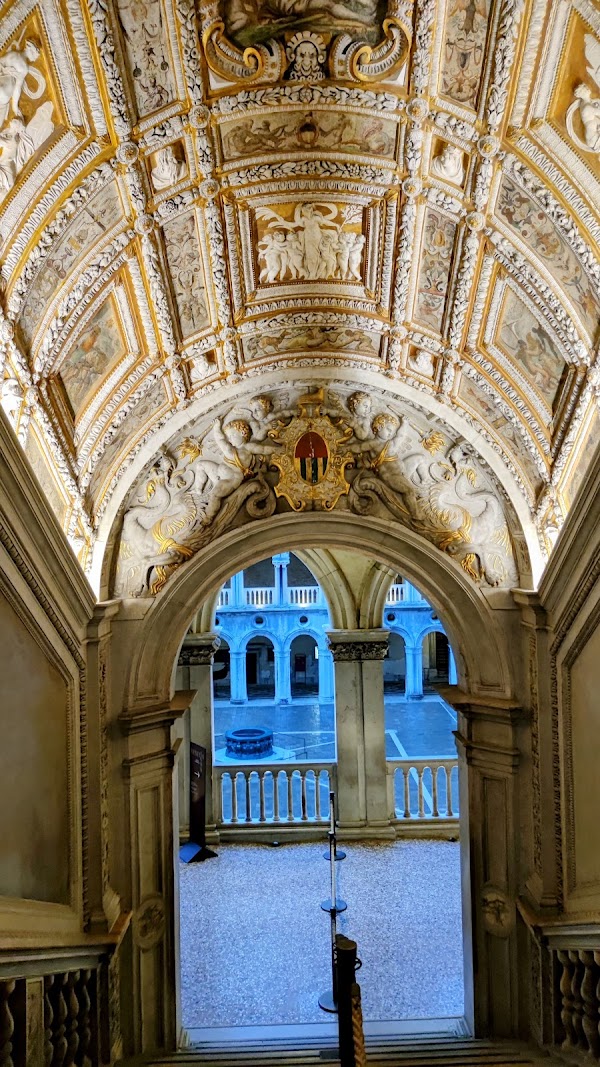
Doge's Palace, a masterpiece of Venetian Gothic architecture, stands as a testament to the city's artistic and political prowess. Its intricate facade, adorned with pointed arches, delicate tracery, and vibrant mosaics, showcases the fusion of Byzantine and Gothic influences. The palace's interior is equally captivating, boasting grand halls adorned with opulent frescoes, gilded ceilings, and marble sculptures. The Sala del Maggior Consiglio, once the seat of the Venetian Republic's governing body, is renowned for its immense size and the stunning ceiling fresco by Tintoretto, depicting the "Paradise." The Doge's Apartments, with their lavish furnishings and exquisite artwork, offer a glimpse into the opulent lifestyle of Venice's rulers. The palace's hidden corners reveal architectural gems, such as the Porta della Carta, an elaborate gateway adorned with intricate carvings, and the Scala d'Oro, a gilded staircase leading to the Doge's private chambers. These architectural marvels, coupled with the palace's rich history and artistic treasures, make Doge's Palace an architectural masterpiece that continues to inspire awe and admiration.
2
St Mark's Campanile
View on map
3
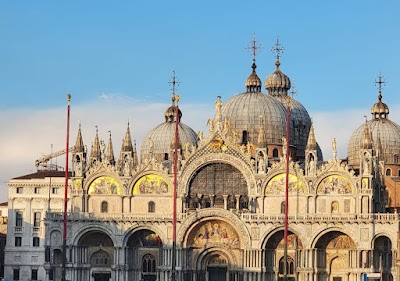
Saint Mark's Basilica
View on map
Audio Narrations
Introduction
Saint Mark's Basilica, a magnificent cathedral in Venice, Italy, is renowned for its opulent golden mosaics that adorn its interior. Built in the 9th century, it houses the relics of Saint Mark the Evangelist, the patron saint of Venice. The basilica's exterior boasts intricate marble encrustations and a multitude of columns, while its western façade features five deeply recessed portals adorned with sculptures and mosaics depicting the translatio of Saint Mark's relics. The basilica's four gilded bronze horses, originally part of a quadriga from Constantinople, stand as symbols of Venice's triumph over Byzantium. Inside, the basilica's golden mosaics cover over 8,000 square meters, narrating biblical tales and showcasing the city's wealth and power. The Pala d'Oro, an exquisite Byzantine altarpiece, is adorned with nearly 2,000 gems, while the Treasury houses spoils from Constantinople. The basilica's crypt holds the Tomb of Saint Mark, and the Museum-Loggia dei Cavalli displays the original gilded bronze horses and offers a panoramic view of St. Mark's Square from its terrace.Religious Significance
Saint Mark's Basilica stands as a testament to the deep religious significance it holds for the city of Venice. Originally built to house the relics of Saint Mark the Evangelist, the basilica has been a central figure in Venetian religious life for centuries. Its opulent interior, adorned with intricate mosaics and precious materials, reflects the city's wealth and devotion. The basilica's status as the Doge's chapel further cemented its importance, as it became the site of significant religious ceremonies and processions. Beyond its architectural grandeur, Saint Mark's Basilica is renowned for its role in Venetian religious traditions. The annual Feast of Saint Mark, held on April 25th, draws thousands of pilgrims and locals alike to celebrate the city's patron saint. The basilica also houses the Pala d'Oro, an exquisite gold altarpiece adorned with jewels and enamel, which holds immense religious significance for the Venetian people. The basilica's religious importance extends beyond its physical presence. It has served as a symbol of Venetian identity and faith, inspiring countless works of art, music, and literature. Its enduring legacy as a center of pilgrimage and devotion continues to attract visitors from around the world, seeking spiritual solace and connection with the city's rich religious heritage.Artistic Masterpiece
Saint Mark's Basilica stands as a testament to the artistic brilliance of the Venetian Republic, showcasing a harmonious blend of Byzantine and Gothic architectural styles. Its opulent interior is adorned with over 85,000 square feet of mesmerizing mosaics, meticulously crafted with real gold, glass, and marble tesserae. These intricate artworks vividly depict biblical tales and historical events, narrating the rich history of Venice and its deep-rooted faith. The Pala d'Oro, an exquisite altarpiece located behind the main altar, is a masterpiece of Byzantine art. Encrusted with 1,300 pearls, 300 sapphires, 300 emeralds, and a dazzling array of garnets, amethysts, rubies, and topazes, it is a testament to the wealth and artistic prowess of Venice during its golden age. The basilica's treasury houses a remarkable collection of sacred relics, including fragments of the True Cross and the body of Saint Mark himself. These treasures, along with the basilica's stunning architecture and opulent decorations, have made it a pilgrimage site for centuries and continue to captivate visitors with its artistic splendor and spiritual significance.
4
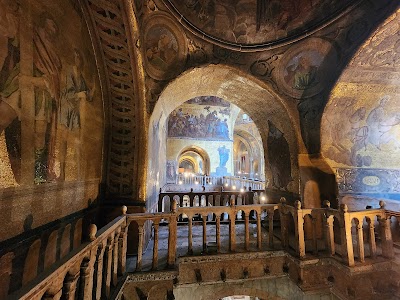
St. Mark’s Museum
View on map
5
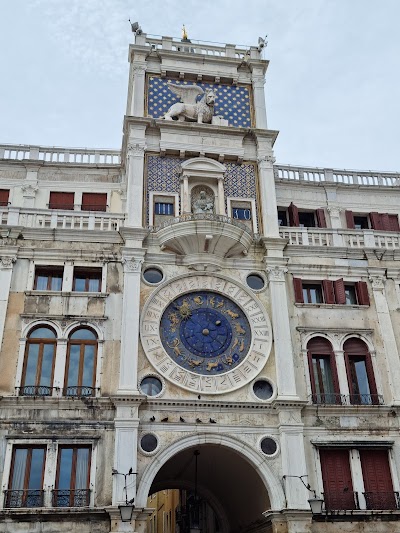
Clock Tower
View on map
6
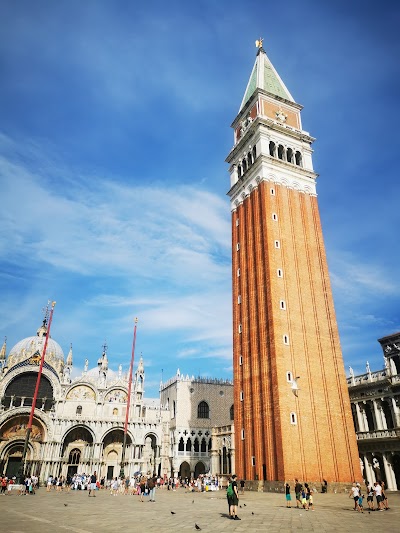
St. Mark's Square
View on map
Audio Narrations
Introduction
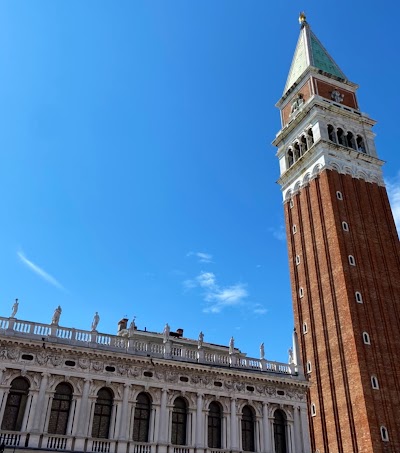
St. Mark's Square, the heart of Venice, is a trapezoidal piazza adorned with architectural marvels. The square is dominated by the iconic St. Mark's Basilica, renowned for its golden mosaics and the priceless Pala d'Oro altar-piece. The Doge's Palace, once the seat of Venetian power, stands adjacent, showcasing its Gothic grandeur. The square's north side features the Procuratie Vecchie and Nuove, elegant arcades housing shops and the Correr Museum. The south side boasts the Loggetta del Sansovino, a graceful Renaissance building, and the famous Caffè Florian, a historic meeting place for intellectuals. The square's focal point is the towering St. Mark's Campanile, offering panoramic city views. The square's history is as rich as its architecture, having witnessed countless events, from religious ceremonies to political gatherings. Today, it remains a vibrant hub, teeming with tourists and locals alike, who gather to admire its beauty and soak in the unique atmosphere of this Venetian treasure.Acqua Alta
St. Mark's Square, the heart of Venice, transforms into a captivating spectacle during Acqua Alta, the city's periodic high tides. As the waters rise, the iconic square becomes a shallow lagoon, reflecting the grandeur of the surrounding architecture. Visitors don colorful boots and navigate the square on raised walkways, capturing the unique charm of this natural phenomenon. The Basilica di San Marco stands tall, its intricate mosaics shimmering in the water's embrace. The Doge's Palace, once the seat of Venetian power, appears as an island amidst the watery expanse. Cafes and shops along the square's perimeter offer refuge, where patrons can sip coffee and watch the spectacle unfold. Acqua Alta transforms St. Mark's Square into a surreal and unforgettable experience, showcasing the resilience and beauty of Venice in the face of nature's whims.Gothic Architecture
St. Mark's Square, the heart of Venice, is a testament to the city's rich history and architectural prowess. While the square is a harmonious blend of architectural styles, Gothic influences are particularly striking. The Doge's Palace, with its intricate tracery and pointed arches, exemplifies Venetian Gothic. Its facade is adorned with delicate carvings and sculptures, a testament to the skill of Venetian artisans. The Palazzo Ducale, connected to the basilica by the Bridge of Sighs, is another Gothic masterpiece. Its elegant loggias and graceful arches create a sense of lightness and airiness. The square's focal point, St. Mark's Basilica, showcases a unique blend of Byzantine and Gothic elements. Its facade features pointed arches, ribbed vaults, and elaborate mosaics, creating a stunning visual spectacle. The interior is equally impressive, with soaring columns, intricate mosaics, and a magnificent golden altarpiece. St. Mark's Square is a living testament to the enduring legacy of Gothic architecture, where the fusion of styles has resulted in a captivating and timeless masterpiece.
7
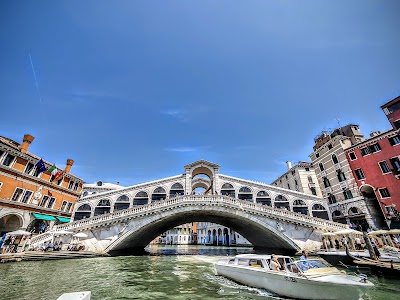
Rialto Bridge
View on map
Audio Narrations
Introduction
The Rialto Bridge, a masterpiece of Renaissance architecture, spans the Grand Canal in Venice, connecting the districts of San Marco and San Polo. Built in 1591, it is the oldest of the four bridges crossing the canal and a testament to the engineering prowess of Antonio da Ponte. Its single stone arch, supported by 6,000 timber piles, has defied critics and become an iconic symbol of Venice. The bridge's design is both functional and aesthetically pleasing. Two ramps lead up to a central portico, flanked by covered ramps lined with shops. This arrangement not only provides access to the bridge but also generates income for the city's treasury. The Rialto Bridge has witnessed countless historical events, from the bustling trade of the Rialto market to the lavish weddings of Venetian nobles. It has also been immortalized in art and literature, including Robert Browning's poem "A Toccata of Galuppi's," where it is referred to as "Shylock's bridge." Today, the Rialto Bridge remains a popular tourist destination, offering breathtaking views of the Grand Canal and the surrounding cityscape. Its unique design and historical significance make it a must-see for any visitor to Venice.Iconic Venetian Architecture
The Rialto Bridge, an architectural marvel spanning the Grand Canal in Venice, stands as a testament to the city's rich history and enduring legacy. Constructed between 1588 and 1591, it is the oldest of Venice's four bridges crossing the Grand Canal and remains a symbol of Venetian engineering prowess. Unlike many other Venetian bridges, the Rialto Bridge features a single, wide arch, allowing for the passage of larger vessels. Its design, attributed to Antonio da Ponte, incorporates elements of both Renaissance and Gothic architecture, showcasing the fusion of styles that characterizes Venetian architecture. The bridge's distinctive silhouette, with its central arch flanked by two smaller arches, has become an iconic symbol of Venice, frequently depicted in art and photography. The Rialto Bridge is not only a functional structure but also a vibrant commercial hub, lined with shops and stalls selling souvenirs, jewelry, and local crafts, adding to its charm and popularity among tourists and locals alike.Architectural Wonder
The Rialto Bridge, an architectural marvel spanning the Grand Canal in Venice, stands as a testament to the city's rich history and enduring legacy. Completed in 1591, this single-span stone arch bridge is a masterpiece of Renaissance engineering, defying the architectural norms of its time. Its innovative design, attributed to Antonio da Ponte, features two inclined ramps leading to a central portico adorned with shops, a unique characteristic that sets it apart from other bridges. The bridge's graceful curve and elegant proportions create a harmonious balance, making it both visually stunning and structurally sound. The Rialto Bridge has withstood centuries of use, earthquakes, and floods, a testament to the exceptional craftsmanship and engineering prowess of its creators. Its enduring presence has made it an iconic symbol of Venice, attracting countless visitors who marvel at its architectural brilliance.
8
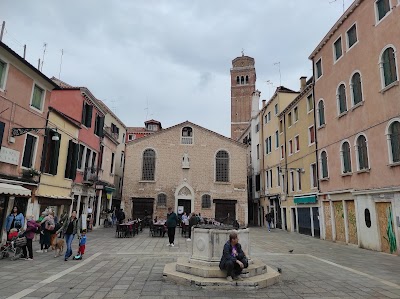
Campo San Tomà
View on map
9
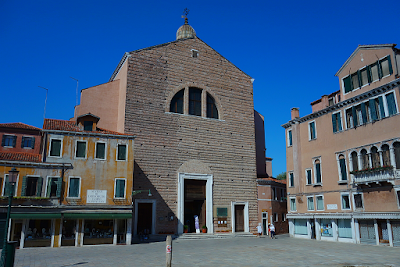
Chiesa Parrocchiale di San Pantalon
View on map
10
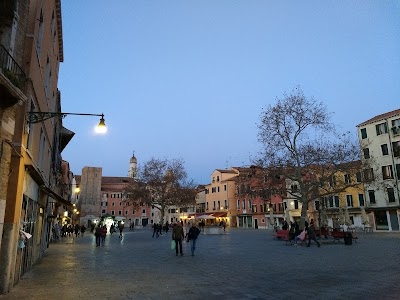
Campo Santa Margherita
View on map
11
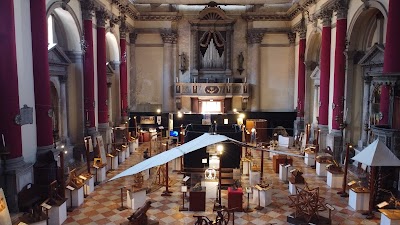
Chiesa di San Barnaba
View on map
12
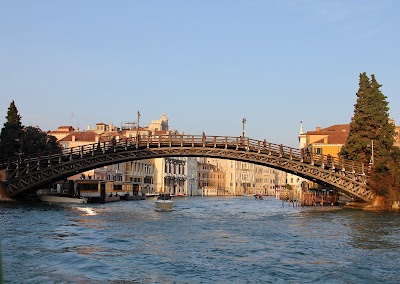
Ponte dell'Accademia
View on map
Audio Narrations
Introduction
The Ponte dell'Accademia, a graceful wooden bridge spanning the Grand Canal in Venice, Italy, offers breathtaking views of the city's iconic landmarks. Designed by Eugenio Miozzi in 1932, it replaced an earlier iron bridge and has since become a beloved landmark. The bridge's simple yet elegant design complements the grandeur of the surrounding architecture, providing a harmonious contrast to the stone palaces and churches. From the Accademia Bridge, visitors can admire the magnificent dome of Santa Maria della Salute on one side and the picturesque bend of the Grand Canal leading towards the Rialto Bridge on the other. The bridge's wooden structure adds a touch of warmth and organic beauty to the cityscape, creating a serene atmosphere amidst the bustling crowds. While the Accademia Bridge is a popular tourist destination, it retains a peaceful ambiance, offering a respite from the throngs of visitors. It's a perfect spot to pause, soak in the beauty of Venice, and capture unforgettable photographs.Historic Connection
The Ponte dell'Accademia, a graceful wooden bridge spanning the Grand Canal in Venice, holds a significant place in the city's history. Built in 1933 as a temporary replacement for an iron bridge, it has become a beloved landmark, embodying the city's resilience and architectural ingenuity. The bridge's design, by Eugenio Miozzi, was initially intended as a temporary solution but has endured for decades, becoming an iconic symbol of Venice. Its wooden structure, a departure from the city's predominantly stone architecture, adds a touch of warmth and organic beauty to the cityscape. The bridge's name pays homage to the Accademia di Belle Arti, housed in the nearby Gallerie dell'Accademia, a renowned museum showcasing Venetian art from the 14th to the 18th centuries. The Ponte dell'Accademia has witnessed countless historical events, from the bustling trade and commerce of the Grand Canal to the romantic serenades and gondola rides that have become synonymous with Venice. It has also been a site of artistic inspiration, featuring in paintings, photographs, and films that capture the essence of the city.Architectural Symbolism
Ponte dell'Accademia, an iconic bridge spanning the Grand Canal in Venice, embodies the architectural symbolism of the city's rich history and cultural heritage. Constructed entirely of wood, it represents the traditional Venetian shipbuilding techniques and the city's close relationship with the sea. The bridge's simple yet elegant design, devoid of elaborate ornamentation, reflects the pragmatic and functional nature of Venetian architecture. The bridge's name, "Accademia," holds symbolic significance as it connects the Accademia di Belle Arti di Venezia, an esteemed art academy, to the rest of the city. This connection underscores the importance of art and culture in Venetian society, where artistic expression has flourished for centuries. The bridge thus serves as a physical and symbolic link between the world of art and the everyday life of the city. Furthermore, Ponte dell'Accademia's location at the heart of Venice, near iconic landmarks like the Peggy Guggenheim Collection and the Punta della Dogana, reinforces its symbolic status. It stands as a testament to the city's enduring architectural legacy and its ability to adapt to changing times while preserving its unique character.
13
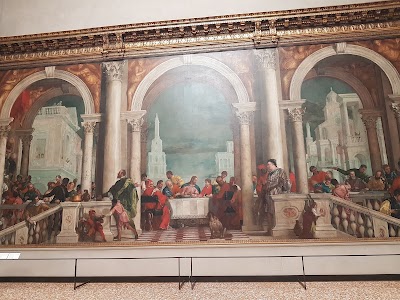
Gallerie dell'Accademia
View on map
14
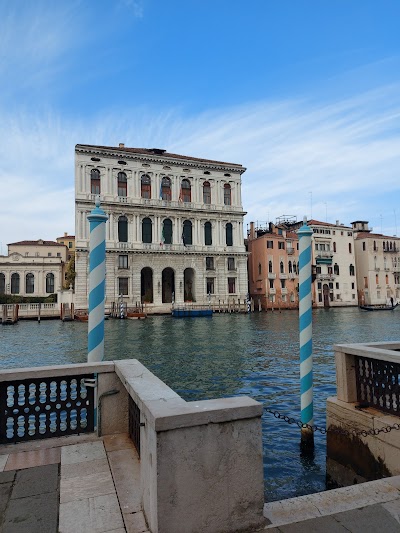
Peggy Guggenheim Collection
View on map
Audio Narrations
Introduction
The Peggy Guggenheim Collection in Venice, Italy, is a renowned museum showcasing 20th-century European and American art. Housed in the opulent Palazzo Venier dei Leoni, the collection boasts works by masters like Picasso, Kandinsky, and Pollock. Peggy Guggenheim, an American art collector and patron, established the museum in 1949, and upon her death, the palace and its contents were donated to the Solomon Guggenheim Foundation. The collection is particularly notable for its holdings of Cubism, Futurism, Surrealism, and American Abstract Expressionism. Visitors can explore the permanent collection, which includes Peggy Guggenheim's personal living spaces, and delve into temporary exhibitions that highlight specific artists or movements. The museum also features a sculpture garden with works by Henry Moore, Alberto Giacometti, and Anish Kapoor, offering a serene outdoor space to contemplate art amidst the Venetian canals.International Internship Program
The Peggy Guggenheim Collection in Venice, Italy, offers an exceptional International Internship Program that immerses participants in the vibrant world of modern and contemporary art. This highly competitive program provides a rare opportunity for aspiring art professionals to gain hands-on experience in various museum departments, including Visitor Services, Education, and Curatorial. Interns collaborate closely with museum staff, assisting with public engagement initiatives, educational programs, and special events. They conduct research, deliver presentations, and engage with visitors, fostering a deep understanding of the museum's collection and mission. The program also includes exclusive access to the museum's library and archive, enabling interns to delve into the rich history of the collection and its founder, Peggy Guggenheim. Beyond the museum's walls, interns benefit from collaborations with other cultural institutions in Venice and beyond. They embark on field trips to renowned art centers, such as Florence, Bologna, and Verona, gaining exposure to diverse artistic movements and historical contexts. These experiences provide a comprehensive perspective on the Italian art scene and its global significance. The International Internship Program at the Peggy Guggenheim Collection is an unparalleled opportunity for individuals seeking an immersive and transformative experience in the field of art. It offers a unique blend of practical training, cultural exploration, and mentorship, fostering the development of future leaders in the art world.Palazzo Venier dei Leoni
Palazzo Venier dei Leoni, an architectural gem on the Grand Canal, serves as the captivating home to the Peggy Guggenheim Collection in Venice. Built in the 18th century by the noble Venier family, the palace boasts a rich history and a unique connection to the art world. Its name, meaning "Palace of the Lions," is attributed to the lion sculptures adorning its facade. Peggy Guggenheim, an American art collector and patron, purchased the palace in 1947, transforming it into her residence and a showcase for her remarkable collection. Upon her death in 1979, the palace and its contents were bequeathed to the Solomon R. Guggenheim Foundation, ensuring the preservation of this extraordinary artistic legacy. The Peggy Guggenheim Collection, housed within Palazzo Venier dei Leoni, offers visitors an intimate glimpse into the life and passion of a visionary collector. The palace's rooms, once Peggy Guggenheim's living spaces, now display masterpieces by renowned artists such as Picasso, Kandinsky, Pollock, and Ernst. The collection reflects Peggy Guggenheim's eclectic taste and her unwavering commitment to supporting contemporary art. Beyond the main collection, the palace also features a sculpture garden, where works by Moore, Giacometti, and Kapoor grace the tranquil outdoor space. The garden serves as Peggy Guggenheim's final resting place, a testament to her enduring connection to the palace and the art it houses. Exploring the Peggy Guggenheim Collection through the lens of Palazzo Venier dei Leoni provides a unique perspective on the life and legacy of a remarkable woman and the exceptional art she collected. The palace's grandeur and the collection's diversity create an unforgettable experience for art enthusiasts seeking an in-depth understanding of Peggy Guggenheim's vision and the transformative power of art.
15
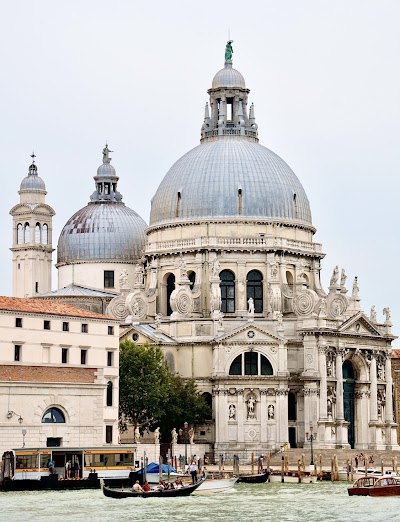
Basilica di Santa Maria della Salute
View on map
Experience the Full Tour
Download the DocentPro app to access all tour stops, complete audio narrations in multiple languages, offline maps, and interactive features.