
Washington D.C.'s Museums: A Cultural Journey Through America's Capital

Walking Tour

3.7 km (2.3 miles)

51 min travel time

9 Stops

Washington D.C., United States
Washington D.C.'s Museums: A Cultural Journey Through America's Capital

Tour Stops
1
National Museum of the American Indian
View on map
Audio Narrations
English
Introduction
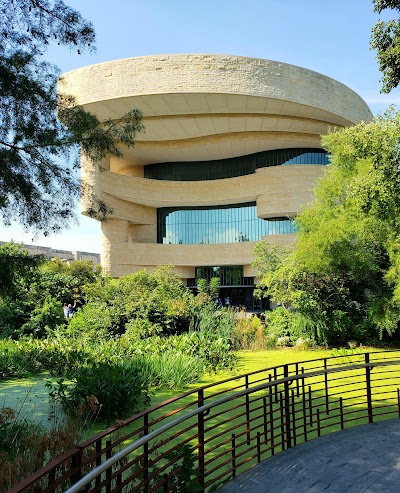
The National Museum of the American Indian in Washington, D.C. stands as a powerful testament to the resilience and diversity of Indigenous cultures across the Western Hemisphere. Its unique architectural design, evocative of natural rock formations, sets the stage for an immersive experience. Within its curved walls, visitors encounter a vast collection of artifacts, ranging from intricately woven textiles and captivating beadwork to poignant photographs and compelling contemporary art. The museum's commitment to presenting Native American perspectives is evident in its exhibitions, often curated in collaboration with Indigenous communities. This approach ensures authenticity and provides a platform for Native voices to be heard directly. One of the museum's most striking features is its impressive collection of totem poles, each one a towering symbol of ancestral knowledge and artistry. The museum also houses the Mitsitam Cafe, a culinary destination in itself, offering visitors a taste of Indigenous cuisines from across the Americas.Indigenous Knowledge
The National Museum of the American Indian in Washington, D.C. offers a unique perspective on Indigenous Knowledge, moving beyond static displays to showcase living traditions and contemporary applications. The museum's collections, exhibitions, and programs emphasize the diversity of Indigenous knowledge systems across the Americas. Visitors can explore how these systems encompass intricate relationships with the natural world, sophisticated understanding of astronomy and medicine, and complex social structures and governance. The museum provides a platform for Indigenous voices to share their perspectives on traditional ecological knowledge, highlighting its relevance in addressing contemporary issues like climate change and sustainability. Through artist demonstrations, storytelling sessions, and interactive workshops, visitors can engage directly with Indigenous knowledge holders and gain a deeper appreciation for the resilience and adaptability of these knowledge systems over generations. The museum's commitment to collaboration with Indigenous communities ensures the accurate and respectful representation of these invaluable cultural assets, making it a vital resource for understanding the depth and dynamism of Indigenous Knowledge.Cultural Revitalization
The National Museum of the American Indian in Washington, D.C. stands as a powerful testament to cultural revitalization. The museum goes beyond simply showcasing artifacts; it provides a platform for Native voices to be heard, stories to be shared, and traditions to be celebrated. Within its walls, visitors encounter living cultures, not relics of the past. The museum actively collaborates with indigenous communities across the Americas, ensuring their perspectives shape exhibitions and programs. This collaborative approach ensures the authenticity and vibrancy of the museum's offerings. From language revitalization programs to contemporary art exhibitions, the museum breathes life into endangered traditions and fosters a deeper understanding of the resilience and diversity of Native cultures. The museum's very existence, designed in collaboration with Native peoples, stands as a powerful symbol of cultural survival and resurgence. By providing a space for intergenerational exchange and cultural transmission, the National Museum of the American Indian empowers Native communities to reclaim their narratives and share their living heritage with the world.
2
Smithsonian National Air and Space Museum
View on map
Audio Narrations
English
Introduction
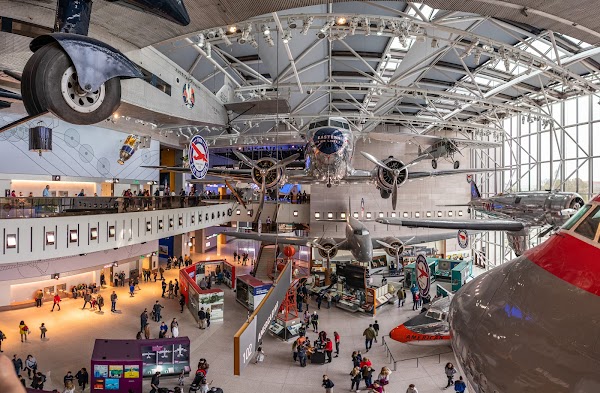
The Smithsonian National Air and Space Museum, located in Washington, D.C., is a renowned institution dedicated to preserving and showcasing the history of aviation and space exploration. Established in 1946, it houses an unparalleled collection of over 60 aircraft, 50 spacecraft, and thousands of artifacts. Among its prized exhibits are the Apollo 11 Command Module Columbia, the Wright brothers' original Flyer, and the Spirit of St. Louis flown by Charles Lindbergh. The museum also boasts an extensive collection of space artifacts, including lunar rocks and a spacesuit worn by Neil Armstrong during his historic moonwalk. Its annex, the Steven F. Udvar-Hazy Center, located near Dulles International Airport, displays even larger aircraft and spacecraft, including the Space Shuttle Discovery and a Concorde. The museum's ongoing renovation, set to be completed in 2026, promises to enhance the visitor experience with new galleries and interactive exhibits, ensuring its status as a global destination for aviation and space enthusiasts.Aerospace
The Smithsonian National Air and Space Museum in Washington, D.C., stands as a beacon of aerospace history and innovation. Its vast collection boasts the Wright brothers' original Flyer, the Apollo 11 command module Columbia, and the Space Shuttle Discovery, offering an unparalleled glimpse into the evolution of human flight. The museum's artifacts extend beyond spacecraft, encompassing historic aircraft like the Lockheed SR-71 Blackbird and the Boeing 367-80, the prototype for the iconic 707 airliner. For those fascinated by space exploration, the museum's displays delve into the intricacies of planetary science and astrophysics. Visitors can marvel at lunar samples, touch a piece of the Martian meteorite ALH84001, and witness the Hubble Space Telescope's corrective optics, COSTAR. The museum's ongoing research initiatives contribute to our understanding of the cosmos, with scientists studying everything from the formation of stars to the search for extraterrestrial life. The museum's commitment to aerospace education is evident in its interactive exhibits and educational programs. The Albert Einstein Planetarium captivates audiences with immersive shows exploring the wonders of the universe, while the Boeing Learning Center engages young minds with hands-on activities that spark a passion for STEM fields. Through its vast collection, cutting-edge research, and educational outreach, the Smithsonian National Air and Space Museum remains a global hub for aerospace enthusiasts, inspiring generations to reach for the stars.Science and Technology
The Smithsonian National Air and Space Museum in Washington, D.C. stands as a beacon of scientific and technological innovation. Its vast collection of artifacts, spanning the history of aviation and space exploration, offers a treasure trove of insights into human ingenuity and the relentless pursuit of knowledge. The museum's exhibits showcase groundbreaking aircraft, from the Wright brothers' original Flyer to the sleek SR-71 Blackbird. Visitors can marvel at the Apollo 11 command module, Columbia, which carried the first humans to the Moon, and witness the evolution of space exploration through interactive displays. Beyond its iconic artifacts, the museum houses a wealth of scientific research and educational programs. The Center for Earth and Planetary Studies conducts cutting-edge research in astrophysics, planetary geology, and the search for life beyond Earth. The museum's educators engage visitors of all ages, fostering a passion for science and inspiring future generations of explorers. The Smithsonian National Air and Space Museum is not merely a repository of the past but a vibrant hub for scientific discovery and innovation. Its collections, exhibits, and programs provide an unparalleled opportunity to delve into the wonders of science and technology, igniting curiosity and fueling the human spirit of exploration.
3
National Gallery of Art
View on map
Audio Narrations
English
Introduction
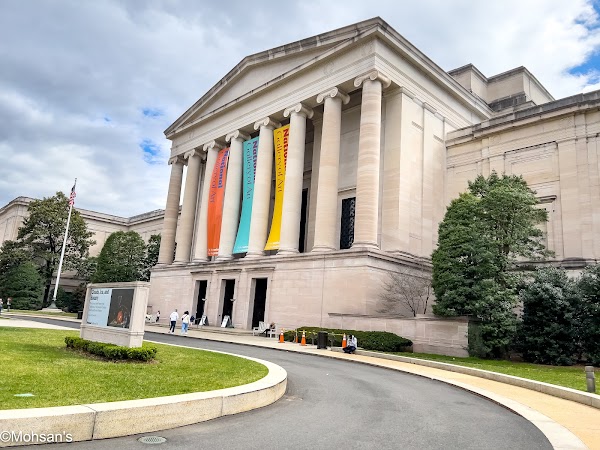
The National Gallery of Art in Washington, D.C., houses an impressive collection of over 141,000 paintings, sculptures, drawings, prints, photographs, and decorative arts. Its European and American masterpieces are displayed in the neoclassical West Building, while modern and contemporary works are showcased in the celebrated East Building designed by I.M. Pei. The Sculpture Garden, a 6.1-acre oasis in the heart of the city, features outdoor sculptures. Among the highlights of the collection is Leonardo da Vinci's "Ginevra de' Benci," the only painting by the master in the Americas. The Gallery also boasts a significant collection of works by Italian Renaissance masters such as Raphael and Titian, as well as masterpieces by Rembrandt, Vermeer, and Van Gogh. With its free admission and diverse offerings, the National Gallery of Art is a must-visit destination for art enthusiasts and culture seekers alike.Masterpieces of Western Art
Nestled in the heart of Washington, D.C., the National Gallery of Art stands as a sanctuary for masterpieces of Western art. Its hallowed halls house an unparalleled collection that spans centuries, from the ethereal beauty of Leonardo da Vinci's "Ginevra de' Benci" to the vibrant brushstrokes of Vincent van Gogh's "The Starry Night." The gallery's Italian Renaissance collection is a treasure trove of artistic brilliance. Duccio's "Maesta" panels, with their intricate gold leaf and vibrant hues, transport visitors to the heart of 14th-century Siena. Fra Angelico's "Adoration of the Magi" and Botticelli's "Adoration of the Magi" showcase the exquisite detail and storytelling that defined the era. Moving through the galleries, one encounters the grandeur of the Venetian masters. Titian's "Venus of Urbino" exudes sensuality and grace, while Giorgione's "Allendale Nativity" captures the tender intimacy of the holy family. Raphael's "Alba Madonna" and "Saint George and the Dragon" display the artist's mastery of composition and emotional depth. The Dutch Golden Age is represented by a stunning array of works by Rembrandt van Rijn. His "Self-Portrait with Two Circles" reveals the artist's introspective gaze, while "A Woman Holding a Pink" captures the fleeting beauty of a moment. Jan Vermeer's "Girl with a Pearl Earring" enchants with its enigmatic smile and exquisite brushwork. The National Gallery of Art's collection of French Impressionism is equally impressive. Claude Monet's "Water Lilies" series invites viewers to immerse themselves in the tranquil beauty of nature. Edgar Degas' "Little Fourteen-Year-Old Dancer" captures the grace and vulnerability of a young ballerina. Vincent van Gogh's "The Starry Night" is a symphony of swirling colors and emotional intensity. With its unparalleled collection and unwavering commitment to preserving and sharing the masterpieces of Western art, the National Gallery of Art is a destination that inspires awe and wonder in every visitor.Community Engagement
The National Gallery of Art in Washington, D.C., has a deep commitment to community engagement, fostering connections between art and diverse audiences. Through innovative programs and partnerships, the museum strives to make art accessible and meaningful to all. One notable initiative is the "Community Day" program, which offers free admission and special activities tailored to specific community groups, such as families, seniors, and individuals with disabilities. The Gallery also collaborates with local organizations to bring art to underserved communities, organizing workshops, exhibitions, and outreach programs in schools, libraries, and community centers. Furthermore, the museum's "Art for All" program provides free art classes and workshops to individuals with cognitive and physical disabilities, empowering them to engage with art in a creative and inclusive environment. By prioritizing community engagement, the National Gallery of Art in Washington, D.C., plays a vital role in fostering a vibrant and inclusive arts ecosystem that enriches the lives of all.
4
Hirshhorn Museum
View on map
5
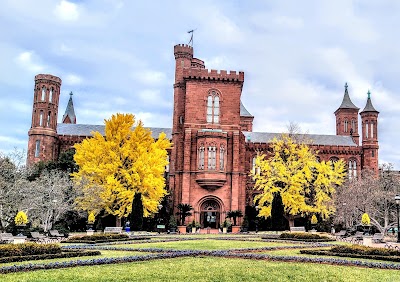
Enid A. Haupt Garden
View on map
6
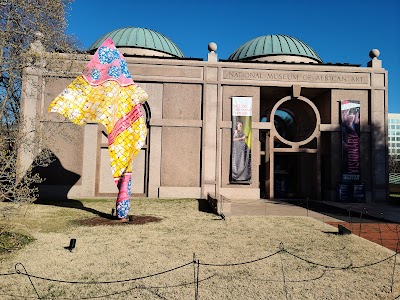
Smithsonian National Museum of African Art
View on map
7
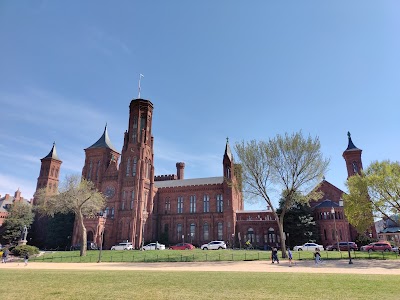
Smithsonian Castle
View on map
Audio Narrations
English
Introduction
The Smithsonian Castle, a majestic sandstone structure, stands as the heart of the Smithsonian Institution in Washington, D.C. Designed in the Norman Revival style by architect James Renwick Jr., the castle's cornerstone was laid in 1847, and it was completed in 1855. Its towers, turrets, and intricate carvings evoke a sense of medieval grandeur, transporting visitors to a bygone era. The castle's interior is equally captivating, with a soaring central hall adorned with intricate murals and sculptures. The nine-foot-tall statue of James Smithson, the institution's founder, stands proudly in the rotunda, a testament to his vision of establishing a center for knowledge and learning. The castle houses the Smithsonian's administrative offices and the Visitor Center, where guests can explore interactive exhibits and learn about the institution's vast collections. Beyond its architectural splendor, the Smithsonian Castle holds a unique place in American history. It served as a hospital during the Civil War, tending to wounded soldiers from both sides of the conflict. Its walls bear witness to the nation's resilience and the power of knowledge to heal. Today, the castle remains a symbol of the Smithsonian's enduring commitment to education, research, and public engagement.Tourist Destination
The Smithsonian Castle, the heart of the Smithsonian Institution, is more than just a museum. It's a historical landmark, a architectural marvel, and a gateway to the vast world of knowledge that the Smithsonian offers. For tourists, the Castle is a must-visit destination. Its iconic red sandstone towers and intricate carvings are a sight to behold, and its central location on the National Mall makes it easily accessible. But beyond its aesthetics, the Castle holds a wealth of treasures waiting to be discovered. Step inside, and you'll be transported back in time. The original exhibits, dating back to the 19th century, showcase the Smithsonian's early collections of natural history specimens, anthropological artifacts, and scientific instruments. These exhibits offer a glimpse into the history of science and exploration, and they're a testament to the Smithsonian's enduring commitment to education and research. One of the Castle's hidden gems is the "Castle's Attic," a collection of over 137,000 objects that haven't been on public display for decades. This treasure trove includes everything from taxidermied animals and antique microscopes to Native American artifacts and historic documents. Visitors can explore this hidden collection through virtual tours and online exhibits, offering a unique behind-the-scenes look at the Smithsonian's vast holdings. The Castle also serves as a starting point for exploring the rest of the Smithsonian museums. With 19 museums and the National Zoo located within walking distance, the Castle is the perfect hub for your Smithsonian adventure. Whether you're a history buff, a science enthusiast, or simply looking for a unique and educational experience, the Smithsonian Castle is a must-visit destination in Washington, D.C. Its rich history, captivating exhibits, and central location make it an unforgettable stop on your journey through the world of knowledge.Fellowship Programs
Nestled in the heart of Washington, D.C., the Smithsonian Castle stands as a beacon of knowledge and discovery, offering unparalleled opportunities for aspiring researchers and scholars through its prestigious Fellowship Programs. Immerse yourself in the rich history of the Smithsonian Institution, the world's largest museum and research complex, as you delve into cutting-edge research and collaborate with renowned experts in your field. The Smithsonian Castle Fellowship Programs provide a unique platform for individuals seeking to advance their research and contribute to the advancement of knowledge. As a Smithsonian Castle Fellow, you will have the privilege of working alongside leading researchers and curators, gaining invaluable insights into the vast collections and resources of the Smithsonian Institution. The Smithsonian Institution offers a diverse range of Fellowship Programs tailored to specific research areas and disciplines. Whether your passion lies in history, science, art, or culture, you will find a program that aligns with your interests and aspirations. From the Smithsonian Institution's Predoctoral Fellowship Program to the Smithsonian Institution's Postdoctoral Fellowship Program, there are numerous opportunities to pursue your research goals and make a meaningful impact on your field. As a Smithsonian Castle Fellow, you will have access to state-of-the-art research facilities, extensive library resources, and a vibrant community of scholars and researchers. The Smithsonian Institution's commitment to fostering a collaborative and intellectually stimulating environment ensures that you will be surrounded by individuals who share your passion for knowledge and discovery. The Smithsonian Castle Fellowship Programs are highly competitive, attracting some of the brightest minds from around the world. To be considered for a Smithsonian Castle Fellowship, you must demonstrate exceptional academic credentials, a strong research proposal, and a commitment to excellence in your field. If you are an aspiring researcher or scholar seeking an unparalleled opportunity to advance your knowledge and make a lasting contribution to your field, the Smithsonian Castle Fellowship Programs offer a transformative experience that will shape your career and ignite your passion for discovery.
8
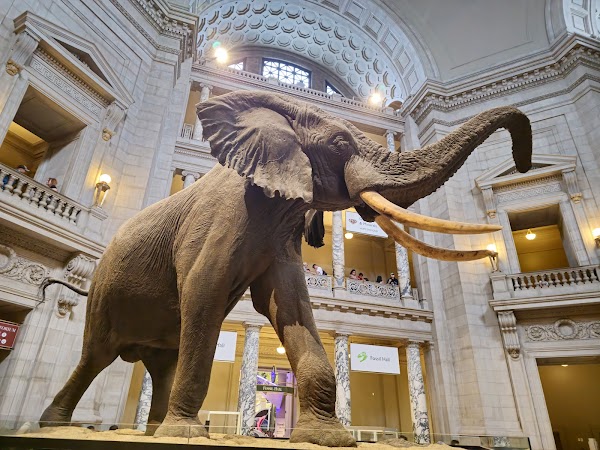
Smithsonian National Museum of Natural History
View on map
Audio Narrations
English
Introduction
The Smithsonian National Museum of Natural History in Washington, D.C., is a colossal institution dedicated to unraveling the mysteries of the natural world. Its vast collection of over 140 million specimens and artifacts spans the realms of geology, zoology, botany, and anthropology. Among its renowned exhibits is the Janet Annenberg Hooker Hall of Geology, Gems and Minerals, which houses the legendary Hope Diamond. The David H. Koch Hall of Fossils, a 31,000-square-foot testament to the concept of "Deep Time," showcases the remarkable journey of life on Earth over billions of years. The Sant Ocean Hall features an awe-inspiring replica of a North Atlantic right whale, while the Q?rius education center empowers young minds with hands-on scientific exploration. The museum's commitment to inclusivity extends to its accessible entrances, designated parking spaces, and a dedicated nursing room for the convenience of visitors.Sant Ocean Hall
The Sant Ocean Hall at the Smithsonian National Museum of Natural History in Washington, D.C., is a captivating exhibition that immerses visitors in the wonders of the ocean. The centerpiece of the hall is a life-size model of a 45-foot North Atlantic right whale named Phoenix, providing an awe-inspiring encounter with one of the ocean's gentle giants. Another highlight is the display of two giant squids, creatures rarely seen alive due to their elusive nature. The hall also boasts a set of 7-foot-tall jaws from the extinct great white shark, Carcharodon megalodon, the largest shark that ever existed. Beyond these remarkable specimens, the Sant Ocean Hall offers an array of interactive exhibits and multimedia presentations. "Ocean Odyssey," a high-definition film by renowned underwater cinematographer Feodor Pitcairn, transports visitors to the depths of the ocean, showcasing its vibrant ecosystems and diverse inhabitants. The "Science on a Sphere" exhibit, created by the National Oceanic and Atmospheric Administration, allows visitors to explore ocean data and imagery, gaining insights into the ocean's dynamic processes. The Sant Ocean Hall is not merely a collection of marine wonders; it is a testament to the Smithsonian's commitment to scientific research and conservation. The exhibition highlights the importance of understanding and protecting the ocean, emphasizing its vital role in sustaining life on Earth. Through its immersive displays and educational programs, the Sant Ocean Hall inspires visitors to appreciate the beauty and fragility of the ocean, fostering a sense of stewardship and responsibility towards this extraordinary realm.Hope Diamond
The Smithsonian National Museum of Natural History in Washington, D.C. proudly houses the Hope Diamond, a captivating blue gem steeped in history and intrigue. Donated by jeweler Harry Winston in 1958, the Hope Diamond has become the centerpiece of the museum's gem collection. Its journey to the Smithsonian was marked by simplicity, arriving via registered mail insured for a mere $1 million. The Hope Diamond's allure extends beyond its captivating hue. In 2005, the Smithsonian confirmed its origins as the stolen French Blue crown jewel through advanced computer-aided geometry research. Its weight, initially estimated between 44 and 45.5 carats, was precisely determined in 1975 at 45.52 carats. The diamond's setting has evolved over time. In 2009, it was showcased as a standalone gem, highlighting its brilliance. In 2010, it was unveiled in a newly designed "Embracing Hope" necklace, featuring white diamonds and white metal. The diamond's current setting, restored in 2012, includes a new diamond worth over a million dollars. The Hope Diamond's mystique is further enhanced by its rumored curse, which has captivated the public's imagination. While there is no concrete evidence linking it to misfortune, the legend adds to its allure. The diamond's journey from India to the Smithsonian is a testament to its enduring legacy and the museum's commitment to preserving historical treasures.
9
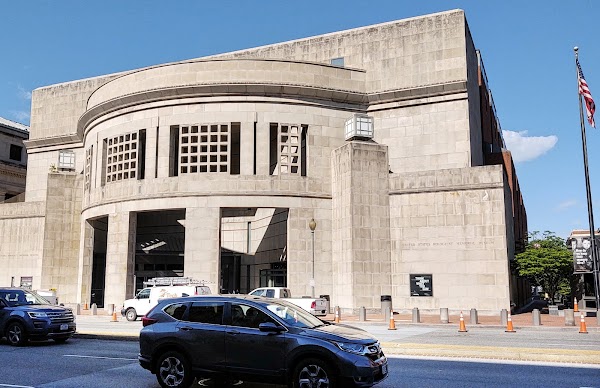
United States Holocaust Memorial Museum
View on map
Audio Narrations
English
Introduction
The United States Holocaust Memorial Museum in Washington, D.C., is a poignant tribute to the victims and survivors of the Holocaust. Its permanent exhibition, "The Holocaust," takes visitors on a chronological journey through the Nazi regime's atrocities, from the rise of Hitler to the liberation of concentration camps. Artifacts, photographs, and eyewitness testimonies paint a vivid and harrowing picture of the horrors endured by millions. The museum also houses special exhibitions that explore the Holocaust's broader context and its impact on human rights. The Hall of Remembrance, a hexagonal room echoing the Star of David, provides a serene space for reflection and remembrance. Beyond its exhibits, the museum actively promotes education and genocide prevention through programs like the Center for Advanced Holocaust Studies and the Academy for Genocide Prevention. Its website offers a wealth of resources, including online exhibitions, personal stories, and an encyclopedia of the Holocaust. The museum's architecture, designed by James Ingo Freed, is a powerful statement in itself. Its angular, disorienting spaces evoke the unease and uncertainty experienced by Holocaust victims. The museum's presence on the National Mall, adjacent to the Smithsonian museums, underscores the importance of confronting and learning from the darkest chapters of human history.Architectural Symbolism
The United States Holocaust Memorial Museum in Washington, D.C., is a powerful embodiment of architectural symbolism, designed to evoke the horrors of the Holocaust through its very structure. Architect James Ingo Freed drew inspiration from Holocaust sites, incorporating elements that subtly reference the atrocities committed. The exterior's simplicity belies a complex interior, where twisted metal and distorted masonry symbolize the disruption and fragmentation caused by the Holocaust. The Hall of Witness, the museum's central space, is a towering atrium that evokes the disorientation and fear experienced by victims. Its steel-framed roof, intentionally asymmetrical, suggests instability and unease. The Hall of Remembrance, a hexagonal chamber filled with light, stands in stark contrast, offering a space for quiet contemplation and remembrance. Its eternal flame and inscribed names of concentration and death camps serve as a poignant reminder of the lives lost. Throughout the museum, materials like kiln-fired bricks and steel sinews recall the industrialization of death, while the interplay of light and shadow creates an atmosphere of both reverence and unease. The United States Holocaust Memorial Museum is not merely a repository of artifacts; it is a living testament to the horrors of the past, using architecture as a powerful tool to convey the incomprehensible.Holocaust Remembrance
The United States Holocaust Memorial Museum in Washington, D.C., stands as a solemn tribute to the victims of the Holocaust and a testament to the resilience of the human spirit. Its permanent exhibit, "The Holocaust," takes visitors on a harrowing journey through the Nazi regime's systematic genocide, from the rise of anti-Semitism to the horrors of the concentration camps. Upon entering, visitors receive an identity card bearing the name of a real Holocaust victim. This personal connection deepens the emotional impact of the exhibit, as visitors witness the unfolding tragedy through the eyes of an individual. The Hall of Remembrance, a hexagonal room echoing the Star of David, provides a serene space for reflection and remembrance. The museum's extensive collection includes artifacts, documents, and testimonies that offer a comprehensive account of the Holocaust. Visitors can view a Polish railcar used to transport Jews to concentration camps, hear firsthand accounts from survivors, and explore the museum's online archives. Beyond its exhibits, the museum plays a vital role in Holocaust education and prevention. The Center for Advanced Holocaust Studies and the Academy for Genocide Prevention train professionals in the field, while the website provides a wealth of resources for educators and the public. The United States Holocaust Memorial Museum is a powerful reminder of the darkness that can consume humanity. Yet, it also serves as a beacon of hope, inspiring visitors to confront hatred, promote tolerance, and work towards a world free from genocide.
Experience the Full Tour
Download the DocentPro app to access all tour stops, complete audio narrations in multiple languages, offline maps, and interactive features.