
Washington D.C.'s Museums: A Cultural Journey Through America's Capital

Walking Tour

3.7 km (2.3 miles)

51 min travel time

9 Stops

Washington D.C., United States
Washington D.C.'s Museums: A Cultural Journey Through America's Capital

Tour Stops
1
National Museum of the American Indian
View on map
Audio Narrations
English
Introduction
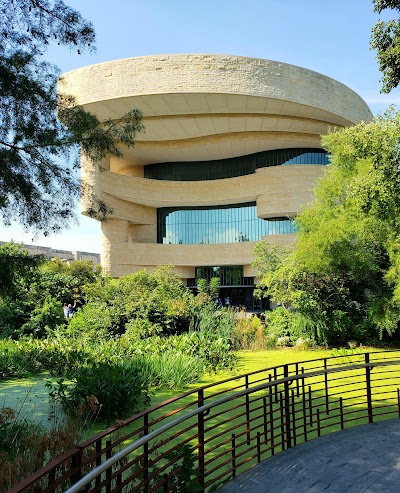
The National Museum of the American Indian in Washington, D.C. stands as a powerful testament to the resilience and diversity of Indigenous cultures across the Western Hemisphere. Its unique architectural design, evocative of natural rock formations, sets the stage for an immersive experience. Within its curved walls, visitors encounter a vast collection of artifacts, ranging from intricately woven textiles and captivating beadwork to poignant photographs and compelling contemporary art. The museum's commitment to presenting Native American perspectives is evident in its exhibitions, often curated in collaboration with Indigenous communities. This approach ensures authenticity and provides a platform for Native voices to be heard directly. One of the museum's most striking features is its impressive collection of totem poles, each one a towering symbol of ancestral knowledge and artistry. The museum also houses the Mitsitam Cafe, a culinary destination in itself, offering visitors a taste of Indigenous cuisines from across the Americas.Indigenous Knowledge
The National Museum of the American Indian in Washington, D.C. offers a unique perspective on Indigenous Knowledge, moving beyond static displays to showcase living traditions and contemporary applications. The museum's collections, exhibitions, and programs emphasize the diversity of Indigenous knowledge systems across the Americas. Visitors can explore how these systems encompass intricate relationships with the natural world, sophisticated understanding of astronomy and medicine, and complex social structures and governance. The museum provides a platform for Indigenous voices to share their perspectives on traditional ecological knowledge, highlighting its relevance in addressing contemporary issues like climate change and sustainability. Through artist demonstrations, storytelling sessions, and interactive workshops, visitors can engage directly with Indigenous knowledge holders and gain a deeper appreciation for the resilience and adaptability of these knowledge systems over generations. The museum's commitment to collaboration with Indigenous communities ensures the accurate and respectful representation of these invaluable cultural assets, making it a vital resource for understanding the depth and dynamism of Indigenous Knowledge.Cultural Revitalization
The National Museum of the American Indian in Washington, D.C. stands as a powerful testament to cultural revitalization. The museum goes beyond simply showcasing artifacts; it provides a platform for Native voices to be heard, stories to be shared, and traditions to be celebrated. Within its walls, visitors encounter living cultures, not relics of the past. The museum actively collaborates with indigenous communities across the Americas, ensuring their perspectives shape exhibitions and programs. This collaborative approach ensures the authenticity and vibrancy of the museum's offerings. From language revitalization programs to contemporary art exhibitions, the museum breathes life into endangered traditions and fosters a deeper understanding of the resilience and diversity of Native cultures. The museum's very existence, designed in collaboration with Native peoples, stands as a powerful symbol of cultural survival and resurgence. By providing a space for intergenerational exchange and cultural transmission, the National Museum of the American Indian empowers Native communities to reclaim their narratives and share their living heritage with the world.
2
Smithsonian National Air and Space Museum
View on map
Audio Narrations
English
Introduction
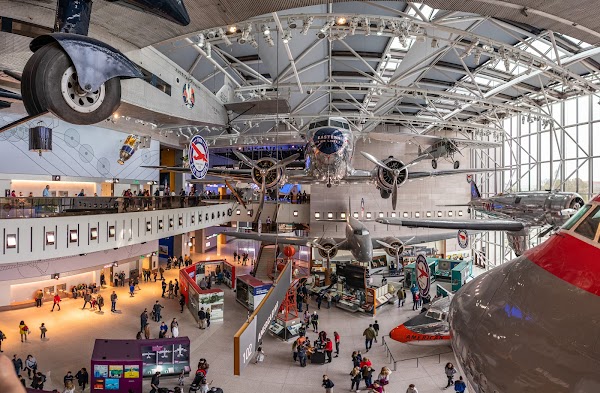
The Smithsonian National Air and Space Museum, located in Washington, D.C., is a renowned institution dedicated to preserving and showcasing the history of aviation and space exploration. Established in 1946, it houses an unparalleled collection of over 60 aircraft, 50 spacecraft, and thousands of artifacts. Among its prized exhibits are the Apollo 11 Command Module Columbia, the Wright brothers' original Flyer, and the Spirit of St. Louis flown by Charles Lindbergh. The museum also boasts an extensive collection of space artifacts, including lunar rocks and a spacesuit worn by Neil Armstrong during his historic moonwalk. Its annex, the Steven F. Udvar-Hazy Center, located near Dulles International Airport, displays even larger aircraft and spacecraft, including the Space Shuttle Discovery and a Concorde. The museum's ongoing renovation, set to be completed in 2026, promises to enhance the visitor experience with new galleries and interactive exhibits, ensuring its status as a global destination for aviation and space enthusiasts.Aerospace
The Smithsonian National Air and Space Museum in Washington, D.C., stands as a beacon of aerospace history and innovation. Its vast collection boasts the Wright brothers' original Flyer, the Apollo 11 command module Columbia, and the Space Shuttle Discovery, offering an unparalleled glimpse into the evolution of human flight. The museum's artifacts extend beyond spacecraft, encompassing historic aircraft like the Lockheed SR-71 Blackbird and the Boeing 367-80, the prototype for the iconic 707 airliner. For those fascinated by space exploration, the museum's displays delve into the intricacies of planetary science and astrophysics. Visitors can marvel at lunar samples, touch a piece of the Martian meteorite ALH84001, and witness the Hubble Space Telescope's corrective optics, COSTAR. The museum's ongoing research initiatives contribute to our understanding of the cosmos, with scientists studying everything from the formation of stars to the search for extraterrestrial life. The museum's commitment to aerospace education is evident in its interactive exhibits and educational programs. The Albert Einstein Planetarium captivates audiences with immersive shows exploring the wonders of the universe, while the Boeing Learning Center engages young minds with hands-on activities that spark a passion for STEM fields. Through its vast collection, cutting-edge research, and educational outreach, the Smithsonian National Air and Space Museum remains a global hub for aerospace enthusiasts, inspiring generations to reach for the stars.Science and Technology
The Smithsonian National Air and Space Museum in Washington, D.C. stands as a beacon of scientific and technological innovation. Its vast collection of artifacts, spanning the history of aviation and space exploration, offers a treasure trove of insights into human ingenuity and the relentless pursuit of knowledge. The museum's exhibits showcase groundbreaking aircraft, from the Wright brothers' original Flyer to the sleek SR-71 Blackbird. Visitors can marvel at the Apollo 11 command module, Columbia, which carried the first humans to the Moon, and witness the evolution of space exploration through interactive displays. Beyond its iconic artifacts, the museum houses a wealth of scientific research and educational programs. The Center for Earth and Planetary Studies conducts cutting-edge research in astrophysics, planetary geology, and the search for life beyond Earth. The museum's educators engage visitors of all ages, fostering a passion for science and inspiring future generations of explorers. The Smithsonian National Air and Space Museum is not merely a repository of the past but a vibrant hub for scientific discovery and innovation. Its collections, exhibits, and programs provide an unparalleled opportunity to delve into the wonders of science and technology, igniting curiosity and fueling the human spirit of exploration.
3
National Gallery of Art
View on map
Audio Narrations
English
Introduction
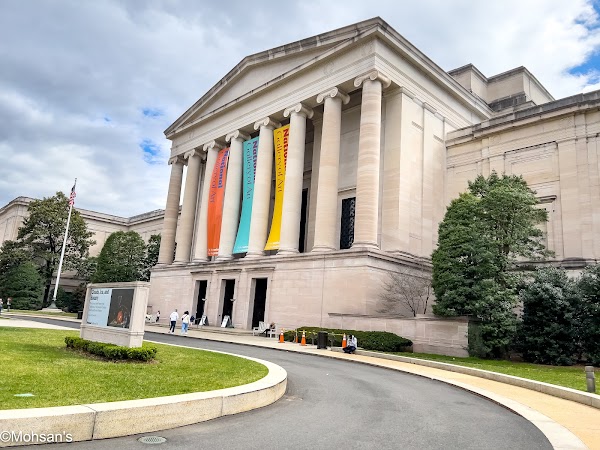
The National Gallery of Art in Washington, D.C., houses an impressive collection of over 141,000 paintings, sculptures, drawings, prints, photographs, and decorative arts. Its European and American masterpieces are displayed in the neoclassical West Building, while modern and contemporary works are showcased in the celebrated East Building designed by I.M. Pei. The Sculpture Garden, a 6.1-acre oasis in the heart of the city, features outdoor sculptures. Among the highlights of the collection is Leonardo da Vinci's "Ginevra de' Benci," the only painting by the master in the Americas. The Gallery also boasts a significant collection of works by Italian Renaissance masters such as Raphael and Titian, as well as masterpieces by Rembrandt, Vermeer, and Van Gogh. With its free admission and diverse offerings, the National Gallery of Art is a must-visit destination for art enthusiasts and culture seekers alike.Masterpieces of Western Art
Nestled in the heart of Washington, D.C., the National Gallery of Art stands as a sanctuary for masterpieces of Western art. Its hallowed halls house an unparalleled collection that spans centuries, from the ethereal beauty of Leonardo da Vinci's "Ginevra de' Benci" to the vibrant brushstrokes of Vincent van Gogh's "The Starry Night." The gallery's Italian Renaissance collection is a treasure trove of artistic brilliance. Duccio's "Maesta" panels, with their intricate gold leaf and vibrant hues, transport visitors to the heart of 14th-century Siena. Fra Angelico's "Adoration of the Magi" and Botticelli's "Adoration of the Magi" showcase the exquisite detail and storytelling that defined the era. Moving through the galleries, one encounters the grandeur of the Venetian masters. Titian's "Venus of Urbino" exudes sensuality and grace, while Giorgione's "Allendale Nativity" captures the tender intimacy of the holy family. Raphael's "Alba Madonna" and "Saint George and the Dragon" display the artist's mastery of composition and emotional depth. The Dutch Golden Age is represented by a stunning array of works by Rembrandt van Rijn. His "Self-Portrait with Two Circles" reveals the artist's introspective gaze, while "A Woman Holding a Pink" captures the fleeting beauty of a moment. Jan Vermeer's "Girl with a Pearl Earring" enchants with its enigmatic smile and exquisite brushwork. The National Gallery of Art's collection of French Impressionism is equally impressive. Claude Monet's "Water Lilies" series invites viewers to immerse themselves in the tranquil beauty of nature. Edgar Degas' "Little Fourteen-Year-Old Dancer" captures the grace and vulnerability of a young ballerina. Vincent van Gogh's "The Starry Night" is a symphony of swirling colors and emotional intensity. With its unparalleled collection and unwavering commitment to preserving and sharing the masterpieces of Western art, the National Gallery of Art is a destination that inspires awe and wonder in every visitor.Community Engagement
The National Gallery of Art in Washington, D.C., has a deep commitment to community engagement, fostering connections between art and diverse audiences. Through innovative programs and partnerships, the museum strives to make art accessible and meaningful to all. One notable initiative is the "Community Day" program, which offers free admission and special activities tailored to specific community groups, such as families, seniors, and individuals with disabilities. The Gallery also collaborates with local organizations to bring art to underserved communities, organizing workshops, exhibitions, and outreach programs in schools, libraries, and community centers. Furthermore, the museum's "Art for All" program provides free art classes and workshops to individuals with cognitive and physical disabilities, empowering them to engage with art in a creative and inclusive environment. By prioritizing community engagement, the National Gallery of Art in Washington, D.C., plays a vital role in fostering a vibrant and inclusive arts ecosystem that enriches the lives of all.
4
Hirshhorn Museum
View on map
5
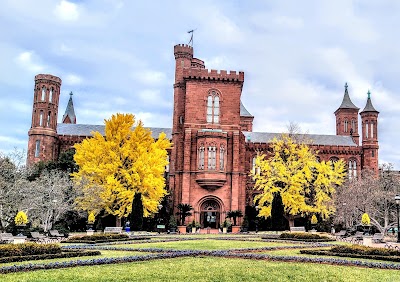
Enid A. Haupt Garden
View on map
6
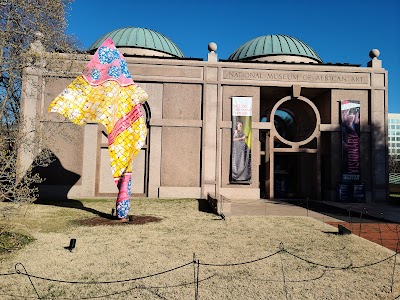
Smithsonian National Museum of African Art
View on map
7
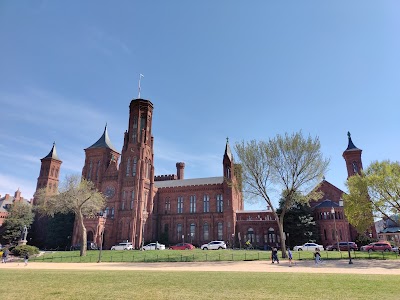
Smithsonian Castle
View on map
Audio Narrations
English
Introduction
The Smithsonian Castle, a majestic sandstone structure, stands as the heart of the Smithsonian Institution in Washington, D.C. Designed in the Norman Revival style by architect James Renwick Jr., the castle's cornerstone was laid in 1847, and it was completed in 1855. Its towers, turrets, and intricate carvings evoke a sense of medieval grandeur, transporting visitors to a bygone era. The castle's interior is equally captivating, with a soaring central hall adorned with intricate murals and sculptures. The nine-foot-tall statue of James Smithson, the institution's founder, stands proudly in the rotunda, a testament to his vision of establishing a center for knowledge and learning. The castle houses the Smithsonian's administrative offices and the Visitor Center, where guests can explore interactive exhibits and learn about the institution's vast collections. Beyond its architectural splendor, the Smithsonian Castle holds a unique place in American history. It served as a hospital during the Civil War, tending to wounded soldiers from both sides of the conflict. Its walls bear witness to the nation's resilience and the power of knowledge to heal. Today, the castle remains a symbol of the Smithsonian's enduring commitment to education, research, and public engagement.Tourist Destination
The Smithsonian Castle, the heart of the Smithsonian Institution, is more than just a museum. It's a historical landmark, a architectural marvel, and a gateway to the vast world of knowledge that the Smithsonian offers. For tourists, the Castle is a must-visit destination. Its iconic red sandstone towers and intricate carvings are a sight to behold, and its central location on the National Mall makes it easily accessible. But beyond its aesthetics, the Castle holds a wealth of treasures waiting to be discovered. Step inside, and you'll be transported back in time. The original exhibits, dating back to the 19th century, showcase the Smithsonian's early collections of natural history specimens, anthropological artifacts, and scientific instruments. These exhibits offer a glimpse into the history of science and exploration, and they're a testament to the Smithsonian's enduring commitment to education and research. One of the Castle's hidden gems is the "Castle's Attic," a collection of over 137,000 objects that haven't been on public display for decades. This treasure trove includes everything from taxidermied animals and antique microscopes to Native American artifacts and historic documents. Visitors can explore this hidden collection through virtual tours and online exhibits, offering a unique behind-the-scenes look at the Smithsonian's vast holdings. The Castle also serves as a starting point for exploring the rest of the Smithsonian museums. With 19 museums and the National Zoo located within walking distance, the Castle is the perfect hub for your Smithsonian adventure. Whether you're a history buff, a science enthusiast, or simply looking for a unique and educational experience, the Smithsonian Castle is a must-visit destination in Washington, D.C. Its rich history, captivating exhibits, and central location make it an unforgettable stop on your journey through the world of knowledge.Fellowship Programs
Nestled in the heart of Washington, D.C., the Smithsonian Castle stands as a beacon of knowledge and discovery, offering unparalleled opportunities for aspiring researchers and scholars through its prestigious Fellowship Programs. Immerse yourself in the rich history of the Smithsonian Institution, the world's largest museum and research complex, as you delve into cutting-edge research and collaborate with renowned experts in your field. The Smithsonian Castle Fellowship Programs provide a unique platform for individuals seeking to advance their research and contribute to the advancement of knowledge. As a Smithsonian Castle Fellow, you will have the privilege of working alongside leading researchers and curators, gaining invaluable insights into the vast collections and resources of the Smithsonian Institution. The Smithsonian Institution offers a diverse range of Fellowship Programs tailored to specific research areas and disciplines. Whether your passion lies in history, science, art, or culture, you will find a program that aligns with your interests and aspirations. From the Smithsonian Institution's Predoctoral Fellowship Program to the Smithsonian Institution's Postdoctoral Fellowship Program, there are numerous opportunities to pursue your research goals and make a meaningful impact on your field. As a Smithsonian Castle Fellow, you will have access to state-of-the-art research facilities, extensive library resources, and a vibrant community of scholars and researchers. The Smithsonian Institution's commitment to fostering a collaborative and intellectually stimulating environment ensures that you will be surrounded by individuals who share your passion for knowledge and discovery. The Smithsonian Castle Fellowship Programs are highly competitive, attracting some of the brightest minds from around the world. To be considered for a Smithsonian Castle Fellowship, you must demonstrate exceptional academic credentials, a strong research proposal, and a commitment to excellence in your field. If you are an aspiring researcher or scholar seeking an unparalleled opportunity to advance your knowledge and make a lasting contribution to your field, the Smithsonian Castle Fellowship Programs offer a transformative experience that will shape your career and ignite your passion for discovery.
8
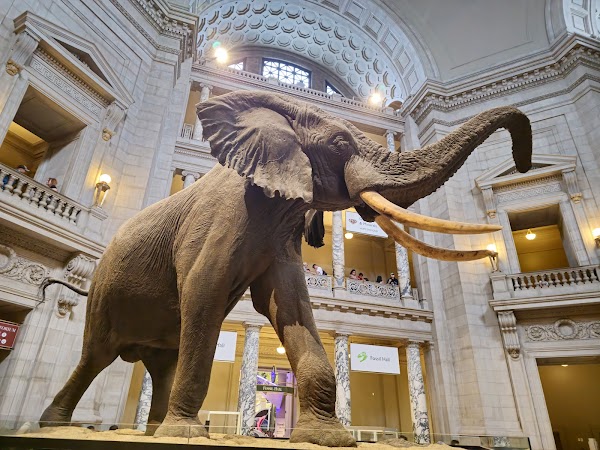
Smithsonian National Museum of Natural History
View on map
Audio Narrations
RU
Введение
Смитсоновский национальный музей естественной истории в Вашингтоне, округ Колумбия, — колоссальное учреждение, посвященное раскрытию тайн природного мира. Его обширная коллекция из более чем 140 миллионов образцов и артефактов охватывает области геологии, зоологии, ботаники и антропологии. Среди его известных экспонатов — зал геологии, драгоценных камней и минералов Джанет Анненберг Хукер, в котором находится легендарный бриллиант «Надежда». Зал окаменелостей Дэвида Х. Коха, площадью 31 000 квадратных футов, является свидетельством концепции «глубокого времени» и демонстрирует замечательное путешествие жизни на Земле на протяжении миллиардов лет. В зале океана Сант представлена внушающая благоговение копия североатлантического гладкого кита, а образовательный центр Q?rius дает молодым умам возможность практического научного исследования. Приверженность музея инклюзивности распространяется на его доступные входы, выделенные парковочные места и специальную комнату для кормления грудью для удобства посетителей.Зал океана Санта
Зал океана Сэнта в Национальном музее естественной истории Смитсоновского института в Вашингтоне, округ Колумбия, — это захватывающая выставка, которая погружает посетителей в чудеса океана. Центральным элементом зала является модель в натуральную величину 45-футового североатлантического гладкого кита по имени Феникс, обеспечивающая внушительную встречу с одним из нежных гигантов океана. Еще одним ярким моментом является демонстрация двух гигантских кальмаров, существ, которых редко можно увидеть живыми из-за их неуловимой природы. В зале также есть набор 7-футовых челюстей вымершей большой белой акулы, Carcharodon megalodon, самой большой акулы, которая когда-либо существовала. Помимо этих замечательных образцов, в зале океана Сэнта представлен ряд интерактивных экспонатов и мультимедийных презентаций. «Океанская одиссея», фильм в формате высокой четкости известного подводного оператора Федора Питкэрна, переносит посетителей в глубины океана, демонстрируя его яркие экосистемы и разнообразных обитателей. Экспонат «Наука на сфере», созданный Национальным управлением по океану и атмосфере, позволяет посетителям изучать данные и изображения океана, получая представление о динамических процессах океана. Зал океана Сэнта — это не просто коллекция морских чудес; это свидетельство приверженности Смитсоновского института научным исследованиям и охране природы. Выставка подчеркивает важность понимания и защиты океана, подчеркивая его жизненно важную роль в поддержании жизни на Земле. Благодаря своим захватывающим экспонатам и образовательным программам зал океана Сэнта вдохновляет посетителей ценить красоту и хрупкость океана, воспитывая чувство бережливости и ответственности по отношению к этому необыкновенному царству.Бриллиант Надежды
Национальный музей естественной истории Смитсоновского института в Вашингтоне, округ Колумбия, с гордостью хранит бриллиант Хоуп, завораживающий голубой камень, пропитанный историей и интригами. Пожертвованный ювелиром Гарри Уинстоном в 1958 году, бриллиант Хоуп стал центральным элементом коллекции драгоценных камней музея. Его путешествие в Смитсоновский институт было отмечено простотой: он прибыл по почте заказным письмом, застрахованным всего на 1 миллион долларов. Притягательность бриллианта Хоупа выходит за рамки его завораживающего оттенка. В 2005 году Смитсоновский институт подтвердил его происхождение как украденной французской королевской драгоценности «Голубой бриллиант» с помощью передовых компьютерных геометрических исследований. Его вес, первоначально оцениваемый в 44–45,5 карата, был точно определен в 1975 году как 45,52 карата. Оправа бриллианта со временем менялась. В 2009 году он был представлен как самостоятельный камень, подчеркивающий его блеск. В 2010 году он был представлен в новом ожерелье «Обнимая надежду», украшенном белыми бриллиантами и белым металлом. Текущая оправа бриллианта, восстановленная в 2012 году, включает новый бриллиант стоимостью более миллиона долларов. Мистику бриллианта Хоупа еще больше усиливает его предполагаемое проклятие, которое захватило воображение общественности. Хотя нет никаких конкретных доказательств, связывающих его с несчастьями, легенда добавляет ему привлекательности. Путешествие бриллианта из Индии в Смитсоновский институт является свидетельством его непреходящего наследия и приверженности музея сохранению исторических сокровищ.
9
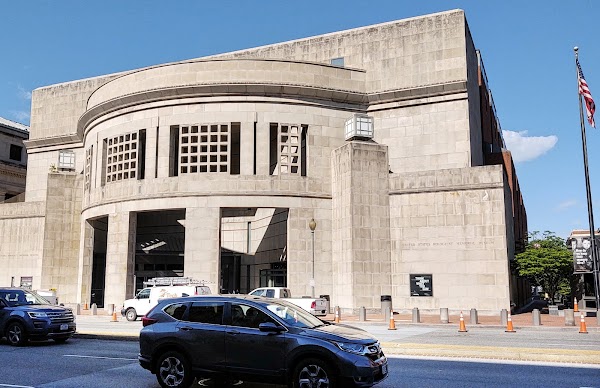
United States Holocaust Memorial Museum
View on map
Audio Narrations
RU
Введение
Мемориальный музей Холокоста Соединенных Штатов в Вашингтоне, округ Колумбия, является трогательной данью памяти жертвам и выжившим в Холокосте. Его постоянная экспозиция «Холокост» проводит посетителей по хронологическому путешествию через зверства нацистского режима, от прихода Гитлера к власти до освобождения концентрационных лагерей. Артефакты, фотографии и свидетельства очевидцев рисуют яркую и душераздирающую картину ужасов, перенесенных миллионами людей. В музее также проводятся специальные выставки, посвященные более широкому контексту Холокоста и его влиянию на права человека. Зал памяти, шестиугольная комната, напоминающая Звезду Давида, предоставляет спокойное место для размышлений и воспоминаний. Помимо своих экспонатов, музей активно продвигает образование и предотвращение геноцида через такие программы, как Центр передовых исследований Холокоста и Академия по предотвращению геноцида. На его веб-сайте представлено множество ресурсов, включая онлайн-выставки, личные истории и энциклопедию Холокоста. Архитектура музея, спроектированная Джеймсом Инго Фридом, сама по себе является мощным заявлением. Его угловатые, дезориентирующие пространства вызывают беспокойство и неуверенность, которые испытывали жертвы Холокоста. Расположение музея на Национальной аллее, рядом с музеями Смитсоновского института, подчеркивает важность противостояния и извлечения уроков из самых мрачных глав человеческой истории.Архитектурная символика
Мемориальный музей Холокоста в Вашингтоне, округ Колумбия, является мощным воплощением архитектурного символизма, призванного вызвать ужасы Холокоста через саму его структуру. Архитектор Джеймс Инго Фрид черпал вдохновение в местах Холокоста, включив элементы, которые тонко ссылаются на совершенные зверства. Простота экстерьера скрывает сложный интерьер, где скрученный металл и искаженная кладка символизируют разрушение и фрагментацию, вызванные Холокостом. Зал свидетелей, центральное пространство музея, представляет собой возвышающийся атриум, который вызывает дезориентацию и страх, испытанные жертвами. Его стальная крыша, намеренно асимметричная, предполагает нестабильность и беспокойство. Зал памяти, шестиугольная камера, залитая светом, резко контрастирует, предлагая пространство для тихого созерцания и воспоминаний. Его вечный огонь и выгравированные названия концентрационных и лагерей смерти служат трогательным напоминанием о потерянных жизнях. По всему музею такие материалы, как обожженный кирпич и стальные жилы, напоминают об индустриализации смерти, в то время как взаимодействие света и тени создает атмосферу как благоговения, так и беспокойства. Мемориальный музей Холокоста в Соединенных Штатах - это не просто хранилище артефактов; это живое свидетельство ужасов прошлого, использующее архитектуру как мощный инструмент для передачи непостижимого.Память о Холокосте
Мемориальный музей Холокоста в Вашингтоне, округ Колумбия, является торжественной данью памяти жертвам Холокоста и свидетельством стойкости человеческого духа. Его постоянная экспозиция «Холокост» уводит посетителей в ужасающее путешествие по систематическому геноциду нацистского режима, от подъема антисемитизма до ужасов концентрационных лагерей. При входе посетители получают удостоверение личности с именем реальной жертвы Холокоста. Эта личная связь усиливает эмоциональное воздействие экспозиции, поскольку посетители становятся свидетелями разворачивающейся трагедии глазами отдельного человека. Зал памяти, шестиугольная комната, напоминающая Звезду Давида, предоставляет спокойное место для размышлений и воспоминаний. Обширная коллекция музея включает артефакты, документы и свидетельства, которые дают полное представление о Холокосте. Посетители могут увидеть польский вагон, использовавшийся для перевозки евреев в концентрационные лагеря, услышать рассказы очевидцев из первых уст и изучить онлайн-архивы музея. Помимо своих экспозиций, музей играет важную роль в образовании и профилактике Холокоста. Центр передовых исследований Холокоста и Академия по предотвращению геноцида обучают специалистов в этой области, а веб-сайт предоставляет множество ресурсов для педагогов и общественности. Мемориальный музей Холокоста в Соединенных Штатах является мощным напоминанием о тьме, которая может поглотить человечество. Тем не менее, он также служит маяком надежды, вдохновляя посетителей противостоять ненависти, пропагандировать терпимость и работать над созданием мира, свободного от геноцида.
Experience the Full Tour
Download the DocentPro app to access all tour stops, complete audio narrations in multiple languages, offline maps, and interactive features.