
Washington D.C.'s Museums: A Cultural Journey Through America's Capital

Walking Tour

3.7 km (2.3 miles)

51 min travel time

9 Stops

Washington D.C., United States
Washington D.C.'s Museums: A Cultural Journey Through America's Capital
Tour Stops
1
National Museum of the American Indian
View on map
Audio Narrations
English
Introduction
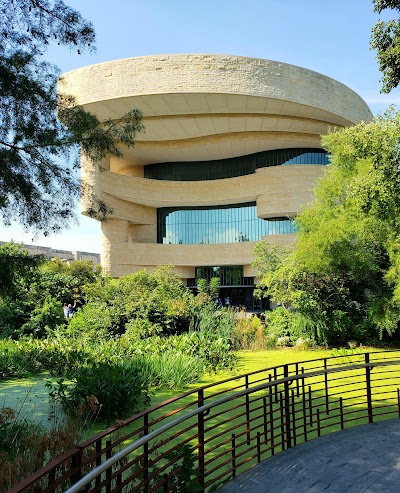
The National Museum of the American Indian in Washington, D.C. stands as a powerful testament to the resilience and diversity of Indigenous cultures across the Western Hemisphere. Its unique architectural design, evocative of natural rock formations, sets the stage for an immersive experience. Within its curved walls, visitors encounter a vast collection of artifacts, ranging from intricately woven textiles and captivating beadwork to poignant photographs and compelling contemporary art. The museum's commitment to presenting Native American perspectives is evident in its exhibitions, often curated in collaboration with Indigenous communities. This approach ensures authenticity and provides a platform for Native voices to be heard directly. One of the museum's most striking features is its impressive collection of totem poles, each one a towering symbol of ancestral knowledge and artistry. The museum also houses the Mitsitam Cafe, a culinary destination in itself, offering visitors a taste of Indigenous cuisines from across the Americas.Indigenous Knowledge
The National Museum of the American Indian in Washington, D.C. offers a unique perspective on Indigenous Knowledge, moving beyond static displays to showcase living traditions and contemporary applications. The museum's collections, exhibitions, and programs emphasize the diversity of Indigenous knowledge systems across the Americas. Visitors can explore how these systems encompass intricate relationships with the natural world, sophisticated understanding of astronomy and medicine, and complex social structures and governance. The museum provides a platform for Indigenous voices to share their perspectives on traditional ecological knowledge, highlighting its relevance in addressing contemporary issues like climate change and sustainability. Through artist demonstrations, storytelling sessions, and interactive workshops, visitors can engage directly with Indigenous knowledge holders and gain a deeper appreciation for the resilience and adaptability of these knowledge systems over generations. The museum's commitment to collaboration with Indigenous communities ensures the accurate and respectful representation of these invaluable cultural assets, making it a vital resource for understanding the depth and dynamism of Indigenous Knowledge.Cultural Revitalization
The National Museum of the American Indian in Washington, D.C. stands as a powerful testament to cultural revitalization. The museum goes beyond simply showcasing artifacts; it provides a platform for Native voices to be heard, stories to be shared, and traditions to be celebrated. Within its walls, visitors encounter living cultures, not relics of the past. The museum actively collaborates with indigenous communities across the Americas, ensuring their perspectives shape exhibitions and programs. This collaborative approach ensures the authenticity and vibrancy of the museum's offerings. From language revitalization programs to contemporary art exhibitions, the museum breathes life into endangered traditions and fosters a deeper understanding of the resilience and diversity of Native cultures. The museum's very existence, designed in collaboration with Native peoples, stands as a powerful symbol of cultural survival and resurgence. By providing a space for intergenerational exchange and cultural transmission, the National Museum of the American Indian empowers Native communities to reclaim their narratives and share their living heritage with the world.
2
Smithsonian National Air and Space Museum
View on map
Audio Narrations
English
Introduction
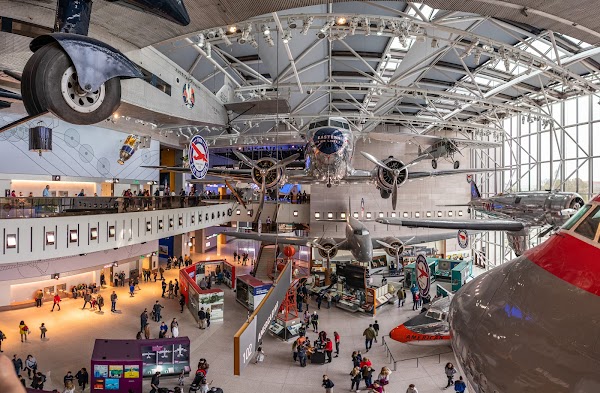
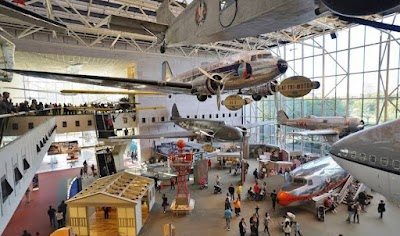
The Smithsonian National Air and Space Museum, located in Washington, D.C., is a renowned institution dedicated to preserving and showcasing the history of aviation and space exploration. Established in 1946, it houses an unparalleled collection of over 60 aircraft, 50 spacecraft, and thousands of artifacts. Among its prized exhibits are the Apollo 11 Command Module Columbia, the Wright brothers' original Flyer, and the Spirit of St. Louis flown by Charles Lindbergh. The museum also boasts an extensive collection of space artifacts, including lunar rocks and a spacesuit worn by Neil Armstrong during his historic moonwalk. Its annex, the Steven F. Udvar-Hazy Center, located near Dulles International Airport, displays even larger aircraft and spacecraft, including the Space Shuttle Discovery and a Concorde. The museum's ongoing renovation, set to be completed in 2026, promises to enhance the visitor experience with new galleries and interactive exhibits, ensuring its status as a global destination for aviation and space enthusiasts.Aerospace
The Smithsonian National Air and Space Museum in Washington, D.C., stands as a beacon of aerospace history and innovation. Its vast collection boasts the Wright brothers' original Flyer, the Apollo 11 command module Columbia, and the Space Shuttle Discovery, offering an unparalleled glimpse into the evolution of human flight. The museum's artifacts extend beyond spacecraft, encompassing historic aircraft like the Lockheed SR-71 Blackbird and the Boeing 367-80, the prototype for the iconic 707 airliner. For those fascinated by space exploration, the museum's displays delve into the intricacies of planetary science and astrophysics. Visitors can marvel at lunar samples, touch a piece of the Martian meteorite ALH84001, and witness the Hubble Space Telescope's corrective optics, COSTAR. The museum's ongoing research initiatives contribute to our understanding of the cosmos, with scientists studying everything from the formation of stars to the search for extraterrestrial life. The museum's commitment to aerospace education is evident in its interactive exhibits and educational programs. The Albert Einstein Planetarium captivates audiences with immersive shows exploring the wonders of the universe, while the Boeing Learning Center engages young minds with hands-on activities that spark a passion for STEM fields. Through its vast collection, cutting-edge research, and educational outreach, the Smithsonian National Air and Space Museum remains a global hub for aerospace enthusiasts, inspiring generations to reach for the stars.Science and Technology
The Smithsonian National Air and Space Museum in Washington, D.C. stands as a beacon of scientific and technological innovation. Its vast collection of artifacts, spanning the history of aviation and space exploration, offers a treasure trove of insights into human ingenuity and the relentless pursuit of knowledge. The museum's exhibits showcase groundbreaking aircraft, from the Wright brothers' original Flyer to the sleek SR-71 Blackbird. Visitors can marvel at the Apollo 11 command module, Columbia, which carried the first humans to the Moon, and witness the evolution of space exploration through interactive displays. Beyond its iconic artifacts, the museum houses a wealth of scientific research and educational programs. The Center for Earth and Planetary Studies conducts cutting-edge research in astrophysics, planetary geology, and the search for life beyond Earth. The museum's educators engage visitors of all ages, fostering a passion for science and inspiring future generations of explorers. The Smithsonian National Air and Space Museum is not merely a repository of the past but a vibrant hub for scientific discovery and innovation. Its collections, exhibits, and programs provide an unparalleled opportunity to delve into the wonders of science and technology, igniting curiosity and fueling the human spirit of exploration.
3
National Gallery of Art
View on map
Audio Narrations
English
Introduction
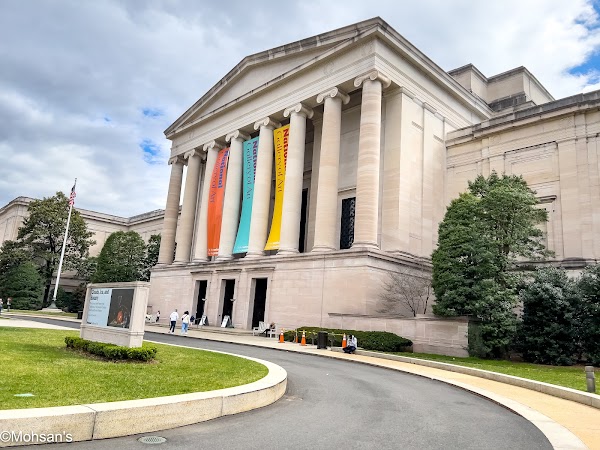
The National Gallery of Art in Washington, D.C., houses an impressive collection of over 141,000 paintings, sculptures, drawings, prints, photographs, and decorative arts. Its European and American masterpieces are displayed in the neoclassical West Building, while modern and contemporary works are showcased in the celebrated East Building designed by I.M. Pei. The Sculpture Garden, a 6.1-acre oasis in the heart of the city, features outdoor sculptures. Among the highlights of the collection is Leonardo da Vinci's "Ginevra de' Benci," the only painting by the master in the Americas. The Gallery also boasts a significant collection of works by Italian Renaissance masters such as Raphael and Titian, as well as masterpieces by Rembrandt, Vermeer, and Van Gogh. With its free admission and diverse offerings, the National Gallery of Art is a must-visit destination for art enthusiasts and culture seekers alike.Masterpieces of Western Art
Nestled in the heart of Washington, D.C., the National Gallery of Art stands as a sanctuary for masterpieces of Western art. Its hallowed halls house an unparalleled collection that spans centuries, from the ethereal beauty of Leonardo da Vinci's "Ginevra de' Benci" to the vibrant brushstrokes of Vincent van Gogh's "The Starry Night." The gallery's Italian Renaissance collection is a treasure trove of artistic brilliance. Duccio's "Maesta" panels, with their intricate gold leaf and vibrant hues, transport visitors to the heart of 14th-century Siena. Fra Angelico's "Adoration of the Magi" and Botticelli's "Adoration of the Magi" showcase the exquisite detail and storytelling that defined the era. Moving through the galleries, one encounters the grandeur of the Venetian masters. Titian's "Venus of Urbino" exudes sensuality and grace, while Giorgione's "Allendale Nativity" captures the tender intimacy of the holy family. Raphael's "Alba Madonna" and "Saint George and the Dragon" display the artist's mastery of composition and emotional depth. The Dutch Golden Age is represented by a stunning array of works by Rembrandt van Rijn. His "Self-Portrait with Two Circles" reveals the artist's introspective gaze, while "A Woman Holding a Pink" captures the fleeting beauty of a moment. Jan Vermeer's "Girl with a Pearl Earring" enchants with its enigmatic smile and exquisite brushwork. The National Gallery of Art's collection of French Impressionism is equally impressive. Claude Monet's "Water Lilies" series invites viewers to immerse themselves in the tranquil beauty of nature. Edgar Degas' "Little Fourteen-Year-Old Dancer" captures the grace and vulnerability of a young ballerina. Vincent van Gogh's "The Starry Night" is a symphony of swirling colors and emotional intensity. With its unparalleled collection and unwavering commitment to preserving and sharing the masterpieces of Western art, the National Gallery of Art is a destination that inspires awe and wonder in every visitor.Community Engagement
The National Gallery of Art in Washington, D.C., has a deep commitment to community engagement, fostering connections between art and diverse audiences. Through innovative programs and partnerships, the museum strives to make art accessible and meaningful to all. One notable initiative is the "Community Day" program, which offers free admission and special activities tailored to specific community groups, such as families, seniors, and individuals with disabilities. The Gallery also collaborates with local organizations to bring art to underserved communities, organizing workshops, exhibitions, and outreach programs in schools, libraries, and community centers. Furthermore, the museum's "Art for All" program provides free art classes and workshops to individuals with cognitive and physical disabilities, empowering them to engage with art in a creative and inclusive environment. By prioritizing community engagement, the National Gallery of Art in Washington, D.C., plays a vital role in fostering a vibrant and inclusive arts ecosystem that enriches the lives of all.
4
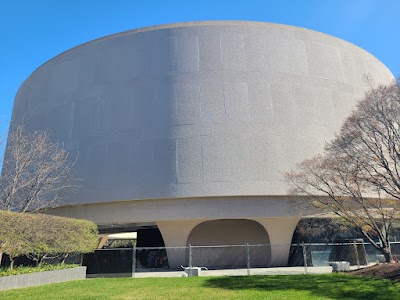
Hirshhorn Museum
View on map
5
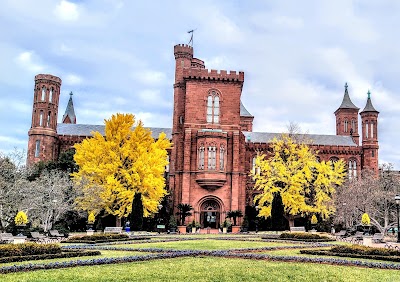
Enid A. Haupt Garden
View on map
6
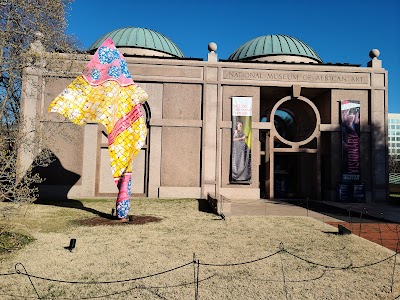
Smithsonian National Museum of African Art
View on map
7
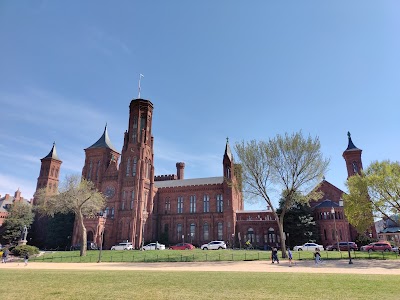
Smithsonian Castle
View on map
Audio Narrations
Chinese
简介
史密森尼城堡,一座雄伟的砂岩建筑,矗立在华盛顿特区的史密森尼学会中心。这座城堡由建筑师詹姆斯·伦威克小詹姆斯设计,采用诺曼复兴风格,于1847年奠基,1855年竣工。它的塔楼、炮塔和精美的雕刻唤起了一种中世纪的宏伟感,将游客带入一个逝去的时代。 城堡的内部同样引人入胜,有一个高耸的中央大厅,装饰着错综复杂的壁画和雕塑。学会创始人詹姆斯·史密森的九英尺高的雕像骄傲地矗立在圆形大厅中,证明了他建立一个知识和学习中心的愿景。城堡内设有史密森尼学会的行政办公室和游客中心,游客可以在那里探索互动展览,了解学会的庞大藏品。 除了其建筑辉煌之外,史密森尼城堡在美国历史上也占据着独特的地位。它在内战期间曾作为医院,照顾冲突双方的伤兵。它的墙壁见证了国家的韧性和知识的力量。如今,这座城堡仍然是史密森尼学会对教育、研究和公众参与的持久承诺的象征。旅游目的地
史密森尼城堡是史密森尼学会的心脏,它不仅仅是一座博物馆。它是一座历史地标,一座建筑奇迹,也是通往史密森尼提供的浩瀚知识世界的门户。 对于游客来说,城堡是必游之地。它标志性的红砂岩塔楼和精美的雕刻令人惊叹,其在国家广场的中心位置使其易于到达。但除了美学之外,城堡还拥有大量等待被发现的珍宝。 走进去,你会被带回到过去。可以追溯到 19 世纪的原始展品展示了史密森尼早期收藏的自然历史标本、人类学文物和科学仪器。这些展品让人们得以一窥科学和探索的历史,它们证明了史密森尼对教育和研究的持久承诺。 城堡的隐藏瑰宝之一是“城堡阁楼”,这是一个包含超过 137,000 件物品的收藏,这些物品几十年来一直没有公开展示。这个宝库包括从标本动物和古董显微镜到美洲原住民文物和历史文件的各种物品。游客可以通过虚拟导览和在线展览探索这个隐藏的收藏,从而独特地了解史密森尼的庞大馆藏。 城堡还作为探索其他史密森尼博物馆的起点。城堡拥有 19 座博物馆和国家动物园,都在步行距离之内,是您史密森尼探险之旅的完美枢纽。 无论您是历史爱好者、科学爱好者,还是仅仅想寻找一种独特且有教育意义的体验,史密森尼城堡都是华盛顿特区必游之地。其丰富的历史、引人入胜的展览和中心位置使其成为您在知识世界之旅中一个难忘的停留点。奖学金项目
史密森尼城堡坐落于华盛顿特区的中心地带,是知识和发现的灯塔,通过其享有盛誉的奖学金计划为有抱负的研究人员和学者提供了无与伦比的机会。沉浸在世界最大的博物馆和研究综合体史密森尼学会的丰富历史中,深入前沿研究,并与您领域的知名专家合作。 史密森尼城堡奖学金计划为寻求推进研究并为知识进步做出贡献的个人提供了一个独特的平台。作为史密森尼城堡研究员,您将有幸与领先的研究人员和策展人一起工作,深入了解史密森尼学会庞大的藏品和资源。 史密森尼学会提供针对特定研究领域和学科量身定制的各种奖学金计划。无论您对历史、科学、艺术还是文化充满热情,您都会找到与您的兴趣和抱负相符的计划。从史密森尼学会的博士前奖学金计划到史密森尼学会的博士后奖学金计划,有许多机会可以追求您的研究目标并对您的领域产生有意义的影响。 作为史密森尼城堡研究员,您将可以使用最先进的研究设施、丰富的图书馆资源以及充满活力的学者和研究人员社区。史密森尼学会致力于营造协作和智力激发环境,确保您将被一群与您分享对知识和发现的热情的人包围。 史密森尼城堡奖学金计划竞争非常激烈,吸引了来自世界各地最聪明的人才。要被考虑授予史密森尼城堡奖学金,您必须展示出色的学术资质、强有力的研究提案以及对您领域的卓越承诺。如果您是一位有抱负的研究人员或学者,正在寻求无与伦比的机会来提升您的知识并为您的领域做出持久的贡献,那么史密森尼城堡奖学金计划将提供一种变革性的体验,塑造您的职业生涯并点燃您对发现的热情。
8
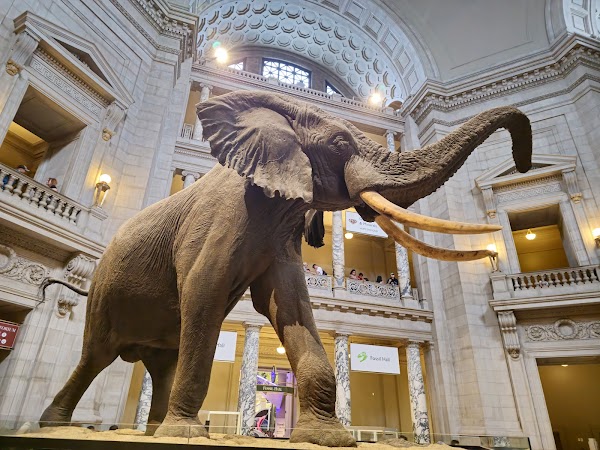
Smithsonian National Museum of Natural History
View on map
Audio Narrations
Chinese
介绍
位于华盛顿特区的史密森尼国家自然历史博物馆是一座致力于揭开自然界奥秘的庞大机构。它拥有超过 1.4 亿件标本和文物的庞大收藏,涵盖地质学、动物学、植物学和人类学领域。其著名的展厅包括珍妮特·安嫩伯格·胡克地质学、宝石和矿物馆,馆内藏有传奇的希望之钻。大卫·H·科赫化石馆占地 31,000 平方英尺,是“深时”概念的证明,展示了地球生命数十亿年来的非凡旅程。圣海洋馆展出了令人惊叹的北大西洋露脊鲸复制品,而 Q?rius 教育中心则通过动手科学探索赋能年轻一代。博物馆致力于包容性,设有无障碍入口、指定停车位和专门的母婴室,为游客提供便利。桑特海洋馆
位于华盛顿特区史密森尼国家自然历史博物馆的桑特海洋馆是一场迷人的展览,让参观者沉浸在海洋奇观之中。展厅的中心是一只名为菲尼克斯的 45 英尺长的北大西洋露脊鲸的真实尺寸模型,提供了一次与海洋温柔巨兽之一的令人惊叹的邂逅。另一个亮点是两只巨型乌贼的展示,由于它们难以捉摸的习性,人们很少能看到它们的活体。展厅还拥有一套 7 英尺高的巨齿鲨颌骨,巨齿鲨是有史以来最大的鲨鱼。 除了这些非凡的标本外,桑特海洋馆还提供一系列互动展览和多媒体演示。由著名水下电影摄影师费多尔·皮特凯恩拍摄的高清电影“海洋奥德赛”将观众带到海洋深处,展示其充满活力的生态系统和多样化的居民。由美国国家海洋和大气管理局创建的“球形科学”展览让参观者能够探索海洋数据和图像,深入了解海洋的动态过程。 桑特海洋馆不仅仅是一个海洋奇观收藏馆;它是史密森尼致力于科学研究和保护的证明。展览强调了理解和保护海洋的重要性,强调了海洋在维持地球生命中的重要作用。通过其身临其境的展示和教育项目,桑特海洋馆激励参观者欣赏海洋的美丽和脆弱,培养对这个非凡领域的管理意识和责任感。希望之钻
位于华盛顿特区的史密森尼国家自然历史博物馆自豪地收藏着希望之钻,这颗迷人的蓝色宝石充满了历史和神秘色彩。希望之钻由珠宝商哈里·温斯顿于 1958 年捐赠,现已成为该博物馆宝石收藏的镇馆之宝。它抵达史密森尼博物馆的旅程十分简单,仅花费了 100 万美元的保费,通过挂号信寄来。 希望之钻的魅力远不止其迷人的色泽。2005 年,史密森尼博物馆通过先进的计算机辅助几何研究证实了它的起源——这颗钻石正是被盗的法国蓝钻王冠上的宝石。它最初估计重约 44 至 45.5 克拉,并于 1975 年被精确测定为 45.52 克拉。 多年来,这颗钻石的镶嵌方式不断演变。2009 年,它被单独展出,以突出其璀璨的光芒。2010 年,它被镶嵌在一款名为“拥抱希望”的新款项链上亮相,这条项链以白钻和白色金属打造。该钻石目前的镶嵌方式于 2012 年修复,其中包括一颗价值超过 100 万美元的新钻石。 关于希望之钻的诅咒传闻更为其增添了一层神秘色彩,激发了公众的无限遐想。虽然没有确凿的证据将其与不幸联系起来,但这个传说增加了它的魅力。这颗钻石从印度到史密森尼博物馆的旅程证明了其经久不衰的传奇色彩,以及博物馆致力于保护历史珍宝的承诺。
9
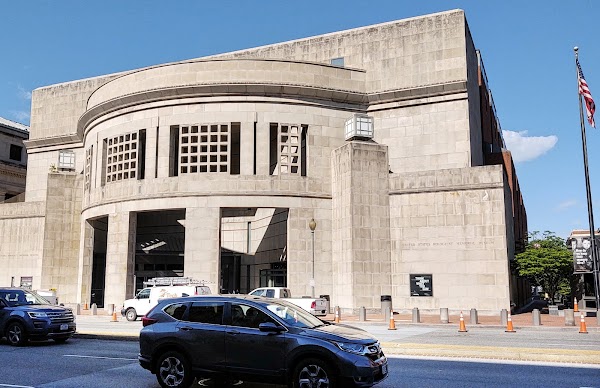
United States Holocaust Memorial Museum
View on map
Audio Narrations
Chinese
介绍
位于华盛顿特区的美国大屠杀纪念馆,是对大屠杀受难者和幸存者的沉痛悼念。 其永久展览“大屠杀”带领参观者按时间顺序回顾纳粹政权的暴行,从希特勒的崛起到集中营的解放。文物、照片和目击者的证词生动而深刻地描绘了数百万人遭受的恐怖经历。 纪念馆还设有特别展览,探讨大屠杀的更广泛背景及其对人权的影响。 大卫之星形状的六边形追思堂为人们提供了一个宁静的反思和纪念空间。 除了展览外,纪念馆还通过高级大屠杀研究中心和种族灭绝预防学院等项目,积极促进教育和预防种族灭绝。 其网站提供丰富的资源,包括在线展览、个人故事和大屠杀百科全书。 纪念馆由詹姆斯·英戈·弗里德设计,其建筑本身就是一种强有力的表达。 其棱角分明、令人迷失方向的空间唤起了大屠杀受难者所经历的不安和不确定性。 纪念馆位于国家广场,毗邻史密森尼博物馆,突显了正视和借鉴人类历史上最黑暗篇章的重要性。建筑象征主义
位于华盛顿特区的美国大屠杀纪念馆是建筑象征主义的有力体现,其设计旨在通过其结构本身唤起人们对大屠杀的恐怖记忆。建筑师詹姆斯·英戈·弗里德从大屠杀遗址中汲取灵感,融入了巧妙地暗示所犯暴行的元素。简洁的外观掩盖了复杂的内部,扭曲的金属和变形 的砖石象征着大屠杀造成的破坏和破碎。证人大厅是博物馆的中心空间,是一个高耸的中庭,唤起了受害者所经历的迷失方向和恐惧。其钢框架屋顶故意设计成不对称的形状,暗示着不稳定和不安。与之形成鲜明对比的是,六边形的纪念馆充满了光明,为人们提供了一个安静沉思和缅怀的空间。馆内的长明火和铭刻着的集中营和死亡集中营的名称, poignant 地提醒着人们那些逝去的生命。在整个博物馆中,窑烧砖和钢筋等材料让人联想到死亡的工业化,而光影的交织则营造出一种既崇敬又不安的氛围。美国大屠杀纪念馆不仅仅是一个存放文物的仓库;它还是对过去恐怖事件的鲜活证明,它利用建筑作为一种强大的工具来传达那些难以理解的苦难。大屠杀纪念
位于华盛顿特区的美国大屠杀纪念馆,庄严地纪念着大屠杀的受害者,也见证了人类精神的坚韧不拔。其永久展览“大屠杀”带领参观者踏上一段沉痛的旅程,从反犹太主义的兴起到集中营的恐怖,再现纳粹政权系统性种族灭绝的罪恶。 进入展馆时,参观者会收到一张身份卡,上面写着一个真实的大屠杀受害者的名字。这种个人化的连接加深了展览的情感冲击,因为参观者可以透过个体的视角见证这场悲剧的发生。 大卫之星形状的六边形追思堂,为人们提供了一个宁静的空间,供人们反思和纪念。 博物馆收藏了大量文物、文献和证词,全面记录了大屠杀的历史。 参观者可以看到用来将犹太人运送到集中营的波兰火车车厢,听到幸存者的亲身讲述,还可以浏览博物馆的在线档案。 除了展览之外,博物馆在大屠杀教育和预防方面也发挥着至关重要的作用。 高级大屠杀研究中心和种族灭绝预防学院对该领域的专业人士进行培训,而网站则为教育工作者和公众提供了丰富的资源。 美国大屠杀纪念馆有力地提醒人们,黑暗可能会吞噬人性。然而,它也像一座希望的灯塔,激励着参观者对抗仇恨,促进宽容,并致力于建立一个没有种族灭绝的世界。
Experience the Full Tour
Download the DocentPro app to access all tour stops, complete audio narrations in multiple languages, offline maps, and interactive features.