
Lucerne's Historic Treasures: A Journey Through Time

Walking Tour

3.7 km (2.3 miles)

56 min travel time

9 Stops

Lucerne, Switzerland
Lucerne's Historic Treasures: A Journey Through Time
Tour Stops
1
Lucerne Culture and Congress Centre
View on map
Audio Narrations
Korean
소개
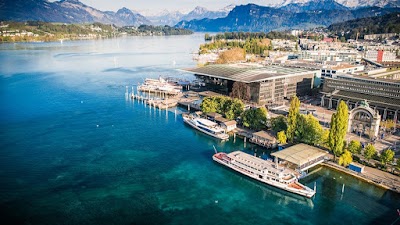
루체른 호숫가에 자리한 건축학적 걸작, 루체른 문화 회의 센터(KKL)는 단순한 장소 그 이상입니다. 유명 건축가 장 누벨이 설계한 이 건물은 그 자체로 화젯거리입니다. "살 블랑쉬(Salle Blanche)"라고 알려진 캔틸레버식 지붕은 마치 물 위에 떠 있는 듯한 인상적인 모습으로 하늘을 반사하며 자연과 인공 환경 사이의 대화를 만들어냅니다. 이러한 빛과 반사의 조화는 센터 전체에서 반복되는 주제입니다. 루체른의 수변 환경에서 영감을 얻은 누벨은 건물 내에 수많은 물의 요소를 결합하여 실내와 주변 풍경 사이의 경계를 모호하게 만들었습니다. 건축적 의미를 넘어, KKL은 세계적인 콘서트와 발레 공연부터 생각을 자극하는 전시회 및 컨벤션에 이르기까지 다양한 행사를 개최하는 활기찬 문화적 표현의 중심지입니다. 특히 콘서트홀의 음향은 그 뛰어난 품질로 유명하며 세계적으로 유명한 오케스트라와 연주자들을 끌어들이고 있습니다.국제적인 의회 개최지
루체른 문화 회의 센터(KKL)는 최첨단 시설과 유명 호숫가 위치를 완벽하게 조융하여 세계적인 회의 장소로서 차별화됩니다. 숨 막힐 듯 아름다운 산의 풍경으로 둘러싸인 루체른 호숫가에 자리한 독특한 입지는 전 세계에서 모인 사람들에게 영감을 불어넣는 배경을 제공합니다. KKL은 아름다운 주변 환경뿐만 아니라 대규모 국제 회의를 위한 탁월한 시설을 자랑합니다. 유연한 디자인 덕분에 다양한 구성이 가능하며 여러 홀과 분과 회의실에서 수천 명의 대표자를 맞이할 수 있습니다. 에너지 효율적인 설계와 현지에서 조달한 케이터링 옵션에서 알 수 있듯이 지속 가능성에 대한 센터의 노력은 환경을 중시하는 조직의 가치와 일치합니다. 또한 호텔에서 도보 거리에 있고 국제 교통 허브와 연결된 KKL의 전략적 위치 덕분에 전 세계에서 오는 참석자들에게 편리한 이동을 보장합니다. 자연의 아름다움, 최첨단 인프라, 지속 가능성에 대한 노력이 어우러진 KKL은 영향력 있고 기억에 남는 국제 회의를 개최하기 위한 최고의 선택입니다.호숫가 건축
루체른 호숫가에 자리 잡은 루체른 문화 회의 센터는 현대 건축과 호반 환경의 매혹적인 조화를 구현합니다. 프랑스 건축가 장 누벨이 설계한 이 건물의 가장 눈에 띄는 특징은 "살 블랑쉬"라고 알려진 넓은 캔틸레버 지붕입니다. 이 거대하고 하얀 평면은 마치 물 위에 떠 있는 듯한 모습을 하고 있으며, 그 아래쪽은 끊임없이 변화하는 호수와 하늘의 빛깔을 반영합니다. 이러한 반영은 건축 환경과 자연 환경 사이의 대화를 만들어내며 구조와 풍경의 경계를 모호하게 합니다. 유리를 광범위하게 사용하여 얻어진 건물의 투명성은 이러한 연결을 더욱 강화합니다. 내부에서 방문객들은 호수와 주변 산의 탁 트인 전망을 감상할 수 있으며, 문화적 경험과 자연의 아름다움이 자연스럽게 어우러집니다. 빛, 반사 및 투명성의 조화는 루체른 문화 회의 센터를 물과 어우러져 상호 작용하는 호숫가 건축의 대표적인 예로 만듭니다.
2
Jesuit Church, Lucerne
View on map
Audio Narrations
English
Introduction
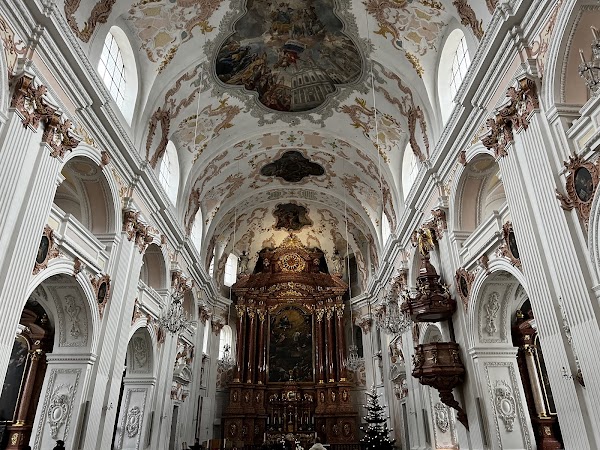
The Jesuit Church in Lucerne, Switzerland, is a masterpiece of early Baroque architecture, boasting a stunning white facade adorned with intricate sculptures and a majestic dome. Inside, the church's opulent interior features soaring columns, gilded stuccowork, and vibrant frescoes depicting scenes from the life of St. Ignatius Loyola, the founder of the Jesuit order. The church's most striking feature is its trompe l'oeil dome, an illusionistic painting that creates the impression of a vast, open sky. This breathtaking artwork, coupled with the church's rich ornamentation, transports visitors to a realm of spiritual grandeur. Beyond its aesthetic splendor, the Jesuit Church holds significant historical importance. Built in the 17th century during the Counter-Reformation, the church served as a powerful symbol of the Catholic Church's resurgence. Its construction marked a turning point in Lucerne's religious landscape, solidifying the city's Catholic identity. Today, the Jesuit Church remains a vibrant center of worship and a testament to the enduring legacy of the Jesuit order.Jesuit Art and Symbolism
The Jesuit Church in Lucerne, Switzerland, is a treasure trove of Jesuit art and symbolism. Built in the 17th century, the church is adorned with intricate frescoes, sculptures, and paintings that reflect the Jesuit order's commitment to education, faith, and service. One of the most striking features of the church is its ceiling frescoes, which depict scenes from the life of St. Ignatius Loyola, the founder of the Jesuits. These frescoes are a testament to the Jesuit emphasis on education and the importance of following in the footsteps of their founder. Another notable feature of the church is its high altar, which is decorated with sculptures of angels and saints. These sculptures represent the Jesuit belief in the power of intercession and the importance of seeking divine guidance. The Jesuit Church in Lucerne is also home to a number of paintings that depict scenes from the Bible. These paintings are a reminder of the Jesuit commitment to spreading the Christian faith and teaching the gospel to all people. The Jesuit Church in Lucerne is a testament to the Jesuit order's rich history and its commitment to art and symbolism. The church is a must-see for anyone interested in learning more about the Jesuits and their impact on the world. The church's architecture is also noteworthy, as it is a blend of Renaissance and Baroque styles. The facade of the church is decorated with statues of Jesuit saints, and the interior is adorned with frescoes and paintings that depict scenes from the life of Christ. The Jesuit Church in Lucerne is a testament to the Jesuit order's commitment to art and symbolism. The church is a must-see for anyone interested in learning more about the Jesuits and their impact on the world.Counter-Reformation in Switzerland
The Jesuit Church in Lucerne, Switzerland, stands as a testament to the Counter-Reformation's impact on the city. Constructed between 1666 and 1677, the church embodies the Baroque style, showcasing the movement's artistic and architectural influence during this period. Its ornate interior, adorned with frescoes and stuccowork, served as a powerful tool for conveying Catholic doctrine and captivating the senses of the faithful. The church's strategic location, situated near the Reuss River and the city's historic center, further underscores its significance. It served as a focal point for Catholic revival in Lucerne, a city that had been divided by religious tensions during the Reformation. The Jesuits, known for their educational and missionary work, played a crucial role in promoting Catholic teachings and combating Protestant ideas. The Jesuit Church's architecture reflects the Counter-Reformation's emphasis on emotional engagement and theatrical presentation. Its dramatic use of light and shadow, coupled with its dynamic sculptures and paintings, aimed to evoke awe and inspire religious devotion. The church's central dome, adorned with frescoes depicting scenes from the life of Christ, served as a visual reminder of Catholic beliefs and values. The Jesuit Church in Lucerne remains a tangible reminder of the Counter-Reformation's legacy in Switzerland. Its architectural grandeur and artistic embellishments continue to captivate visitors, offering a glimpse into the religious and cultural transformations that shaped the region during this pivotal era.
3
Chapel Bridge
View on map
Audio Narrations
Korean
소개
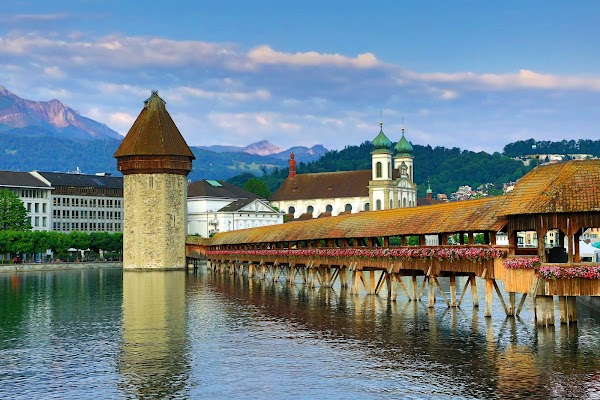
루체른, 스위스에 있는 역사적 명소인 카펠교는 유럽에서 가장 오래된 목재로 만든 지붕 달린 다리입니다. 14세기에 건설된 이 다리는 로이스 강을 가로지르며 구시가와 신시가를 연결합니다. 다리에는 17세기 그림이 장식되어 있는데, 이들은 스위스 역사와 루체른의 수호 성인들의 삶을 묘사합니다. 1993년 파괴적인 화재가 발생했지만, 다리는 섬세하게 재건되어 그 상징적인 모습을 보존했습니다. 카펠교는 아름다운 볼거리일 뿐만 아니라 루체른의 풍부한 과거를 증명하는 유산입니다. 교량 내부에 늘어선 그림은 도시의 전통을 엿볼 수 있도록 해주고, 다리 자체는 복원력과 건축적 창의성의 상징으로 자리하고 있습니다. 이 독특한 매력과 역사적 중요성으로 인해 카펠교는 루체른을 방문하는 관광객들에게 반드시 방문해야 할 곳이 되었습니다.중세 건축
카펠 다리는 중세 공학의 걸작으로 남아 있으며, 그 시대 건축적 독창성을 입증합니다. 14세기에 세워진 이 다리는 목재를 주요 건축 자재로 사용한 혁신적인 사용법을 보여주며, 당시의 숙련된 장인 정신을 증명합니다. 이 다리의 특징적인 매력인 덮인 복도는 악천후로부터 보호할 뿐만 아니라 매력적인 회화를 위한 캔버스 역할도 했습니다. 17세기에 추가된 이러한 예술 작품은 루체른의 역사와 수호 성인들의 삶을 묘사하며, 도시의 풍부한 과거를 엿볼 수 있게 합니다. 카펠 다리는 루체른의 중세 방어 시스템에서 핵심적인 역할을 했습니다. 이 다리는 도시로 들어가는 요새화된 관문으로 사용되었습니다. 로이스 강 위의 전략적 위치 덕분에 침략자들로부터 접근 통제와 보호를 효과적으로 할 수 있었습니다. 요새화된 탑을 포함한 다리의 견고한 구조와 방어적 특징은 이 격변의 시기에 도시를 보호하는 데 중점을 두고 있음을 반영합니다. 군사적 중요성을 넘어 카펠 다리는 또한 문화적, 사회적 중요성을 지니고 있었습니다. 이 다리는 지역 주민과 여행자들이 모이는 장소로 사용되어 지역 사회 의식을 키우고 다양한 행사와 축하 행사를 위한 무대를 제공했습니다. 다리의 덮인 회랑은 악천후로부터 보호했다는 점에서, 사회적 교류와 예술 공연을 위한 이상적인 장소가 되었습니다. 오늘날 카펠 다리는 독특한 건축적, 역사적 중요성이 조화를 이루어 방문객을 매료시키는 사랑받는 랜드마크로 남아 있습니다. 디자인과 건설에 드러난 중세 시대적 기원은 과거의 풍부한 이야기에 관심이 있는 사람들을 지속적으로 매료시킵니다.문화적 랜드마크
스위스 루체른의 카펠교는 시의 풍부한 역사와 예술적 유산을 구현하는 매력적인 문화적 랜드마크입니다. 14세기에 건설된 이곳은 유럽에서 가장 오래되고 가장 긴 목조 다리 중 하나로, 로이스 강을 가로질러 올드타운과 뉴타운을 연결합니다. 이 다리의 가장 두드러지는 특징은 17세기에 추가된 복잡한 그림입니다. 이러한 생생한 벽화는 루체른의 수호 성인인 성 레오데가르와 성 모리스의 생애를 포함한 스위스 역사의 장면을 묘사합니다. 이 그림은 도시의 과거를 엿볼 수 있고 방문객에게 독특한 시각적 서사를 제공합니다. 역사적 중요성을 넘어서, 카펠교는 루체른의 문화 생활에서 중추적인 역할을 했습니다. 이곳은 세계적으로 유명한 음악가와 공연자를 유치하는 연례 루체른 페스티벌을 포함한 수많은 축제와 이벤트의 무대가 되었습니다. 다리의 그림 같은 환경과 독특한 분위기는 문화적 모임과 축하 행사를 위한 이상적인 장소입니다. 카펠교는 또한 루체른의 회복력의 상징입니다. 1993년에 화재로 인해 다리의 상당 부분이 파괴되었지만, 전통적인 기술을 사용하여 세심하게 재건하여 역사적 무결성을 보존했습니다. 이러한 복원은 문화적 유산을 보존하고 미래 세대를 위한 다리의 유산을 보장하려는 도시의 노력을 보여줍니다. 오늘날 카펠교는 지역 주민과 관광객 모두에게 사랑받는 랜드마크로 남아 있습니다. 그 문화적 중요성은 건축적 아름다움을 넘어서 루체른의 정체성의 필수적인 부분이 되었으며 도시의 활기찬 문화적 풍경을 증명합니다.
4
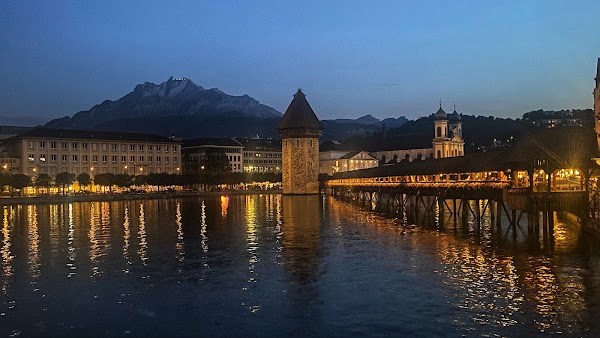
Luzern Altstadt
View on map
5
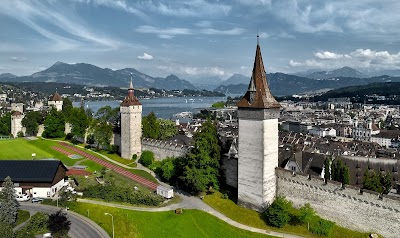
Museggmauer
View on map
6
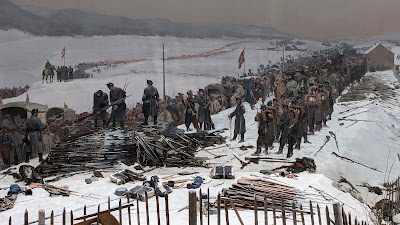
Bourbaki Panorama Lucerne
View on map
7
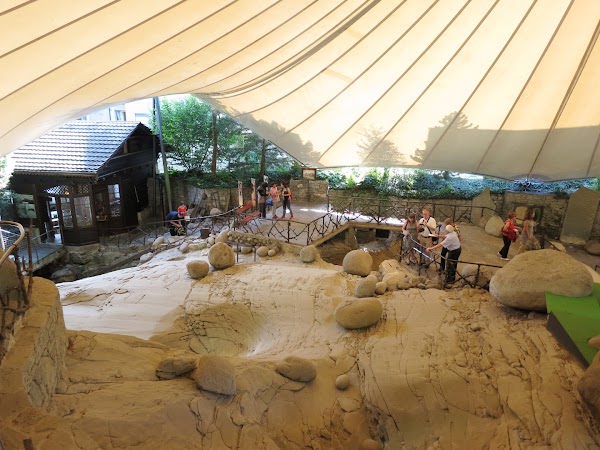
Glacier Garden of Lucerne
View on map
8
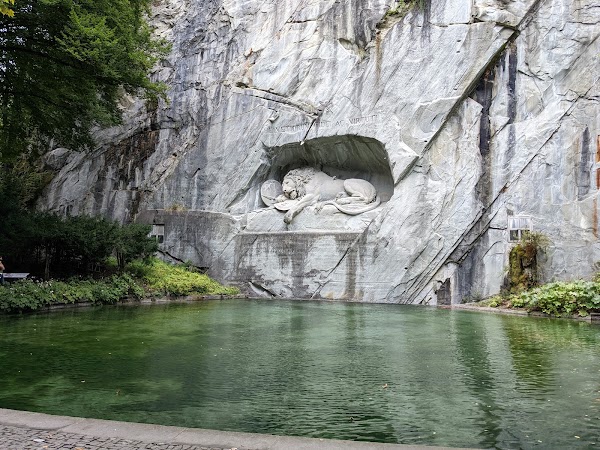
Lion Monument
View on map
Audio Narrations
English
Introduction
Nestled in a charming park setting in Lucerne, the Lion Monument stands as a poignant tribute to the Swiss Guards who lost their lives defending King Louis XVI during the French Revolution. The colossal sandstone sculpture, carved by Lucas Ahorn in 1821, depicts a dying lion impaled by a spear, its paw resting on a shield bearing the fleur-de-lis of the French monarchy. The monument's Latin inscription, "Helvetiorum Fidei ac Virtuti," translates to "To the loyalty and bravery of the Swiss." The Lion Monument has been a popular tourist attraction since its unveiling in 1821. Mark Twain famously described it as "the most mournful and moving piece of stone in the world." The monument's enduring appeal lies not only in its artistic beauty but also in its historical significance. It serves as a reminder of the sacrifice made by the Swiss Guards and the tumultuous events of the French Revolution. Beyond its historical importance, the Lion Monument is also a testament to the skill of its creator, Bertel Thorvaldsen. The intricate details and lifelike depiction of the lion's agony evoke a profound sense of emotion in viewers. The monument's setting, amidst a tranquil park and surrounded by the picturesque Swiss Alps, further enhances its impact.French Revolution
The Lion Monument in Lucerne, Switzerland, stands as a poignant tribute to the Swiss Guards who perished during the French Revolution. Commissioned by Karl Pfyffer von Altishofen, an officer who witnessed the tragedy, the monument was unveiled in 1821. Carved from sandstone, the majestic lion lies in its death throes, a spear piercing its side. Its paw rests upon a shield adorned with the fleur-de-lis, symbolizing the French monarchy it defended. The inscription "Helvetiorum Fidei ac Virtuti" (To the loyalty and bravery of the Swiss) pays homage to the guards' unwavering devotion. The monument's significance lies in its commemoration of the pivotal event of August 10, 1792, when a mob stormed the Tuileries Palace in Paris. Amidst the chaos, the Swiss Guards fought valiantly, defending King Louis XVI and his family. However, they were overwhelmed by the sheer force of the attackers, resulting in the deaths of hundreds of guards. The Lion Monument serves as a reminder of the sacrifices made by these brave soldiers. Its emotive depiction of the dying lion has deeply moved visitors, including Mark Twain, who described it as "the most mournful and moving piece of stone in the world." Beyond its artistic merit, the monument has also been a focal point of political controversy. Initially seen as a symbol of conservative, counter-revolutionary sentiments, it later became a rallying point for extreme right-wing movements. However, the city of Lucerne has taken steps to mitigate these associations, emphasizing the monument's historical significance and its role as a memorial to the fallen Swiss Guards.Luzern
Nestled within the heart of Luzern, the Lion Monument stands as a poignant tribute to the fallen Swiss Guards who valiantly defended the French monarchy during the tumultuous French Revolution. This iconic sculpture, carved into the natural rock face of a former quarry, depicts a majestic lion in its final moments, pierced by a spear and cradling a shield adorned with the fleur-de-lis. The monument's inscription, "Helvetiorum Fidei ac Virtuti," serves as a testament to the loyalty and bravery of these brave soldiers. Beyond its historical significance, the Lion Monument holds a special place in Luzern's cultural landscape. It has become an enduring symbol of the city's rich heritage and its deep connection to the Swiss Guards. The monument's serene setting, surrounded by lush greenery and a tranquil pond, invites visitors to pause and reflect on the sacrifices made by these courageous men. For those seeking a deeper understanding of Luzern's history and its relationship with the Lion Monument, guided tours are available, providing insights into the monument's creation, symbolism, and the broader context of the French Revolution. These tours offer a unique opportunity to explore the monument's significance beyond its aesthetic beauty, delving into the intricate tapestry of Luzern's past.
9
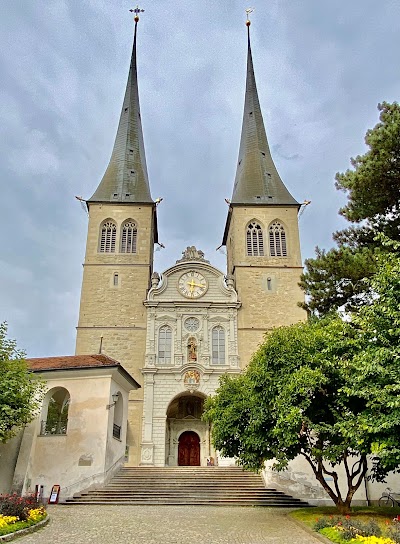
Hofkirche St. Leodegar
View on map
Experience the Full Tour
Download the DocentPro app to access all tour stops, complete audio narrations in multiple languages, offline maps, and interactive features.