
Enchanted Edinburgh: A Journey Through History and Natural Beauty

Walking Tour

4.6 km (2.9 miles)

1h 16min travel time

7 Stops

Edinburgh, Scotland
Enchanted Edinburgh: A Journey Through History and Natural Beauty

7 places on the map
Explore the map in the DocentPro app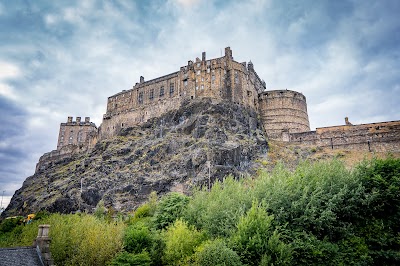
Tour Stops
1
Edinburgh Castle
View on map
Audio Narrations
English
Introduction
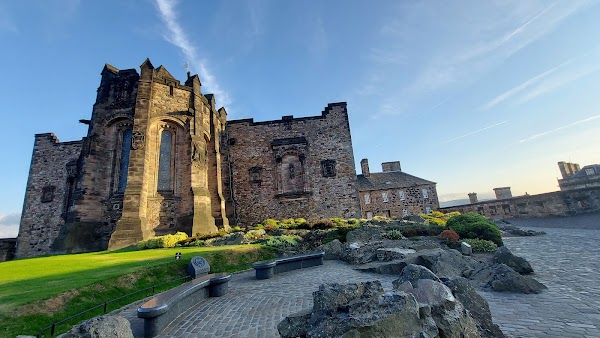
Edinburgh Castle, a historic fortress perched atop Castle Rock, has witnessed centuries of Scottish history. Its volcanic origin has resulted in sheer cliffs and a steep ascent, providing a natural defense. The castle's strategic location has made it a coveted stronghold, with its walls enduring numerous sieges. The oldest building within the castle is St. Margaret's Chapel, dating back to the 12th century. The Great Hall, completed in 1511, served as a grand venue for banquets and state events. The Half Moon Battery, built after the Lang Siege of 1573, defended the castle with bronze guns known as the Seven Sisters. Edinburgh Castle has played a pivotal role in Scottish history, serving as a royal residence, military garrison, and prison. It was the birthplace of James VI, who later became James I of England, uniting the crowns of Scotland and England. The castle houses the Honours of Scotland, the oldest Crown jewels in Britain, and the Stone of Destiny, a symbol of Scottish monarchy. Today, Edinburgh Castle is a popular tourist destination, offering guided tours and historical displays. It is also the setting for the annual Edinburgh Military Tattoo, a spectacular military music festival. The castle's rich history, stunning architecture, and captivating stories make it a must-visit for anyone interested in Scottish heritage and culture.Historical Fortress
Edinburgh Castle, a formidable fortress perched atop Castle Rock in Edinburgh, Scotland, stands as a testament to centuries of conflict and intrigue. Its strategic location, atop a volcanic crag, has made it a coveted stronghold since the Iron Age. Over the millennia, it has witnessed countless sieges, invasions, and power struggles, leaving an indelible mark on its storied walls. The castle's medieval origins are evident in its formidable defenses. David's Tower, built in the 14th century, served as a royal residence and the castle's main entrance. Its thick walls and narrow passages were designed to repel invaders. The Half Moon Battery, constructed after the devastating "Lang Siege" of 1573, further strengthened the castle's defenses with its powerful artillery. Throughout its history, Edinburgh Castle has played a pivotal role in Scottish history. It was the royal residence of Scottish monarchs for centuries, and its halls have echoed with the footsteps of kings and queens. It has also been a military garrison, a prison, and a treasury, housing the Crown Jewels of Scotland. The castle's strategic importance made it a frequent target of attack. It was besieged 26 times, more than any other fortress in Britain. The most famous siege was the "Lang Siege" of 1573, which lasted for a year and resulted in the destruction of David's Tower. Today, Edinburgh Castle is a popular tourist destination, attracting visitors from around the world. Its historical significance, stunning architecture, and captivating stories make it a must-see for anyone interested in the rich tapestry of Scottish history.Military Stronghold
Edinburgh Castle, a formidable military stronghold perched atop a volcanic crag, has witnessed centuries of conflict and played a pivotal role in shaping Scotland's destiny. Its strategic location and impregnable defenses made it a coveted prize, withstanding numerous sieges and invasions. The castle's medieval fortifications, including David's Tower and the Half Moon Battery, showcase the architectural ingenuity employed to protect its occupants. The castle's military significance is evident in its arsenal of weaponry, including the iconic Mons Meg, a colossal medieval cannon. Its thick walls and intricate network of tunnels provided shelter and strategic advantage to its defenders. The castle's garrison played a crucial role in safeguarding the Scottish crown jewels, known as the Honours of Scotland, and served as a prison for captured enemies. Edinburgh Castle's military history is etched into its very fabric. The scars of battle are visible in the remnants of David's Tower, destroyed during the Lang Siege of 1573. The castle's resilience and adaptability are a testament to its enduring importance as a military stronghold, a symbol of Scottish resistance and a guardian of the nation's heritage.
2
National Galleries of Scotland: National
View on map
3
Princes Street Gardens
View on map
Audio Narrations
English
Introduction
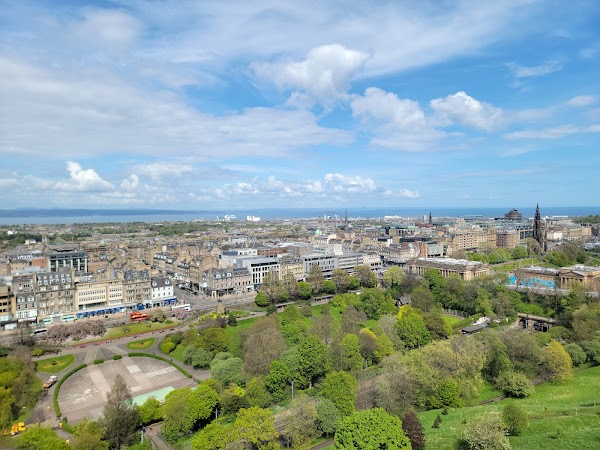
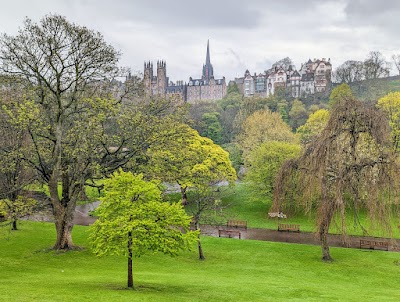
Nestled amidst the bustling heart of Edinburgh, Princes Street Gardens offer an idyllic oasis with picturesque views of Edinburgh Castle. These verdant grounds, divided by The Mound, comprise East and West Princes Street Gardens, each boasting unique attractions. East Princes Street Gardens, renowned for its iconic Scott Monument, houses statues of notable figures like David Livingstone and Adam Black. The world's first floral clock, dating back to 1903, adds a touch of horticultural charm. During the festive season, the gardens transform into "Edinburgh's Christmas," featuring amusement rides and a vibrant Christmas Market. West Princes Street Gardens, once the private domain of Princes Street Proprietors, became a public park in 1876. Its highlights include the Ross Bandstand, where concerts and events take place, and the Ross Fountain, a stunning centerpiece gifted by Daniel Ross. Monuments honoring the Royal Scots, Scottish Americans, and Norwegian Brigade add historical significance to the gardens. A unique feature is the Mortonhall Baby Ashes Memorial, a poignant tribute to families affected by a tragic scandal.Mortonhall Baby Ashes Memorial
Princes Street Gardens, a verdant oasis in the heart of Edinburgh, holds a poignant memorial to the innocent lives lost in the Mortonhall baby ashes scandal. Unveiled in 2015, the bronze baby elephant sculpture, a creation of renowned artist Andy Scott, stands as a symbol of remembrance and a tribute to the 250 babies whose ashes were secretly buried at Mortonhall Crematorium for decades. The memorial's design is both evocative and deeply moving, featuring small footprints and forget-me-not flowers, a testament to the fragility and enduring memory of these lost children. The garden surrounding the sculpture offers a serene space for contemplation and reflection, where bereaved families can find solace and connect with the memory of their loved ones.Historical Landmark
Nestled in the heart of Edinburgh, Princes Street Gardens stand as a testament to the city's rich history and enduring legacy. Created in the 1820s following the draining of the Nor Loch, these gardens emerged as a vibrant public space amidst the grandeur of the New Town. The gardens are divided by The Mound, a man-made hill housing the National Gallery of Scotland and the Royal Scottish Academy. East Princes Street Gardens, extending from The Mound to Waverley Bridge, boasts the iconic Scott Monument, a towering Gothic spire honoring Sir Walter Scott. Within its confines lie statues of notable figures, including David Livingstone, Adam Black, and John Wilson. West Princes Street Gardens, spanning from The Mound to the churches of St. John's and St. Cuthbert's, holds a wealth of historical significance. Originally the private domain of the Princes Street Proprietors, the gardens were acquired by the town council in 1876 and transformed into a public park. The Ross Bandstand, a magnificent Victorian structure, hosts concerts and events, while the Ross Fountain, a gift from Daniel Ross, graces the western end of the gardens. Princes Street Gardens are not merely a green oasis but a repository of Edinburgh's past. The Royal Scots Monument, a modern henge, commemorates the fallen of the Royal Scots Regiment. The Mortonhall Baby Ashes Memorial, a poignant reminder of a tragic scandal, stands as a testament to the city's resilience. As you stroll through these historic gardens, you will encounter a tapestry of monuments, statues, and memorials that speak to the rich heritage of Edinburgh. Princes Street Gardens are not just a place of beauty but a living testament to the city's enduring spirit and the passage of time.
4
The Real Mary King's Close
View on map
Audio Narrations
English
Introduction
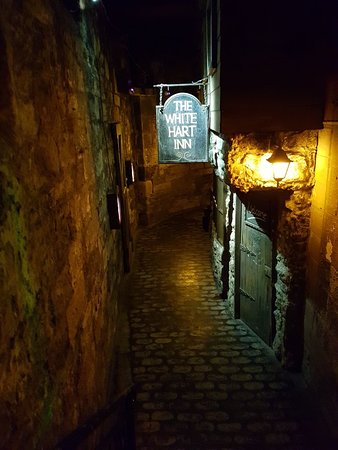
Beneath the Royal Mile, The Real Mary King's Close unfolds as a labyrinthine network of subterranean streets and dwellings, famously sealed off and built over in the 17th century. This historical site offers a unique preservation of 17th-century Edinburgh, with original cobblestones and facades still visible. Unlike other closes, Mary King's was not simply abandoned, but rather incorporated into the foundations of the Royal Exchange, creating an extraordinary time capsule. Visitors descend into the preserved homes and workplaces of former residents, experiencing the cramped, often disease-ridden conditions exacerbated by the plague of 1645. One particular dwelling, known as the "spirit of Annie," is said to be haunted by a young girl's ghost, a tale stemming from a Japanese psychic's experience in the 1990s, who left Annie a doll. The close also reveals the innovative yet rudimentary sewage systems of the era, illustrating the stark realities of urban life centuries ago. Its existence beneath the modern city provides a profound physical connection to Edinburgh's past.Mary King's Close Residents' Lives
The Real Mary King’s Close offers a unique insight into the lives of its former residents, extending beyond typical historical narratives to reveal the daily realities of people spanning centuries. Guides, often portraying actual historical figures like Mary King’s daughter, Jonet Nimmo, share first-hand accounts of life within the close. Jonet, born in 1622, experienced the warren-like streets from the age of seven, offering a glimpse into the twists and turns of these stone passages. The tours highlight a cross-section of Edinburgh's history, covering the lives of both the wealthiest and the poorest, and the challenges they faced. Visitors learn about the multiple plagues that swept through Edinburgh, including the severe outbreak in 1645. Due to the crowded living conditions, sickness spread rapidly, and the tours explore the nature of the disease and the efforts of ordinary people who risked their lives to treat the infected. The narrative also delves into various crimes and their punishments, painting a vivid picture of justice in centuries past. Beyond the historical narratives, the Close is home to the intriguing story of Annie’s Room, where a Japanese psychic reportedly made contact with the spirit of a child, leading to a growing collection of dolls left by visitors. This blend of historical fact and dramatic interpretation, without resorting to ghost stories, allows visitors to comprehend the grime, filth, and chaos of a city with over 30,000 people living within its small, walled confines. Even Mary King herself, a prominent businesswoman in the 1630s and a widow with four children, traded in fabrics and sewed for a living, an unusual distinction that led to the Close being named after her. The tour also describes the practicalities of daily life, including the common practice of shouting "Gardyloo!" before discarding waste into the streets.Underground Edinburgh History
The Real Mary King's Close offers a unique window into Edinburgh's subterranean past, providing a direct experience of the city's layered history. Unlike many other tours in Edinburgh claiming to be underground, Mary King's Close genuinely exists beneath the modern city streets. In the 17th century, it was a bustling thoroughfare, open to the sky and a hub of activity for Old Town residents. However, its fate shifted dramatically in 1760 when the Edinburgh City Chambers, originally the Royal Exchange, was constructed. Instead of building elsewhere, the city chose to erect the new structure directly over several existing closes, including Mary King's Close. This involved "chopping the tops" off medieval buildings, essentially burying the original streets and their lower levels. This architectural decision sealed off the closes, preserving them beneath the new construction and rendering them inaccessible to the public for centuries. The close, named after a merchant burgess from the 17th century, became a place shrouded in myths and urban legends, with tales of hauntings and murders. It was only much later that these buried streets were reopened as a tourist attraction, revealing a preserved segment of Edinburgh's past. The close’s location, near the stagnant and polluted Nor Loch, led to theories that escaping biogas caused eerie lights and hallucinations, contributing to its reputation for hauntings. This fascinating historical event demonstrates how Edinburgh's urban development literally created an "underground" city, offering a tangible connection to the lives and environments of its past inhabitants. The tour delves into these historical facts, presenting a narrative ingrained in reality rather than fantasy, distinguishing it from other "underground" experiences that might refer to the South Bridge vaults.
5
Royal Mile
View on map
Audio Narrations
English
Introduction
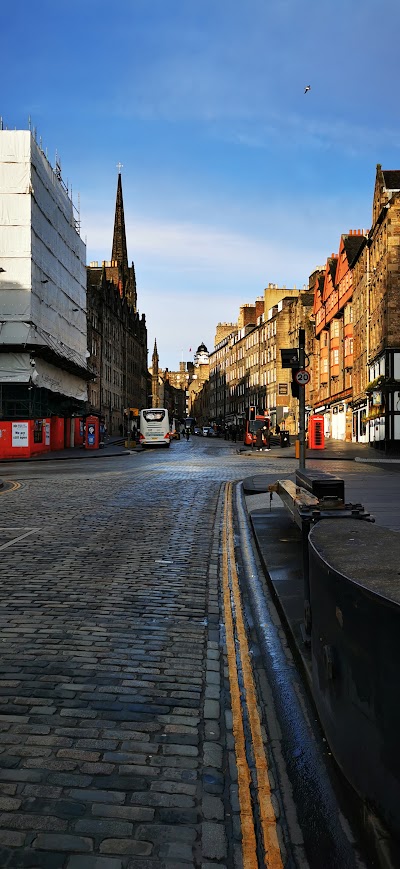
The Royal Mile, a succession of streets forming the main thoroughfare of Edinburgh's Old Town, is a vibrant hub steeped in history and charm. Stretching from Edinburgh Castle to the Palace of Holyroodhouse, it was traditionally the processional route of Scottish monarchs. The mile-long route comprises Castlehill, the Lawnmarket, the High Street, the Canongate, and Abbey Strand. The Lawnmarket, once a marketplace for "inland merchandise," is now lined with tourist-oriented shops. Gladstone's Land, a preserved 17th-century merchant's townhouse, offers a glimpse into the past. The High Street, the heart of the city's legal system, is home to the High Court of Justiciary and the Court of Session. Parliament Square, with its iconic Heart of Midlothian, marks the site of the Old Tolbooth. Continuing down the Canongate, visitors encounter Moray House, the Canongate Tolbooth, and the Kirk of the Canongate. The Scottish Parliament Building and Holyrood Palace lie at the end of this historic street. Abbey Strand, leading to the Palace of Holyroodhouse, was once home to Lucky Spence, a notorious brothel madam immortalized in Allan Ramsay's poem. The Queen's Gallery, showcasing items from the Royal collection, stands on the south side.Canongate
Beyond the bustling intersection of the Royal Mile and the Bridges, the thoroughfare continues its descent as Canongate, a historic street steeped in ecclesiastical significance. Its name, meaning "the canons' way," alludes to its origins as a path used by Augustinian canons from Holyrood Abbey. Canongate boasts an array of architectural gems, including Moray House, the grand former residence of the Earl of Moray and now home to the University of Edinburgh's Moray House School of Education. The Canongate Tolbooth, once a prison and courthouse, now serves as The People's Story Museum, showcasing the social history of Edinburgh. At the heart of Canongate stands the Kirk of the Canongate, a thriving parish church with a rich history. Its graveyard is the final resting place of renowned figures such as Adam Smith, the father of modern economics. Continuing down Canongate, visitors encounter the imposing Scottish Parliament Building, a contemporary architectural marvel that houses the Scottish Parliament. The street culminates at Holyrood Palace, the official residence of the British monarch in Scotland, and the adjacent ruined Holyrood Abbey, a poignant reminder of Edinburgh's religious past. Canongate's unique character is further enhanced by its charming closes, narrow alleyways that lead to hidden courtyards and historic buildings. One such close is World's End Close, whimsically named as it once marked the boundary between Edinburgh and the Canongate. Today, Canongate is a vibrant hub of culture and commerce, with independent shops, cozy cafes, and traditional pubs lining its cobblestone streets. Its rich history and architectural heritage make it a captivating destination for those seeking an immersive experience of Edinburgh's storied past.Old Town Edinburgh
Nestled within the heart of Edinburgh's Old Town, the Royal Mile unfurls as a vibrant artery pulsating with history and charm. This iconic thoroughfare, steeped in centuries of Scottish heritage, stretches from the majestic Edinburgh Castle to the grand Palace of Holyroodhouse, connecting two royal residences that have witnessed the ebb and flow of time. The Royal Mile is a captivating tapestry of architectural wonders, from towering tenements to hidden closes and narrow stairways that weave an intricate labyrinth beneath the city's surface. Along its bustling streets, visitors can delve into the captivating tales of the past at The Real Mary King's Close or immerse themselves in the vibrant storytelling traditions at the Scottish Storytelling Centre. St Giles' Cathedral, a magnificent edifice, stands as a testament to the city's religious heritage, while the Scottish Parliament, a striking contemporary masterpiece, embodies Edinburgh's modern spirit. The Grassmarket, once a bustling medieval marketplace and site of public executions, has transformed into a vibrant hub of lively pubs and eclectic shops, offering a glimpse into the city's colorful past. The Royal Mile is not merely a thoroughfare; it is a living, breathing entity that encapsulates the essence of Old Town Edinburgh. Its cobbled streets whisper secrets of a bygone era, while its vibrant atmosphere invites visitors to embrace the city's rich tapestry of culture, history, and tradition.
6
Museum of Edinburgh
View on map
Audio Narrations
English
Introduction
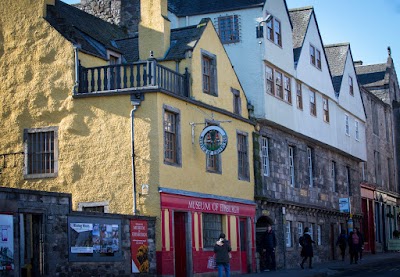
Nestled in the historic Canongate, the Museum of Edinburgh offers a captivating journey through the city's past, distinctively housed within the 16th-century Huntly House. Its unique collection showcases an extensive array of Edinburgh silver and Scottish pottery, providing a focused insight into local craftsmanship and economic history often overlooked in broader national museums. Visitors encounter the original Covenanters' Flag, a potent symbol of religious and political strife from the 17th century, alongside an extraordinary collection of artifacts related to the city's celebrated literary figures, including personal items of Robert Burns and Robert Louis Stevenson. A particularly compelling exhibit traces the infamous story of Deacon Brodie, the respectable cabinetmaker and secret burglar who inspired Stevenson's Dr. Jekyll and Mr. Hyde. The museum's intimate scale allows for a truly immersive exploration of Edinburgh's social and cultural evolution, from its medieval origins to its burgeoning industrial era, highlighting the lives of ordinary citizens and pivotal historical moments. The architectural nuances of Huntly House itself, with its preserved historic interiors, enhance the contextual understanding of the exhibits, making the building an exhibit in its own right.Historical Collection
The National Museum of Scotland houses extensive historical collections, developed from the merger of the Museum of Scotland, which focused on Scottish antiquities, culture, and history, and the Royal Scottish Museum, which covered international collections including natural history and world cultures. The museum effectively incorporates the collections of the former National Museum of Antiquities of Scotland, featuring national collections of Scottish archaeological finds and medieval objects. The galleries in the modern building present Scottish history chronologically, from prehistory to the early medieval period on lower levels, and later periods on higher levels. The Victorian building's collections, reopened in 2011, include exhibits on world cultures, featuring the South Pacific, East Asia, and Ancient Egypt, alongside European art and design, and science and technology. The Grand Gallery displays a variety of large objects, with the "Window on the World" showcasing over 800 items reflecting the breadth of the collections, rising through four storeys. The "Discoveries" gallery at ground level highlights objects connected to "remarkable Scots" in fields such as invention, exploration, and adventure. Notable historical artifacts on display include the stuffed body of Dolly the sheep, the first successful cloned mammal, Ancient Egyptian exhibitions, and the Scottish Maiden, an early beheading machine predating the French guillotine. The museum's diverse holdings stem from a long history, including the Royal Museum of the University's natural history collection established in 1697, which grew to be considered "second only to those of the British Museum." The museum also contains artifacts from around the world, encompassing geology, archaeology, natural history, science, technology, art, and world cultures, with 8,000 objects in its reopened 2011 galleries, 80% of which were previously unseen. In August 2023, the museum began preparations for the return of the Ni'isjoohl totem pole, carved in 1855 and acquired in 1929 after being stolen from the Nisga'a people of British Columbia, Canada.Architectural Heritage
The National Museum of Scotland in Edinburgh, a prominent fixture on Chambers Street, comprises two architecturally distinct buildings that reflect different historical periods. The former Royal Scottish Museum building, initiated in 1861 and partially opened in 1866, showcases a Victorian Venetian Renaissance façade. Its interior boasts a grand central hall constructed of cast iron, rising the full height of the structure, a design attributed to Francis Fowke and Robert Matheson. This building underwent an extensive three-year, £47 million refurbishment, reopening in 2011. In contrast, the Museum of Scotland, opened in 1998, is a modern structure featuring geometric, Corbusian forms. Designed by Benson & Forsyth, it incorporates design elements referencing Scottish architectural traditions like brochs and castellated defenses. The newer building is clad in golden Moray sandstone, an intentional nod to Scottish geology, and includes a roof garden offering panoramic city views. The Royal Scottish Museum building's construction proceeded in phases, with eastern sections opening in 1866 and the original design fully completed by 1888. Captain Francis Fowke, known for his work on the Royal Albert Hall, designed the exterior in Venetian Renaissance style, while the light-flooded main hall, inspired by The Crystal Palace, stands in stark contrast. Numerous extensions, particularly in the 1930s, expanded the museum significantly. The 2011 redevelopment, led by Gareth Hoskins Architects, transformed former storage areas into a 1,400 m2 vaulted entrance hall at street level, incorporating lifts and escalators despite its Class A listed status. The harmonious juxtaposition of these contrasting historic and modern architectural styles contributes to Edinburgh's unique character, a city recognized for its Old Town with a medieval fortress and the neoclassical New Town, which profoundly influenced European urban planning from the 18th century.
7
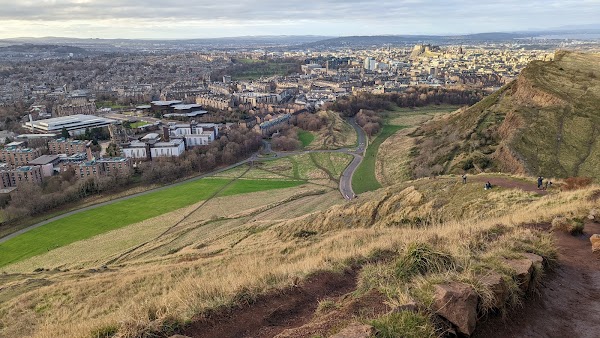
Arthur's Seat
View on map
Experience the Full Tour
Download the DocentPro app to access all tour stops, complete audio narrations in multiple languages, offline maps, and interactive features.