
Pisa's Architectural Wonders: A Journey Through History

Walking Tour

1.4 km (0.9 miles)

19 min travel time

7 Stops

Pisa, Italy
Pisa's Architectural Wonders: A Journey Through History
Tour Stops
1
Piazza del Duomo
View on map
Audio Narrations
English
Introduction
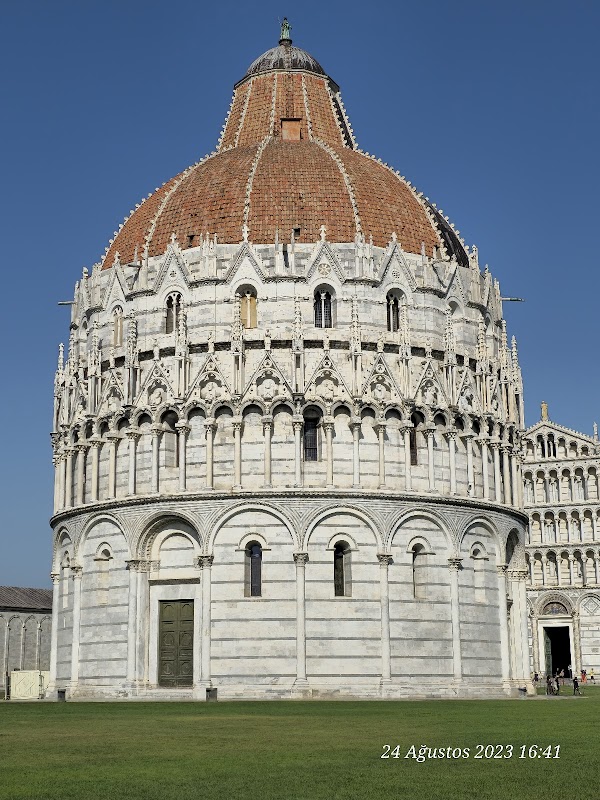
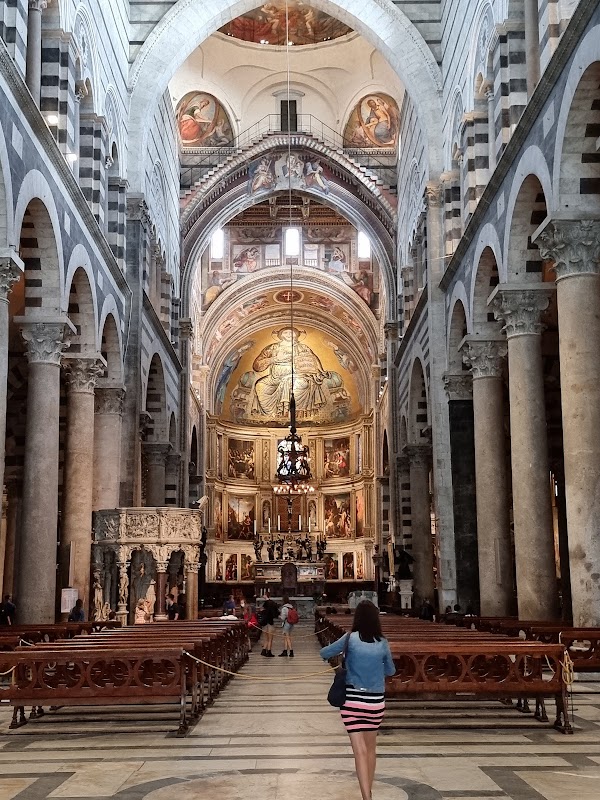
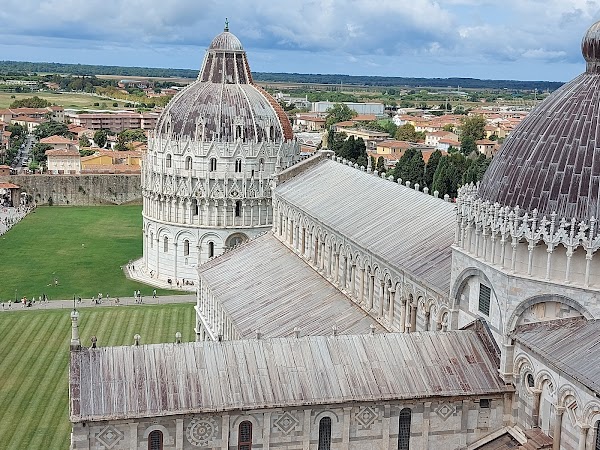
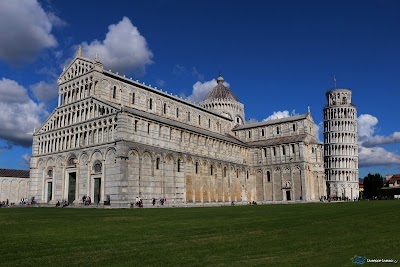
The Piazza del Duomo in Pisa, Tuscany, Italy, is a walled, 8.87-hectare compound that houses four great religious edifices: Pisa Cathedral, the Pisa Baptistery, the Leaning Tower of Pisa, and the Camposanto Monumentale. The square's popular name, "Field of Miracles," was coined by Italian writer Gabriele D'Annunzio, who described it as a "meadow of miracles" in his 1910 novel. Pisa Cathedral, the medieval cathedral of the Archdiocese of Pisa, is dedicated to Santa Maria Assunta. Its construction began in 1064 and set the model for the distinctive Pisan Romanesque style of architecture. The cathedral has two aisles on either side of the nave and a transept consisting of three aisles. The Pisa Baptistery, the largest in Italy, was begun in 1152 and completed in the 14th century. It combines typical Romanesque and Gothic elements and houses the pulpit by Nicola Pisano. The Leaning Tower of Pisa, the cathedral's campanile or bell tower, is the most famous landmark in the square. Its construction began in 1173, and its inclination is due to the shifting ground in the subsoil. The Camposanto Monumentale, a monumental cemetery, was built around a shipload of sacred soil from Calvary. Its walls are adorned with frescoes, including the famous "Triumph of Death" by Buonamico Buffalmacco.Religious Center
Piazza del Duomo in Pisa, Tuscany, Italy, is a captivating religious center that embodies the essence of medieval Christian architecture. Its iconic monuments, including the Cathedral, Baptistery, Bell Tower, and Camposanto, stand as testaments to the city's rich religious heritage. The Cathedral, dedicated to Santa Maria Assunta, boasts intricate mosaics and bronze doors, showcasing the fusion of Byzantine and Pisan Romanesque styles. The Baptistery, the largest in Italy, features an octagonal font and a renowned pulpit sculpted by Nicola Pisano, a precursor to the Italian Renaissance. The Bell Tower, known as the Leaning Tower of Pisa, is a marvel of engineering, its distinctive tilt adding to its allure. The Camposanto, a monumental cemetery, houses a remarkable collection of frescoes depicting biblical scenes and the Triumph of Death, offering a poignant reminder of mortality. Together, these structures form an unparalleled ensemble that has influenced religious architecture throughout history, making Piazza del Duomo a must-visit destination for those seeking a profound connection to the spiritual heart of Pisa.Pisan Romanesque Architecture
Piazza del Duomo in Pisa, Tuscany, Italy, is a stunning architectural ensemble that epitomizes the unique characteristics of Pisan Romanesque architecture. This style emerged in the 11th century and flourished during the golden age of the Pisan Maritime Republic. The piazza's most iconic structures, including the cathedral, baptistery, bell tower (Leaning Tower), and Camposanto Monumentale, showcase the defining elements of Pisan Romanesque. The cathedral, begun in 1064, features a Latin cross plan with five naves. Its exterior is adorned with alternating bands of white and dark marble, a hallmark of Pisan Romanesque. The interior boasts monolithic granite columns, intricate mosaics, and an elliptical dome, reflecting influences from both ancient Roman and Eastern architecture. The baptistery, constructed in the 12th century, is an octagonal structure with a conical dome. Its exterior is decorated with blind arcades and intricate carvings, while the interior features a baptismal font supported by sculpted figures. The bell tower, known as the Leaning Tower, is a freestanding campanile that began to tilt during its construction due to the soft soil beneath. Despite its inclination, the tower remains a testament to the ingenuity of Pisan architects. The Camposanto Monumentale, a rectangular cloister, houses a collection of Roman sarcophagi and medieval frescoes. Its walls are adorned with vibrant depictions of biblical scenes and allegorical figures, showcasing the artistic prowess of Pisan Romanesque masters. Overall, Piazza del Duomo in Pisa is a living testament to the innovative and influential Pisan Romanesque architectural style. Its harmonious blend of classical, Byzantine, and Islamic elements has left an enduring legacy on Italian art and architecture.
2
Cattedrale di Pisa
View on map
3
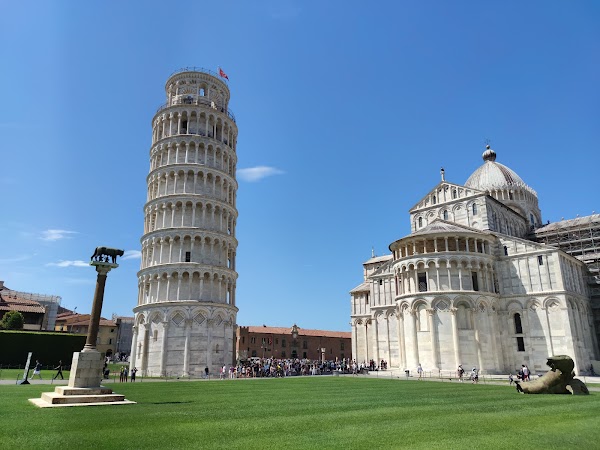
Leaning Tower of Pisa
View on map
Audio Narrations
English
Introduction
The Leaning Tower of Pisa, a captivating architectural marvel in Pisa, Tuscany, Italy, is renowned for its distinctive tilt. Its construction began in 1173 as the bell tower of the city's cathedral, but due to unstable ground conditions, it began to lean during its early stages. Despite this, construction continued, with the upper floors built with a slight curve to compensate for the tilt. The tower stands at 56 meters tall and has eight floors, accessible via 294 steps. Its unique appearance has made it a beloved tourist destination, attracting visitors from around the world.Cultural Icon
The Leaning Tower of Pisa, an iconic symbol of Italy, stands as a testament to architectural ingenuity and a captivating cultural phenomenon. Its distinctive tilt, caused by unstable ground during construction, has made it an enduring symbol of resilience and a beloved subject of art, literature, and popular culture. As a cultural icon, the tower has inspired countless works of art, from paintings and sculptures to films and music, capturing the imagination of generations. Its unique appearance has also made it a popular tourist destination, attracting millions of visitors each year who marvel at its architectural marvel and the intriguing story behind its construction. The Leaning Tower of Pisa remains an enduring symbol of Italian heritage and a cherished cultural icon, embodying the country's rich history, artistic achievements, and enduring spirit.Construction Blunder
The Leaning Tower of Pisa, an iconic architectural marvel, owes its distinctive tilt to a colossal construction blunder. Its foundation, laid in 1173 on soft, unstable soil, proved inadequate to support the tower's ambitious height. As construction progressed, the tower began to sink, resulting in the gradual development of its famous lean. Despite attempts to compensate for the tilt by adding taller columns and arches on the sinking side, the tower continued to lean. The construction was halted for nearly a century, allowing the soil to settle and preventing the tower's collapse. However, upon resumption, the lean worsened due to the added weight of the upper floors. The tower's lean became a source of concern in the late 20th century, prompting extensive restoration efforts. In 1990, a comprehensive project was undertaken to stabilize the tower. Earth was carefully removed from beneath the foundations, reducing the lean by 17 inches. The tower continued to straighten until 2008, when sensors indicated that the movement had ceased. Today, the Leaning Tower of Pisa stands as a testament to the unintended consequences of architectural miscalculations. Its lean, once a symbol of instability, has become an enduring symbol of resilience and a reminder of the challenges faced by builders throughout history.
4
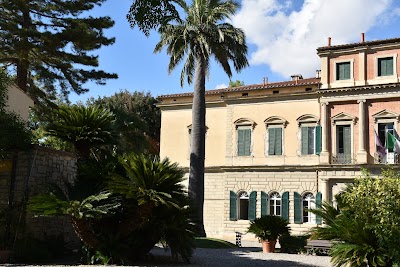
Botanical Garden and Museum
View on map
5
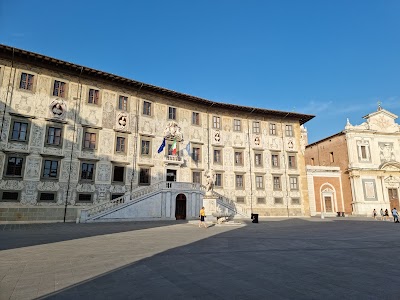
Piazza dei Cavalieri
View on map
6
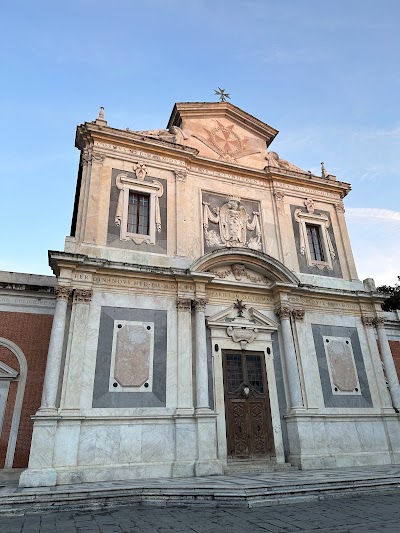
Chiesa di Santo Stefano dei Cavalieri
View on map
7
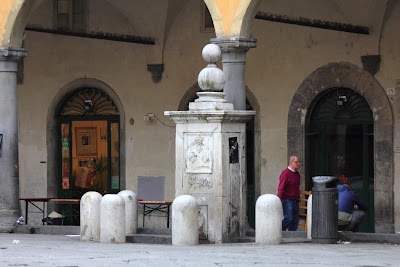
Piazza delle Vettovaglie
View on map
Audio Narrations
Chinese
导言
维托瓦格里亚广场坐落在比萨历史中心的中心地带,是一个充满活力、历史悠久且具有当地特色的广场。它的名字翻译为“供应广场”,暗示了它过去作为农民和商人聚集在一起出售商品的繁华市场。如今,这个广场仍然保持着热闹的氛围,是当地人和游客的热门聚会场所。 广场的中心是宏伟的维托瓦格里亚宫,这是一座 16 世纪的建筑,曾经是该市的食品市场。它优雅的文艺复兴建筑风格,以一系列拱形凉廊和钟楼为特色,为广场增添了一丝宏伟。在凉廊下方,一个充满活力的市场继续蓬勃发展,提供新鲜农产品、当地工艺品和纪念品。 除了市场之外,维托瓦格里亚广场还装饰着迷人的咖啡馆和餐馆,邀请游客驻足并沉浸在氛围中。新鲜冲泡的咖啡香气和热闹的聊天声弥漫在空气中,营造出一种温暖而温馨的氛围。随着太阳下山,广场变成了一个浪漫的天堂,被路灯的柔和光芒和附近餐馆闪烁的灯光照亮。 广场内的一个隐藏瑰宝是小型但引人入胜的古代船舶博物馆,展示了一系列在该地区挖掘中出土的古罗马船只。这座独特的博物馆让人们得以一窥比萨的海事历史以及该市在古代世界中作为繁荣港口的作用。 无论是漫步在熙熙攘攘的市场中,在当地咖啡馆享用悠闲的美食,还是探索古代船舶博物馆的珍宝,维托瓦格里亚广场都提供了对比萨的心脏和灵魂的迷人一瞥。它丰富的历史、充满活力的氛围和迷人的当地特色使其成为任何寻求正宗意大利体验的人的必游之地。中世纪市场广场
在比萨的中心地带,坐落在标志性的比萨斜塔和阿诺河之间,是维托瓦格里广场,一个历史悠久的广场,曾经充满了中世纪市场的活力。这个长方形的广场铺着光滑的灰色石头,是繁华商业中心的一个舞台,来自该地区的商人和小工匠们在这里汇聚。 广场的名字“维托瓦格里广场”翻译为“供应广场”,证明了它作为必需品市场的主要功能。农民、面包师、鱼贩和其他小贩摆放着他们的摊位,提供各种新鲜农产品、烘焙食品、鱼、肉和其他日常必需品。空气中弥漫着新鲜出炉的面包香气、小贩的叫卖声和当地人讨价还价的热闹聊天声。 除了商业意义之外,维托瓦格里广场还充当一个社交聚会场所。城镇居民会面来交换新闻、八卦,并进行热烈的讨论。广场上会发布公共公告,它通常是节日、庆祝活动甚至公开处决的地点。 维托瓦格里广场最引人注目的特点之一是其建筑群。广场周围环绕着一系列中世纪建筑,每座建筑都有自己独特的魅力和历史。维托瓦格里宫,前海关大楼,证明了广场的商业过去。其优雅的外观,饰有纹章和纹章符号,反映了中世纪时期比萨的财富和繁荣。 另一座著名的建筑是班奇拱廊,这是一系列曾经容纳商店和作坊的拱廊。拱廊的优雅拱门和柱子为人们遮挡阳光和雨水,为购物者和商人创造了一个宜人的氛围。 如今,维托瓦格里广场保留了其中世纪的魅力,将游客带回到商业、社区和文化在比萨中心交织在一起的时代。虽然市场摊位和熙熙攘攘的人群已经不复存在,但广场的历史意义和建筑美仍然吸引着那些漫步在其鹅卵石街道上的人们。建筑瑰宝
坐落在比萨市中心,维托瓦格里广场见证了这座城市丰富的建筑遗产。这个历史悠久的广场,曾经是一个熙熙攘攘的市场,现在是一个隐藏的瑰宝,让人们得以一窥比萨的中世纪历史。 广场的中心是维托瓦格里宫,这是一座宏伟的建筑,可以追溯到 13 世纪。其宏伟的外观,装饰着精美的雕刻和优雅的拱门,展现了其建造者的精湛技艺。这座宫殿的内部,有着高耸的天花板和大厅,曾经是这座城市的粮食市场,是商业和贸易的重要枢纽。 围绕着这座宫殿的是一系列迷人的建筑,每座建筑都有自己独特的特色。班奇拱廊,以其优雅的拱门和露天设计,为商人提供了展示其商品的空间。瓜兰迪塔,一座曾经用作瞭望塔的细长塔楼,可欣赏到城市的全景。 广场的鹅卵石街道和亲密的氛围营造出一种永恒感。当你漫步在它的狭窄小巷中时,你几乎可以听到商人讨价还价的回声和运送货物的马车发出的哐当声。 维托瓦格里广场不仅仅是一个历史地标;它还是比萨不屈精神的活生生的证明。它的建筑美和丰富的历史继续吸引着来自世界各地的游客。
Experience the Full Tour
Download the DocentPro app to access all tour stops, complete audio narrations in multiple languages, offline maps, and interactive features.