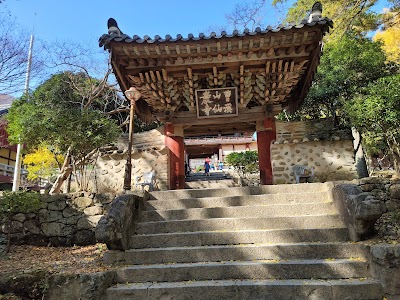
bopsim_official — Seonamsa Temple

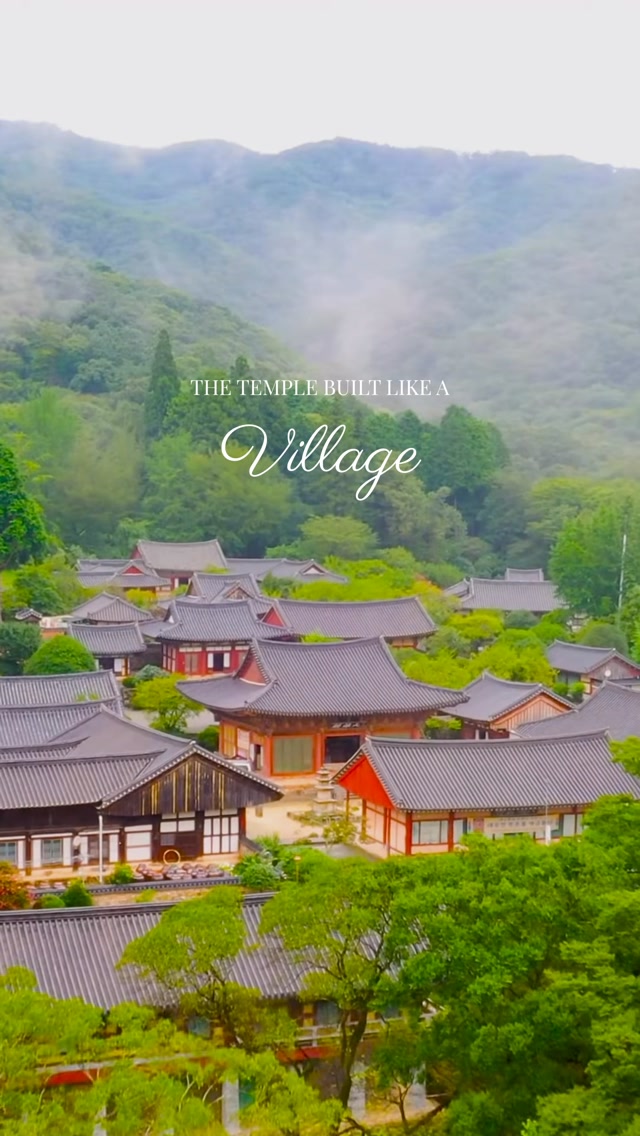

Most Korean temples run on one axis, gate to gate to hall. Seonamsa does not. It went up over roughly two hundred years rather than to a single plan, so it spreads into clustered courtyards, walls turning into other walls, halls stacked up the slope. UNESCO’s assessment describes the layout as closer to a rural village than a temple. Some of what makes it distinct is what was left out. There is no Gate of the Four Heavenly Kings, because the peak above is named General’s Peak and the mountain was held to be standing guard already. In the main hall the Buddha sits alone, without the attendant bodhisattvas that flank him nearly everywhere else. The approach passes the stupa field and reaches two arch bridges. The upper one is Seungseongyo, a single granite arch about 14 m long, sitting on no built foundation. It springs straight off the bedrock of the streambed. From the center of its underside a carved dragon’s head protrudes downward, facing upstream. Pull it out, tradition says, and the bridge comes down. Much of the place is still working rather than on display. Four stone basins run in sequence, the first for water offered to the Buddha, the last for everything else. The privy, 丁 shaped and older than the 1920s, still composts. About fifty plum trees run through the grounds, 350 to 650 years old, peaking from late March into early April. Admission has been free since May 2023. Around 2h40m to 3h from Yongsan by KTX, then a city bus, then a 1 km walk up.